
Last updated on August 25th, 2026 at 02:31 pm
The Powertrain Control Module (PCM) in your 1994 Beretta with the 3.1L V6 manages fuel delivery, ignition timing, and transmission shifting. Failure typically stems from voltage spikes, heat exposure, moisture intrusion, or connector corrosion.
If your 1994 Chevrolet Beretta with the 3.1L V6 engine won’t start, runs poorly, or the check engine light stays on despite new plugs and wires, the Powertrain Control Module (PCM) may be the culprit. This vehicle predates full OBD-II standardization, meaning the PCM handles both engine management and transmission control through a unified system. In this guide, you’ll learn what the module does, where it’s located, typical failure symptoms, and why choosing a VIN-programmed replacement can save you time and money compared to dealer parts and programming fees. Whether you’re a DIY mechanic evaluating repair options or a shop technician quoting a customer, understanding the replacement process helps ensure a correct repair the first time.
The Powertrain Control Module in your 1994 Chevrolet Beretta serves as the central computer for the 3.1L V6 engine and the 4-speed automatic transmission. It receives input from dozens of sensors throughout the engine bay—including the coolant temperature sensor, mass airflow sensor, throttle position sensor, and vehicle speed sensor—and uses this data to calculate optimal fuel injector pulse width, ignition coil firing angle, and transmission shift points in real time. Unlike later OBD-II vehicles that separate engine control (ECM) from transmission control (TCM), this generation uses a single integrated unit, so a failure affects both powertrain functions simultaneously. The module processes these inputs through a microprocessor and stores calibration data in non-volatile memory, meaning it retains its programming even when the battery is disconnected. Why does this matter? When the PCM fails or its internal memory becomes corrupted, the engine may crank but not start, run extremely rich or lean, stall at idle, or refuse to shift gears properly. The module also monitors emissions control systems and can trigger the check engine light when it detects faults. Because this unit controls such a wide array of critical functions, a failing PCM can mimic dozens of other problems—from bad fuel injectors to transmission slippage—making accurate diagnosis essential. Replacement engine computers for the Beretta are available as new, used, or professionally refurbished units, each with different programming requirements and warranty coverage.
Flagship One keeps Chevrolet Beretta replacement engine computers in stock for exactly this failure pattern.
1994 Chevrolet Beretta
OEM programmed ECM for your 1994 Chevrolet Beretta — plug & play, no dealer visit.
Free shipping · Lifetime warranty
The PCM on the 1994 Chevrolet Beretta is mounted in the engine compartment, typically on the driver’s side near the firewall and brake master cylinder. Access requires removing the PCM from its mounting bracket, disconnecting the electrical harness, and transferring the mounting hardware to the new unit. The job is straightforward for experienced technicians: remove the connector retainers, unplug the harness, unbolt the module, and reverse the procedure with the replacement. According to factory labor guides, the remove-and-replace operation takes approximately 1.3 hours of book time. After installing the new module, the vehicle requires a relearn procedure to allow the PCM to adapt to the engine’s unique characteristics—this takes an additional 0.5 hours. During installation, ensure all connector pins are clean and undamaged; a corroded or bent pin can cause intermittent faults that mimic a bad module. Torque specifications for mounting bolts are typically 8-10 ft-lbs, but always verify against a service manual. The key takeaway: this is not a difficult job mechanically, but the electrical connections demand care and the relearn procedure requires either a proper scan tool or access to a dealer facility.
| Operation | Configuration | Book Time |
|---|---|---|
| Engine Control Module R&R | All configurations | 1.3 hr |
| Powertrain Control Module R&R | All configurations | 1.3 hr |
| Powertrain Control Module Relearn | All configurations | 0.5 hr |
After replacing the PCM in your 1994 Beretta, the factory service procedure requires a relearn cycle so the new module can calibrate to your specific engine. The 0.5-hour relearn procedure involves starting the engine and allowing it to idle while the PCM monitors fuel trims, spark advance, and transmission adaptions—this teaches the computer the unique characteristics of your engine’s airflow and fuel delivery. On a stock replacement unit, this relearn is mandatory; without it, the vehicle may run poorly, stall, or exhibit erratic shifting until the adaptation completes. However, when you purchase a VIN-programmed replacement unit, the supplier programs the PCM with your specific vehicle identification number before shipping, which means the module arrives pre-configured for your Beretta. This eliminates the need for dealer programming equipment or special software. The relearn procedure still runs its course during normal driving, but you skip the additional programming steps that would otherwise require a trip to the dealership or a professional calibration tool. Essentially, a VIN-programmed replacement unit handles the heavy lifting at the supplier level, making the install as simple as swapping the hardware and driving.
Every VIN-programmed replacement unit from Flagship One arrives with these steps already completed.
The 1994 Beretta PCM can fail in several ways, each producing distinct symptoms that help distinguish a bad module from other component failures. A no-start condition where the engine cranks normally but won’t fire often points to a PCM that has lost its calibration or internal processor—the fuel injectors simply don’t receive the command to spray. Intermittent stalling, especially at idle or under light acceleration, occurs when the module’s signal processing becomes erratic; the engine may run for a few seconds then die, then restart, suggesting an electrical rather than mechanical issue. Misfire codes (multiple cylinder random misfires) frequently appear because the PCM incorrectly calculates fuel delivery or ignition timing based on faulty sensor input processing. A dead scan tool connection—where your code reader cannot communicate with any module—is a strong indicator of PCM power or ground failure, since the module acts as the gateway for all OBD communications. Transmission symptoms include harsh shifting, failure to shift into overdrive, or the converter clutch not engaging, as the PCM controls shift solenoids and torque converter lockup. Finally, a check engine light that illuminates with multiple unrelated codes (such as sensor circuit failures across several inputs simultaneously) suggests the PCM itself is faulty rather than individual sensors. If your Beretta exhibits any combination of these symptoms and sensor replacements haven’t resolved the issue, the PCM is a prime suspect.
A used PCM will likely require dealer programming to match your VIN, and its condition is unknown. Junkyard units often come with unknown history and may fail shortly after installation, making them a risky choice compared to professionally refurbished or new units.
If the rough idle and stalling stem from a failed or failing PCM, then yes—replacement often resolves these symptoms. However, identical symptoms can also result from bad spark plugs, vacuum leaks, a faulty mass airflow sensor, or fuel delivery problems, so proper diagnosis before replacing the module is essential.
Not necessarily. If you purchase a VIN-programmed replacement unit that arrives pre-configured with your specific vehicle identification number, you can install it and drive—no dealer programming is required. The relearn procedure happens automatically during normal driving.
A stock replacement PCM has no vehicle-specific programming, so it won’t properly control fuel delivery or transmission functions until it’s programmed. Additionally, if the relearn procedure hasn’t been allowed to complete through driving, the module may run in a default calibration that doesn’t suit your specific engine.
A failing PCM can leave you stranded with a no-start condition, cause excessive fuel consumption, or trigger emissions failures that prevent your vehicle from passing inspection. In some cases, a marginally-failing module may allow driving but with severely degraded performance and drivability.
When your 1994 Beretta needs a PCM, you have two main repair paths: a new OEM unit from the dealer (expensive and requires dealer programming) or a professionally refurbished replacement that arrives VIN-programmed and ready to install. The refurbished route typically costs significantly less while providing comparable reliability, provided you source from a reputable supplier that tests and warranties their units. For this model year, the VIN-programmed option saves you the dealer programming fee and the hassle of scheduling a service appointment, making it the practical choice for most owners and independent shops alike.
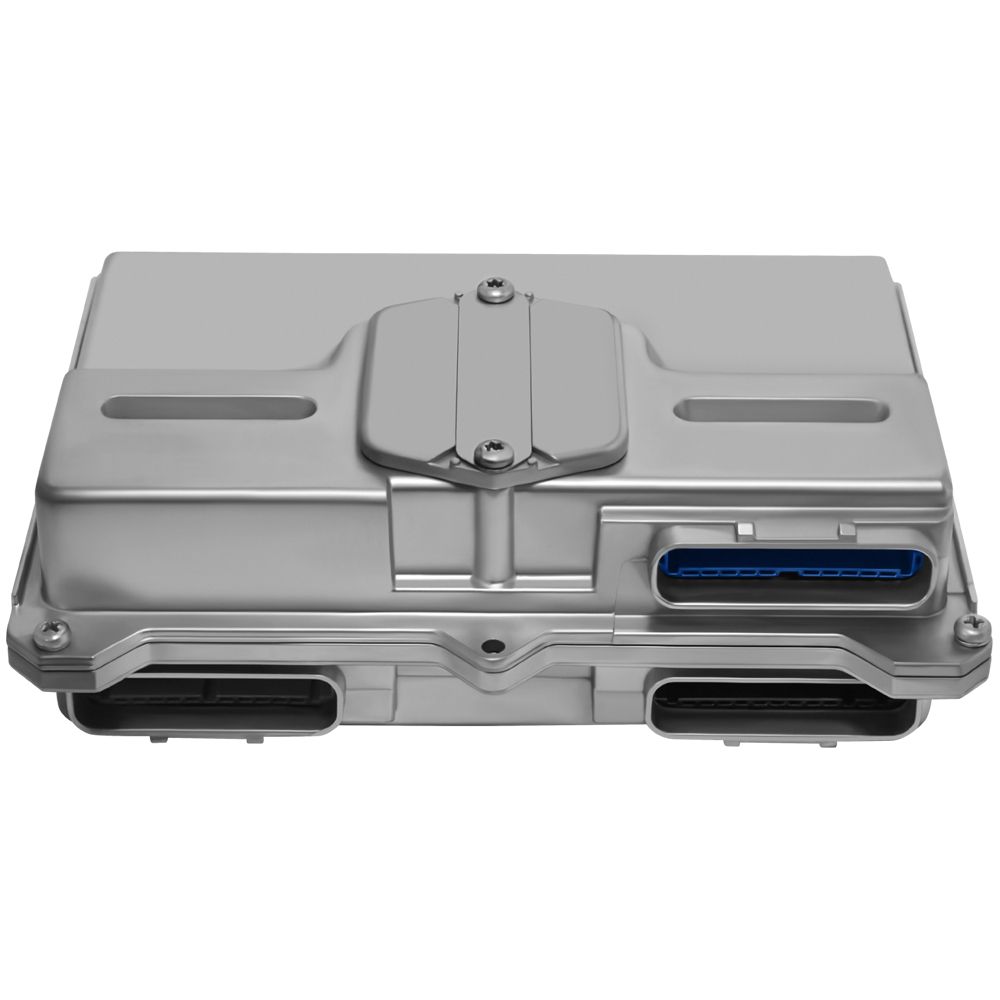
Flagship One stocks a refurbished, VIN-programmed PCM for the 1994 Chevrolet Beretta with a lifetime warranty, free shipping and no core charge. The full Chevrolet Beretta module lineup covers other engine configurations as well.