
Last updated on August 25th, 2026 at 01:50 pm
The Engine Control Module on your 1993 Nissan 240SX serves as the central computer managing fuel delivery, ignition timing, and emissions controls on the 2.4L engine. When internal circuitry fails, the engine runs poorly or not at all, and diagnostic communication becomes impossible.
If your 1993 Nissan 240SX has developed a hard starting problem, runs rough at idle, or stalls unexpectedly, the Engine Control Module may have failed. This central computer coordinates every aspect of engine operation on the 2.4L four-cylinder, and when its internal circuitry degrades, symptoms appear suddenly and worsen over time. Many owners initially suspect traditional mechanical issues—spark plugs, fuel pump, or timing components—before considering the electronics. Understanding what the ECM does, where it lives in your 240SX, and what replacement involves will help you make an informed repair decision. Flagship One specializes in these replacements, with units programmed specifically for your vehicle before they leave the warehouse. This guide covers everything you need to know about diagnosing, replacing, and programming the Engine Control Module on the 1993 Nissan 240SX.
1993 Nissan 240SX
OEM programmed ECM for your 1993 Nissan 240SX — plug & play, no dealer visit.
Free shipping · Lifetime warranty
The Engine Control Module in your 1993 Nissan 240SX functions as the brain of the 2.4L engine management system. Unlike modern vehicles with dozens of separate sensors and controllers, the pre-OBD-II architecture relies heavily on this single module to interpret input signals and adjust engine operation in real time. The ECM receives data from the mass airflow sensor, throttle position sensor, coolant temperature sensor, and oxygen sensor, then calculates the appropriate fuel injector pulse width and ignition advance for current conditions.
On the 240SX, this module also manages basic emissions components including the evaporative emissions purge valve and exhaust gas recirculation system. The fuel mixture must remain precisely balanced for the engine to run smoothly and pass any emissions testing your state may require. When the ECM’s processor or memory circuits fail, it may continue producing outputs based on corrupted data, causing the engine to run rich or lean, misfire under load, or stall when coasting to a stop.
replacement engine computers for the Nissan 240SX are available as fully tested refurbished units. The original module uses a 32-bit processor architecture that was cutting-edge for its era, but the technology has since become obsolete. Replacement modules incorporate updated circuitry that maintains factory-calibrated behavior while improving long-term reliability. Your 1993 Nissan 240SX came equipped with a specific part number calibrated for the 2.4L engine’s displacement, intake configuration, and rear axle ratio, ensuring proper integration with the manual or automatic transmission installed at the factory.
The Engine Control Module on the 1993 Nissan 240SX is mounted inside the passenger compartment, typically beneath the dashboard on the driver’s side near the steering column. Access requires removing the lower dashboard panel and any associated trim pieces that obstruct the module’s location. The module itself is a rectangular box approximately eight inches long, four inches wide, and two inches thick, secured to its mounting bracket with several screws or bolts.
Removal involves disconnecting the negative battery terminal first to prevent electrical shorts, then unplugging the main wiring harness connector and any secondary connectors. The old module slides out of its bracket after fasteners are removed. Installation reverses this procedure, with particular attention to seating all electrical connections fully and ensuring weatherstripping around the module remains intact to protect against moisture intrusion.
The factory service manual specifies torque values for mounting fasteners to prevent vibration-induced loosening without damaging the plastic module housing. Most technicians complete this job within a reasonable timeframe, with labor costs varying by shop. After installation, the module must be properly secured and all trim pieces reassembled to restore the interior to its original condition.
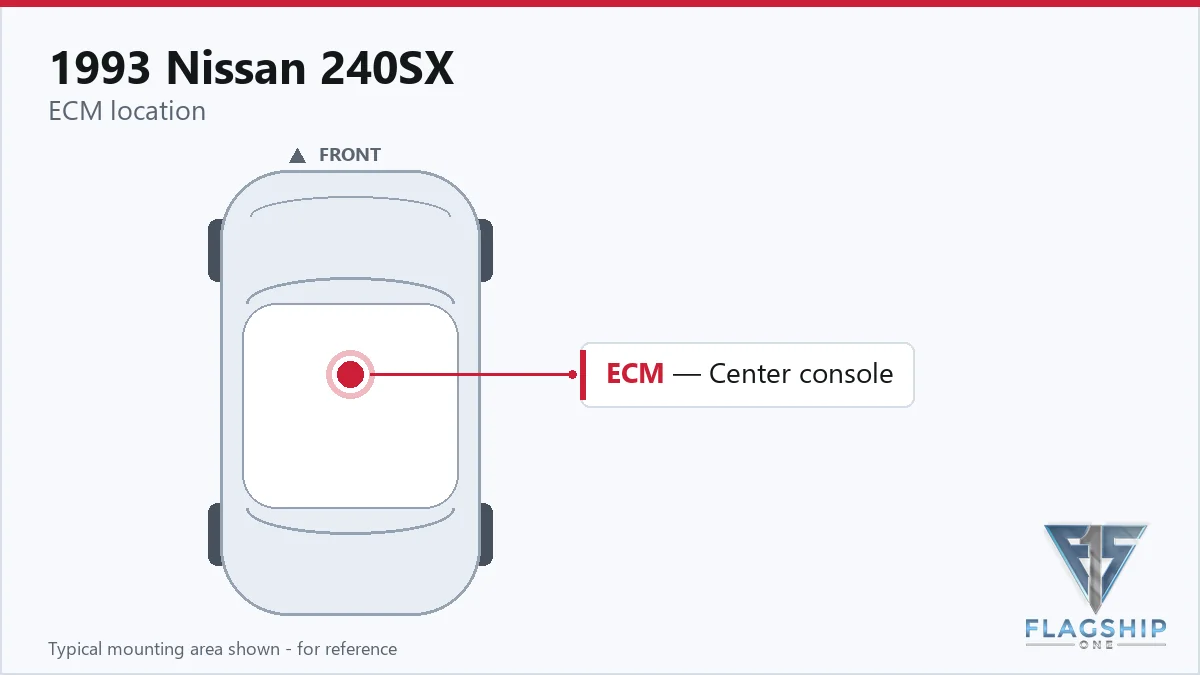
Work with the ignition off, and treat the module as static-sensitive: avoid touching the connector pins at any point.
After physically installing a replacement Engine Control Module on the 1993 Nissan 240SX, the factory service procedure requires programming the module with your specific vehicle identification number and applicable calibration data. This process establishes the communication link between the ECM and the passive anti-theft system, ensuring the module recognizes your ignition key and allows the engine to start. Without this step, the security system may prevent fuel delivery entirely, leaving you stranded.
The programming procedure also configures transmission-specific parameters if your 240SX came equipped with an automatic transmission versus a manual gearbox. Different axle ratios and tire sizes affect the speed sensor calculations the ECM uses for proper shifting behavior and fuel economy optimization. Factory dealerships use dedicated Nissan diagnostic software to perform these updates.
When you purchase a VIN-programmed replacement unit from Flagship One, this entire programming process is completed before the module ships to you. The unit arrives ready to install and will communicate with your vehicle’s systems immediately upon connection. This eliminates the need to schedule a dealership visit after physical installation and prevents delays caused by programming equipment availability. You can complete the repair in a single session without specialized tools or software.
Engine Control Module failure on the 1993 Nissan 240SX produces recognizable symptoms that distinguish it from mechanical problems. A no-start condition where the engine cranks normally but refuses to catch often points directly to ECM malfunction, particularly when spark and fuel delivery test normal. The engine may start and run for several seconds before stalling, indicating the ECM cannot maintain proper fuel delivery as operating conditions change.
Intermittent stalling during deceleration or at idle suggests the ECM is misreading sensor data and leaning out the fuel mixture inappropriately. Rough idle quality, cylinder misfire codes, and hesitation during acceleration follow similar patterns of degraded calculation accuracy. In some cases, the check engine light may illuminate steadily while the engine runs poorly, or the light may stay dark entirely despite obvious drivability problems—a sign that the bulb circuit or indicator logic has failed.
On automatic transmission models, harsh shifting or failure to engage gears properly may accompany ECM issues if the module communicates with the transmission control system. Dead communication on a scan tool is a telltale indicator of ECM failure, especially when all other electrical systems appear functional. Pre-OBD-II diagnostic limitations mean trouble codes are stored in manufacturer-specific formats requiring older dealer scan equipment or legacy aftermarket tools to retrieve.
Nissan has not issued specific technical service bulletins for 1993 Nissan 240SX Engine Control Module replacement procedures that apply to all examples of this vehicle. Service bulletins for this era typically address diagnostic procedures, connector corrosion in humid climates, and module ground circuit failures. Consult your local Nissan dealer with your vehicle’s specific identification number to determine whether any applicable bulletins exist for your particular build date and destination market.
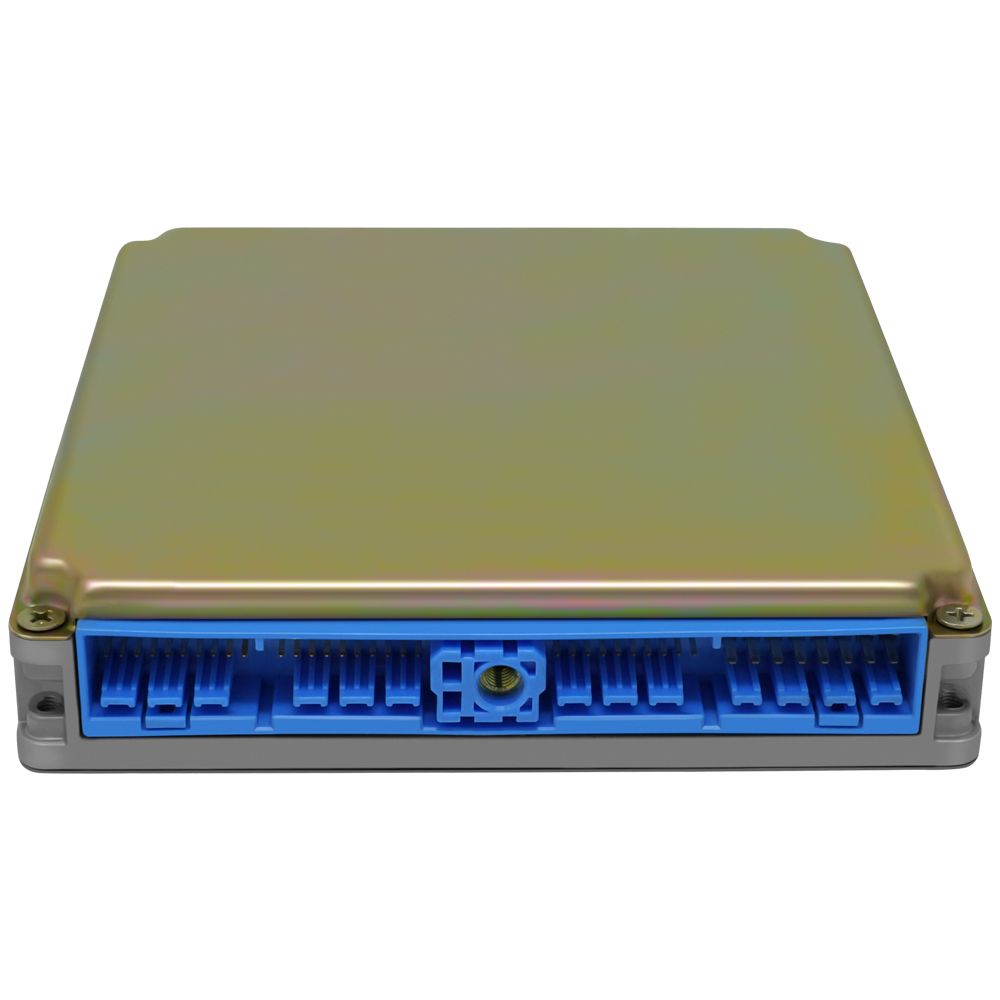
Flagship One stocks a refurbished, VIN-programmed ECM for the 1993 Nissan 240SX with a lifetime warranty, free shipping and no core charge. The full Nissan 240SX module lineup covers other engine configurations as well.
The 1993 Nissan 240SX relies on its Engine Control Module to manage every aspect of 2.4L engine operation, and module failure creates drivability problems that affect reliability and safety. Understanding the symptoms, location, and replacement process helps you make an informed decision when this component fails. Flagship One provides VIN-programmed replacement ECMs that arrive ready to install, saving you time and eliminating the need for dealer programming. Contact our support team for assistance selecting the correct module for your specific vehicle configuration.