
Last updated on August 25th, 2026 at 11:45 am
The Engine Control Module (ECM) in your 1992 Toyota Corolla manages fuel injection, ignition timing, and idle control. Failures may cause stalling, rough running, or a complete no-start condition due to sensor misreads or internal circuit faults.
If your 1992 Toyota Corolla suddenly stalls at stoplights or refuses to start, the Engine Control Module (ECM) may be the culprit. This small but critical computer governs how your 1.6L engine runs, from fuel delivery to spark timing. Unlike modern vehicles, the Corolla’s pre-OBD-II system lacks self-diagnostic trouble codes, making ECM issues harder to pinpoint without hands-on testing. Replacing the module isn’t just about swapping a box—it involves careful disconnection, proper installation, and a factory-mandated relearn procedure to ensure smooth operation. Understanding these steps helps you avoid unnecessary labor costs or repeat visits to the shop. Whether you’re diagnosing a no-start condition or preparing for a replacement, knowing how the ECM functions in your Corolla—and what to expect during service—can save time and frustration. This guide covers the module’s role, common failure signs, and the exact labor times for replacement and relearn, so you can approach the repair with confidence.
The Engine Control Module (ECM) in your 1992 Toyota Corolla acts as the brain of the fuel and ignition systems. It continuously monitors inputs from sensors like the throttle position, coolant temperature, and oxygen sensor to adjust fuel injection and spark timing for optimal performance. Without a properly functioning ECM, your engine may run too rich or too lean, misfire, or fail to start altogether. The module also controls idle speed, ensuring smooth operation when the vehicle is stationary. Over time, heat, vibration, or voltage spikes may degrade its internal circuits, leading to intermittent or permanent failures. When replacement becomes necessary, replacement engine computers for the Corolla are available to restore factory-level functionality. Since this vehicle predates OBD-II, the ECM lacks the standardized diagnostic codes found in newer models, which means troubleshooting often relies on symptom-based testing rather than scan tool data. Its role is especially critical in the Corolla’s 1.6L engine, where precise fuel and spark management directly impact drivability and fuel economy.
1992 Toyota Corolla
OEM programmed ECM for your 1992 Toyota Corolla — plug & play, no dealer visit.
Free shipping · Lifetime warranty
In the 1992 Toyota Corolla, the ECM is located behind the glove compartment, mounted to the passenger-side firewall. Accessing it requires removing the glove box assembly, which involves disconnecting the damper and releasing the stops. Once the glove box is out of the way, the ECM is secured with a single bolt and connected via a multi-pin harness. Replacement begins with disconnecting the battery and waiting 90 seconds if the vehicle is equipped with an airbag, as Toyota’s factory caution advises. The module can then be unplugged, removed, and swapped with a new unit. Labor for removal and reinstallation (R&R) is typically booked at 1.1 hours, covering the time needed to access, disconnect, and secure the module. No special tools are required beyond basic hand tools, but care must be taken to avoid damaging the harness connector or bending the pins during installation.
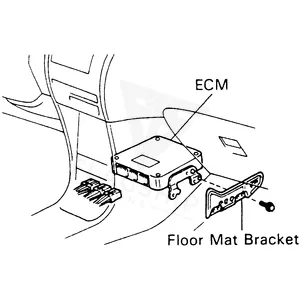
Work with the ignition off, and treat the module as static-sensitive: avoid touching the connector pins at any point.
| Operation | Configuration | Book Time |
|---|---|---|
| Engine Control Module Relearn | All configurations | 0.5 hr |
| Engine Control Module R&R | All configurations | 1.1 hr |
| Powertrain Control Module R&R | All configurations | 1.1 hr |
| Powertrain Control Module Relearn | All configurations | 0.5 hr |
After installing a new ECM in your 1992 Toyota Corolla, the factory procedure requires a relearn process to synchronize the module with the engine’s sensors and fuel system. This step, which typically takes 0.5 hours of labor, ensures the ECM adapts to your vehicle’s specific operating conditions. However, if you opt for a VIN-programmed replacement unit, these relearn steps are already completed at the factory, eliminating the need for additional shop time. The pre-programmed module arrives ready to plug in and drive, saving you both time and potential diagnostic headaches. Without this pre-programming, the relearn process may involve driving the vehicle under specific conditions to allow the ECM to recalibrate, which can be inconvenient if the vehicle isn’t running properly. For pre-OBD-II models like the Corolla, this step is particularly important because the system lacks the adaptive learning capabilities of newer vehicles.
A failing ECM in your 1992 Toyota Corolla may produce a range of symptoms that can mimic other issues, making diagnosis tricky. Common signs include intermittent stalling, especially at idle or during deceleration, as the module struggles to maintain proper fuel and spark delivery. You might also notice rough running or hesitation under acceleration, as if the engine is starving for fuel or spark. In some cases, the vehicle may crank but fail to start entirely, leaving you stranded. Since this model lacks OBD-II diagnostics, you won’t see trouble codes on a scan tool, but symptoms like poor fuel economy or a check engine light (if equipped) may point to ECM issues. Another telltale sign is erratic idle speed, where the engine revs up and down unpredictably. If the ECM’s internal memory is corrupted, the vehicle may also exhibit random misfires or a complete loss of communication with scan tools. In severe cases, the engine may run in a limp-home mode, severely limiting performance. While these symptoms can stem from other problems like faulty sensors or wiring issues, persistent or recurring issues often trace back to the ECM, especially if other components have been ruled out.
Stalling at stops is often linked to the ECM’s inability to maintain proper idle control. The module relies on inputs from the throttle position sensor and idle air control valve to adjust fuel and air delivery. If the ECM is failing, it may misread these signals, causing the engine to stall. Other potential causes include vacuum leaks or a faulty idle air control valve, but persistent stalling after ruling these out may point to an ECM issue.
Driving with a failing ECM is risky, as the vehicle may stall unexpectedly or run poorly. While some drivers report intermittent operation, the ECM’s role in fuel and spark management means a complete failure could leave you stranded. If you notice symptoms like stalling, rough running, or no-start conditions, it’s best to address the issue promptly to avoid further complications.
Testing the ECM in a pre-OBD-II vehicle like the Corolla involves a few steps. Start by checking for power and ground at the ECM connector with a multimeter. Next, inspect the harness for damage or corrosion. If the ECM is receiving power but the engine still won’t start, you may need to swap in a known-good module for testing. Since scan tools won’t read ECM-specific codes, hands-on testing is often the most reliable method.
Skipping the ECM relearn procedure after replacement may result in poor engine performance, including rough idle, hesitation, or stalling. The relearn process allows the new ECM to adapt to your Corolla’s specific sensor readings and fuel system. Without it, the module may default to generic settings, leading to suboptimal operation. If you install a pre-programmed unit, this step is unnecessary, as the module arrives calibrated for your vehicle.
In the 1992 Toyota Corolla, the terms ECM (Engine Control Module) and PCM (Powertrain Control Module) refer to the same component. This vehicle’s module exclusively manages engine functions, unlike newer models where the PCM may also control transmission operations. For the Corolla, the ECM handles fuel injection, ignition timing, and idle control, making it a critical part of the engine management system.
If your 1992 Toyota Corolla is experiencing ECM-related issues, you have two main options: repair or replacement. While some shops may attempt to repair the existing module, this approach can be time-consuming and may not address underlying circuit damage. A replacement ECM, particularly one that arrives pre-programmed for your VIN, offers a more reliable solution. This eliminates the need for post-install relearn procedures and ensures your Corolla runs as intended. Given the labor times involved, opting for a pre-programmed unit can save you both time and money in the long run.
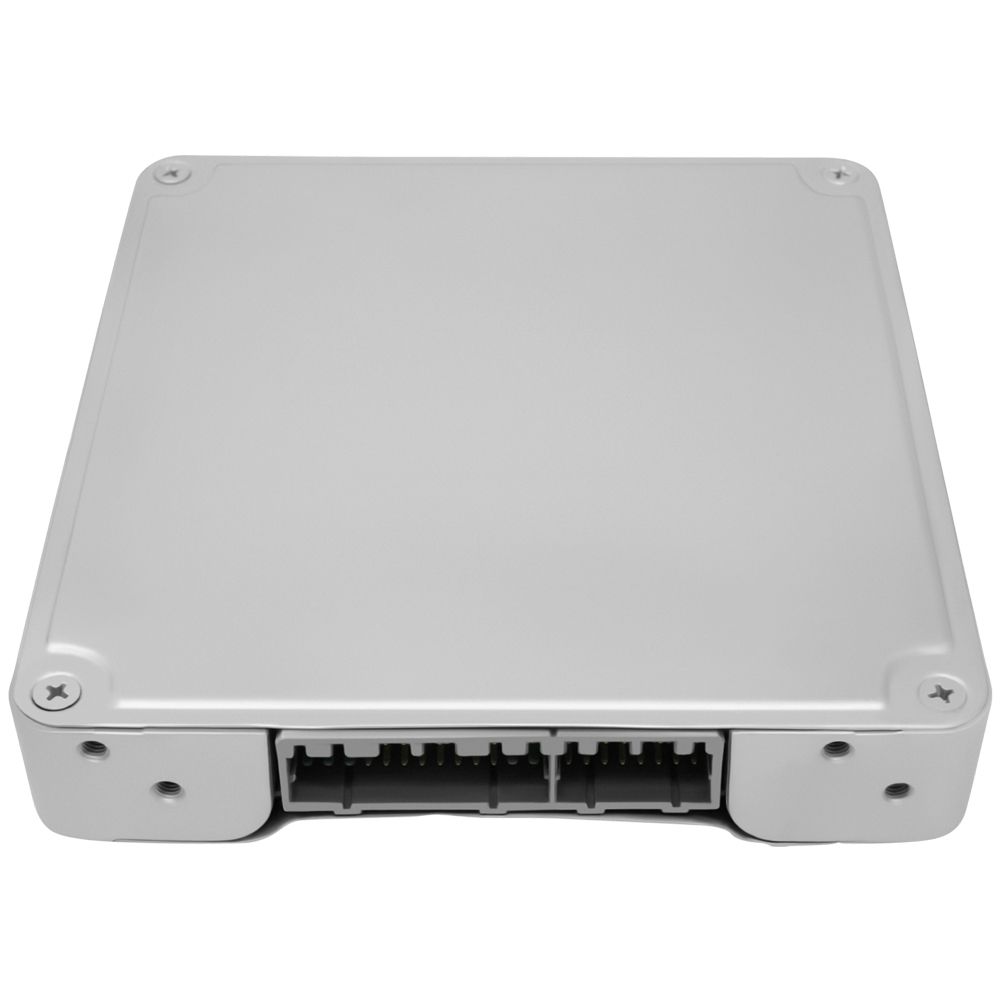
Flagship One stocks a refurbished, VIN-programmed PCM for the 1992 Toyota Corolla with a lifetime warranty, free shipping and no core charge. The full Toyota Corolla module lineup covers other engine configurations as well.
The 1992 Toyota Corolla’s ECM plays a vital role in keeping your engine running smoothly, from fuel delivery to idle control. If you’re facing symptoms like stalling, rough running, or a no-start condition, the ECM may be the culprit. Replacing it involves careful disconnection, proper installation, and a factory-mandated relearn procedure—unless you opt for a pre-programmed unit. Understanding these steps helps you make informed decisions about your vehicle’s repair, ensuring you get back on the road with minimal hassle.