
Last updated on August 25th, 2026 at 12:15 pm
The module manages fuel and ignition timing in your 1992 Honda Accord. Failure causes drivability issues like stalling or no-start conditions. Replacement restores factory performance levels.
Owning a vintage sedan involves understanding its electronic management systems. The 1992 Honda Accord relies on sophisticated computerization to manage engine performance and efficiency. When these systems malfunction, diagnosing the root cause requires knowledge of how the module interacts with sensors and actuators. This guide explains the role of the control unit, common failure signs, and the replacement process. You will learn about factory labor standards, physical location, and necessary programming steps. Understanding these elements helps you make informed decisions about repairs. Proper maintenance extends the life of your vehicle. We focus on factual data regarding service times and installation requirements. This information assists mechanics and owners in planning repairs accurately. Knowing the scope of work prevents unexpected delays during service. Your vehicle deserves precise attention to detail. Technicians often refer to book times to estimate job duration. These estimates vary based on shop conditions and technician experience. Accessing the unit may require removing interior trim pieces. Safety protocols should always be followed during electrical work. Ensuring correct installation prevents future drivability concerns.
The engine management system in this car uses a dedicated computer to regulate fuel delivery and ignition timing. This component processes data from various sensors to optimize combustion. If the unit fails, the engine may run poorly or not start. Replacement units must match the specific configuration of your car. You can find replacement engine computers that meet original specifications. The system monitors oxygen levels and throttle position continuously. It adjusts parameters to maintain smooth operation under different loads. A faulty module can disrupt communication with other electronic systems. Diagnosing issues often involves checking power and ground connections first. The computer stores data regarding operational history. This data helps technicians identify intermittent problems. Proper function is critical for emissions compliance and fuel economy. The 1992 Honda Accord depends on this logic for daily reliability. Upgrading or replacing the unit restores factory performance levels. Always verify compatibility before installing new hardware. Internal circuits manage the firing order and injection pulse width. Voltage spikes from the charging system can damage these sensitive components. Ground connections must remain clean to ensure signal integrity. The module acts as the brain for the entire powertrain. Without it, the vehicle cannot coordinate mechanical functions effectively. Technicians use specialized tools to verify signal output.
1992 Honda Accord
OEM programmed ECM for your 1992 Honda Accord — plug & play, no dealer visit.
Free shipping · Lifetime warranty
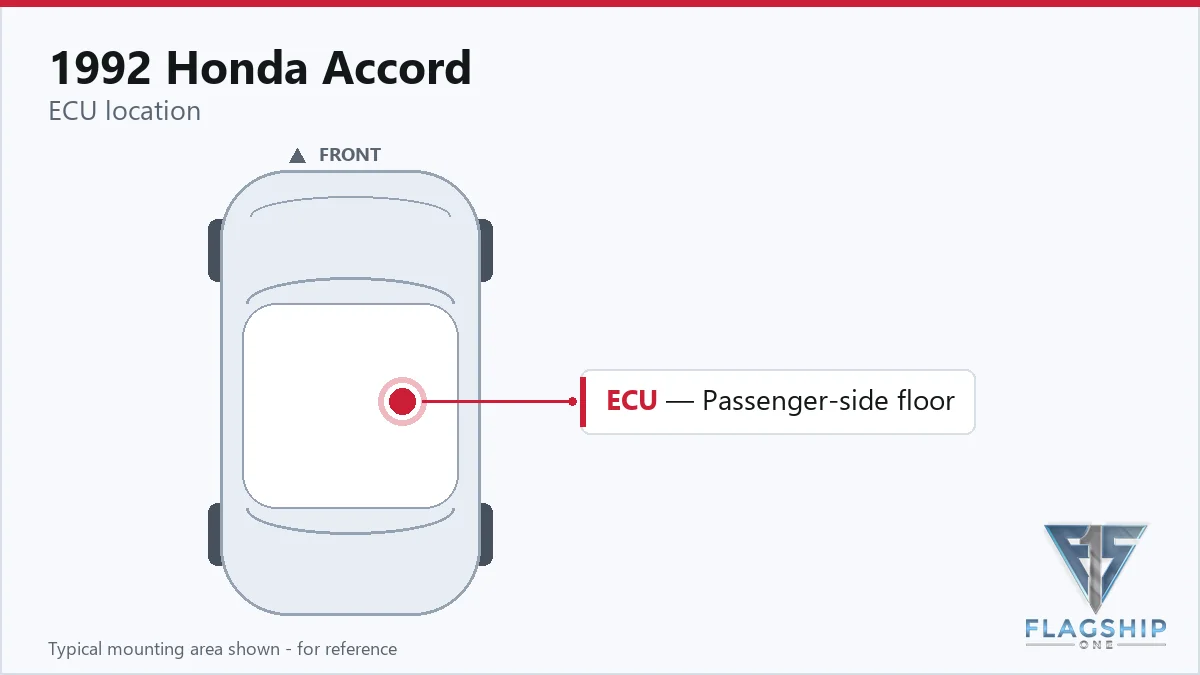
Service documentation indicates the PGM-FI engine control unit resides on the right front floor under a protective ECU cover. Accessing this area typically requires removing carpeting or trim panels. Labor guides suggest 0.6 hours for powertrain control module removal and installation. Another entry notes 0.5 hours for removing and installing the engine control module. Variations exist depending on the specific service manual used. The protective cover shields the electronics from moisture and debris. You should inspect the surrounding area for corrosion before installation. Secure mounting prevents vibration damage during operation. Reaching the unit may require working in a confined space. Proper tools ensure fasteners are tightened correctly. The location protects the unit from high engine heat. Technicians must handle connectors carefully to avoid pin damage.
| Operation | Configuration | Book Time |
|---|---|---|
| Powertrain Control Module R&R | All configurations | 0.6 hr |
| Powertrain Control Module Relearn | All configurations | 0.5 hr |
| Engine Control Module Relearn | All configurations | 0.5 hr |
| Engine Control Module R&R | All configurations | 0.5 hr |
Factory procedures often require a relearn process after swapping the module. Documentation lists 0.5 hours for the powertrain control module relearn procedure. An engine control module relearn often takes 0.5 hours as well. These steps synchronize the new hardware with the vehicle identity. Flagship One units arrive with this work completed beforehand. You receive a VIN-programmed replacement unit ready for installation. This eliminates the need for specialized diagnostic tools at the shop. The programming ensures the computer recognizes your specific vehicle configuration. Skipping this step can result in a no-start condition. Professional equipment is usually required to perform these tasks manually. Pre-programmed solutions save time and reduce complexity. Your vehicle will operate correctly immediately after installation. Verification of communication links is still recommended.
Common signs of failure include engine stalling or hesitation during acceleration. You might experience a no-start condition where the crank produces no fire. Intermittent shutdowns while driving indicate potential internal faults. The check engine light may illuminate without storing standard codes. Scan tools might fail to communicate with the module entirely. Shifting issues can occur if the transmission relies on engine data. Fuel economy often drops significantly when the computer malfunctions. Rough idling suggests timing or mixture calculations are incorrect. Power loss under load points to sensor processing errors. These symptoms mimic other mechanical problems like bad fuel pumps. Proper diagnosis isolates the computer from peripheral components. The 1992 Honda Accord may exhibit unique drivability quirks. Electrical gremlins often worsen in humid conditions. Corrosion on connectors exacerbates communication failures. Addressing these signs early prevents being stranded. Internal voltage regulators can fail due to age. Capacitors within the unit may leak or swell over time. Heat soak from prolonged driving stresses the circuitry. Moisture intrusion through sealed cases causes short circuits. Vibration from rough roads loosens internal solder joints. Owners should monitor performance changes closely.
Factory notices warn that adding accessory wiring can damage the fuse box. Careful handling is required during ECU connector terminal removal. Improper tool use bends pins and causes connection loss. Aftermarket alarms or stereos often introduce electrical noise. This interference disrupts sensitive computer signals. Technicians should inspect the fuse box for melting or corrosion. Repairing damaged terminals restores reliable communication paths. Following factory guidelines prevents unnecessary component replacement. The 1992 Honda Accord benefits from strict adherence to these notices. Electrical integrity is crucial for long-term reliability.
| Bulletin | Subject | What It Addresses |
|---|---|---|
| — | Accessory Wiring May Ruin Fuse Box • ECU Connector Terminal Removal | — |
Driving is not recommended as the engine may stall unexpectedly. Safety risks increase if power steering or brakes lose assistance. You should tow the vehicle to a repair facility.
Flagship One units arrive pre-programmed to your VIN. This eliminates the need for additional setup steps. You can install the unit and start the engine.
Book times suggest around 0.6 hours for removal and installation. Relearn procedures may add another 0.5 hours if required. Total time varies by shop workflow.
It sits on the right front floor under a cover. You must remove trim to access the protective ECU cover. Location protects the unit from engine heat.
Voltage spikes from alternators often damage internal circuits. Moisture intrusion through seals also causes corrosion. Poor ground connections stress the electronics over time.
Repairing the original unit is an option if damage is minor. Refurbished replacements offer a reliable alternative for severe failures. Cost considerations often drive the decision between repair and swap. Your vehicle needs a dependable solution for daily use. Evaluate the extent of damage before choosing a path. Professional assessment ensures the correct repair strategy is selected.
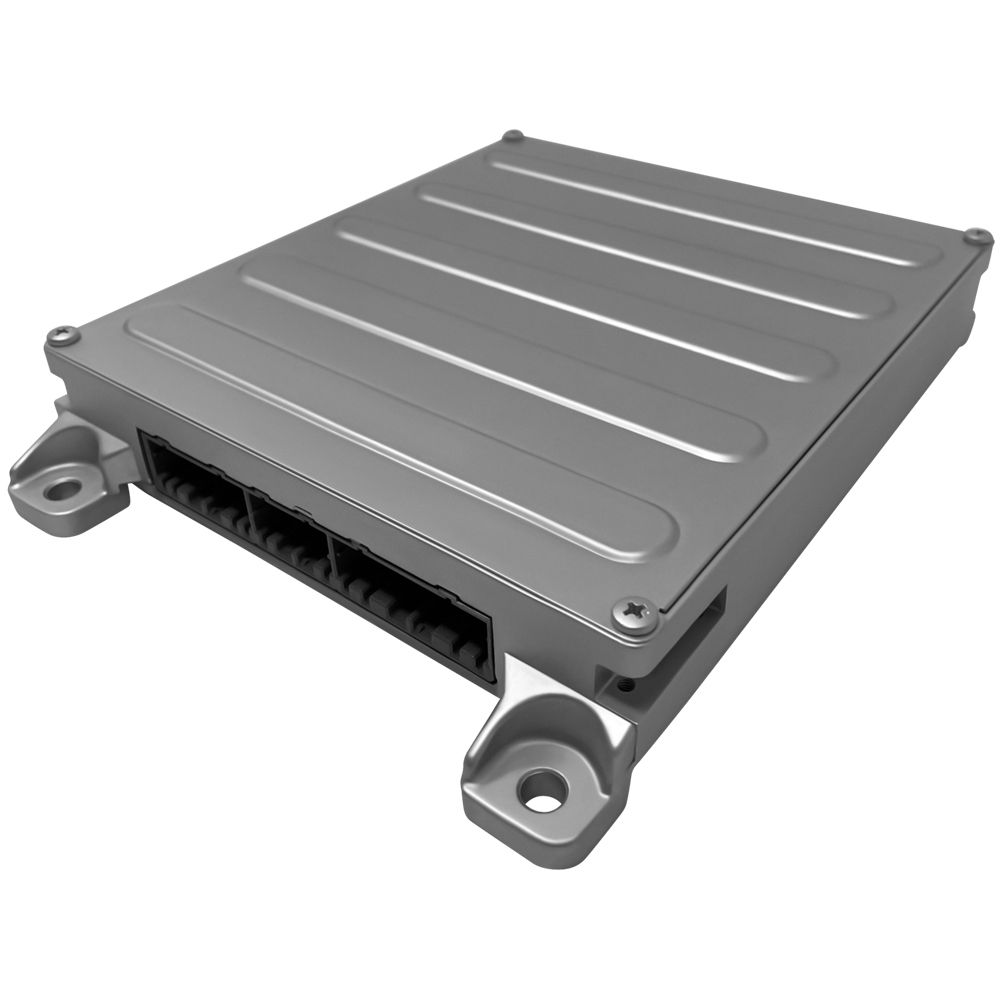
Flagship One stocks a refurbished, VIN-programmed PCM for the 1992 Honda Accord with a lifetime warranty, free shipping and no core charge. The full Honda Accord module lineup covers other engine configurations as well.
Maintaining the 1992 Honda Accord requires attention to its electronic systems. Understanding the module role helps you manage repairs effectively. Contact Flagship One for compatible replacement options. Your vehicle will return to smooth operation quickly. Proper installation ensures longevity and performance. Trust experienced technicians for complex electrical work.