
Last updated on August 25th, 2026 at 02:41 pm
The powertrain control module in a 1990 Buick Regal manages engine timing, fuel delivery, and emissions functions. A failure often results from electrical stress or water intrusion, leading to loss of engine control and driveability issues.
When a 1990 Buick Regal begins to hesitate, stall, or refuse to start, the powertrain control module is a common suspect. Understanding where this computer lives, how it interacts with the engine, and what steps are required after a swap can save you time and prevent costly mistakes. This guide walks you through the module’s purpose, its location in your vehicle, the caution needed when you work on it, and what to expect from a Flagship One replacement. By the end, you’ll know how to protect the PCM, what symptoms point to its failure, and how a VIN‑programmed unit simplifies the re‑calibration process.
1990 Buick Regal
OEM programmed ECM for your 1990 Buick Regal — plug & play, no dealer visit.
Free shipping · Lifetime warranty
In the 1990 Buick Regal, the powertrain control module acts as the brain for the gasoline engine, regulating ignition timing, fuel injection, and idle speed based on sensor input. It translates data from the crankshaft position sensor, throttle position sensor, and oxygen sensors into precise commands that keep the engine running smoothly and within emissions limits. Because the module controls critical functions, any interruption or corruption of its data can cause rough running, stalling, or a complete no‑start condition. The reliability of the PCM directly influences fuel economy and overall drivability, making it essential to maintain proper electrical connections and voltage levels. For owners seeking a replacement, replacement engine computers for the 1990 Buick Regal provide a direct swap without needing additional adapters.
The PCM in a 1990 Buick Regal is mounted inside the passenger compartment beneath the instrument panel, rather than in the engine bay. Access typically requires removal of the trim panel and disconnecting the module connector while the ignition switch is off. After the connector is unplugged, the mounting bolts are loosened, and the unit can be lifted out for replacement. Reinstallation follows the reverse order, ensuring the connector seats fully and the bolts are torqued to the factory specification. Because the module resides away from the engine, the labor time is generally limited to the removal of interior trim and connector handling.
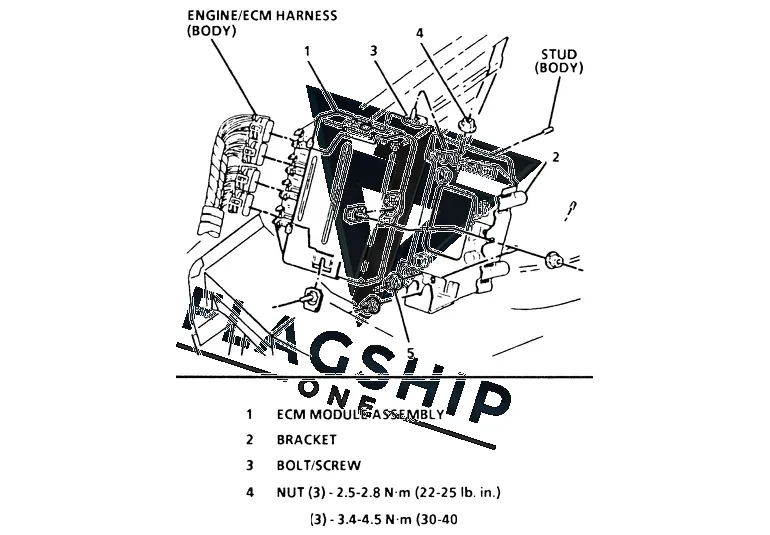
Work with the ignition off, and treat the module as static-sensitive: avoid touching the connector pins at any point.
Factory service procedures call for a post‑installation programming step to align the new PCM with the vehicle’s sensor calibrations and emissions strategy. Flagship One units arrive already matched to the vehicle identification number, so the required VIN‑programming is completed at the factory. This means the installer can focus on the physical replacement, and the a VIN-programmed replacement unit eliminates the need for on‑site re‑flash or special tools.
A failing PCM in a 1990 Buick Regal often reveals itself through a range of drivability issues. You may notice the engine cranking but not starting, intermittent stalling at idle, rough acceleration, or a sudden loss of power while driving. In some cases, the check engine light illuminates, and the vehicle may report generic fault codes related to engine control. Communication with a scan tool can become erratic, making diagnostics difficult. These symptoms typically point to the module’s inability to process sensor data or to output correct commands to the fuel and ignition systems.
Yes, the module is accessible under the dash and can be swapped with basic hand tools, but you must ensure the ignition is off and follow the torque specifications.
Flagship One units arrive VIN‑programmed, so no on‑site programming is required after installation.
Typical signs include a no‑start condition, erratic idle, stalling, and a persistent check engine light.
Jump‑starting can expose the PCM to voltage spikes; it is best to resolve the underlying issue before attempting a jump‑start.
Periodic visual checks during routine service are advisable to ensure the connector remains clean and securely seated.
When the PCM in your 1990 Buick Regal needs attention, you can choose a brand‑new factory unit or a refurbished replacement that meets the same specifications. Both options restore the engine’s control functions, but a Flagship One refurbished unit arrives pre‑programmed to match your VIN, simplifying the installation process and reducing downtime.
Flagship One stocks a refurbished, VIN-programmed ECM for the 1990 Buick Regal with a lifetime warranty, free shipping and no core charge. The full Buick Regal module lineup covers other engine configurations as well.
The powertrain control module is essential to the reliable operation of your 1990 Buick Regal. Whether you opt for a new or refurbished unit, proper handling and awareness of the post‑install requirements will keep your vehicle running smoothly. Consider a Flagship One replacement to benefit from factory‑level programming without extra steps.