
Last updated on August 25th, 2026 at 02:41 pm
The engine control module (ECM) in a 1990 Buick LeSabre 3.8L is the computer that manages fuel delivery, ignition timing, and emission controls. When it malfunctions, the engine may crank without starting, stall unexpectedly, or run poorly, often without warning.
When a 1990 Buick LeSabre with the 3.8L engine begins to exhibit hard starting, sudden stalling, or a complete no-crank situation, the engine control module (ECM) often becomes a prime suspect. This computer is the brain behind fuel metering, spark timing, and idle control, and its failure can mimic a host of mechanical or sensor problems. You may have already checked the battery, alternator, and ignition components without finding a clear cause. The ECM itself can degrade over time due to heat, vibration, or voltage spikes, leading to intermittent faults that are difficult to trace. Understanding how to locate, test, and replace this module can save you from unnecessary parts swapping and get your LeSabre back on the road. This guide explains the ECM’s role, its exact location in your vehicle, the critical safety precautions to follow during service, and what to expect from a replacement unit. You will also learn about common failure symptoms and practical steps to protect the new module from premature failure. By the end, you will have a clear, professional-level understanding of the ECM replacement process for your 1990 Buick LeSabre.
1990 Buick LeSabre 3.8L
OEM programmed ECM for your 1990 Buick LeSabre 3.8L — plug & play, no dealer visit.
Free shipping · Lifetime warranty
The engine control module in a 1990 Buick LeSabre 3.8L is a dedicated computer that continuously reads data from sensors such as the crankshaft position sensor, throttle position sensor, and oxygen sensor. It uses this information to calculate the precise amount of fuel to inject and the exact moment to fire each spark plug. The ECM also manages the idle air control valve to maintain a steady idle speed and controls the evaporative emission purge solenoid. Without a functioning ECM, the engine cannot run because the fuel injectors and ignition system rely on its commands. Over time, internal solder joints can crack, capacitors can leak, or the circuit board can suffer from moisture intrusion, leading to intermittent or complete failure. When the ECM fails, you may experience a no-start condition, stalling after the engine warms up, or a sudden loss of power while driving. Because the module is specific to the 1990 LeSabre’s 3.8L engine calibration, a generic or incorrectly programmed unit will not work. For a reliable repair, many technicians and owners turn to replacement ECMs for the Buick LeSabre that are pre-flashed with the correct VIN and calibration data, ensuring a plug-and-play installation.
In the 1990 Buick LeSabre, the engine control module is located in the engine compartment, positioned in front of the right-side shock tower and directly above the EVAP canister. This underhood placement makes the module relatively accessible, though you will need to remove any covers or brackets that secure it. For other model years within the 1987–1995 generation, the module may be found behind the right side of the instrument panel, but the 1990 model uses the engine-compartment location. Before beginning any work, turn the ignition switch to the OFF position and disconnect the negative battery cable. This step is not just a safety recommendation; it is essential to prevent permanent damage to the ECM. Once the battery is disconnected, you can unplug the wiring harness connectors from the module, remove the mounting fasteners, and lift the unit out. Installation is the reverse, but you must ensure the ignition remains off until all connections are secure. There are no special torque specifications for the mounting bolts; simply tighten them snugly. After the replacement module is in place and the battery is reconnected, you can start the engine and verify proper operation.
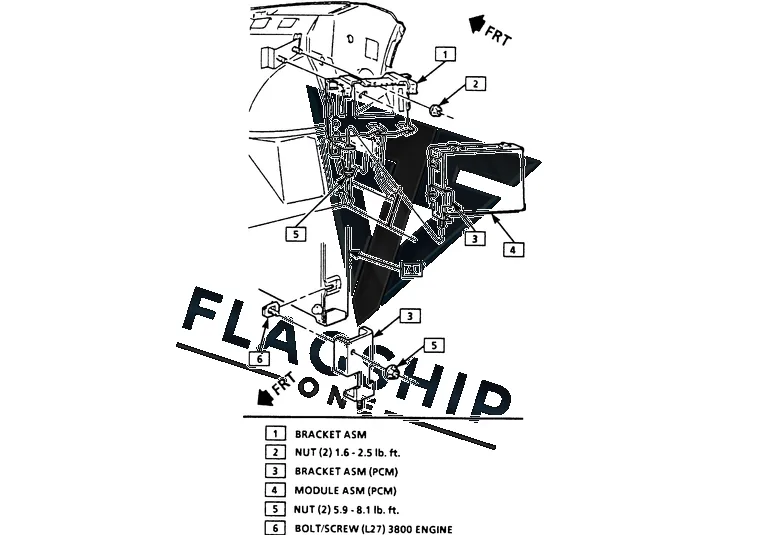
Work with the ignition off, and treat the module as static-sensitive: avoid touching the connector pins at any point.
After installing a new engine control module in a 1990 Buick LeSabre, the factory procedure typically requires a crankshaft position sensor relearn and, in some cases, a security system relearn to synchronize the module with the vehicle. These steps demand a professional-grade scan tool and a specific sequence of engine operations. However, when you obtain a module from Flagship One, the unit arrives already programmed with your vehicle’s VIN and calibration data. This means the relearn procedures are often unnecessary, and the module is ready to start the engine immediately after installation. You simply install a pre-programmed ECM from Flagship One, reconnect the battery, and turn the key. The module will communicate with the existing sensors and actuators without requiring a trip to the dealer for programming. This plug-and-play approach saves both time and the expense of specialized diagnostic equipment, making it a practical solution for DIY repairs and independent shops alike.
A failing ECM in a 1990 Buick LeSabre 3.8L can produce a range of symptoms that are often mistaken for other component failures. The most common sign is a no-start condition where the engine cranks but does not fire, because the ECM is not triggering the fuel injectors or ignition system. Intermittent stalling, especially after the engine reaches operating temperature, is another frequent complaint, as heat can cause internal circuit failures to manifest. You may also notice a rough or unstable idle, surging at highway speeds, or a sudden loss of power under acceleration. In some cases, the check engine light may illuminate, but on this pre-OBD-II vehicle, the light does not always come on even when the ECM is faulty. A dead scan-tool communication line—where a diagnostic scanner cannot connect to the module—is a strong indicator of ECM failure. Additionally, you might experience hard starting when the engine is hot, or the engine may run excessively rich or lean, leading to black smoke from the exhaust or a strong fuel smell. Because the ECM controls the fuel pump relay, a no-start condition could also be caused by the module failing to ground the relay circuit. These symptoms can be intermittent, making diagnosis challenging, but if you have ruled out the usual suspects like the ignition module, crankshaft sensor, and fuel pump, the ECM becomes a likely culprit.
Common signs include a crank-no-start condition, intermittent stalling, and a lack of communication with a scan tool. If you have verified that the ignition system, fuel pump, and main sensors are working, the ECM is a likely suspect. A professional can also check for internal faults by testing the module’s power and ground circuits.
A used or remanufactured ECM from a parts store typically requires programming with the vehicle’s VIN and calibration data. However, a unit from Flagship One arrives pre-programmed, so you can install it and start the engine without additional steps.
It is in the engine compartment, mounted in front of the right-side shock tower and above the EVAP canister. You will need to remove a plastic cover or bracket to access the module and its wiring connectors.
Yes, because the ECM controls the torque converter clutch and shares data with the transmission. A failing module can cause harsh shifts, no lockup, or the transmission to stay in limp mode.
Always turn the ignition switch off before disconnecting the battery or unplugging the module. Failing to do so can cause a voltage surge that permanently damages the new ECM.
When your 1990 Buick LeSabre needs a new engine control module, you have a few paths. A dealership can supply and program a factory unit, but the cost is often high. Local rebuilders may offer a repair service, though turnaround time can leave you without a car for days. A pre-programmed, plug-and-play replacement from Flagship One provides a middle ground: a thoroughly tested module that arrives ready to install, with your VIN already loaded. This approach eliminates the programming hurdle and gets your LeSabre running again quickly, without sacrificing reliability.
Flagship One stocks a refurbished, VIN-programmed ECM for the 1990 Buick LeSabre with a lifetime warranty, free shipping and no core charge. The full Buick LeSabre module lineup covers other engine configurations as well.
The engine control module is a critical component in your 1990 Buick LeSabre 3.8L, and when it fails, the symptoms can be frustrating and misleading. By knowing its location, following the proper safety precautions, and choosing a VIN-programmed replacement, you can complete the repair with confidence. A reliable ECM restores smooth performance and dependable starting, keeping your LeSabre on the road for years to come.