
Last updated on August 25th, 2026 at 12:00 pm
The engine computer in a 2010 Toyota Tacoma PreRunner manages fuel delivery and ignition timing. This electronic module processes sensor data to optimize performance. Internal hardware failures or corrupted software often cause stalling, poor shifting, or a complete failure for the engine to start.
The 2010 Toyota Tacoma PreRunner relies on a complex network of sensors and actuators to maintain peak efficiency and drivability. At the center of this system is the engine control module, which acts as the brain for the vehicle. When this component begins to fail, you may notice erratic behavior that ranges from minor shifting hesitations to a total loss of engine power. For many owners, these symptoms are frustrating because they often mimic mechanical failures, leading to unnecessary part replacements. Understanding the role of the electronic control unit helps in diagnosing whether the problem is a physical engine component or a digital processing error. By examining the specific labor requirements and known service bulletins for this vehicle, you can determine the best path forward for a repair. This guide provides a technical overview of the PCM and ECM functions, the labor involved in their replacement, and how modern programming solutions can simplify the restoration of your vehicle to factory specifications. By focusing on the intersection of hardware and software, you can better understand how the 2.7L engine interacts with its digital controllers.
The engine control module in your 2010 Toyota Tacoma PreRunner is a sophisticated microprocessor designed to monitor every aspect of the combustion process. It constantly calculates the ideal air-fuel mixture and spark timing based on inputs from the mass airflow sensor, oxygen sensors, and the crankshaft position sensor. This real-time processing ensures that the 2.7L engine operates efficiently across various load conditions while minimizing emissions. Beyond the engine, the module often manages transmission shift points to ensure a smooth transition between gears. When searching for replacement engine computers for the Tacoma, it is important to recognize that these modules are not merely passive parts but active controllers. If the internal circuitry degrades or the memory becomes corrupted, the vehicle may enter a limp mode or fail to recognize critical engine parameters. This can lead to a significant drop in fuel economy or an inability to maintain a steady idle. Because the module is integrated into the vehicle’s security and emissions systems, a failure often manifests as a series of seemingly unrelated problems. The precision of this computer allows the vehicle to adapt to wear over time, but once the hardware fails, the only viable solution is a full replacement of the unit to restore the original factory logic and operational stability.
2010 Toyota Tacoma PreRunner
OEM programmed ECM for your 2010 Toyota Tacoma PreRunner — plug & play, no dealer visit.
Free shipping · Lifetime warranty
Replacing the control module in a 2010 Toyota Tacoma PreRunner involves accessing the electronic unit typically located within the engine bay or interior cabin. Based on factory labor guides, the process of removing and replacing the Engine Control Module is estimated at 0.5 hours. If the vehicle requires the replacement of the Powertrain Control Module, the book time for removal and installation is 0.7 hours. These figures represent the physical labor of disconnecting wiring harnesses and unmounting the hardware. Once a new unit is in place, additional time may be required for system synchronization. A standard Engine Control Module Reset is listed at 0.3 hours, while the process for an Engine Control Module Relearn is estimated at 0.5 hours. These steps ensure that the new hardware communicates correctly with the rest of the vehicle’s electrical architecture before the truck is returned to service.
| Operation | Configuration | Book Time |
|---|---|---|
| Engine Control Module Relearn | All configurations | 0.5 hr |
| Engine Control Module R&R | All configurations | 0.5 hr |
| Engine Control Module Reset | All configurations | 0.3 hr |
| Powertrain Control Module R&R | All configurations | 0.7 hr |
| Powertrain Control Module Relearn | All configurations | 0.5 hr |
After installing a new module, the factory process typically requires a series of calibration steps to link the hardware to the specific vehicle. This often involves using a specialized tool to perform an Engine Control Module Relearn, which takes about 0.5 hours, or a Powertrain Control Module Relearn, also estimated at 0.5 hours. These steps are critical because the computer must be synced with the vehicle identification number to function. However, when you choose a VIN-programmed replacement unit, these labor-intensive steps are already completed before the part reaches you. Flagship One provides modules that are pre-configured to your specific vehicle’s requirements. This eliminates the need for dealership-level flash tools or extended shop time for reprogramming. By receiving a unit that is already programmed, you can avoid the complexities of the factory flash procedure and move directly to testing the vehicle’s performance.
Identifying a failing engine computer in a 2010 Toyota Tacoma PreRunner can be challenging because the symptoms often overlap with other mechanical issues. One of the most common indicators is a sudden no-start condition, where the engine cranks but will not fire because the module is not sending the necessary signal to the fuel injectors or ignition coils. You may also experience intermittent stalling or an erratic idle that occurs without any obvious vacuum leaks or sensor failures. Shifting issues are another hallmark of module degradation; this may manifest as harsh gear transitions or a failure to upshift at the correct RPM. In some cases, the vehicle may exhibit a dead scan-tool communication, where a technician cannot establish a connection with the ECU, indicating an internal processor failure. Misfire codes may appear across multiple cylinders simultaneously, even when the spark plugs and coils are in good condition. Because the module manages the timing of the 2.7L engine, any internal corruption can lead to a loss of synchronization between the crankshaft and camshaft, causing the vehicle to run poorly or not at all. These digital failures often occur without warning, leaving the driver with a vehicle that is unreliable or completely immobile.
Toyota has released several service bulletins regarding the engine control modules for the 2010 Tacoma. Bulletins T-SB-0393-09 Rev1 and T-TCI-3343 specifically address ECM calibration updates intended to improve shifting performance and smoothness, with T-TCI-3343 focusing on vehicles in Canada. Additionally, T-SB-0064-10 outlines the official Techstream ECU flash reprogramming procedure. These bulletins indicate that software updates are often required to resolve drivability concerns and ensure the transmission operates according to factory standards.
| Bulletin | Subject | What It Addresses |
|---|---|---|
| T-TCI-3343 | ’10 Tacoma: ECM Calibration: Enhancement to Shifting Performance and Smoothness (Canada) | — |
| T-SB-0393-09 Rev1 | T-SB-0393-09 Rev1: ’10 Tacoma: ECM Calibration: Enhancement to Shifting Performance & Smoothnes | — |
| T-SB-0064-10 | 01-11 Applicable Toyota Models: Techstream ECU Flash Reprogramming Procedure | — |
Yes, the module manages transmission shift points. A failure in the calibration or hardware may lead to rough or inconsistent shifting.
The book time for the removal and replacement of the Powertrain Control Module is 0.7 hours.
Typically, the factory requires a relearn process, which is estimated at 0.5 hours for both the ECM and PCM.
This service bulletin provides the technical procedure for flashing and reprogramming the ECU using the Techstream system.
If the no-start is caused by a failure in the module’s ability to trigger fuel or spark, a replacement unit may resolve the issue.
When deciding between a refurbished unit and a new replacement, consider the long-term reliability of your 2010 Toyota Tacoma PreRunner. While some may opt for budget-friendly refurbished options, a precision-programmed replacement ensures that the 2.7L engine receives the exact calibration it needs. Evaluating the cost of labor against the benefit of a plug-and-play solution can help you determine the most efficient way to get your truck back on the road.
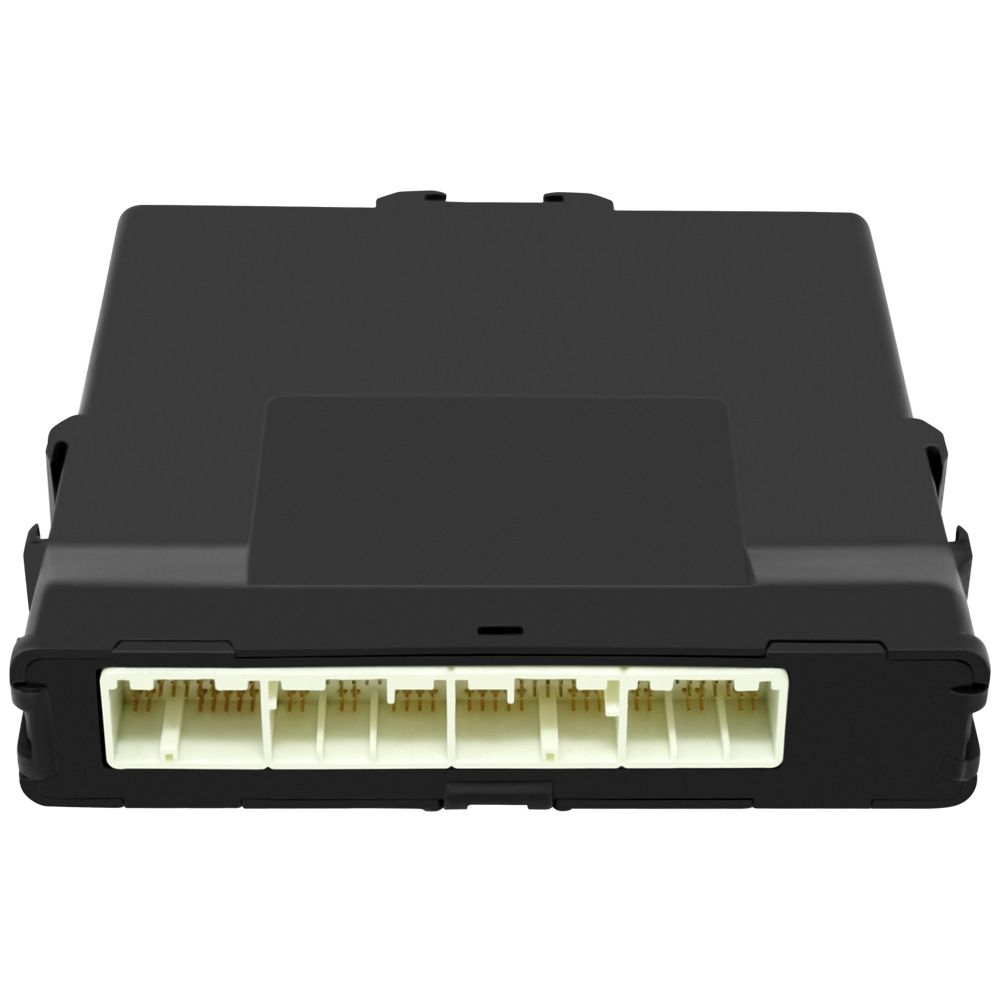
Flagship One stocks a refurbished, VIN-programmed PCM for the 2010 Toyota Tacoma PreRunner with a lifetime warranty, free shipping and no core charge. The full Toyota Tacoma PreRunner module lineup covers other engine configurations as well.
Maintaining the electronic integrity of your 2010 Toyota Tacoma PreRunner is essential for preserving its longevity and performance. From addressing shifting issues via TSBs to replacing a failed PCM, the right approach ensures your vehicle remains dependable. If you are experiencing engine or transmission irregularities, a professional diagnostic check is the first step toward a permanent solution.