
Last updated on August 25th, 2026 at 12:03 pm
The engine control module (ECM) in the 2004 Toyota MR2 Spyder manages fuel injection, ignition timing, and emissions. When it fails, you may experience no-start, stalling, or misfire codes. Internal trouble codes such as P0604, P0606, P0607, and P0657 are documented for this vehicle.
If your 2004 Toyota MR2 Spyder is experiencing drivability problems such as intermittent stalling, a no-start condition, or warning lights on the dash, the engine control module (ECM) could be the culprit. This module is the brain of the engine management system, controlling fuel delivery, ignition timing, and emissions. Understanding its role and knowing what to do when it fails can save you time and money. In this guide, you will learn where the ECM is located, what symptoms point to a failing module, how replacement is performed, and what programming steps are required. We also cover factory service bulletins and internal trouble codes specific to this vehicle. Whether you plan to repair or replace the module, this information will help you make an informed decision.
The engine control module (ECM) in the 2004 Toyota MR2 Spyder is a dedicated computer that interprets sensor data and adjusts engine parameters in real time. It controls fuel injector pulse width, ignition coil firing, idle speed, and variable valve timing. The module also monitors emissions systems and stores diagnostic trouble codes when faults occur. For this vehicle, the ECM is a critical component because the MR2 Spyder’s 1.8L engine relies on precise electronic management for performance and fuel economy. When searching for replacement engine computers for the MR2 Spyder, you need a unit that matches the original specifications. A failed ECM can cause a range of issues from poor fuel economy to complete engine shutdown. Understanding what the module does helps you diagnose problems accurately and choose the right replacement.
2004 Toyota MR2 Spyder
OEM programmed replacements — plug & play, no dealer visit.
Find yours by year, make & model →
Free shipping · Lifetime warranty
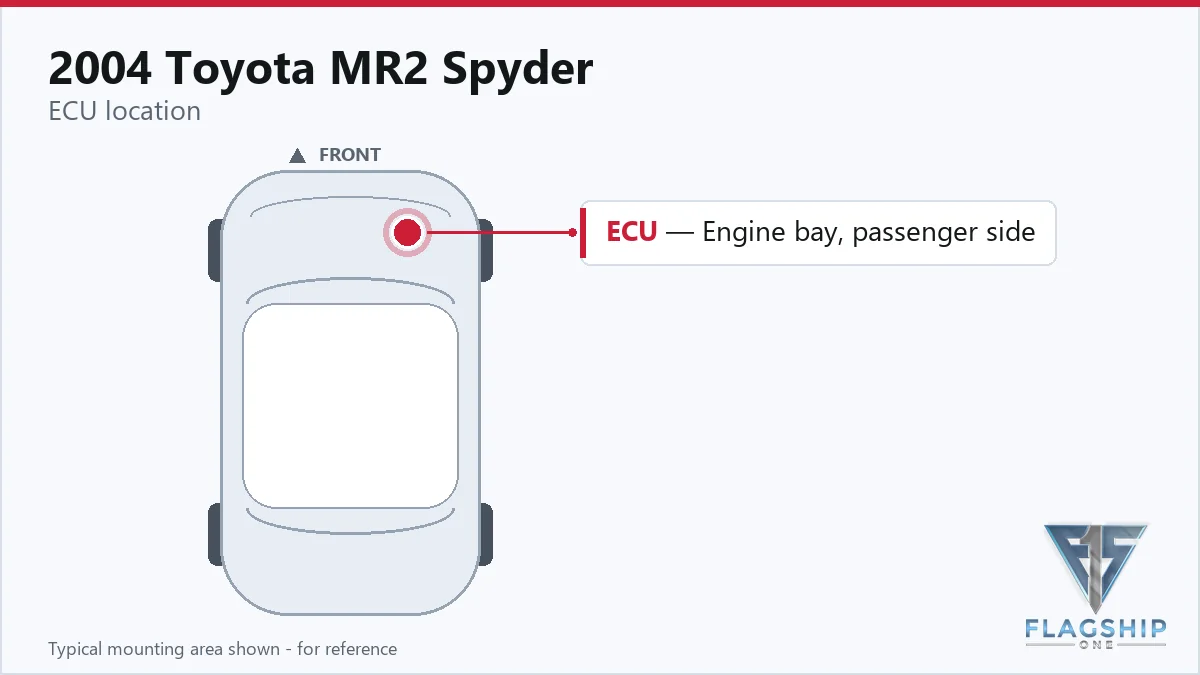
According to the factory wiring guide, the engine ECU is located in the body of the 2004 Toyota MR2 Spyder. Replacement of the engine control module (ECM) or powertrain control module (PCM) carries a book labor time of 1.8 hours. After installing the new module, a relearn procedure is required, which adds 0.5 hours of labor. The relearn process typically involves using a scan tool to reset adaptive values and allow the module to synchronize with the engine. Access to the module may require removing interior trim panels or other components depending on the exact mounting location. It is important to disconnect the battery before handling the module to avoid electrical damage. Always follow the factory service manual for proper removal and installation steps.
| Operation | Configuration | Book Time |
|---|---|---|
| Engine Control Module Relearn | All configurations | 0.5 hr |
| Engine Control Module R&R | All configurations | 1.8 hr |
| Powertrain Control Module R&R | All configurations | 1.8 hr |
| Powertrain Control Module Relearn | All configurations | 0.5 hr |
After replacing the ECM in the 2004 Toyota MR2 Spyder, the factory procedure requires a flash reprogramming using Toyota’s Techstream tool. Service bulletins SS002-01 and SS002-07 outline the correct process for updating the module’s software. This step ensures the module communicates properly with the vehicle’s systems. However, when you purchase a VIN-programmed replacement unit from Flagship One, the programming is already completed before shipping. That means the module is ready to install and start the engine without needing a dealer visit for the flash update. The relearn procedure may still be necessary to calibrate idle and throttle positions, but the major reprogramming step is eliminated.
A failing ECM in the 2004 Toyota MR2 Spyder often produces symptoms that mimic other problems. You may experience a no-start condition where the engine cranks but does not fire. Intermittent stalling while driving is another common sign. The check engine light may illuminate with codes such as internal control module fault P0604. Other symptoms include misfire codes that do not clear, poor acceleration, and erratic idle. In some cases, the scan tool may fail to communicate with the module entirely. Transmission shifting issues can also occur if the PCM portion is affected. Because these symptoms overlap with sensor or wiring faults, proper diagnosis is essential before replacing the module.
The following diagnostic trouble codes are documented as module-internal faults for the 2004 Toyota MR2 Spyder. These codes indicate issues within the ECM itself rather than external sensors or circuits.
Two factory service bulletins apply to the 2004 Toyota MR2 Spyder regarding the engine control module. Bulletin SS002-01 covers the ECU flash reprogramming process for 2001 and later applicable models and has been revised. Bulletin SS002-07 applies to 2001-2008 Toyota vehicles and details the Techstream ECU flash reprogramming procedure. Both bulletins emphasize that after module replacement, the ECM must be reprogrammed using Toyota’s diagnostic software to ensure proper operation. These bulletins do not address specific failure symptoms but provide the correct method for updating the module’s software.
| Bulletin | Subject | What It Addresses |
|---|---|---|
| SS002-01 | :SS002-01: 2001 & Later Applicable Models: ECU Flash Reprogramming Process (Revised) | — |
| SS002-07 | :SS002-07: 01-08 Applicable Toyota: Techstream ECU Flash Reprogramming Procedure | — |
Common signs include a no-start condition, stalling, and check engine light codes like P0604, P0606, P0607, or P0657. A scan tool that cannot communicate with the module is another strong indicator. However, always rule out wiring and sensor issues first.
Yes, if you have basic mechanical skills. The module is located in the body and replacement takes about 1.8 hours of labor. You will need to disconnect the battery, remove any trim panels, unplug the connectors, and install the new unit. After installation, a relearn procedure is recommended.
Factory procedure requires a flash reprogramming using Toyota Techstream, as outlined in bulletins SS002-01 and SS002-07. However, if you purchase a VIN-programmed unit from Flagship One, the flash update is already done, so you only need to perform the relearn procedure.
When your 2004 Toyota MR2 Spyder needs an ECM, you have two options: repair the original module or replace it with a refurbished unit. Repair may be possible for some internal faults, but replacement is often more reliable. Flagship One offers refurbished modules that are tested and VIN-programmed to match your vehicle, saving you the time and cost of a dealer flash. Consider the condition of your current module and your budget when deciding.
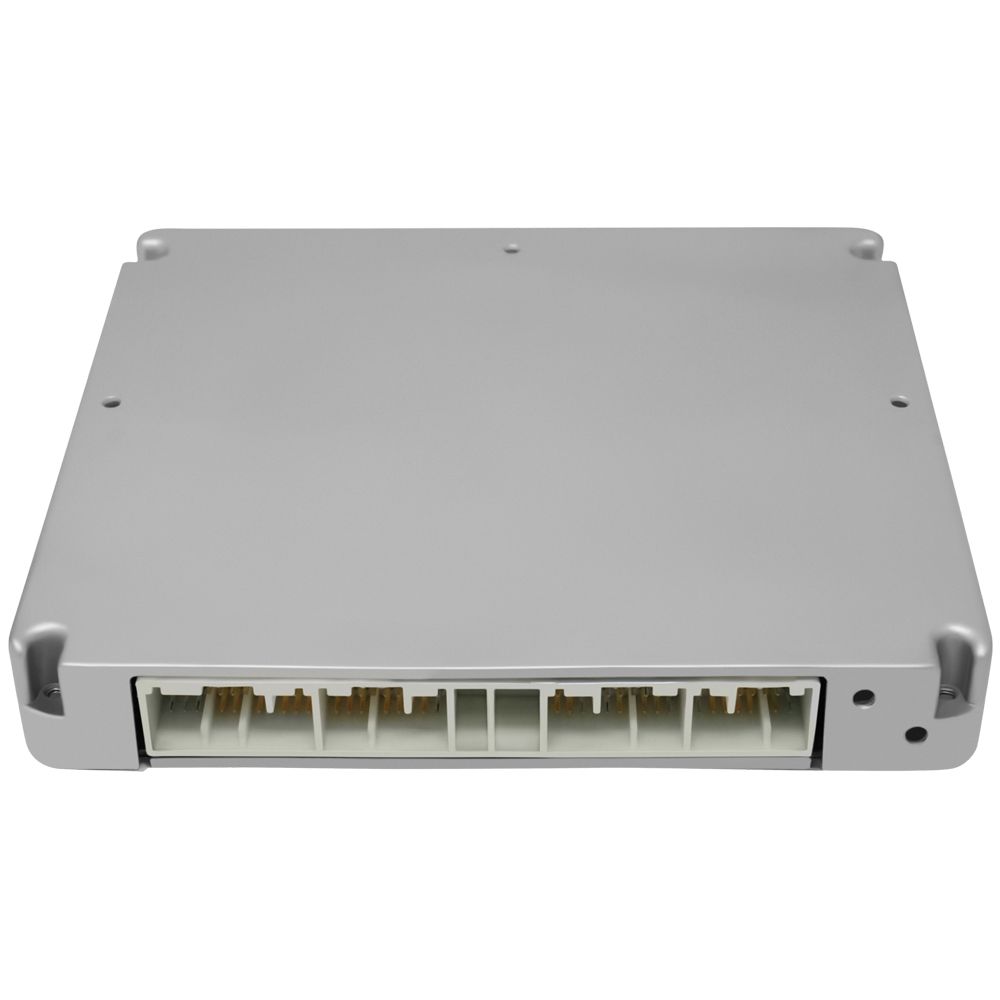
Flagship One stocks a refurbished, VIN-programmed PCM for the 2004 Toyota MR2 Spyder with a lifetime warranty, free shipping and no core charge. The full Toyota MR2 Spyder module lineup covers other engine configurations as well.
The engine control module in your 2004 Toyota MR2 Spyder is a vital component that requires proper diagnosis and handling. Whether you choose to repair or replace it, understanding the symptoms, location, and programming requirements will help you get your vehicle back on the road. Flagship One provides VIN-programmed units that simplify the replacement process.