
Last updated on August 25th, 2026 at 12:05 pm
The engine computer in a 2001 Toyota Sienna manages fuel delivery and ignition timing. When this module fails, the vehicle typically experiences erratic idling, poor fuel economy, or a total loss of engine power, as the ECU can no longer process sensor data accurately.
Addressing electrical failures in a 2001 Toyota Sienna often leads back to the central processing units that govern the powertrain. When your vehicle exhibits unpredictable performance, it is usually because the engine computer is failing to interpret signals from the various sensors distributed throughout the engine bay. This guide focuses on the Engine Control Module (ECM) and Powertrain Control Module (PCM), which act as the brain of the vehicle. Understanding how these components function and how to replace them helps you avoid unnecessary diagnostic costs and ensures the repair is performed correctly. By identifying the specific symptoms of a failing module and knowing the correct installation procedures, you can restore the drivability of your vehicle. You will learn where these components are housed and the typical time requirements for swapping them out. This process involves more than just physical installation, as the software interaction between the module and the vehicle’s sensors is critical for efficiency. The goal is to provide a clear technical path for returning your 2001 Toyota Sienna to its original operational standards without relying on guesswork.
2001 Toyota Sienna
OEM programmed ECM for your 2001 Toyota Sienna — plug & play, no dealer visit.
Free shipping · Lifetime warranty
The engine control module in your 2001 Toyota Sienna is a sophisticated microprocessor that monitors countless variables to optimize engine performance. It processes data from the oxygen sensors, mass airflow sensor, and crankshaft position sensor to determine the exact amount of fuel to inject and the precise moment to trigger the spark plugs. This continuous loop ensures that the 3.0L engine operates within emissions standards while providing the necessary torque for daily driving. If the internal circuitry of the module degrades, the engine may enter a limp mode or fail to start entirely. When searching for replacement engine computers for the 2001 Toyota Sienna, you will find that these units are designed to integrate seamlessly with the existing wiring harness. The module also manages the idle speed and adjusts for altitude or temperature changes, meaning a faulty unit often manifests as a rough idle or sudden stalling at stoplights. Because the PCM coordinates the interaction between the engine and the transmission, a failure here can lead to harsh shifts or an inability to engage specific gears. This level of integration makes the module the most critical electronic component in the vehicle, as it translates raw electrical signals into mechanical action. Without a functioning computer, the fuel pump may not prime and the ignition system will remain dormant.
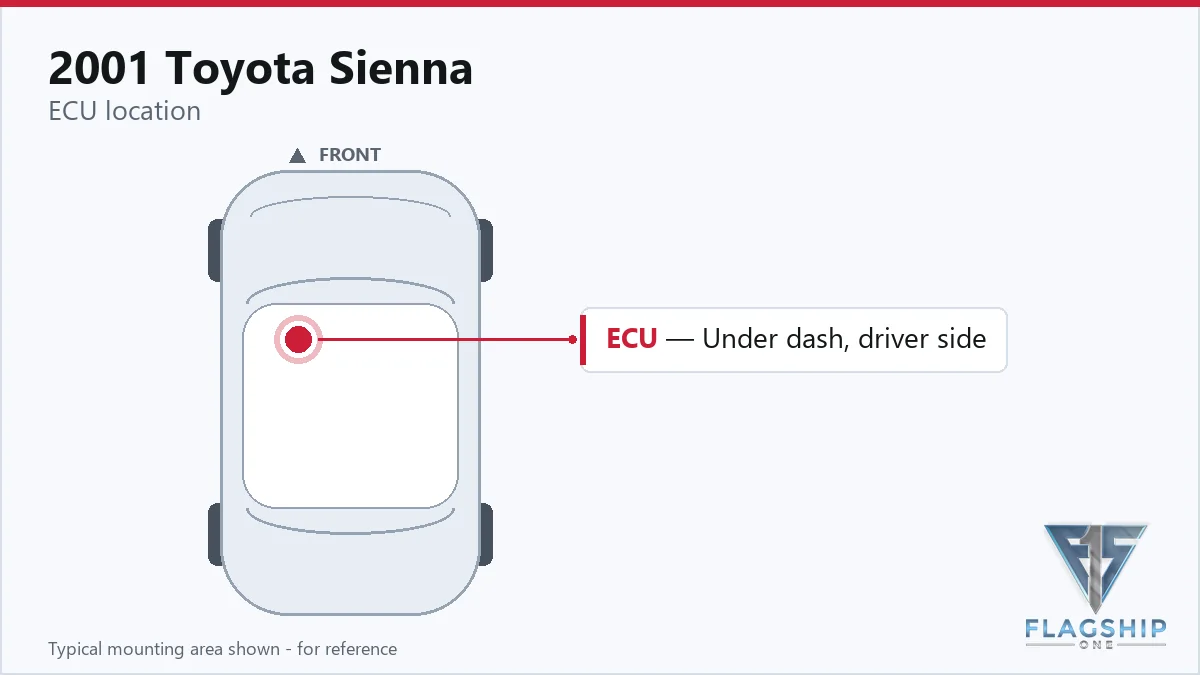
According to the factory wiring guide’s component grid, the engine ECU is situated inside the instrument panel of the 2001 Toyota Sienna. Accessing this area requires removing portions of the interior trim to reach the module. For those performing the work, the labor for the removal and replacement of the Engine Control Module is 0.6 hours. If you are dealing with the Powertrain Control Module, the removal and replacement process is estimated at 0.8 hours. Because the unit is located within the cabin rather than the engine bay, it is generally protected from direct moisture and extreme heat, though interior spills or electrical shorts can still cause failure. Once the old unit is removed and the new one is seated, the physical installation is complete. These book times provide a standard expectation for the duration of the physical swap, though actual time may vary based on the technician’s familiarity with the instrument panel layout.
| Operation | Configuration | Book Time |
|---|---|---|
| Engine Control Module Relearn | All configurations | 0.5 hr |
| Engine Control Module R&R | All configurations | 0.6 hr |
| Powertrain Control Module R&R | All configurations | 0.8 hr |
| Powertrain Control Module Relearn | All configurations | 0.5 hr |
After a new module is installed in a 2001 Toyota Sienna, the factory service procedure typically requires a relearn process to synchronize the computer with the vehicle’s specific engine parameters. The labor for an Engine Control Module relearn is 0.5 hours, and the Powertrain Control Module relearn also takes 0.5 hours. This step is essential to ensure the vehicle recognizes the new hardware and optimizes fuel trim. However, when you purchase a VIN-programmed replacement unit from Flagship One, these complex software steps are already completed. The module arrives with the correct vehicle identification information pre-loaded, which means the time-consuming factory programming and initial synchronization are handled before the part ever reaches your door. This allows you to bypass the dealership’s programming tools and move straight to the installation and testing phase. By eliminating the need for external programming equipment, you can significantly reduce the total downtime of your vehicle and avoid the additional costs associated with professional software flashing.
Identifying a failing engine computer in a 2001 Toyota Sienna often involves spotting patterns of erratic behavior that do not respond to traditional mechanical fixes. You may notice a complete no-start condition where the engine cranks but never fires because the ECU is not sending a signal to the ignition system. Stalling is another common sign; the vehicle may shut off unexpectedly while idling or during slow turns. In some cases, you might experience a sudden drop in fuel economy or an increase in emissions, as the module fails to correctly calculate the air-fuel ratio. Misfire codes may appear on your scan tool, but replacing spark plugs and coils often fails to solve the problem if the root cause is a faulty driver inside the PCM. You might also encounter a total loss of communication when attempting to use a scan tool, resulting in a “no communication” error that points directly to a dead module. Transmission issues, such as erratic shifting or a failure to lock the torque converter, can also stem from a PCM malfunction. Since these modules control so many systems, the symptoms can be broad, often mimicking sensor failures. It is typically recommended to verify the integrity of the wiring harness before concluding that the internal circuitry of the computer has failed.
The engine ECU is found within the instrument panel. This location protects it from engine bay heat.
The book time for removing and replacing the Powertrain Control Module is 0.8 hours.
Factory units require a relearn process taking 0.5 hours. Flagship One units come pre-programmed to skip this step.
Yes, a failing module may stop sending critical signals to the fuel and ignition systems.
The factory book time for an Engine Control Module relearn is 0.5 hours.
Deciding between a refurbished unit and a new replacement depends on your budget and long-term goals for your 2001 Toyota Sienna. While some choose budget-friendly options, a high-quality replacement ensures that the vehicle’s complex timing and fuel systems operate reliably. Selecting a unit that is already matched to your VIN simplifies the repair and removes the need for expensive dealership visits for programming.
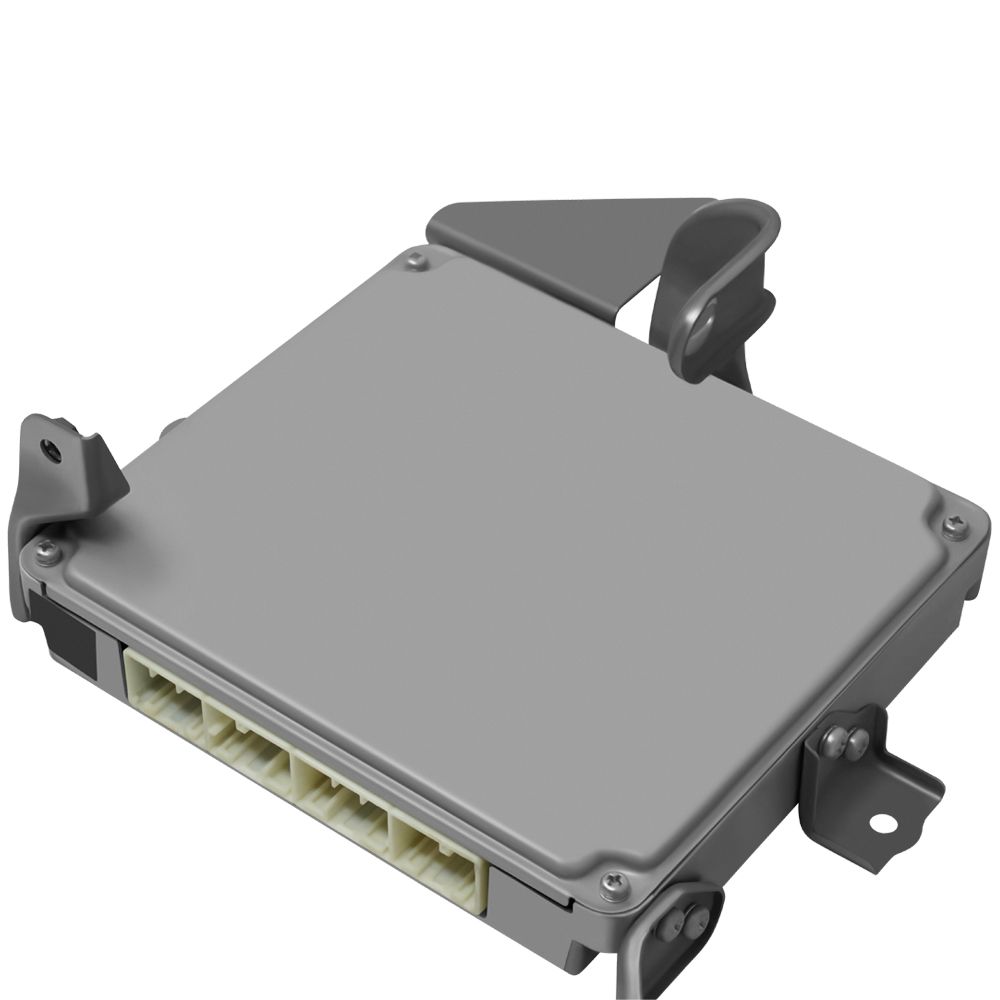
Flagship One stocks a refurbished, VIN-programmed PCM for the 2001 Toyota Sienna with a lifetime warranty, free shipping and no core charge. The full Toyota Sienna module lineup covers other engine configurations as well.
Restoring the engine management system in your 2001 Toyota Sienna is the most effective way to resolve persistent stalling and no-start issues. By focusing on the ECU and PCM, you can ensure the vehicle maintains its efficiency and reliability. If you are ready to resolve these electrical faults, explore the precision-programmed options available to get your vehicle back on the road.