
Last updated on August 25th, 2026 at 12:06 pm
The engine control module in the 1997 Toyota Camry 3.0L manages fuel delivery and ignition timing. When this computer malfunctions, it often causes hard starting, erratic idling, or sudden engine shutdowns, requiring replacement to restore proper vehicle operation.
When a 1997 Toyota Camry begins exhibiting drivability issues, the engine control module often emerges as a primary suspect. This critical computer dictates how the 3.0L engine operates, adjusting critical parameters to maintain smooth performance. Understanding how this component functions, where it resides, and what happens when it fails gives you an advantage when diagnosing problems. You will learn about the specific location of this unit, the typical labor times associated with swapping it out, and the necessary reprogramming steps that follow installation. Additionally, reviewing relevant technical service bulletins helps contextualize known factory issues. Whether you are troubleshooting a stubborn no-start condition or simply researching ahead of a repair, having accurate, specific details about your vehicle’s computer system ensures you can make informed service decisions without unnecessary guesswork.
In the 1997 Toyota Camry, the engine control module acts as the central brain for the 3.0L powertrain. It continuously processes data from various engine sensors to regulate fuel injector pulse width, ignition timing, and idle speed. When this unit operates correctly, your vehicle runs efficiently and passes emissions standards. However, internal circuit failures or software glitches can disrupt these commands, leading to poor performance or a disabled engine. Because this computer is integral to engine management, a malfunction typically prevents the car from starting or causes intermittent stalling. If you are dealing with such symptoms, exploring 1997 Toyota Camry ECMs can provide a reliable path to restoring function. Replacing a faulty unit ensures the engine receives accurate operational commands once again. Understanding the exact role of this module highlights why addressing failures promptly is crucial for maintaining the overall drivability and reliability of your vehicle.
1997 Toyota Camry 3.0L
OEM programmed ECM for your 1997 Toyota Camry 3.0L — plug & play, no dealer visit.
Free shipping · Lifetime warranty
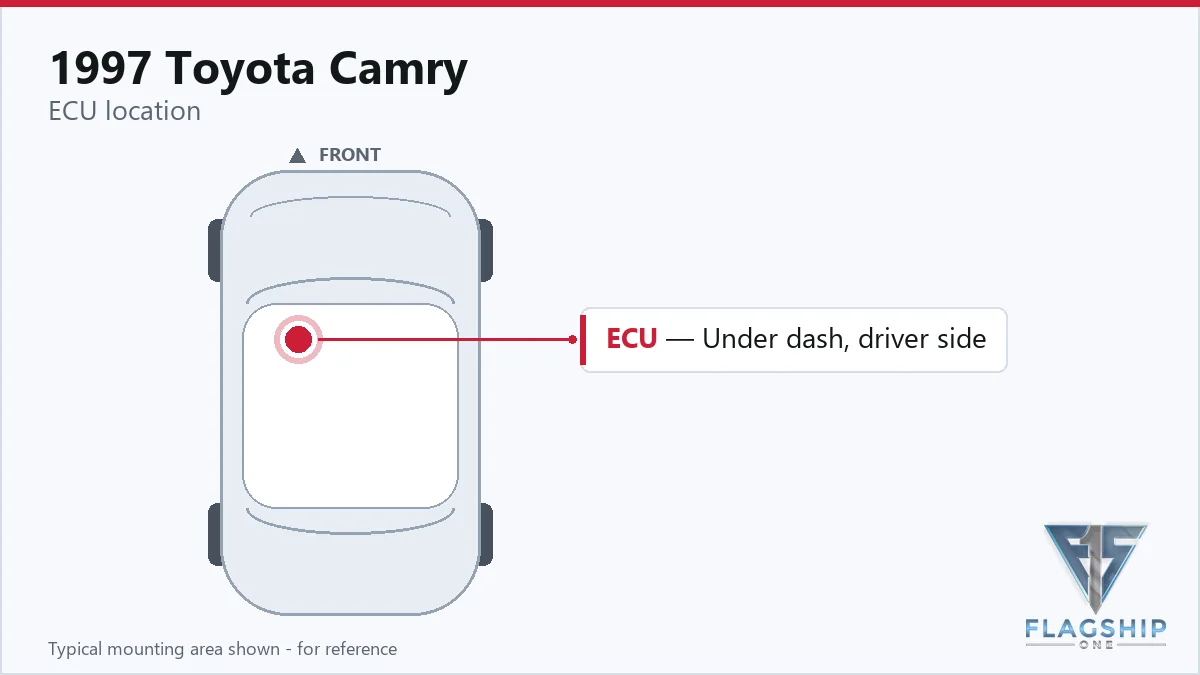
Per the manufacturer’s wiring documentation, the engine ECU is located within the instrument panel. Accessing it typically involves removing portions of the dashboard trim to reach the mounting bracket and electrical connectors. The specified book time for removing and installing the unit on a 3.0L engine is 0.5 hours. For reference, the powertrain control module removal and installation carries a time allowance of 0.6 hours. Once the hardware is swapped, completing the engine control module relearn procedure adds an additional 0.5 hours. A separate powertrain control module relearn also requires 0.5 hours. These factory time allowances reflect the standardized labor involved in physically exchanging the computer and performing the subsequent idle and fuel adaptations required to integrate the new hardware with your vehicle.
| Operation | Configuration | Book Time |
|---|---|---|
| Powertrain Control Module R&R | All configurations | 0.6 hr |
| Powertrain Control Module Relearn | All configurations | 0.5 hr |
| Engine Control Module Relearn | All configurations | 0.5 hr |
| Engine Control Module R&R | 2.2L | 0.5 hr |
| Engine Control Module R&R | 3.0L | 0.5 hr |
Following the physical installation of a new computer, the factory procedure mandates specific relearn routines to synchronize the hardware with your vehicle. For the 1997 Toyota Camry, the specified engine control module relearn requires 0.5 hours, while the powertrain control module relearn also demands 0.5 hours. These procedures are necessary so the vehicle recognizes the new module and adjusts idle parameters and fuel trim strategies appropriately. Without these steps, the engine may run poorly or fail to start. However, choosing a pre-programmed ECM replacement from Flagship One bypasses these extensive post-installation steps. Because these units arrive already flashed to your specific vehicle identification number, the relearn procedures are effectively completed prior to installation, allowing you to start the engine and drive immediately without additional diagnostic sequencing.
When the engine computer begins to fail in the 1997 Toyota Camry, several distinct symptoms often present themselves. A common indicator is a no-start condition, where the engine cranks but refuses to fire due to a lack of fuel or spark commands. Drivers may also experience sudden stalling while idling or driving, which creates unpredictable and unsafe situations. Misfire codes frequently appear because the module struggles to correctly time the ignition coils. Additionally, you might encounter dead scan-tool communication, meaning diagnostic equipment cannot establish a connection with the vehicle’s computer network. If your 3.0L Camry exhibits these issues, an internal processor fault may be to blame. Recognizing these warning signs early helps prevent being stranded and ensures accurate diagnosis before replacing other components unnecessarily.
Technical service bulletin EG009-97 outlines modifications to the ECM TAU fuel cut logic for certain models. The document applies to the 1996 Camry along with the 1996-1997 Celica featuring the 5S-FE engine. While the bulletin specifically highlights the 2.2L 5S-FE engine variant, it illustrates the manufacturer’s ongoing adjustments to engine computer programming. Owners of the 3.0L Camry should be aware of these logic updates, as they indicate how factory software revisions alter the way the computer manages fuel delivery during deceleration or specific operational modes.
| Bulletin | Subject | What It Addresses |
|---|---|---|
| EG009-97 | :EG009-97: 96 Camry & 96-97 Celica 5S-FE ECM TAU Fuel Cut Logic Changed | — |
Per the manufacturer’s wiring documentation, the engine ECU is positioned within the instrument panel. Accessing it requires removing dashboard components to reach the unit.
The specified book time for removing and installing the unit on the 3.0L engine is 0.5 hours. Additional time is necessary for the required relearn procedures.
This bulletin addresses changes to the ECM TAU fuel cut logic for the 1996 Camry and 1996-1997 Celica 5S-FE models, detailing how the manufacturer updated the engine management software.
Deciding between repairing a malfunctioning computer or opting for a refurbished replacement depends on the exact nature of the internal failure. For the 1997 Toyota Camry, a remanufactured unit often provides a more dependable solution than attempting to repair damaged circuitry. Choosing a replacement that is already programmed eliminates the need for dealership programming, getting your vehicle back on the road efficiently and reliably while avoiding additional diagnostic costs.
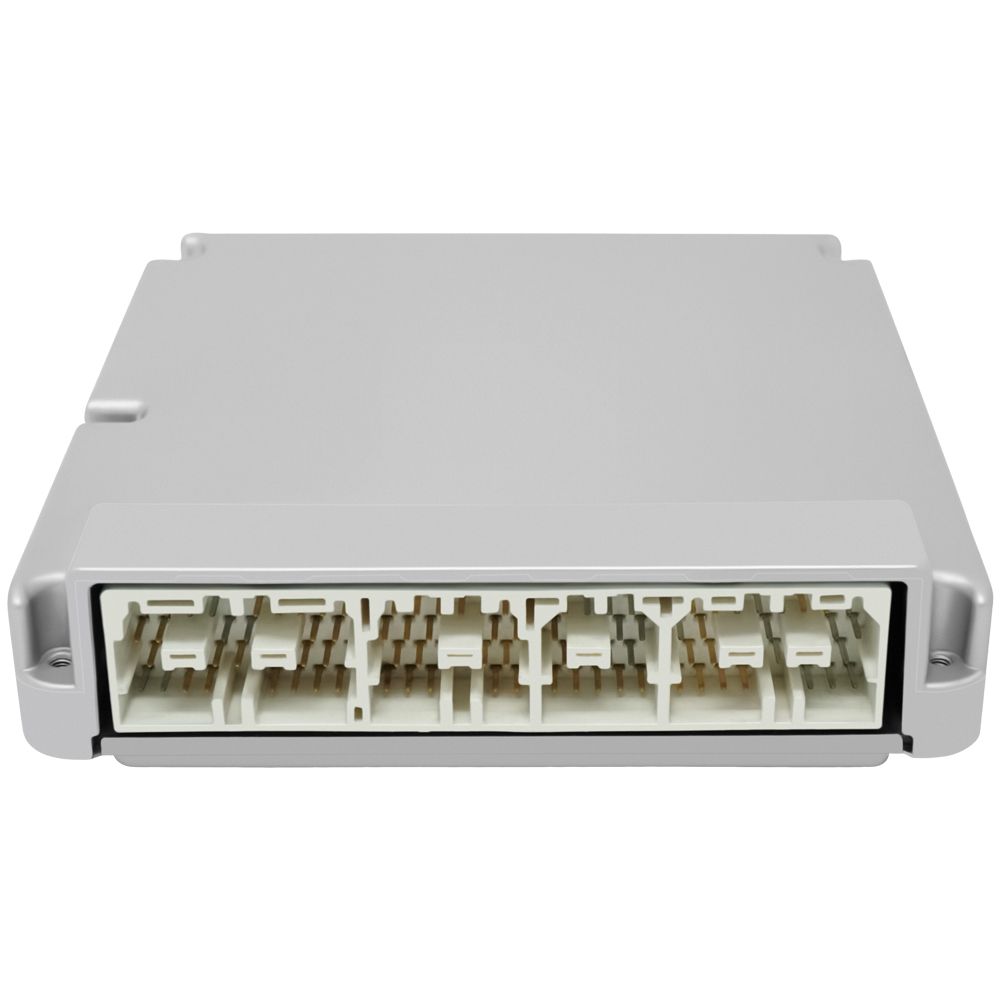
Flagship One stocks a refurbished, VIN-programmed PCM for the 1997 Toyota Camry with a lifetime warranty, free shipping and no core charge. The full Toyota Camry module lineup covers other engine configurations as well.
Addressing engine computer issues in your 1997 Toyota Camry promptly prevents further drivability complications and ensures reliable daily transportation. Understanding the precise location, factory labor times, and necessary programming steps guarantees a straightforward replacement process without unexpected delays. When you are ready to restore your vehicle’s performance, exploring quality replacement modules provides a practical and efficient path forward to get your engine running smoothly again.