
Last updated on August 25th, 2026 at 12:24 pm
In the 1995 Plymouth Voyager, the powertrain control module (PCM) and engine control module (ECM) are the same unit that manages fuel delivery, ignition timing, and transmission shifting. A failure typically disrupts engine start, causes rough idle, or leads to loss of communication with scan tools, requiring diagnostic attention.
When a 1995 Plymouth Voyager exhibits intermittent power loss or refuses to start, the PCM/ECM is a common suspect. Understanding what this computer does, where it lives, and what the factory expects after replacement helps you avoid unnecessary downtime. This guide walks you through the module’s role, the steps a technician follows, and how a Flagship One replacement can simplify the process.
The PCM/ECM in a 1995 Plymouth Voyager controls engine timing, fuel injection, and transmission shift logic, acting as the vehicle’s central command for powertrain operation. It constantly receives sensor data and adjusts parameters to keep the engine running smoothly, which is why a malfunction often results in no‑start conditions or erratic shifting. Proper function is essential for emissions compliance and drivability, and a faulty unit may require replacement or reprogramming. The module’s importance is underscored by the fact that replacement engine control modules for the Voyager are stocked by many parts distributors.
1995 Plymouth Voyager
OEM programmed ECM for your 1995 Plymouth Voyager — plug & play, no dealer visit.
Free shipping · Lifetime warranty
The PCM is positioned under the hood on the driver’s side inner fender panel, making it accessible without removing major components. Removal typically follows a 0.5‑hour labor entry, involving disconnecting the electrical connector, unbolting the mounting hardware, and extracting the unit. Installation mirrors the removal steps and also carries a 0.5‑hour labor entry. After the new module is in place, the service manual calls for a relearn procedure, also listed as a 0.5‑hour task, to synchronize the replacement with the vehicle’s existing sensors and transmission control.
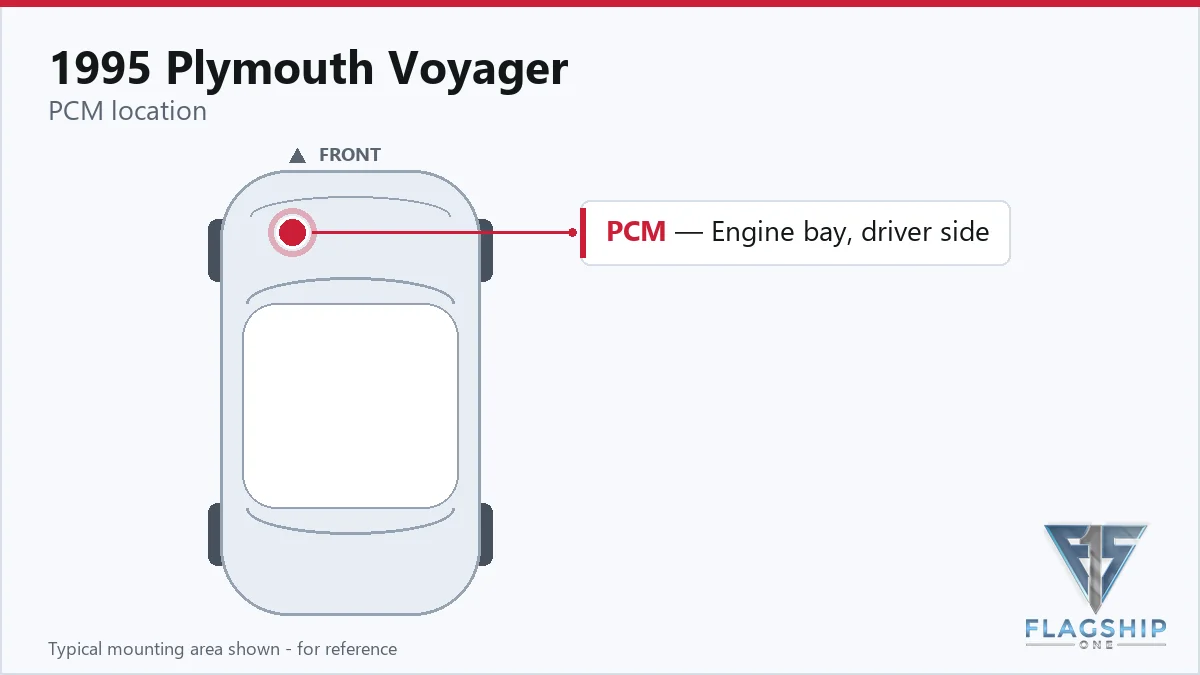
Work with the ignition off, and treat the module as static-sensitive: avoid touching the connector pins at any point.
| Operation | Configuration | Book Time |
|---|---|---|
| Engine Control Module Relearn | Grand Voyager | 0.5 hr |
| Engine Control Module Relearn | Voyager | 0.5 hr |
| Engine Control Module R&R | Grand Voyager | 0.5 hr |
| Engine Control Module R&R | Voyager | 0.5 hr |
| Powertrain Control Module R&R | Grand Voyager | 0.5 hr |
| Powertrain Control Module R&R | Voyager | 0.5 hr |
| Powertrain Control Module Relearn | Grand Voyager | 0.5 hr |
| Powertrain Control Module Relearn | Voyager | 0.5 hr |
Factory service requires a PCM/ECM relearn after any replacement, which involves using a dealer‑level scan tool to write the vehicle’s calibration data. Flagship One units arrive already calibrated to the specific VIN, so the technician can skip the programming step and move directly to the relearn. This simplifies the job and reduces the chance of errors. The process is completed with a a VIN-programmed replacement unit that matches the Voyager’s original specifications.
Typical signs of a failing PCM/ECM in the 1995 Plymouth Voyager include a complete no‑start condition, rough idle that may stall, irregular transmission shifts, and loss of communication when a scan tool is connected. Drivers may also notice intermittent loss of power or unexpected engine shutdowns, especially under load. These symptoms often point to the computer’s inability to process sensor inputs correctly, prompting a diagnostic check.
Service bulletin #18-037-05 describes a flash programming failure recovery method using the DRBIII® tool. This bulletin provides guidance for technicians who encounter programming issues during PCM replacement.
| Bulletin | Subject | What It Addresses |
|---|---|---|
| 18-037-05 | 18-037-05 Flash Programming Failure Recovery Using DRBIII® | — |
The unit is accessible, but proper removal, installation, and relearn procedures require specialized tools and a calibrated replacement. Professional installation helps ensure the vehicle runs correctly.
It synchronizes the new computer with the engine and transmission sensors, allowing the vehicle to operate with the correct fuel and shift strategies.
Flagship One provides a VIN‑specific unit that matches the factory specifications for each Voyager configuration.
When the PCM/ECM in a 1995 Plymouth Voyager needs attention, you can choose a brand‑new factory replacement or a refurbished unit that meets the original specifications. Both options require the same removal and relearn steps, but a Flagship One product arrives pre‑programmed, reducing shop time and potential errors. Weigh the cost, warranty, and availability to decide which path fits your repair plan.
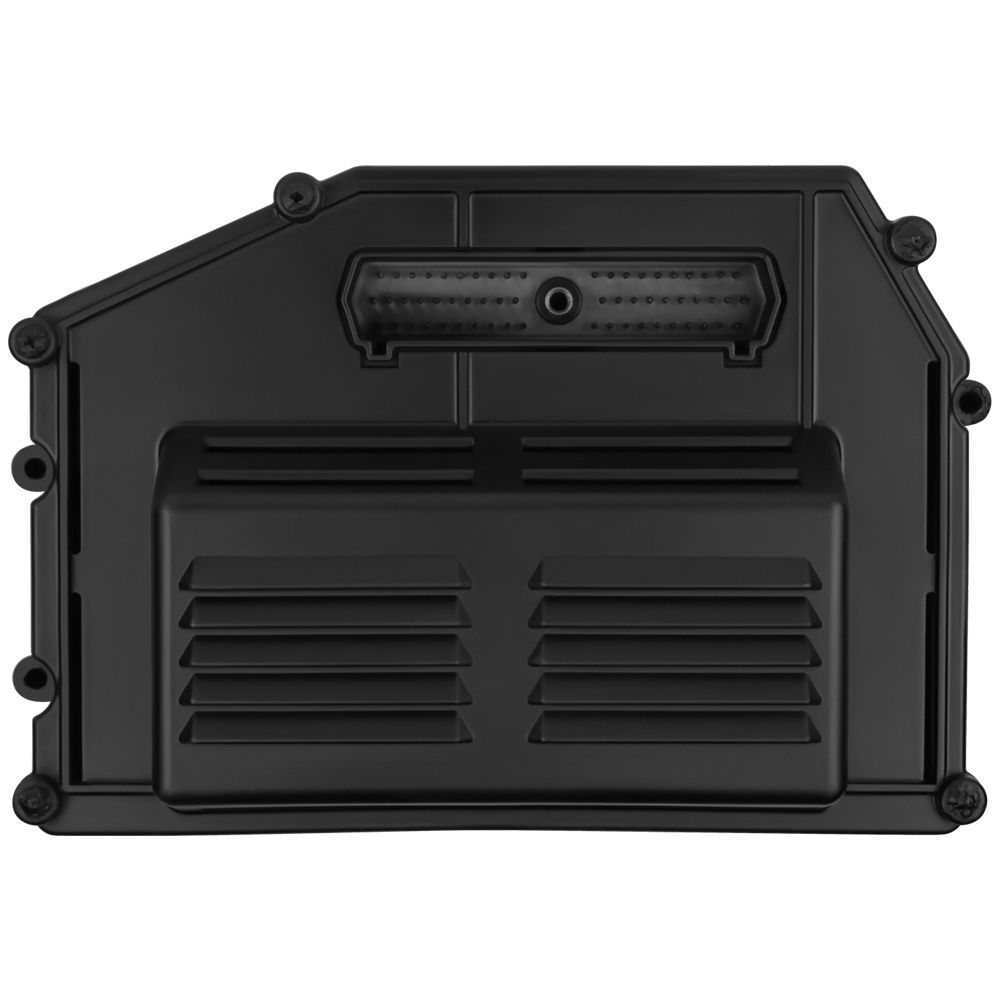
Flagship One stocks a refurbished, VIN-programmed PCM for the 1995 Plymouth Voyager with a lifetime warranty, free shipping and no core charge. The full Plymouth Voyager module lineup covers other engine configurations as well.
The PCM/ECM is vital to the reliable operation of your 1995 Plymouth Voyager. Whether you opt for a new or refurbished replacement, ensuring proper installation and relearn will keep the vehicle running smoothly. Contact a qualified technician to assess the best solution for your situation.