
Last updated on August 25th, 2026 at 12:25 pm
In the 1993 Saab 900, the engine control module manages fuel delivery, ignition timing, and sensor data processing. A failure typically results in no‑start conditions, rough idle, or loss of engine speed control, often accompanied by diagnostic trouble codes indicating communication loss with the module.
When a 1993 Saab 900 exhibits intermittent starting problems, sudden stalls, or an inability for a scan tool to communicate, the engine control module is a likely suspect. Understanding how this computer functions, where it is located, and what the factory expects after a replacement can save you time and prevent unnecessary repairs. This guide walks you through the module’s role in your Saab, the steps required to reach it, the programming obligations that follow a swap, and practical ways to keep the unit healthy. By the end, you will know what to look for, how a Flagship One replacement fits into the process, and how to protect the module from future issues.
1993 Saab 900
OEM programmed ECM for your 1993 Saab 900 — plug & play, no dealer visit.
Free shipping · Lifetime warranty
The engine control module in a 1993 Saab 900 serves as the central brain that interprets sensor inputs and commands fuel injectors, ignition coils, and emission controls. It continuously monitors engine speed, coolant temperature, and air‑flow data to calculate the optimal fuel‑air mixture and ignition timing. Because the Saab 900 predates OBD‑II, the module uses proprietary communication protocols, making accurate data handling essential for smooth operation. A malfunction can disrupt fuel delivery or ignition sequencing, leading to rough idle, stalling, or a complete no‑start condition. Access to the module is limited, requiring removal of interior panels, which is why many owners opt for professional service. Understanding its function helps you diagnose related symptoms and appreciate why proper replacement and programming are critical. replacement engine computers for the 1993 Saab 900 ensure that the new unit matches the vehicle’s original specifications.
The factory removal method for the 1993 Saab 900 routes to the control module by first extracting the glove box and then navigating behind the kick panel. This pathway places the module directly behind those interior components, meaning technicians must detach the glove box, remove any fasteners securing the kick panel, and then reach into the cavity to disconnect the module’s wiring harness. No additional torque specifications or labor hour figures were supplied, so the focus remains on the physical steps required to expose the unit. Once the old module is withdrawn, the replacement can be positioned in the same location, and the wiring harness reconnected before reassembling the interior panels.
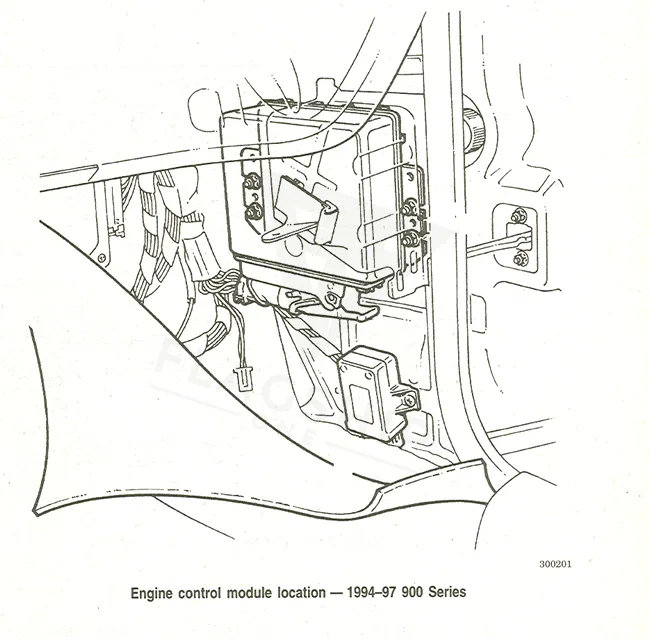
Work with the ignition off, and treat the module as static-sensitive: avoid touching the connector pins at any point.
After installing a new engine control module in a 1993 Saab 900, the factory service procedure calls for a post‑install programming sequence to align the unit with the vehicle’s VIN and calibration data. Flagship One units arrive pre‑loaded with the correct VIN and calibration parameters, so the required programming step is already completed at the factory. This eliminates the need for on‑site coding or special tools. a VIN‑programmed replacement unit thus streamlines the repair, allowing you to focus on reassembly and final verification.
When the engine control module in a 1993 Saab 900 begins to fail, owners often notice the engine refusing to start, intermittent stalling at idle, or a sudden loss of power during acceleration. Diagnostic trouble codes may appear, such as a communication fault that the scan tool cannot read, which is typical for this era of Saab. One specific fault that can surface is internal control module timing error, indicating the module’s internal clock is out of sync. Other signs include rough idle, erratic rev limiting, and the absence of any engine data on a diagnostic reader. These symptoms reflect the module’s loss of ability to manage fuel injection and ignition timing accurately.
Common indicators include a no‑start condition, frequent stalling, rough idle, and loss of communication with scan tools. You may also see diagnostic codes related to internal timing or communication errors.
The module is located behind the glove box and kick panel, requiring removal of interior trim. If you are comfortable with disassembly and reassembly of these components, a DIY replacement is possible, but professional assistance is recommended for proper handling.
Factory service requires a programming step after replacement, but Flagship One units arrive VIN‑programmed, so no additional tools or on‑site coding are needed.
Installation time varies based on experience, but the process involves removing the glove box, accessing the module behind the kick panel, and reconnecting the harness before reassembly.
A properly refurbished unit that has been VIN‑programmed can restore the vehicle’s original functionality, provided it meets the factory specifications for the 1993 Saab 900.
When the engine control module in your 1993 Saab 900 needs attention, you can choose a brand‑new factory‑spec unit or a Flagship One refurbished replacement that arrives VIN‑programmed. Both options restore the module’s core functions, but the refurbished choice offers a cost‑effective path while still meeting the vehicle’s requirements. Consider your budget, the availability of parts, and the convenience of eliminating the post‑install programming step when deciding which route to take.
Flagship One stocks a refurbished, VIN-programmed ECM for the 1993 Saab 900 with a lifetime warranty, free shipping and no core charge. The full Saab 900 module lineup covers other engine configurations as well.
The engine control module is vital to the reliable operation of your 1993 Saab 900. Whether you opt for a new or Flagship One refurbished unit, proper installation and attention to preventive care will help keep your Saab running smoothly. Reach out for expert assistance if you need guidance on the replacement process.