
Last updated on August 25th, 2026 at 12:07 pm
The Engine Control Module in your 1995 Toyota Camry is the primary computer that manages fuel injection, ignition timing, emissions controls, and idle speed. When this unit fails, your vehicle may exhibit starting difficulties, poor idle quality, or unexpected stalling.
If your 1995 Toyota Camry with the 2.2L engine is experiencing starting problems, intermittent stalling, or unexpected performance issues, the Engine Control Module may be the culprit. The ECM serves as the brain of your vehicle’s powertrain, continuously monitoring and adjusting engine operations to maintain optimal performance and emissions compliance. Understanding the replacement process, including where the module is located and what the procedure involves, helps you make informed decisions about repairs. This guide covers everything you need to know about ECM replacement for your Camry, from recognizing failure symptoms to understanding the factory service procedure and post-installation requirements. Whether you are diagnosing a no-start condition or planning a proactive replacement, the information here helps you understand what to expect during the repair process.
The Engine Control Module in your 1995 Toyota Camry is the central computer responsible for managing the engine’s critical functions. This unit controls the fuel injection system by determining how much fuel to deliver based on inputs from various sensors, including the mass air flow sensor, coolant temperature sensor, and throttle position sensor. It also manages ignition timing, adjusting the spark advance to optimize power output and fuel efficiency while maintaining emissions within acceptable limits. Additionally, the ECM monitors and controls the idle air control system, evaporative emissions system, and various other engine-related functions that keep your Camry running smoothly. When this module malfunctions, the engine may run poorly, consume excessive fuel, or fail to start entirely. The complexity of this system means that replacement engine computers for the Camry must be properly matched to your specific vehicle to ensure compatibility and proper function.
Flagship One keeps Toyota Camry replacement engine computers in stock for exactly this failure pattern.
1995 Toyota Camry
OEM programmed ECM for your 1995 Toyota Camry — plug & play, no dealer visit.
Free shipping · Lifetime warranty
Replacing the Engine Control Module on a 1995 Toyota Camry with the 2.2L engine requires access to the passenger compartment. The ECM is typically located under the dash on the passenger side, often tucked behind the glovebox compartment. Accessing this location involves removing the glovebox assembly, which may require releasing retaining clips or screws depending on your exact configuration. Some vehicles may have the ECM mounted under the dash on the driver side instead, so actual location may vary. The replacement procedure itself is straightforward for a qualified technician, with a book time of 1.0 hour for the removal and installation on the 2.2L engine. After physically installing the new module, the technician must perform a relearn procedure to allow the new ECM to adapt to your vehicle’s specific characteristics, which requires an additional 0.5 hours of labor. Always disconnect the battery before beginning work, and on models equipped with an airbag system, wait at least 90 seconds after turning the ignition to LOCK and disconnecting the battery before starting any work to avoid inadvertently deploying the airbag.
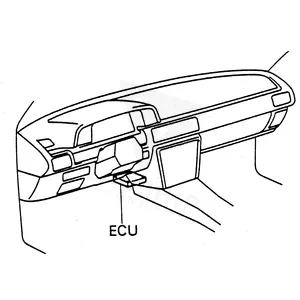
Work with the ignition off, and treat the module as static-sensitive: avoid touching the connector pins at any point.
| Operation | Configuration | Book Time |
|---|---|---|
| Engine Control Module Relearn | All configurations | 0.5 hr |
| Engine Control Module R&R | 2.2L | 1.0 hr |
| Engine Control Module R&R | 3.0L | 1.0 hr |
| Powertrain Control Module R&R | All configurations | 1.0 hr |
| Powertrain Control Module Relearn | All configurations | 0.5 hr |
After installing a replacement ECM in your 1995 Toyota Camry, the factory procedure requires a relearn process so the new module can establish communication with your vehicle’s sensors and learn optimal operating parameters. This relearn procedure involves starting the engine and allowing it to idle while the ECM monitors sensor inputs and adjusts fuel delivery and ignition timing accordingly. The process typically takes 0.5 hours to complete and may require the scan tool to remain connected to verify that all parameters have been learned successfully. Without this procedure, your vehicle may run poorly or exhibit drivability issues until the relearn is completed. However, when you purchase a VIN-programmed replacement unit from Flagship One, the module arrives pre-programmed with your specific vehicle’s information, which means many of these adaptation steps are already completed before installation. This significantly reduces the post-installation procedure and helps ensure your Camry runs properly right after the replacement is complete.
Every VIN-programmed replacement unit from Flagship One arrives with these steps already completed.
When the Engine Control Module in your 1995 Toyota Camry begins to fail, several telltale symptoms often appear. A no-start condition is one of the most common signs of ECM failure, where the engine cranks normally but will not fire due to the lack of fuel delivery or spark. Intermittent stalling while driving is another frequent complaint, particularly at idle or low-speed maneuvers when the ECM fails to maintain proper idle speed. Misfire codes may set in the module’s internal memory, causing rough running and reduced power, even though the underlying spark plugs and ignition components are functioning normally. In some cases, the scan tool may fail to communicate with the vehicle entirely, leaving technicians unable to retrieve diagnostic information. Automatic transmission shifting may also be affected because the ECM often coordinates shift points with the transmission control module on later models. If your Camry exhibits any of these symptoms and other potential causes have been ruled out, the ECM itself is a prime candidate for replacement.
Common indicators include a no-start condition, intermittent stalling, rough idle, or the complete inability of a scan tool to communicate with the vehicle. If diagnostics rule out sensors, wiring, and the fuel system, the ECM itself is likely at fault. A professional diagnosis using a compatible scan tool can verify whether the ECM is producing internal fault codes.
A used ECM from another vehicle will not have your specific vehicle identification number programmed into it, which means it may not communicate properly with your Camry’s systems. Additionally, used units carry the risk of the same failure mode that caused the original module to be removed. Purchasing a replacement that arrives VIN-programmed for your specific vehicle eliminates these compatibility concerns.
Without completing the relearn procedure, your 1995 Toyota Camry may run poorly, exhibit elevated idle speeds, experience hesitation under acceleration, or fail to meet emissions standards. The ECM needs to learn your vehicle’s specific sensor characteristics and fuel trims to operate correctly. While some basic functions may work, the vehicle will not perform optimally until adaptation is complete.
The ECM is typically located inside the passenger compartment under the dash on the passenger side, often behind the glovebox. However, some model configurations have the ECM mounted under the dash on the driver side. Checking the specific location in your vehicle before ordering a replacement helps ensure you know what to expect during the installation.
If the check engine light is being caused by a faulty ECM producing internal codes rather than sensor faults, replacing the module will resolve the issue. However, if the light is triggered by an actual sensor malfunction or wiring problem, installing a new ECM will not fix the underlying cause. Proper diagnosis is essential to determine whether the ECM itself is the root cause of the recurring light.
When your 1995 Toyota Camry requires ECM replacement, you have two primary options: repair the existing module or install a refurbished replacement unit. Repair involves returning the original module for component-level service, while a refurbished replacement provides a ready-to-install unit that has been tested and serviced. For this pre-OBD-II vehicle, ensuring the replacement module is properly matched to your specific application is essential for proper function. Consider your timeline, budget, and whether the original module is available when deciding which approach makes the most sense for your situation.
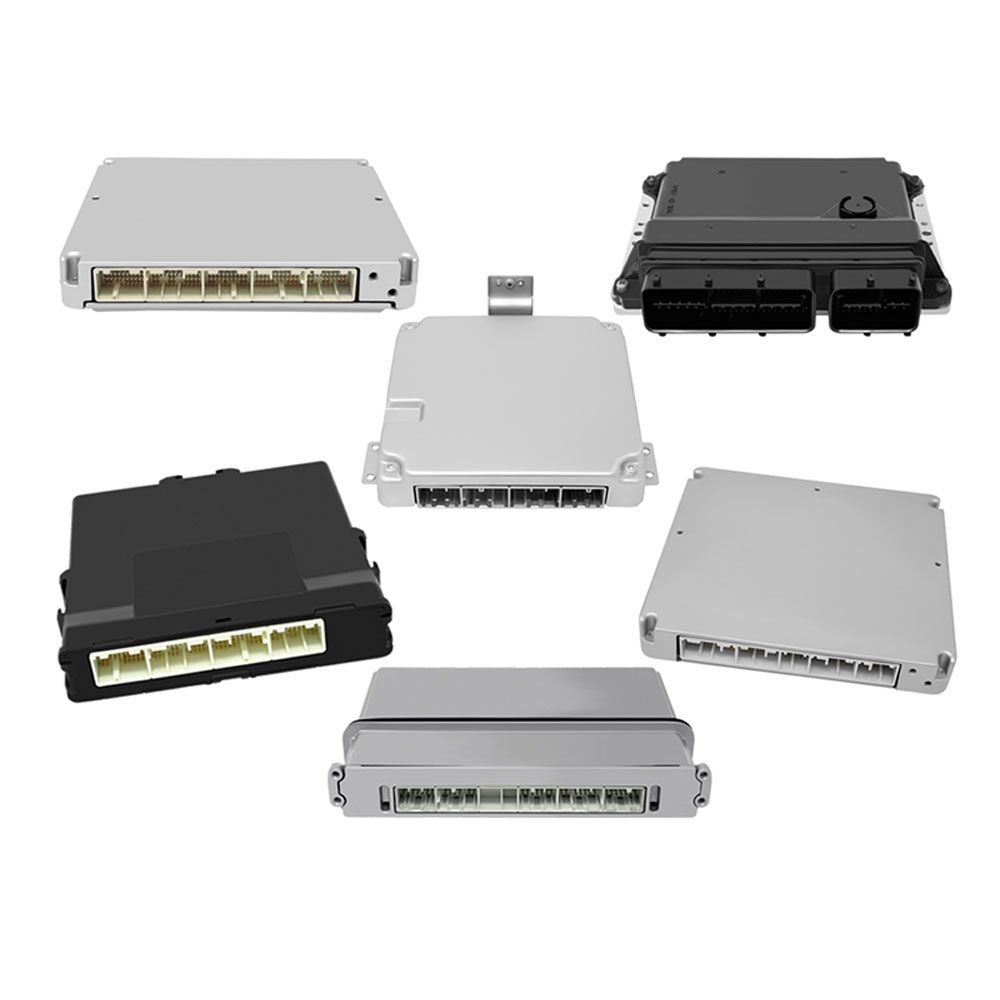
Flagship One stocks a refurbished, VIN-programmed PCM for the 1995 Toyota Camry with a lifetime warranty, free shipping and no core charge. The full Toyota Camry module lineup covers other engine configurations as well.
The Engine Control Module in your 1995 Toyota Camry is a critical component that manages your engine’s operation. When symptoms of failure appear, timely replacement helps restore reliable performance and prevents further drivability issues. Whether you choose repair or replacement, understanding the procedure and post-installation requirements ensures your Camry returns to proper operation. If you are ready to proceed, explore your options for a module matched to your specific vehicle.