
Last updated on August 25th, 2026 at 12:07 pm
The engine control module on the 2010 Pontiac Solstice 2.4L manages fuel injection, ignition timing, and emissions systems; internal processor or memory failures can trigger no-start conditions, erratic warning lights, and communication loss with other modules. These faults may also set module-internal diagnostic codes that prevent the engine from starting or cause reduced-power modes.
When your 2010 Pontiac Solstice 2.4L develops an intermittent no-crank condition, a persistent malfunction indicator lamp, or a sudden loss of communication with a scan tool, the engine control module often becomes the focus of diagnosis. This module acts as the central processor for fuel delivery, ignition timing, and emissions control, so any internal fault can produce a wide range of drivability symptoms that mimic sensor or wiring problems. Factory service bulletins for this model highlight connector fretting corrosion and accelerator-pedal correlation codes as known causes of similar complaints, which means a thorough inspection of the wiring harness should accompany any ECM evaluation. Understanding the module’s role, the typical failure modes, and the factory reprogramming requirements will help you decide whether a repair attempt or a replacement unit is the more reliable path. The following sections break down the module’s function, common symptoms, relevant trouble codes, and the programming steps that the factory procedure demands, so you can approach the job with a clear picture of what is involved. Because the ECM also stores learned adaptive values, capturing that data before removal is a factory-recommended step that can prevent drivability issues after installation.
The engine control module in the 2010 Pontiac Solstice 2.4L is a sealed electronic controller that monitors inputs from the crankshaft position sensor, camshaft position sensor, mass airflow sensor, throttle position sensors, and oxygen sensors to calculate precise fuel injector pulse widths and ignition coil firing events. It also manages the electronic throttle body, evaporative emissions purge valve, and the cooling fan relays, making it the hub of the powertrain management system. When the module’s internal microprocessor, memory circuits, or voltage regulators degrade, you may experience a no-start condition, random stalling, or a sudden reduction in engine power accompanied by a warning message on the instrument panel. The module communicates with other controllers over the class 2 serial data bus, so a failure can also silence the transmission control module or body control module, leading to a complete loss of scan-tool communication. Because the ECM houses the vehicle’s immobilizer logic and the calibration maps that match the specific engine and transmission combination, simply swapping a used unit from another vehicle will not restore proper operation without the correct software. For owners seeking a reliable solution, replacement engine computers for the Solstice that arrive pre-programmed with the correct VIN and calibration can eliminate the need for dealer-level flashing equipment and reduce the risk of mismatched software. The module’s internal diagnostics continuously check the integrity of its read-only memory, random-access memory, and analog-to-digital converters; when a discrepancy is detected, the ECM sets a module-internal diagnostic trouble code and may illuminate the malfunction indicator lamp. Heat cycling, vibration, and moisture intrusion through the connector seals are common contributors to internal circuit fatigue over time. The factory service information notes that the ECM is calibrated specifically for the 2.4L LEC engine and the six-speed manual or five-speed automatic transmission, so any replacement must carry the exact calibration identification to maintain emissions compliance and drivability. Additionally, the ECM controls the fuel pump relay and the starter relay circuit, meaning a fault in those driver circuits can mimic a bad fuel pump or starter motor. Proper diagnosis should include verifying power and ground circuits at the module connector before condemning the unit.
2010 Pontiac Solstice 2.4L
OEM programmed ECM for your 2010 Pontiac Solstice 2.4L — plug & play, no dealer visit.
Free shipping · Lifetime warranty
The engine control module on the 2010 Pontiac Solstice 2.4L is mounted in the engine compartment, typically on the firewall or inner fender panel where it is exposed to underhood heat and vibration. Access requires removing any cosmetic covers or air intake ducting that obstructs the module’s connector. The factory procedure calls for disconnecting the negative battery cable first, then releasing the connector locks and unplugging the wiring harness. Mounting hardware usually consists of bolts or studs that secure the module to the bracket; these should be removed with the appropriate socket size. Once the old module is free, the new unit is positioned, the hardware is reinstalled to the specified torque if a value is provided, and the connector is seated until the lock clicks. Reconnecting the battery completes the physical installation. No specific book time or torque values are published in the available factory documentation for this model, so a technician should allow sufficient time for careful connector handling and verification of all related grounds.
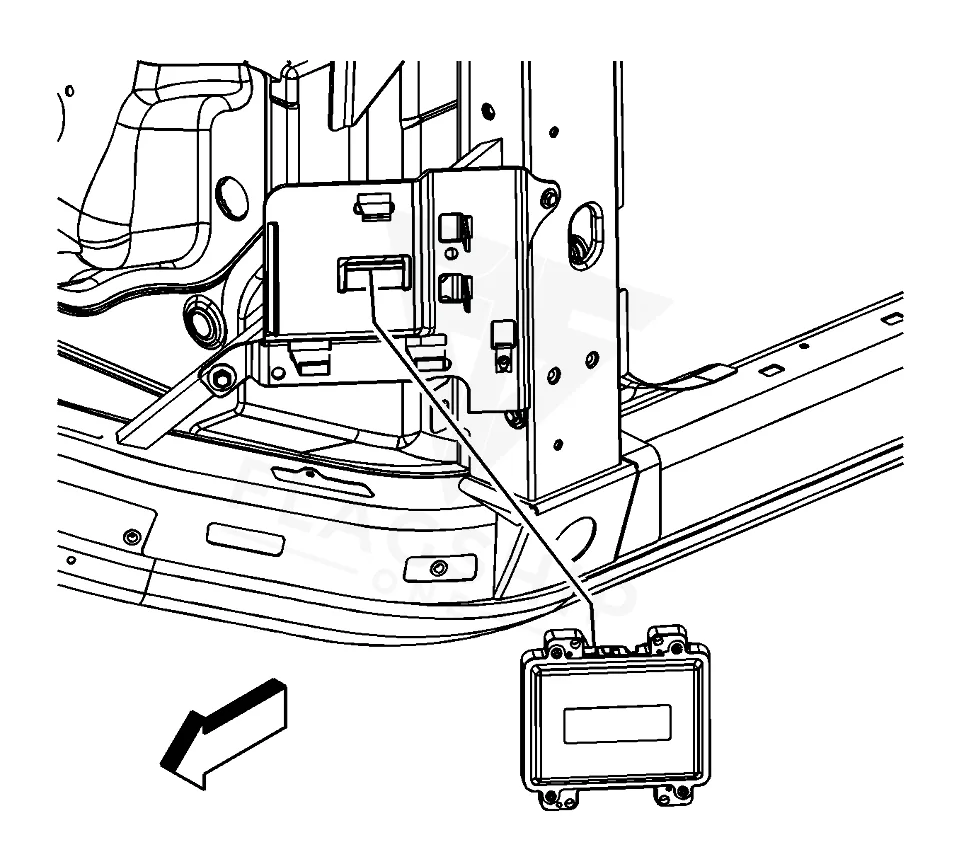
Work with the ignition off, and treat the module as static-sensitive: avoid touching the connector pins at any point.
After the physical installation, the factory service information requires that a scan tool be used to capture the ECM data before the original module is removed, preserving learned adaptive values and immobilizer codes. The replacement module must then be programmed with the correct software calibration that matches the vehicle’s engine, transmission, and emissions configuration; this process demands special programming equipment, a valid subscription to the manufacturer’s software database, and the correct calibration file for the specific VIN. Without the proper calibration, the engine may fail to start, run poorly, or set emissions-related diagnostic codes. Flagship One simplifies this step because a VIN-programmed replacement unit arrives with the correct software already loaded, so the technician can skip the dealer-level flashing procedure and proceed directly to the relearn steps for the throttle body and crankshaft position sensor. The factory also notes that any aftermarket electrical equipment should be connected to the battery rather than the vehicle’s wiring harness to avoid voltage spikes that could damage the new module.
Common symptoms of a failing engine control module in the 2010 Pontiac Solstice 2.4L include an intermittent no-crank condition where the starter does not engage despite a charged battery, a sudden loss of communication with a scan tool that prevents reading any module data, and an illuminated malfunction indicator lamp that may flash or stay solid. Drivers often report that the engine stalls unexpectedly at idle or during low-speed maneuvers, and that the vehicle may enter a reduced-power mode with a message such as “Reduced Engine Power” displayed on the driver information center. The instrument cluster can also show erratic gauge readings or warning lights for systems that are otherwise functional, such as the traction control or stability control indicators. In some cases, the fuel pump relay or ignition coil drivers inside the ECM fail, causing a no-start that mimics a bad fuel pump or ignition module. When the module’s internal diagnostics detect a problem with its own memory or processor, a module-internal trouble code such as internal control module memory fault may be stored, though the code may not appear if the ECM cannot communicate. Other signs include the inability to program new keys, loss of adaptive fuel trims that results in rough idle or poor fuel economy, and intermittent operation of the cooling fans. Because these symptoms overlap with wiring harness corrosion, ground faults, and sensor failures, a systematic diagnosis that verifies power, ground, and communication circuits at the ECM connector is essential before concluding the module is at fault.
The following module-internal diagnostic trouble codes have been documented for the 2010 Pontiac Solstice 2.4L engine control module. These codes indicate faults within the ECM’s processor, memory, or internal voltage regulators and typically require module replacement rather than wiring repair. The list includes P0601, P0602, P0603, P0604, P0605, P0606, P0607, P060D, P062F, P0641, P064D, P0651, and P167D.
Two factory service bulletins address intermittent electrical issues that can mimic ECM failure on the 2010 Pontiac Solstice 2.4L. Bulletin 09-06-03-004E describes an intermittent no-crank/no-start condition, loss of module communication, illuminated malfunction indicator lamp, warning lights, and vehicle messages that may be caused by fretting corrosion in various control module connectors; the repair involves disconnecting the affected connector and applying dielectric lubricant. Bulletin 07-06-04-019D covers an intermittent malfunction indicator lamp with a reduced engine power message and DTC P2138 for accelerator pedal position sensor correlation, traced to the instrument panel to body harness connector; the correction is to repair that connector. Both bulletins emphasize that the conditions are intermittent and may not be present during testing, so a thorough connector inspection is recommended before replacing any module.
| Bulletin | Subject | What It Addresses |
|---|---|---|
| 09-06-03-004 | Intermittent No Crank/No Start, No Module Communication, MIL, Warning Lights, Vehicle Messages | Some customers may comment on any of the following conditions: An intermittent no crank/no start Intermittent malfunction indicator lamp (MIL) illumination… |
| 07-06-04-019 | Intermittent Malfunction Indicator Lamp (MIL) Illuminated, DTC P2138 with Reduced Engine Power | Some customers may comment on an intermittent malfunction indicator lamp (MIL) being Illuminated with a message or an indicator that displays Reduced Engine… |
A used ECM will not function correctly because it contains the immobilizer codes and calibration specific to the donor vehicle; the module must be reprogrammed with your VIN and the correct calibration to operate your engine and transmission.
The caution advises that any add-on equipment should be wired to the battery positive and negative terminals rather than tapped into the vehicle’s harness, preventing voltage spikes that could damage the ECM or other modules.
If the starter does not click and the scan tool cannot communicate with any module, the ECM may be at fault; however, you should first verify battery voltage at the starter solenoid and check the starter relay circuit before condemning the ECM.
Flagship One units are programmed to your VIN before shipping, so the dealer-level flashing step is eliminated; you will still need to perform the throttle body relearn and crankshaft position sensor relearn procedures after installation.
The bulletins indicate that connector corrosion can produce symptoms identical to a failed ECM, so the connectors should be inspected and repaired first; replacing the ECM without addressing corroded terminals often leads to a repeat failure.
Choosing between repairing a faulty ECM and installing a refurbished replacement depends on the nature of the internal fault and the availability of proper programming equipment. For the 2010 Pontiac Solstice 2.4L, internal memory or processor failures generally cannot be repaired at the component level, making a pre-programmed replacement unit the more reliable option. A VIN-matched unit avoids the risk of calibration mismatch and reduces the time your vehicle spends in the shop.
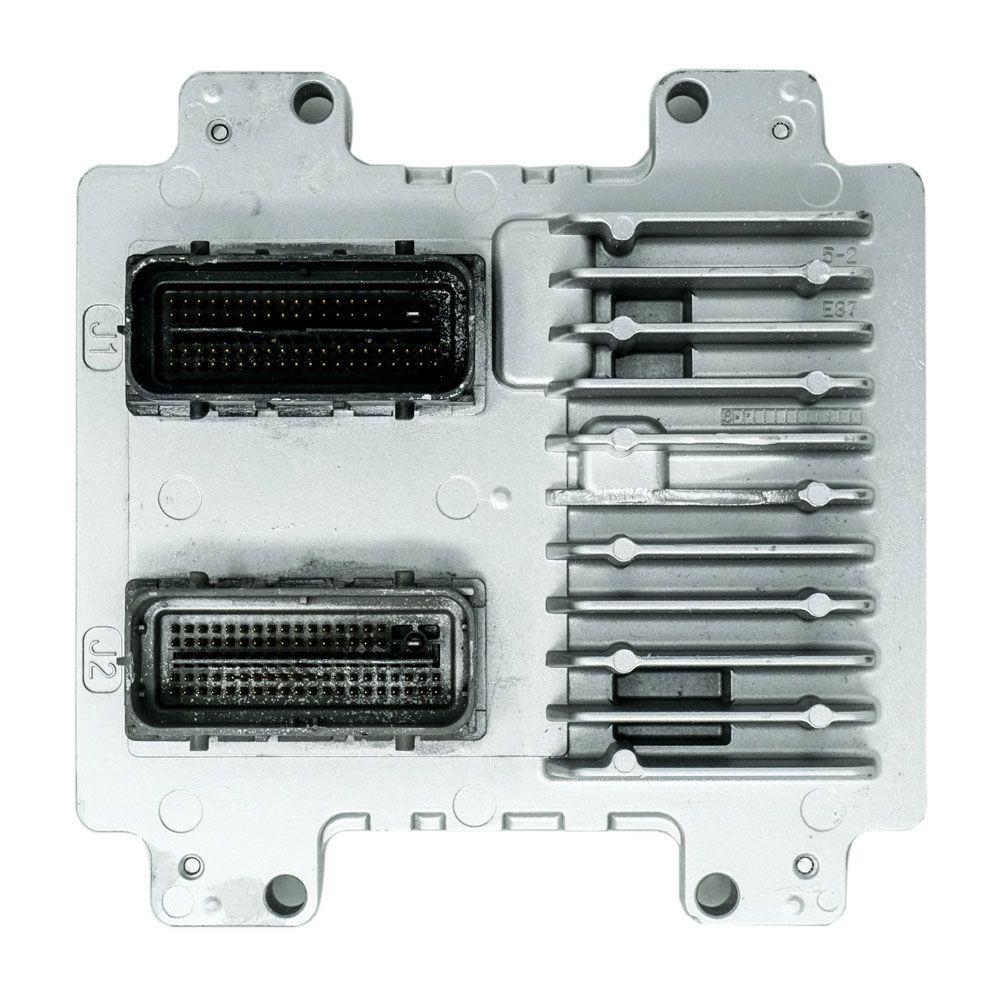
Flagship One stocks a refurbished, VIN-programmed ECM for the 2010 Pontiac Solstice with a lifetime warranty, free shipping and no core charge. The full Pontiac Solstice module lineup covers other engine configurations as well.
The 2010 Pontiac Solstice 2.4L relies on a robust engine control module to manage its fuel, ignition, and emissions systems. When that module fails, the symptoms can be confusing, but a systematic approach that checks connectors, verifies power and ground, and reviews the relevant service bulletins will guide you to the correct repair. If replacement becomes necessary, a VIN-programmed unit can restore operation without the hassle of dealer programming.