
Last updated on August 25th, 2026 at 12:30 pm
In the 1997 Pontiac Grand Am the Powertrain Control Module (PCM) serves as the central computer that monitors engine speed, fuel delivery, emissions, and transmission shift points. A failure typically disables communication with the engine, triggers a range of diagnostic codes and can prevent the vehicle from starting or running smoothly.
When a 1997 Pontiac Grand Am exhibits no‑start conditions, rough idle, or erratic shifting, the Powertrain Control Module often lies at the heart of the problem. Understanding how the PCM functions, where it lives, and what the factory requires after a swap can help you decide whether a new unit or a refurbished replacement is the right path. This guide walks you through the module’s role, the steps to access it, the programming expectations, common symptoms, and practical ways to keep it healthy, so you can make an informed choice for your vehicle.
The Powertrain Control Module in a 1997 Pontiac Grand Am acts as the brain that coordinates engine timing, fuel injection, emissions control, and transmission shift logic. It receives sensor inputs, processes them with calibrated maps, and commands actuators to keep the powertrain operating within design limits. Because it integrates both engine and transmission management, a fault can affect everything from idle stability to gear changes. Proper operation is essential for emissions compliance and drivability, and a malfunction often triggers diagnostic trouble codes that point to internal processor errors. The module’s reliability hinges on clean electrical connections and protection from static, making careful handling a must. Replacement units are typically marketed as replacement powertrain control modules for the 1997 Grand Am that match the original specifications.
1997 Pontiac Grand Am
OEM programmed ECM for your 1997 Pontiac Grand Am — plug & play, no dealer visit.
Free shipping · Lifetime warranty
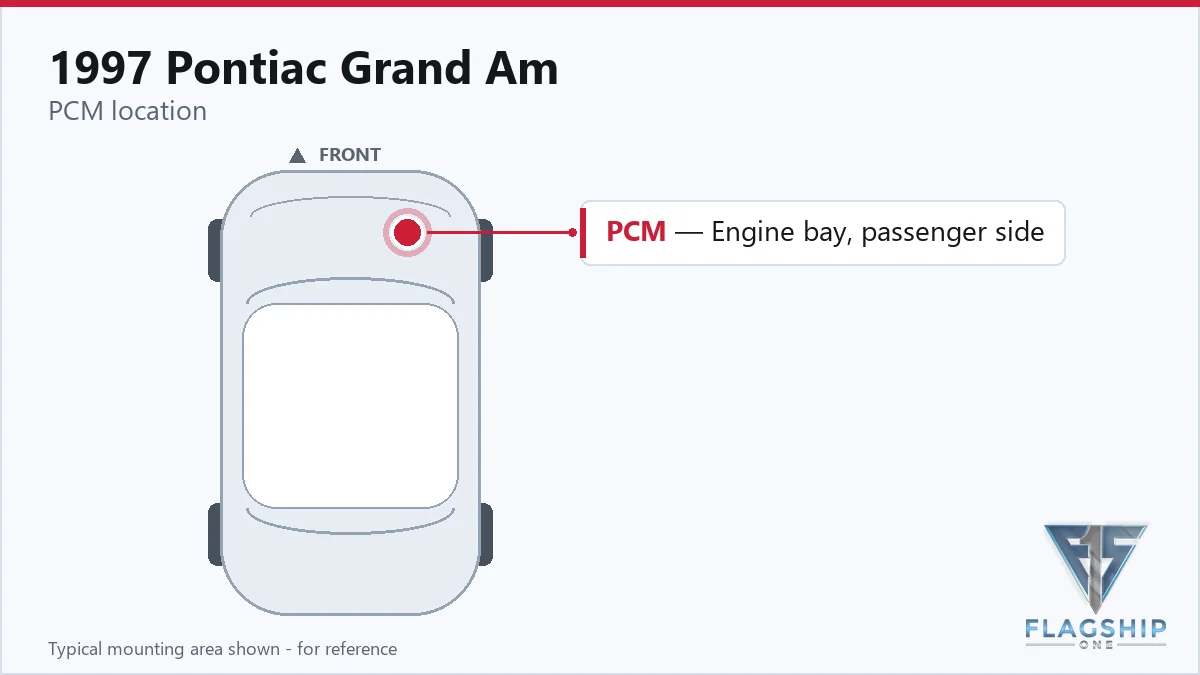
The PCM sits under the hood in front of the right strut tower, close to the engine coolant reservoir. Access involves removing the cover panel to expose the module, disconnecting the electrical harness, and unbolting the mounting hardware. The book lists 0.9 hours for removing and reinstalling the engine control module and 1.1 hours for the powertrain control module itself, with an additional 0.5 hours for the PCM relearn procedure after installation. No torque specifications are provided, so follow the factory fastener recommendations. Once the new PCM is in place, reconnect the harness, replace the cover, and be prepared for the post‑install learning step.
| Operation | Configuration | Book Time |
|---|---|---|
| Engine Control Module R&R | All configurations | 0.9 hr |
| Powertrain Control Module Relearn | All configurations | 0.5 hr |
| Powertrain Control Module R&R | All configurations | 1.1 hr |
After the PCM is installed, the factory procedure requires flashing the EEPROM calibration into the new unit and allowing the vehicle to learn its password on the first ignition cycle. Flagship One supplies a a VIN‑programmed replacement unit that arrives pre‑loaded with the correct calibration data, eliminating the need for on‑site flashing or password learning. This means the only remaining step is the standard relearn routine, which the service manual allocates 0.5 hours to complete.
A failing PCM in the 1997 Grand Am may prevent the engine from cranking, cause intermittent stalling, produce rough idle, or result in unexpected transmission shifts. Diagnostic trouble codes such as processor communication error often appear, indicating internal processor faults. You might also see codes like P0602, P1626, or P1655, which relate to internal memory or communication issues. In addition to a no‑start condition, drivers may notice loss of power‑train warning lights, erratic fuel trims, or a complete loss of scan‑tool connectivity, all of which point back to the PCM’s central role.
The following trouble codes are commonly reported for the PCM in this vehicle and can help pinpoint internal failures:
| Code | Meaning | Full Guide |
|---|---|---|
| P0601 | Internal memory checksum error | Full P0601 guide → |
| P0602 | Control module programming error | Full P0602 guide → |
| P1626 | Module-internal fault | — |
| P1629 | Module-internal fault | — |
| P1635 | Module-internal fault | — |
| P1639 | Module-internal fault | — |
| P1641 | Module-internal fault | — |
| P1651 | Module-internal fault | — |
| P1654 | Module-internal fault | — |
| P1655 | Module-internal fault | — |
| P1662 | Module-internal fault | — |
| P1675 | Module-internal fault | — |
Service bulletin #99-06-04-053, dated October 26, 1999, provides information on PCM reprogramming procedures. Bulletin #77-65-16, dated May 13, 1997, addresses a no‑start condition that requires PCM reprogramming. Both bulletins emphasize the need for proper calibration after replacement.
| Bulletin | Subject | What It Addresses |
|---|---|---|
| 99-06-04-053 | Info – PCM Reprogramming – (Oct 26, 1999) | — |
| 77-65-16 | NO START CONDITION (REPROGRAM PCM) – (May 13, 1997) | — |
The service guide lists about 0.9 hours for engine control module removal and 1.1 hours for powertrain control module removal, plus an additional 0.5 hours for the relearn procedure.
Factory procedures call for flashing the EEPROM calibration, but a VIN‑programmed replacement from Flagship One arrives with the data already loaded, eliminating the need for on‑site flashing tools.
Yes. The factory cautions against touching connector pins or soldered components to prevent electrostatic discharge damage.
Codes such as P0601, P0602, P1626, and P1655 are commonly associated with internal processor or communication errors in this vehicle.
The service manual specifies a 0.5‑hour relearn step to allow the vehicle to learn the new password on initial ignition, even when using a pre‑programmed unit.
When the PCM in your 1997 Pontiac Grand Am fails, you can choose a brand‑new factory‑spec unit or a refurbished replacement that meets the same performance standards. Both options require the same removal steps and post‑install relearn, but a refurbished module from Flagship One arrives VIN‑programmed, saving you the flashing step. Consider your budget, warranty preferences, and the importance of a quick turnaround when deciding which path best fits your repair plan.
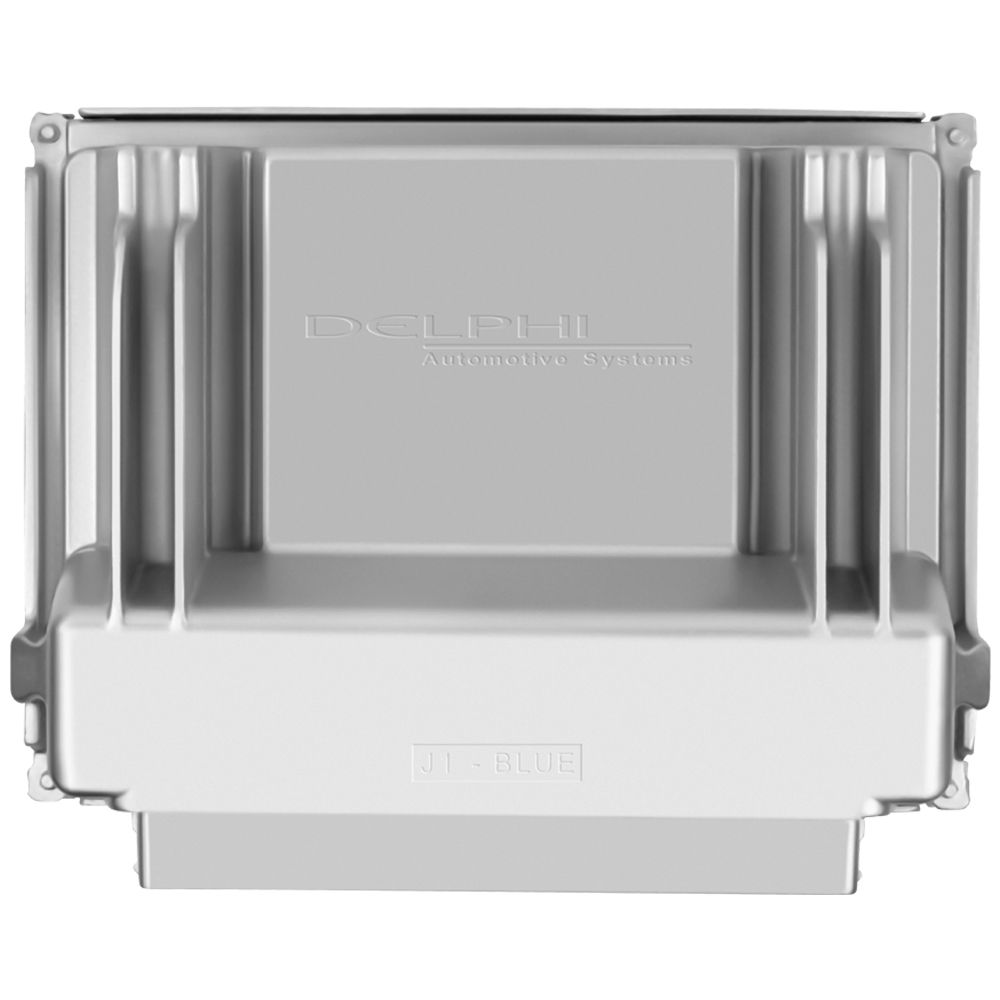
Flagship One stocks a refurbished, VIN-programmed PCM for the 1997 Pontiac Grand Am with a lifetime warranty, free shipping and no core charge. The full Pontiac Grand Am module lineup covers other engine configurations as well.
A faulty PCM can cripple a 1997 Pontiac Grand Am, but understanding its location, required programming, and common symptoms helps you address the issue confidently. Whether you opt for a new or refurbished unit, proper installation and post‑install procedures will get your vehicle back on the road.