
Last updated on August 25th, 2026 at 12:30 pm
The Powertrain Control Module in the 1996 Pontiac Grand Am acts as the central brain for engine and transmission operations. When this unit fails, it often triggers erratic shifting, poor fuel economy, or a complete failure to start, as it can no longer accurately process sensor data or manage fuel injection.
Owning a 1996 Pontiac Grand Am often means managing the transition between traditional mechanical systems and early computerized engine management. When your vehicle begins exhibiting erratic idling, strange shifting patterns, or fails to start entirely, the Powertrain Control Module is a likely culprit. This electronic unit serves as the primary coordinator for the engine and transmission, translating sensor data into precise mechanical actions. Understanding how this module operates and why it fails is essential for any owner or technician attempting to restore the vehicle to its original operating condition. By reviewing the technical requirements for replacement and the common symptoms of failure, you can ensure a more reliable repair process. This guide provides the necessary technical context regarding the location, installation labor, and specific factory cautions required to successfully replace the computer without causing further electrical harm to your vehicle’s sensitive circuitry.
The Powertrain Control Module in the 1996 Pontiac Grand Am is a sophisticated electronic computer that governs the interaction between the engine and the automatic transmission. It monitors a wide array of inputs from the crankshaft, oxygen sensors, and throttle position sensors to determine the exact amount of fuel and spark timing needed for efficient combustion. Because it handles both the engine and the transmission, it is often referred to as a combined unit. This integration is why choosing high-quality replacement engine computers for the 1996 Pontiac Grand Am is so critical for maintaining smooth gear transitions and steady fuel economy. If the internal logic of the module degrades, the vehicle may enter a limp mode or experience significant performance loss. The module ensures that the 3.1L engine meets emissions standards while providing the necessary torque for daily driving. Because it operates on very low voltage, any internal short or external electrical spike can render the entire unit unresponsive, leading to a complete loss of engine management and an inability to communicate with diagnostic scan tools.
Engine computer (ECM/PCM)
OEM programmed replacements — plug & play, no dealer visit.
Find yours by year, make & model →
Free shipping · Lifetime warranty
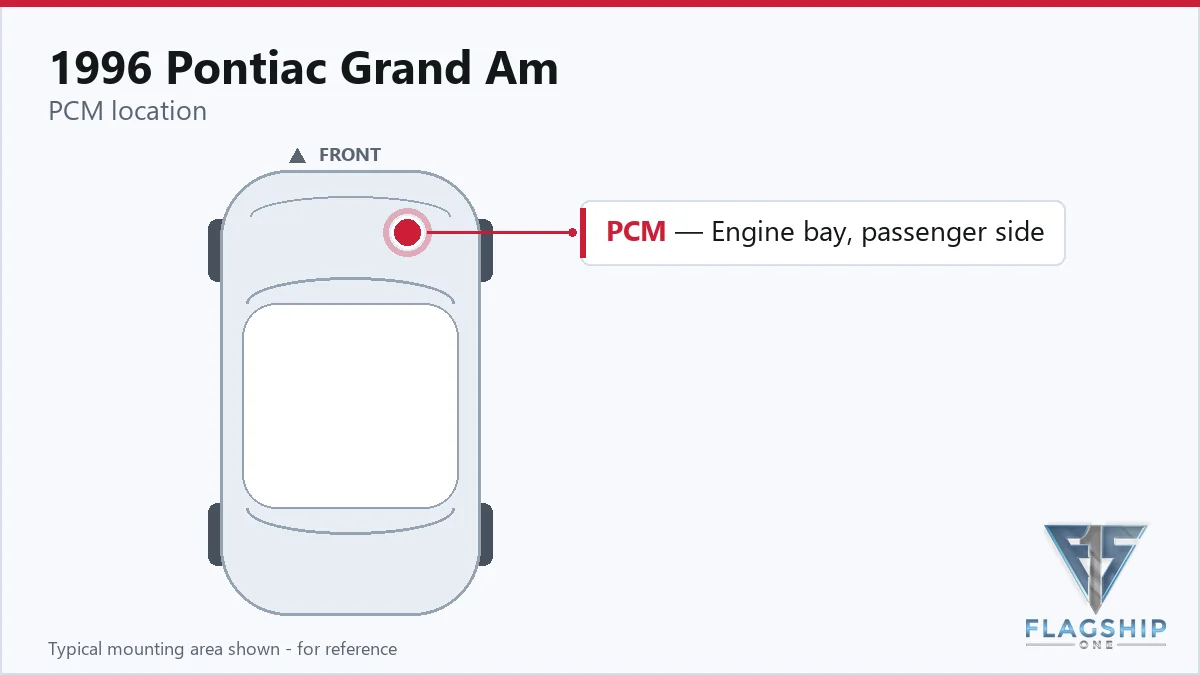
In the 1996 Pontiac Grand Am, the Powertrain Control Module is located beneath the hood. You can find it positioned forward of the right strut tower and close to the engine coolant reservoir. Replacing the unit is a straightforward process, with the Powertrain Control Module R&R listed at 1.1 hours. Similarly, the Engine Control Module R&R is also listed at 1.1 hours. When performing the installation, you must be extremely careful with the hardware. The factory warns that you should avoid making contact with the terminal pins or the circuit board’s soldered elements. This precaution is necessary because the electronic components are designed for very low voltage and are highly susceptible to Electrostatic Discharge damage, which can permanently destroy the module before it is even powered on.
| Operation | Configuration | Book Time |
|---|---|---|
| Engine Control Module R&R | All configurations | 1.1 hr |
| Powertrain Control Module Relearn | All configurations | 0.5 hr |
| Powertrain Control Module R&R | All configurations | 1.1 hr |
After a new module is installed in a 1996 Pontiac Grand Am, the factory process requires the EEPROM calibration to be flashed into the unit. Once this is complete, the vehicle is designed to acquire the updated password during the first time the ignition is turned on. There is also a specific Powertrain Control Module Relearn procedure that typically takes 0.5 hours. However, when you purchase a VIN-programmed replacement unit from Flagship One, these complex calibration and flashing steps are handled before the part ships. This means the module arrives ready to communicate with your vehicle, eliminating the need for expensive dealership flashing tools and reducing the time your vehicle spends in the shop.
Failures of the PCM in a 1996 Pontiac Grand Am often manifest as unpredictable engine behavior. You may experience a complete no-start condition where the engine cranks but never fires, or the vehicle may stall randomly while idling at a stop. In many cases, the transmission may shift harshly or refuse to shift into certain gears because the computer is sending incorrect signals to the solenoids. You might also notice a significant drop in fuel efficiency or a rough idle that cannot be cured by adjusting the vacuum lines. When connecting a diagnostic tool, you may find that the computer is completely dead and will not communicate. A common internal failure is indicated by an internal processor fault P0601, which points directly to a malfunction within the module’s own internal hardware. These symptoms are often intermittent at first, appearing only when the engine bay reaches a certain temperature, before eventually becoming permanent failures.
The 1996 Pontiac Grand Am may trigger specific internal diagnostic codes when the computer detects its own hardware failure. The following code is specifically associated with internal module malfunctions.
| Code | Meaning | Full Guide |
|---|---|---|
| P0601 | Internal memory checksum error | Full P0601 guide → |
Factory service records for the 1996 Pontiac Grand Am include specific guidance for the PCM. Bulletin #99-06-04-053, released on October 26, 1999, provides information regarding PCM Reprogramming procedures. Additionally, bulletin #83-81-32 from September 16, 1998, introduces new PCM connector service kits, which are used to address wiring or connection issues at the module interface.
| Bulletin | Subject | What It Addresses |
|---|---|---|
| 99-06-04-053 | Info – PCM Reprogramming – (Oct 26, 1999) | — |
| 83-81-32 | INFO – NEW PCM CONNECTOR SERVICE KITS – (Sep 16, 1998) | — |
The module is found under the hood, situated in front of the right strut tower and near the coolant reservoir.
No, you should connect any add-on electrical equipment directly to the battery power and ground. Wiring these into the vehicle’s main system may cause the powertrain system to malfunction.
The components use very low voltage and can be destroyed by Electrostatic Discharge from your fingertips.
If the transmission problems are caused by a failing computer, a replacement may resolve the erratic shifting.
The book time for the Powertrain Control Module R&R is 1.1 hours.
When deciding how to resolve a computer failure in your 1996 Pontiac Grand Am, you have a choice between attempting a circuit-level repair or opting for a refurbished replacement. Because these modules are so sensitive to static and heat, a professional replacement is often the most reliable path. Choosing a unit that is already calibrated to your specific vehicle ensures that the engine and transmission return to their factory performance levels without the need for additional dealership visits.
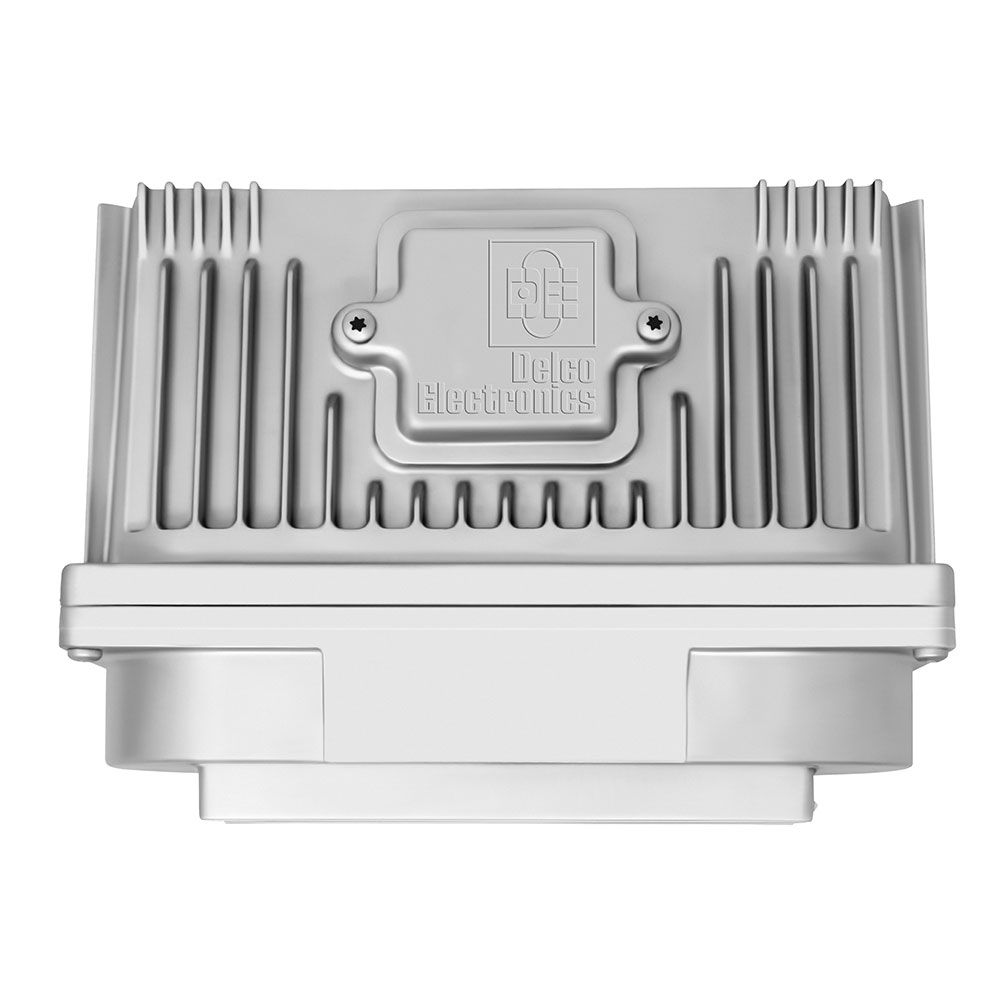
Flagship One stocks a refurbished, VIN-programmed PCM for the 1996 Pontiac Grand Am with a lifetime warranty, free shipping and no core charge. The full Pontiac Grand Am module lineup covers other engine configurations as well.
Restoring the electronic stability of your 1996 Pontiac Grand Am requires a careful approach to both hardware installation and software calibration. By following the factory cautions regarding electrostatic discharge and electrical add-ons, you can protect your new investment. Whether you are dealing with a P0601 code or general driveability issues, a properly programmed PCM is the key to getting your vehicle back on the road.