
Last updated on August 25th, 2026 at 11:46 am
The engine control module in the 2014 Mercedes-Benz CLS-Class acts as the central brain for the powertrain. It manages fuel injection and ignition timing based on sensor data. When this unit fails, it typically leads to severe drivability issues, erratic idling, or a complete failure of the vehicle to start.
You may be facing a vehicle that refuses to start or exhibits strange idling behavior. In the 2014 Mercedes-Benz CLS-Class, these symptoms often point toward the engine control module. This component is the primary computer responsible for ensuring the 4.7L engine runs efficiently by processing data from various sensors and adjusting output in real-time. Understanding how this module operates and how to replace it is essential for maintaining the luxury and performance of your vehicle. Exploring the technical aspects of the ECM reveals the specific labor requirements and the physical location of the hardware. This information provides a clear overview of the symptoms that indicate a failing computer and the steps necessary to restore the vehicle to factory specifications. Whether you are a DIY enthusiast or a professional technician, knowing the nuances of the 2014 Mercedes-Benz CLS-Class powertrain management system helps avoid common installation mistakes and ensures a successful repair process.
2014 Mercedes-Benz CLS-Class
OEM programmed ECM for your 2014 Mercedes-Benz CLS-Class — plug & play, no dealer visit.
Free shipping · Lifetime warranty
The engine control module is the primary electronic controller for the 2014 Mercedes-Benz CLS-Class. It functions as a high-speed processor that monitors air intake, throttle position, and exhaust emissions to optimize the combustion cycle. By adjusting the timing of spark plugs and the volume of fuel delivered to each cylinder, the ECM ensures the engine produces the intended power while minimizing emissions. This level of precision is what allows the vehicle to maintain a smooth idle and responsive acceleration. If the internal circuitry of the module degrades, the communication between the engine and the rest of the vehicle may be interrupted. When searching for replacement engine computers for the 2014 Mercedes-Benz CLS-Class, it is important to recognize that the module is deeply integrated into the vehicle’s network. It interacts with the transmission control and chassis systems to coordinate gear shifts and traction control. Because it manages such a wide array of variables, a malfunctioning unit can cause everything from poor fuel economy to a total loss of engine power. The module relies on a constant stream of data from oxygen sensors and mass airflow sensors to make millisecond adjustments, making it the most critical electronic component in the engine bay.
To access the engine control module in the 2014 Mercedes-Benz CLS-Class, you must follow the factory removal path, which leads to the module located at the intake manifold. This placement allows the computer to be centrally positioned relative to the engine’s primary air systems. The process of removing and replacing the unit is relatively straightforward, with a documented book time of 0.6 hours. Because the module is located near the intake manifold, technicians should ensure the area is clear of debris before beginning the installation to prevent contaminants from entering the engine. Once the old unit is removed and the new one is seated, the physical installation is complete, although the vehicle will require further software steps before it is fully operational.
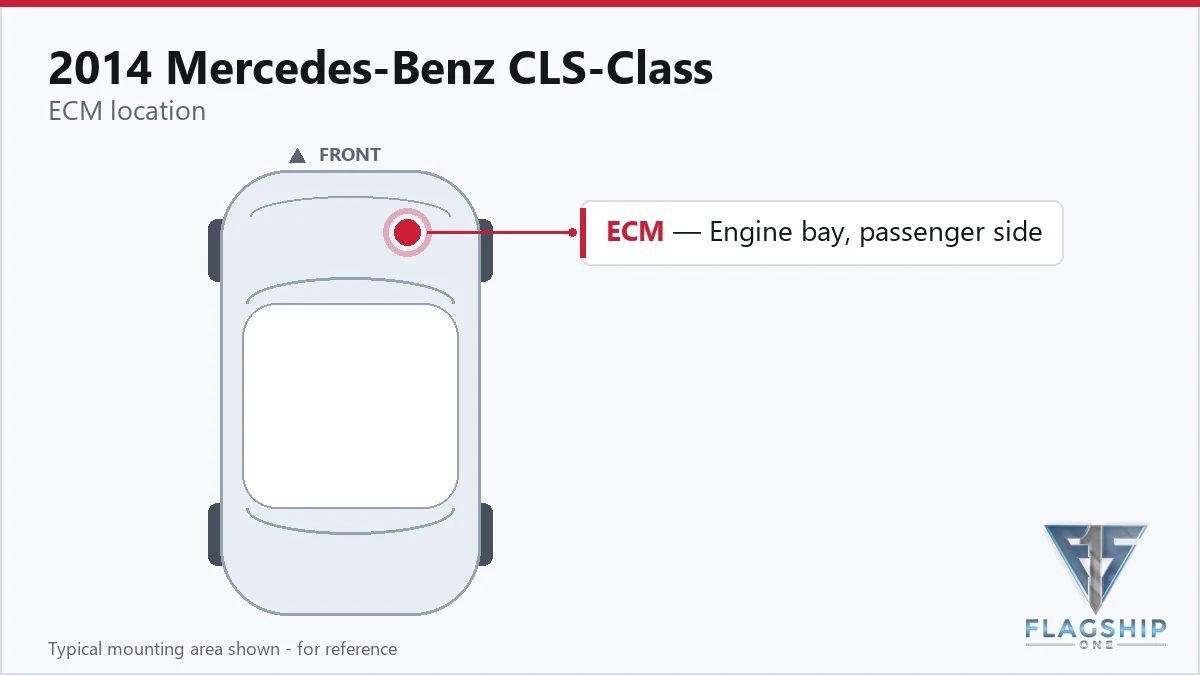
Work with the ignition off, and treat the module as static-sensitive: avoid touching the connector pins at any point.
| Operation | Configuration | Book Time |
|---|---|---|
| Engine Control Module R&R | All configurations | 0.6 hr |
| Engine Control Module Relearn | All configurations | 0.5 hr |
After the physical installation of a new module, the factory service manual typically requires a relearn procedure. This process, which is estimated to take 0.5 hours of labor, ensures that the computer is properly synced with the vehicle’s specific engine parameters and sensor calibrations. However, the complexity of modern automotive software means that traditional programming can be time-consuming and requires specialized equipment. Flagship One simplifies this by providing units that arrive with the VIN already programmed into the hardware. By using a VIN-programmed replacement unit, you can bypass the initial factory programming steps, as the critical vehicle identification data is already embedded. This significantly reduces the time the vehicle spends in the shop and minimizes the risk of software mismatches during the setup process. While the 0.5 hour relearn may still be performed to optimize performance, the primary hurdle of VIN entry is handled before the part ever reaches your door.
Identifying a failing engine control module in the 2014 Mercedes-Benz CLS-Class can be challenging because the symptoms often mimic other mechanical failures. One of the most common signs is a complete no-start condition, where the engine cranks but will not fire because the ECM is not sending the necessary trigger signals to the ignition system. You may also experience intermittent stalling, especially when coming to a stop or idling at a red light, as the computer fails to maintain the correct air-fuel mixture. In some cases, the vehicle may enter a restricted power mode, severely limiting engine power and RPMs to prevent further damage. Drivers often notice erratic shifting or a loss of communication with the onboard diagnostic scan tool, which suggests the internal processor of the module has failed. Misfire codes may appear across multiple cylinders even after the spark plugs and coils have been replaced, indicating that the timing signals from the ECM are incorrect. These symptoms typically manifest as a gradual decline in performance before the module fails entirely, leaving the 2014 Mercedes-Benz CLS-Class immobile.
The module is positioned such that the factory removal process leads you to it at the intake manifold. This location allows it to be close to the engine’s primary air intake system.
The labor for removing and replacing the module is listed at 0.6 hours. Additionally, there is a 0.5 hour book time for the relearn process.
If the no-start condition is caused by a failure in the computer’s ability to trigger ignition or fuel, a replacement may resolve the problem. However, it is important to verify that the wiring and sensors are functioning correctly first.
Factory units typically require VIN programming and a relearn procedure. Units from Flagship One come pre-programmed with the VIN to reduce the amount of labor required.
Common symptoms include erratic idling, sudden stalling, and a lack of communication with scan tools. You may also notice the vehicle entering a restricted power mode.
When deciding how to address a failing module in the 2014 Mercedes-Benz CLS-Class, you have several paths. While some choose to attempt a repair of the existing board, a refurbished replacement often provides a more reliable long-term solution. Choosing a unit that is already programmed to your specific vehicle’s VIN removes the stress of dealership software updates and reduces the overall time your vehicle is out of service.
Flagship One stocks a refurbished, VIN-programmed ECM for the 2014 Mercedes-Benz CLS-Class with a lifetime warranty, free shipping and no core charge. The full Mercedes-Benz CLS-Class module lineup covers other engine configurations as well.
Restoring the 2014 Mercedes-Benz CLS-Class to its original operating condition requires a functional engine control module. By understanding the symptoms of failure and the specific labor involved in the replacement, you can ensure a professional repair. If you are experiencing powertrain issues, checking the health of your ECM is a critical first step toward regaining vehicle reliability.