
Last updated on August 25th, 2026 at 12:42 pm
The PCM (Powertrain Control Module) in the 2016 Lincoln MKC manages engine and transmission functions. When it fails, you may experience drivability issues, warning lights, and diagnostic trouble codes. Replacement requires programming to match your vehicle’s VIN and options.
Imagine your 2016 Lincoln MKC suddenly refuses to start, or the check engine light glows with a code like P0606. The culprit may be the Powertrain Control Module (PCM), the central computer that governs your engine and transmission. This guide explains what the PCM does in your MKC, where it is located, and what replacement involves. You will learn the common symptoms of a failing PCM, the labor times for replacement, and the critical programming step required after installation. Understanding these details helps you make an informed decision about repair versus replacement, and how a pre-programmed unit can simplify the process. Whether you are a DIY owner or a professional technician, this article provides the essential facts to get your Lincoln back on the road reliably.
The Powertrain Control Module (PCM) in the 2016 Lincoln MKC is the primary electronic controller for the 2.0L EcoBoost engine and the automatic transmission. It receives input from sensors throughout the vehicle—such as the throttle position, oxygen sensors, and crankshaft position sensor—and adjusts fuel delivery, ignition timing, boost pressure, and shift points in real time. The PCM also communicates with other modules via the CAN bus, including the ABS module and the instrument cluster. When the PCM fails, it can cause a wide range of drivability issues because it is the brain of the powertrain. For the 2016 MKC, the PCM is a VIN-specific component; a replacement unit must be programmed with the vehicle’s original calibration data and security codes. If you are considering replacement PCM modules for the 2016 Lincoln MKC, it is important to know that a used or generic unit will not work without proper programming. The PCM’s role is so critical that even a minor internal fault can trigger a no-start condition or erratic transmission behavior. Understanding what the PCM does helps you diagnose problems accurately and avoid unnecessary part replacements.
2016 Lincoln MKC
OEM programmed ECM for your 2016 Lincoln MKC — plug & play, no dealer visit.
Free shipping · Lifetime warranty
The PCM on the 2016 Lincoln MKC is typically mounted under the hood, on the passenger side near the firewall, often behind the air cleaner housing. To access it, you may need to remove the air intake duct and possibly the battery cover. The factory labor time for removal and replacement (R&R) of the PCM is 0.9 hours. After installation, a Powertrain Control Module Relearn procedure is required, which adds 0.5 hours of labor. This relearn process allows the PCM to adapt to the vehicle’s specific sensors and actuators. During replacement, ensure the battery is disconnected to prevent electrical shorts. The module is usually secured with bolts; take care not to damage the connector pins when unplugging the harness. No special tools are required beyond basic hand tools, but a scan tool capable of PATS programming will be needed for the final step.
| Operation | Configuration | Book Time |
|---|---|---|
| Powertrain Control Module Relearn | All configurations | 0.5 hr |
| Powertrain Control Module R&R | All configurations | 0.9 hr |
| Engine Control Module R&R | All configurations | 0.9 hr |
| Engine Control Module Relearn | All configurations | 0.5 hr |
After installing a new or replacement PCM in the 2016 Lincoln MKC, the factory procedure requires reprogramming the Passive Anti-Theft System (PATS) to synchronize the module with the vehicle’s keys and immobilizer. This step is essential for the engine to start and run. Without it, the PCM will not recognize the key transponder, and the vehicle will remain immobilized. Flagship One provides a VIN-programmed replacement unit that arrives with the correct calibration and PATS data already loaded. This means the post-install programming step is already completed, saving you the 0.5-hour relearn labor and the need for a dealer-level scan tool. Simply install the module, reconnect the battery, and the vehicle should start and operate normally. This approach eliminates the risk of programming errors and gets your MKC back on the road faster.
A failing PCM in the 2016 Lincoln MKC can produce a variety of symptoms that mimic other component failures. The most common sign is a no-start condition where the engine cranks but does not fire, often accompanied by a flashing anti-theft light. You may also experience intermittent stalling while driving, rough idle, or a sudden loss of power. The check engine light will typically illuminate, and the scan tool may retrieve module-internal trouble codes such as internal control module fault. Other symptoms include erratic transmission shifting, where the transmission may slip, shift harshly, or fail to engage gears. Communication loss with other modules is another indicator; you might notice the speedometer or tachometer dropping to zero, or the scan tool unable to connect to the PCM. In some cases, the vehicle may run but with reduced performance, such as limited boost or poor fuel economy. Because the PCM controls so many functions, any unusual electrical or drivability issue should be investigated with a proper diagnostic scan.
The following module-internal trouble codes have been documented for the 2016 Lincoln MKC PCM. These codes indicate faults within the module itself rather than external sensor or circuit problems.
| Code | Meaning | Full Guide |
|---|---|---|
| P0605 | Internal ROM error | Full P0605 guide → |
| P0606 | Module processor failure | Full P0606 guide → |
| P0607 | Module performance fault | Full P0607 guide → |
| P164E | Module-internal fault | — |
| P166B | Module-internal fault | — |
| P2533 | Module-internal fault | Full P2533 guide → |
| U0100 | Module-internal fault | Full U0100 guide → |
| U0103 | Module-internal fault | Full U0103 guide → |
| U0151 | Module-internal fault | Full U0151 guide → |
| U0155 | Module-internal fault | Full U0155 guide → |
| U019E | Module-internal fault | — |
Common symptoms include no-start, stalling, rough idle, erratic transmission shifting, and a check engine light with codes like P0606. You may also notice loss of communication with other modules, such as a dead speedometer or scan tool unable to connect.
The PCM is typically mounted under the hood on the passenger side near the firewall, often behind the air cleaner housing. Access may require removing the air intake duct and possibly the battery cover.
The factory labor time for PCM removal and replacement is 0.9 hours. An additional 0.5 hours is required for the Powertrain Control Module Relearn procedure after installation.
Yes, the factory procedure requires reprogramming the Passive Anti-Theft System (PATS) to match the vehicle’s keys. However, a pre-programmed unit from Flagship One arrives with the correct VIN and PATS data already loaded, eliminating that step.
Module-internal codes such as P0605, P0606, P0607, P164E, P166B, P2533, U0100, U0103, U0151, U0155, and U019E have been documented for this vehicle. These codes point to faults within the PCM itself rather than external circuits.
When your 2016 Lincoln MKC’s PCM fails, you have two main options: repair the existing module or replace it with a new or refurbished unit. Repair may be possible for some internal faults, but often replacement is more reliable. Flagship One offers pre-programmed PCMs that arrive ready to install, saving you the programming labor and the need for a dealer visit. This approach is especially valuable for the MKC, where PATS programming is mandatory.
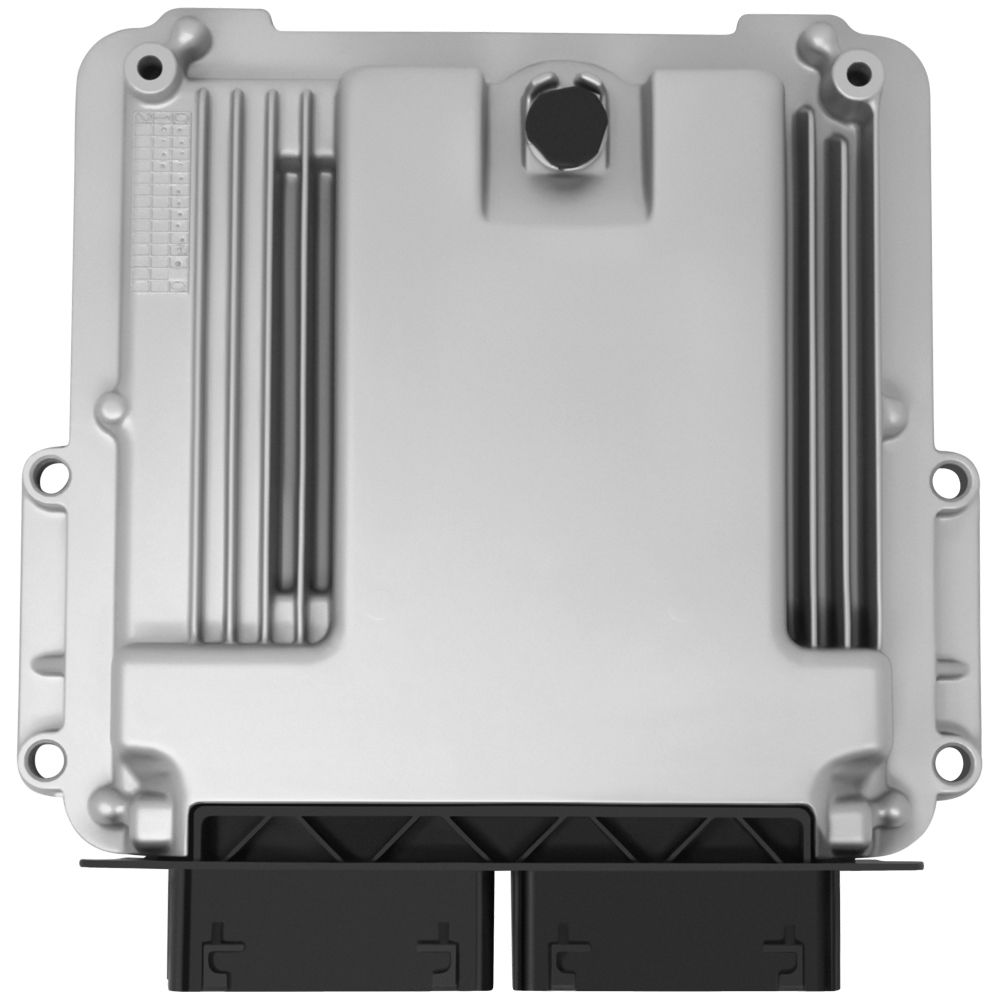
Flagship One stocks a refurbished, VIN-programmed PCM for the 2016 Lincoln MKC with a lifetime warranty, free shipping and no core charge. The full Lincoln MKC module lineup covers other engine configurations as well.
The PCM is a vital component in your 2016 Lincoln MKC, controlling engine and transmission performance. Recognizing symptoms like no-start and codes such as P0606 can help you diagnose a failing module. Replacement involves 0.9 hours of labor plus a 0.5-hour relearn, but a pre-programmed unit from Flagship One eliminates the programming step. Consider this option for a straightforward repair that gets your Lincoln back on the road quickly.