
Last updated on August 25th, 2026 at 12:43 pm
The Powertrain Control Module in a 2007 Lincoln Navigator is the central computer that manages engine fueling, ignition timing, and transmission shift points. When it fails, the vehicle may crank but not start, exhibit erratic shifting, or trigger multiple warning lights.
You turn the key in your 2007 Lincoln Navigator and the engine cranks but refuses to fire. The instrument cluster lights up with a check-engine warning, and your scan tool either fails to communicate or displays a code you have never seen before. After ruling out the battery, starter, and fuel pump, the diagnostic trail leads to the Powertrain Control Module. This computer is the brain of your Navigator’s 5.4L V8, and when it malfunctions, the symptoms can mimic a dozen other problems. Understanding what the PCM does, how to confirm it is the culprit, and what a proper replacement involves can save you from unnecessary parts swapping and repeated trips to the shop. This guide walks you through the module’s role, common failure signs, the replacement process, and the programming steps that a pre-programmed unit can simplify. You will learn how to approach a suspected PCM failure with confidence and get your Navigator back on the road without the complexity of factory-level software configuration.
The Powertrain Control Module in a 2007 Lincoln Navigator is a sealed electronic unit that orchestrates nearly every aspect of engine and transmission operation. It receives real-time data from sensors such as the mass airflow meter, throttle position sensor, crankshaft position sensor, and oxygen sensors, then uses that information to calculate the precise amount of fuel to inject, the ideal ignition timing, and the appropriate shift points for the six-speed automatic transmission. The module also monitors emission-control systems, activates the cooling fans, and communicates with the anti-lock brake and stability-control modules over the vehicle’s CAN bus. Because the Navigator is a heavy, full-size SUV, the PCM must manage torque delivery smoothly to prevent driveline clunks and ensure stable towing performance. When the module begins to fail, these calculations become unreliable. You may notice the transmission hunting for gears, the engine running excessively rich or lean, or the stability-control warning light flashing for no apparent reason. A failing PCM can also lose its ability to retain learned idle and fuel-trim values, forcing the engine to rely on default parameters that reduce power and efficiency. For owners seeking a direct fix, replacement units such as replacement engine computers for the Navigator are available with the correct factory calibration already installed, avoiding the need to transfer data from a dead module.
2007 Lincoln Navigator
OEM programmed replacements — plug & play, no dealer visit.
Find yours by year, make & model →
Free shipping · Lifetime warranty
On the 2007 Lincoln Navigator, the PCM is located in the engine compartment, typically mounted on the passenger-side firewall near the cowl. Access requires removing the plastic sight shield and, in some cases, loosening the coolant reservoir for clearance. The module is secured by a bracket and connected to the engine wiring harness with a large multi-pin connector. Book time for removing and reinstalling the PCM is 0.8 hours. Once the new module is bolted in place and the connector is seated, a separate Powertrain Control Module Relearn procedure is specified at 0.5 hours. This step allows the module to adapt to the vehicle’s specific sensors and actuators, including the electronic throttle body and transmission solenoids. No additional torque specifications or special tools are required beyond a basic socket set and a scan tool capable of initiating the relearn routine.
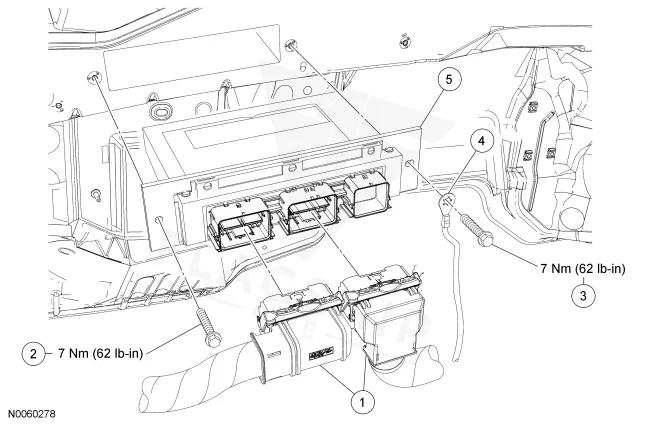
| Operation | Configuration | Book Time |
|---|---|---|
| Powertrain Control Module Relearn | All configurations | 0.5 hr |
| Powertrain Control Module R&R | All configurations | 0.8 hr |
| Engine Control Module R&R | All configurations | 0.8 hr |
After a new PCM is installed in a 2007 Lincoln Navigator, the factory service procedure requires a module relearn to synchronize the replacement computer with the vehicle’s security system, throttle actuator, and transmission adaptive tables. This process typically demands a professional-grade scan tool and access to the manufacturer’s software to transfer immobilizer data and perform the necessary initializations. However, when you source a pre-programmed unit from Flagship One, the module arrives with your Navigator’s VIN and calibration already loaded. The relearn procedure is still recommended to fine-tune idle and shift behavior, but the complex security pairing and base programming are already complete. a VIN-programmed replacement unit allows you to install the module and drive the vehicle immediately, with only a brief adaptive period needed for optimal performance.
A failing PCM in a 2007 Lincoln Navigator often produces symptoms that seem unrelated to the computer itself. The engine may crank strongly but never start because the module fails to trigger the fuel injectors or ignition coils. Intermittent stalling at idle or while decelerating is another common complaint, especially when the module loses its ability to control the electronic throttle. You might see the check-engine light illuminate with codes that do not return after being cleared, or the transmission may refuse to shift out of second gear as a failsafe measure. Communication errors between the PCM and your scan tool are a strong indicator of internal module failure. In some cases, the stability-control warning light flashes and the sliding-car icon appears on the instrument panel, even on dry pavement, due to corrupted data from the module. A stored code such as throttle actuator control module fault can point directly to an internal PCM issue rather than a problem with the throttle body itself, especially when accompanied by a no-start condition and no other driveability concerns.
Ford issued Technical Service Bulletin 07-10-06 for 2007 Lincoln Navigators that exhibit diagnostic trouble codes P2107 or P2110 with the malfunction indicator lamp on and no noticeable driveability concern. The bulletin advises technicians to inspect the PCM for internal faults before replacing the throttle body or accelerator pedal sensor. A separate bulletin, 08-14-02, addresses a condition where the stability/traction control indicator illuminates or flashes, sometimes accompanied by code C1996, without any actual loss of traction. The corrective action involves reprogramming or replacing the PCM to resolve the false activation of the electronic stability control system.
| Bulletin | Subject | What It Addresses |
|---|---|---|
| 08-14-02 | DTC C1996 OR SENSITIVE ESC/RSC ACTIVATION NO CODES – ON OR FLASHING – SLIDING-CAR ICON – STABIL | — |
| 07-10-06 | DTCS P2107/P2110 – MIL ON – NO DRIVEABILITY CONCERN | — |
Common signs include a no-start condition with good battery and starter, a scan tool that cannot communicate with the module, or multiple unrelated sensor codes that return after being cleared. If you have ruled out wiring and power supply issues, the PCM may be the root cause.
A new or used module typically needs to be programmed with the vehicle’s VIN, immobilizer data, and latest calibration. However, a VIN-programmed unit from Flagship One arrives ready to install, so you can skip the dealer visit and only need to perform a brief relearn procedure.
A relearn is a short process that allows the module to adapt to your specific engine and transmission characteristics, such as idle speed and shift feel. A full reprogram involves loading the base software and security information, which is already done on a pre-programmed replacement module.
Yes. Technical Service Bulletin 08-14-02 describes a condition where the sliding-car icon illuminates or flashes due to a PCM fault, even when the vehicle is on dry pavement. Replacing or reprogramming the module resolves the false activation.
The book time for removing and reinstalling the module is 0.8 hours. An additional 0.5 hours is specified for the Powertrain Control Module Relearn procedure to complete the installation.
When your 2007 Lincoln Navigator’s PCM fails, you have two paths: send the original module out for repair, which can take days or weeks, or install a refurbished replacement that arrives pre-programmed to your VIN. A plug-and-play unit eliminates the downtime and uncertainty of a repair attempt, letting you restore the vehicle’s performance in your own garage. For a full-size luxury SUV that your family depends on, a reliable replacement module is a practical investment in long-term dependability.
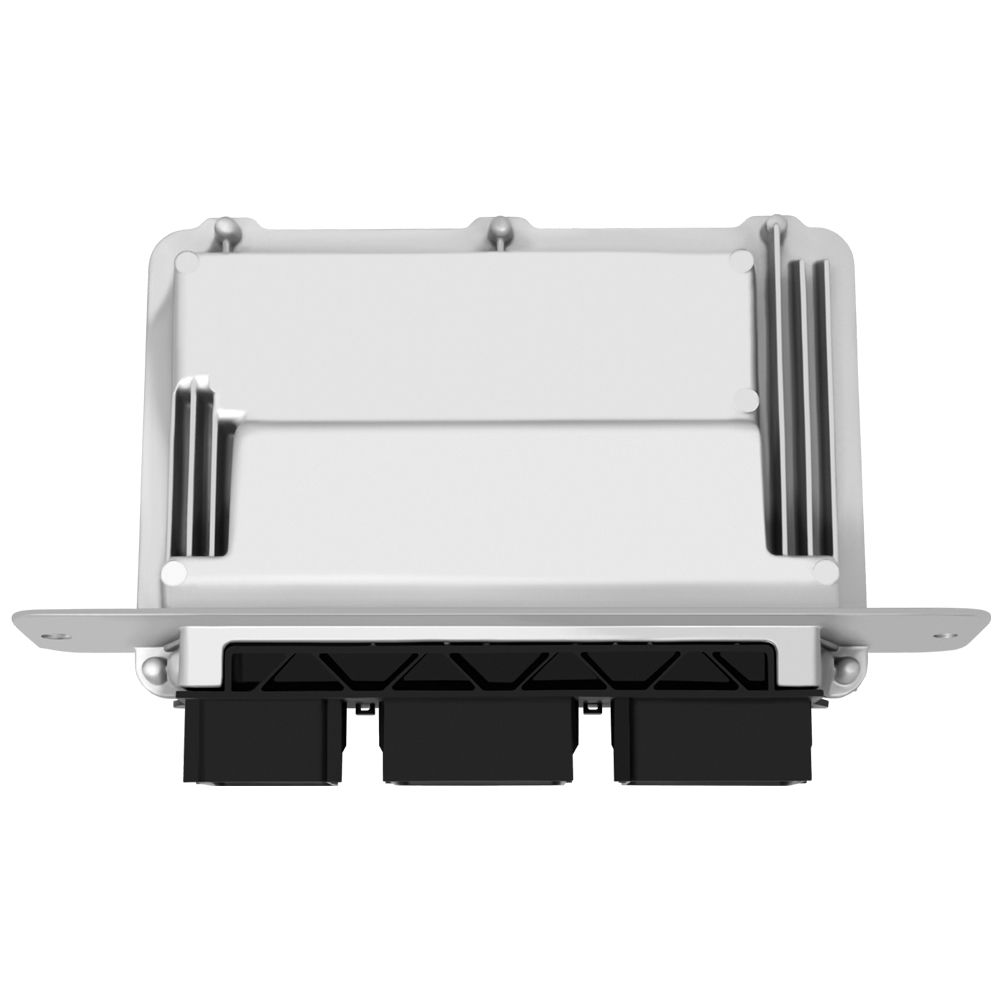
Flagship One stocks a refurbished, VIN-programmed PCM for the 2007 Lincoln Navigator with a lifetime warranty, free shipping and no core charge. The full Lincoln Navigator module lineup covers other engine configurations as well.
A malfunctioning PCM in a 2007 Lincoln Navigator can bring your vehicle to a standstill, but the right replacement strategy gets you moving again without a trip to the dealership. By choosing a pre-programmed module, you avoid the complexity of factory-level software tools and the risk of mismatched calibrations. With the new computer installed and the relearn procedure complete, your Navigator’s 5.4L engine and transmission can return to smooth, reliable operation.