
Last updated on August 25th, 2026 at 12:43 pm
The powertrain control module (PCM) in your 2006 Lincoln Navigator 5.4L is the main computer that manages engine and transmission operation. It controls fuel injection, ignition timing, shift points, and emissions systems. Failure often causes no-start, stalling, poor performance, or check-engine lights.
If your 2006 Lincoln Navigator 5.4L is experiencing hard starting, low power, or a check-engine light with misfire or transmission codes, the powertrain control module (PCM) may be at fault. This computer governs engine and transmission functions, and when it fails, the vehicle may run poorly or not at all. Understanding what the PCM does, where it is located, and what replacement involves can help you make an informed repair decision. This guide covers the module’s role in your Navigator, common failure symptoms, relevant factory service bulletins, and the programming steps required after a new or refurbished unit is installed. You will also learn how a pre-programmed PCM from Flagship One can simplify the process by eliminating the need for dealer-level PATS reprogramming. Whether you are a DIY owner or a professional technician, this information will help you diagnose and resolve PCM-related issues efficiently.
The powertrain control module (PCM) in your 2006 Lincoln Navigator 5.4L acts as the central brain for the engine and transmission. It receives data from sensors like the crankshaft position sensor, throttle position sensor, oxygen sensors, and mass airflow sensor, then adjusts fuel delivery, ignition timing, idle speed, and shift patterns in real time. The PCM also monitors emissions and stores diagnostic trouble codes (DTCs) when a fault is detected. In this vehicle, the PCM is a single unit that controls both the engine and the 6-speed automatic transmission, so a failure can affect drivability in multiple ways. When the PCM malfunctions, it may send incorrect signals, causing misfires, poor fuel economy, or transmission shifting problems. Because the Navigator is a heavy SUV, a properly functioning PCM is critical for maintaining power and reliability. If you need to replace this module, you will be looking for replacement PCMs for the 2006 Navigator that are compatible with your vehicle’s specific calibration. The PCM is located in the engine compartment, making it relatively accessible for replacement.
2006 Lincoln Navigator
OEM programmed ECM for your 2006 Lincoln Navigator — plug & play, no dealer visit.
Free shipping · Lifetime warranty
The powertrain control module in your 2006 Lincoln Navigator 5.4L is mounted in the engine compartment, typically on the driver’s side near the firewall or on the inner fender. Access may require removing a cover or other components, but the location is straightforward. According to factory labor times, removing and replacing the PCM takes 0.3 hours, which reflects the simplicity of the job. After installation, a PCM relearn procedure is required, which adds 0.5 hours of labor. This relearn allows the module to adapt to the vehicle’s specific sensors and actuators. During replacement, ensure the battery is disconnected to avoid electrical shorts. Also, handle the module carefully to avoid damaging connectors or the circuit board. The PCM is secured with bolts or screws; torque specifications are not provided here, but standard practice is to tighten them securely without over-torquing.
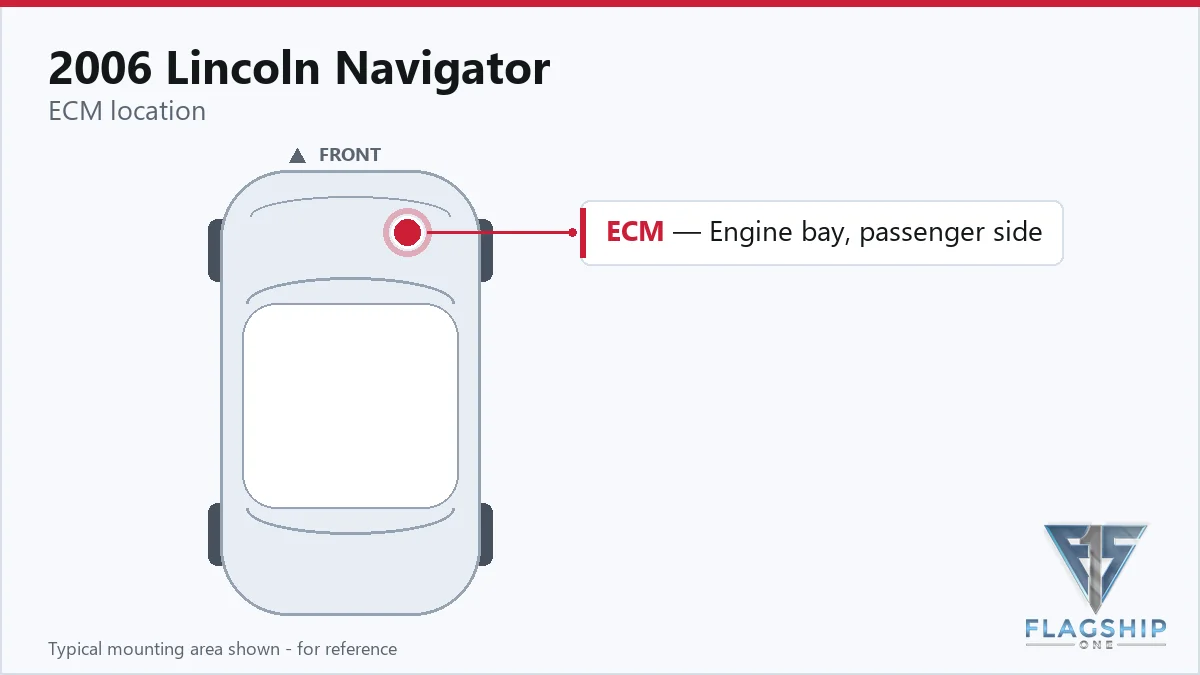
Work with the ignition off, and treat the module as static-sensitive: avoid touching the connector pins at any point.
| Operation | Configuration | Book Time |
|---|---|---|
| Powertrain Control Module Relearn | All configurations | 0.5 hr |
| Powertrain Control Module R&R | All configurations | 0.3 hr |
| Engine Control Module R&R | All configurations | 0.3 hr |
After installing a new or refurbished PCM in your 2006 Lincoln Navigator 5.4L, the factory procedure requires reprogramming the passive anti-theft system (PATS). This step is necessary to synchronize the module with the vehicle’s keys and immobilizer system. Without PATS programming, the engine may crank but not start. Additionally, the PCM may need to be flashed with the correct calibration for your specific engine and transmission combination. This typically requires a dealer-level scan tool and access to factory software. However, when you purchase a pre-programmed PCM from Flagship One, the unit arrives with the correct VIN and PATS data already loaded. This means the module is ready to install and start the vehicle without the need for a separate PATS reprogramming session. The PCM relearn procedure (0.5 hours) is still recommended to allow the module to adapt to your vehicle’s sensors, but the complex anti-theft step is already completed.
A failing PCM in your 2006 Lincoln Navigator 5.4L can produce a variety of symptoms. The engine may crank but not start, or it may start and then stall shortly after. You might experience hard starting, especially when cold, or a lack of power when accelerating. The engine may run rough, misfire, or hesitate at certain RPMs. The check-engine light may illuminate with codes related to misfire (P0300, P0304, P0308), camshaft/crankshaft position (P0340, P0344), fuel trim (P0172, P0175), or ignition coil faults (P0351-P0358). Transmission issues can also occur, such as a lack of upshift or harsh shifting. In some cases, the scan tool may fail to communicate with the PCM entirely, indicating a dead module. One common code associated with internal PCM failure is internal control module memory checksum error, which points to a corrupted processor. If you notice any of these symptoms, diagnosing the PCM early can prevent further drivability problems.
Two factory service bulletins apply to the 2006 Lincoln Navigator 5.4L. TSB 06-13-09 addresses hard start, low power at 3500 RPM, and a check-engine light with codes P0340, P0344, P0172, P0175, and for Expedition only, fast idle when cold. TSB 05-23-01 covers a lack of upshift and a check-engine light with misfire codes P0351 through P0358. These bulletins provide diagnostic and repair procedures that may involve PCM reprogramming or replacement.
| Bulletin | Subject | What It Addresses |
|---|---|---|
| 06-13-09 | HARD START, LOW POWER AT 3500 RPM, MIL ON P0340, P0344, P0172, P0175 AND EXPEDITION ONLY – IDLE | — |
| 05-23-01 | LACK OF UPSHIFT – MIL ON WITH DTC P0351-P0358 | — |
Common signs include no-start, stalling, misfires, poor acceleration, transmission shifting problems, and a check-engine light with codes like P0601 or misfire codes. A scan tool that cannot communicate with the PCM is a strong indicator of failure.
Yes, the PCM is located in the engine compartment and removal takes about 0.3 hours. However, after installation, the passive anti-theft system (PATS) must be reprogrammed, which typically requires a dealer or specialized tool. A pre-programmed PCM from Flagship One avoids that step.
The relearn takes about 0.5 hours and allows the PCM to adapt to the vehicle’s sensors and actuators. It may involve a specific driving cycle or scan tool procedure. This is separate from PATS programming.
A used PCM must be programmed with your vehicle’s VIN and PATS data to work. Without that, the engine may not start. A pre-programmed unit from Flagship One is a more reliable option.
TSB 06-13-09 covers hard start, low power, and codes P0340, P0344, P0172, P0175. TSB 05-23-01 covers lack of upshift and codes P0351-P0358. Both may involve PCM reprogramming.
When your 2006 Lincoln Navigator 5.4L needs a PCM, you have options: repair the existing module, buy a new one from the dealer, or choose a refurbished unit. A refurbished PCM from Flagship One is tested and pre-programmed with your VIN and PATS data, so installation is straightforward. This saves time and money compared to dealer programming.
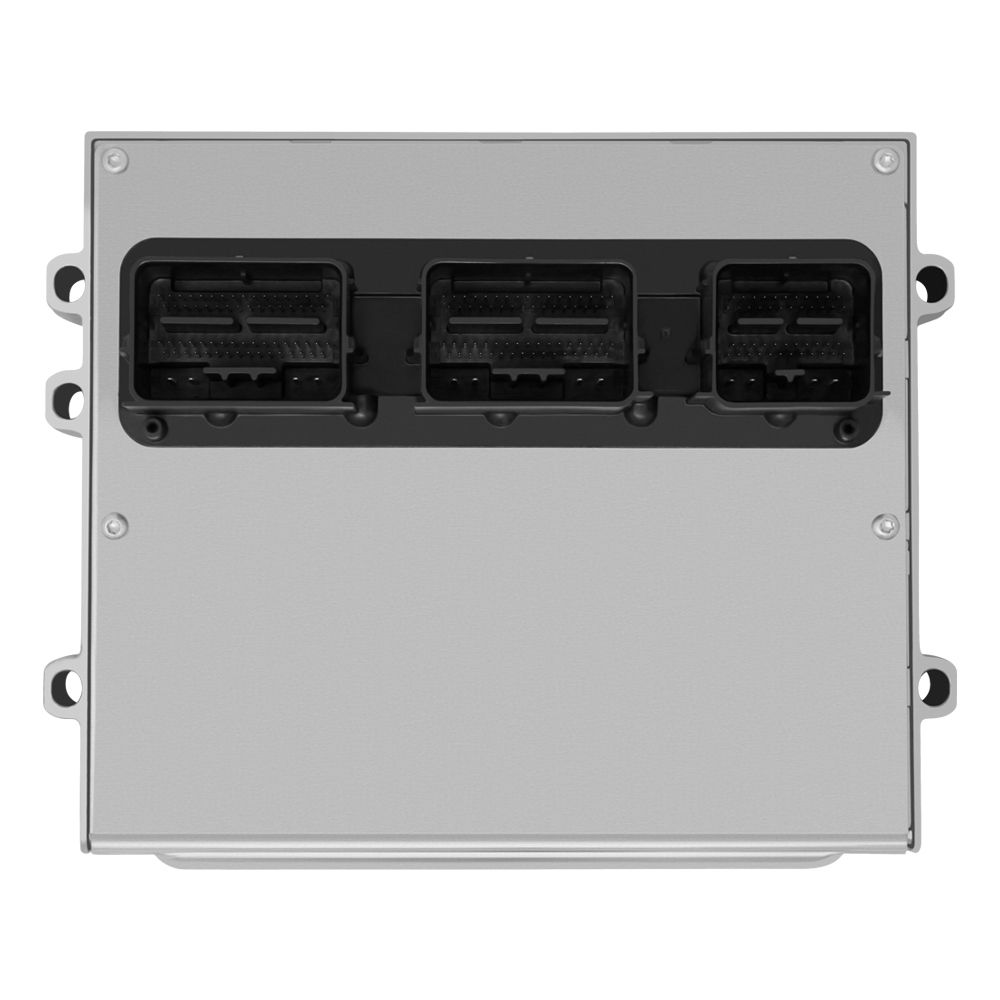
Flagship One stocks a refurbished, VIN-programmed PCM for the 2006 Lincoln Navigator with a lifetime warranty, free shipping and no core charge. The full Lincoln Navigator module lineup covers other engine configurations as well.
The powertrain control module in your 2006 Lincoln Navigator 5.4L is essential for engine and transmission performance. Recognizing failure symptoms early and understanding the replacement process can help you get back on the road quickly. Flagship One offers pre-programmed PCMs that eliminate the need for dealer PATS reprogramming, making the repair simpler and more affordable.