
Last updated on August 25th, 2026 at 12:43 pm
The Powertrain Control Module (PCM) in your 2005 Lincoln Navigator manages engine and transmission functions. Failures may cause erratic performance, stalling, or warning lights, often tied to sensor inputs or internal faults.
If your 2005 Lincoln Navigator hesitates on cold starts, stalls unexpectedly, or throws a check-engine light, the Powertrain Control Module (PCM) may be the culprit. This critical computer oversees everything from fuel delivery to transmission shifts, and when it falters, drivability suffers. Replacing it isn’t just about swapping a box—it involves precise labor steps and a factory relearn to sync the new module with your vehicle’s systems. Understanding the process helps you avoid unnecessary dealer trips or incomplete repairs. You’ll learn where the PCM is located, what symptoms signal its failure, and how to ensure a smooth replacement without guesswork. Whether you’re diagnosing a no-start condition or addressing a persistent trouble code, this guide gives you the clarity to proceed with confidence.
In your 2005 Lincoln Navigator, the Powertrain Control Module (PCM) acts as the brain for both the engine and transmission. It processes data from sensors like the crankshaft position, oxygen, and throttle position to optimize fuel injection, ignition timing, and shift points. Without it, your vehicle may run poorly or not at all. The PCM also communicates with other modules, such as the anti-lock brake system, to coordinate stability control and traction management. When it fails, you might notice rough idling, poor acceleration, or even a complete loss of power. Replacement isn’t just about plugging in a new unit—it requires careful handling and, often, a relearn procedure to ensure all systems recognize the new replacement engine computers for the Navigator. The module’s role in emissions control means a faulty PCM can also trigger a check-engine light, leaving your vehicle out of compliance with state inspections until addressed.
2005 Lincoln Navigator
OEM programmed replacements — plug & play, no dealer visit.
Find yours by year, make & model →
Free shipping · Lifetime warranty
The PCM in your 2005 Lincoln Navigator is mounted inside the engine bay, typically near the firewall on the passenger side. Accessing it involves removing a protective cover, which may require unbolting a few fasteners. Once exposed, the module is secured with a single connector and mounting bolts. Replacement labor is straightforward, with factory book time set at 0.3 hours for removal and installation. This includes disconnecting the battery, unplugging the wiring harness, and transferring any necessary components to the new unit. No special tools are required beyond basic hand tools, but care should be taken to avoid damaging the connector pins during removal. After installation, the battery must be reconnected, and a relearn procedure may be necessary to restore full functionality.
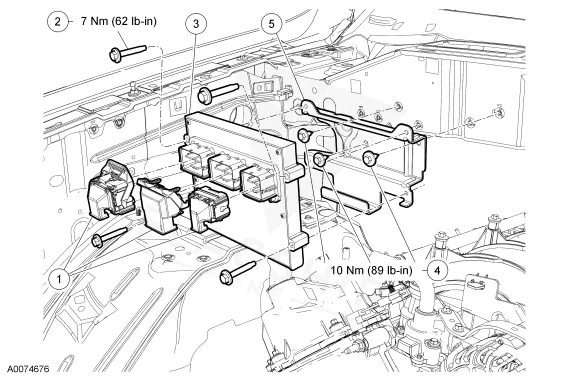
Work with the ignition off, and treat the module as static-sensitive: avoid touching the connector pins at any point.
| Operation | Configuration | Book Time |
|---|---|---|
| Powertrain Control Module Relearn | All configurations | 0.5 hr |
| Powertrain Control Module R&R | All configurations | 0.3 hr |
| Engine Control Module R&R | All configurations | 0.3 hr |
After replacing the PCM in your 2005 Lincoln Navigator, the factory procedure requires a relearn process to synchronize the new module with the vehicle’s systems. This typically involves a 0.5-hour procedure using a scan tool to reset adaptive values, calibrate the throttle body, and ensure proper communication with the transmission and other modules. Without this step, you may experience shifting issues, poor idle quality, or even a no-start condition. However, a VIN-programmed replacement unit from Flagship One arrives pre-configured to your vehicle’s specifications, eliminating the need for dealer programming. This saves time and reduces the risk of incomplete initialization, allowing you to focus on reinstallation and road testing. Always verify that the new module matches your Navigator’s build date and engine configuration to avoid compatibility issues.
A failing PCM in your 2005 Lincoln Navigator may cause a range of symptoms, often starting subtly before worsening. Common signs include intermittent stalling, especially after cold starts, or a rough idle that smooths out as the engine warms. You might also notice hesitation during acceleration, as if the vehicle is struggling to deliver power, or erratic shifting from the transmission. Warning lights, such as the check-engine or traction control indicators, may illuminate, and a scan tool could reveal codes like internal control module torque performance. In some cases, the vehicle may fail to start at all, with no crank or no spark, due to the PCM’s role in controlling the ignition and fuel systems. Dead scan-tool communication is another red flag, indicating the module isn’t responding to diagnostic requests. If you experience these issues, especially in combination, the PCM is a likely suspect and should be tested before assuming sensor or wiring problems.
Factory service bulletins for the 2005 Lincoln Navigator highlight several PCM-related issues. TSB #06-08-03 provides diagnostic tips for speed control malfunctions, which may stem from PCM communication errors. TSB #05-06-03 addresses vehicles built before January 24, 2005, that set a check-engine light with codes P061B and P2106 after cold starts and rapid transmission engagement. Another bulletin, TSB #06-13-09, targets hard starts, low power at 3500 RPM, and idle issues tied to codes P0340, P0344, P0172, and P0175. These bulletins emphasize the importance of verifying PCM function before replacing sensors or other components, as the module itself may be the root cause of persistent drivability problems.
| Bulletin | Subject | What It Addresses |
|---|---|---|
| 06-08-03 | PCM – SPEED CONTROL DIAGNOSTIC TIPS | — |
| 05-06-03 | MIL ON WITH DTC P061B AND P2106 AFTER COLD START AND RAPID TRANSMISSION GEAR ENGAGEMENT – VEHIC | — |
| 06-13-09 | HARD START, LOW POWER AT 3500 RPM, MIL ON P0340, P0344, P0172, P0175 AND EXPEDITION ONLY – IDLE | — |
Stalling after a cold start in your Navigator may indicate a PCM issue, particularly if the vehicle also sets codes like P061B or P2106. The factory has documented this behavior in early-build models, often tied to rapid transmission engagement or fuel delivery faults. A relearn procedure or PCM replacement may resolve the issue, but sensor inputs should be verified first.
Driving with a check-engine light for PCM-related codes, such as P0340 or P0172, may lead to further drivability issues, including poor acceleration or transmission shifting problems. While the vehicle may still run, prolonged operation with these codes can cause additional damage to sensors or the catalytic converter. It’s best to diagnose the issue promptly.
If your Navigator exhibits symptoms like stalling, no-start conditions, or dead scan-tool communication, the PCM may need replacement. Reprogramming is typically recommended for software-related issues, such as those addressed in factory bulletins. A diagnostic scan can help determine whether the module is responding to commands, which is a key indicator of its condition.
Premature PCM failure in your Navigator may result from voltage spikes, such as those caused by a weak battery or improper jump-starting. Corrosion in the wiring harness or connector pins can also disrupt communication, leading to internal faults. Additionally, exposure to moisture or extreme temperatures may accelerate wear, particularly if the module’s seals are compromised.
In your 2005 Navigator, the terms PCM and ECM are often used interchangeably, but the PCM (Powertrain Control Module) encompasses both engine and transmission control functions. The ECM (Engine Control Module) typically refers to the engine-specific portion of the system. Both are housed in the same physical unit, so replacement or diagnostics apply to the entire module.
If your 2005 Lincoln Navigator is experiencing PCM-related issues, you have options beyond a costly dealer replacement. A refurbished or remanufactured unit can restore functionality at a fraction of the price, especially when pre-programmed to your VIN. Flagship One provides modules that eliminate the need for dealer flash procedures, saving you time and hassle. Whether you’re addressing a no-start condition or persistent trouble codes, a properly matched replacement can get your Navigator back on the road without unnecessary delays.
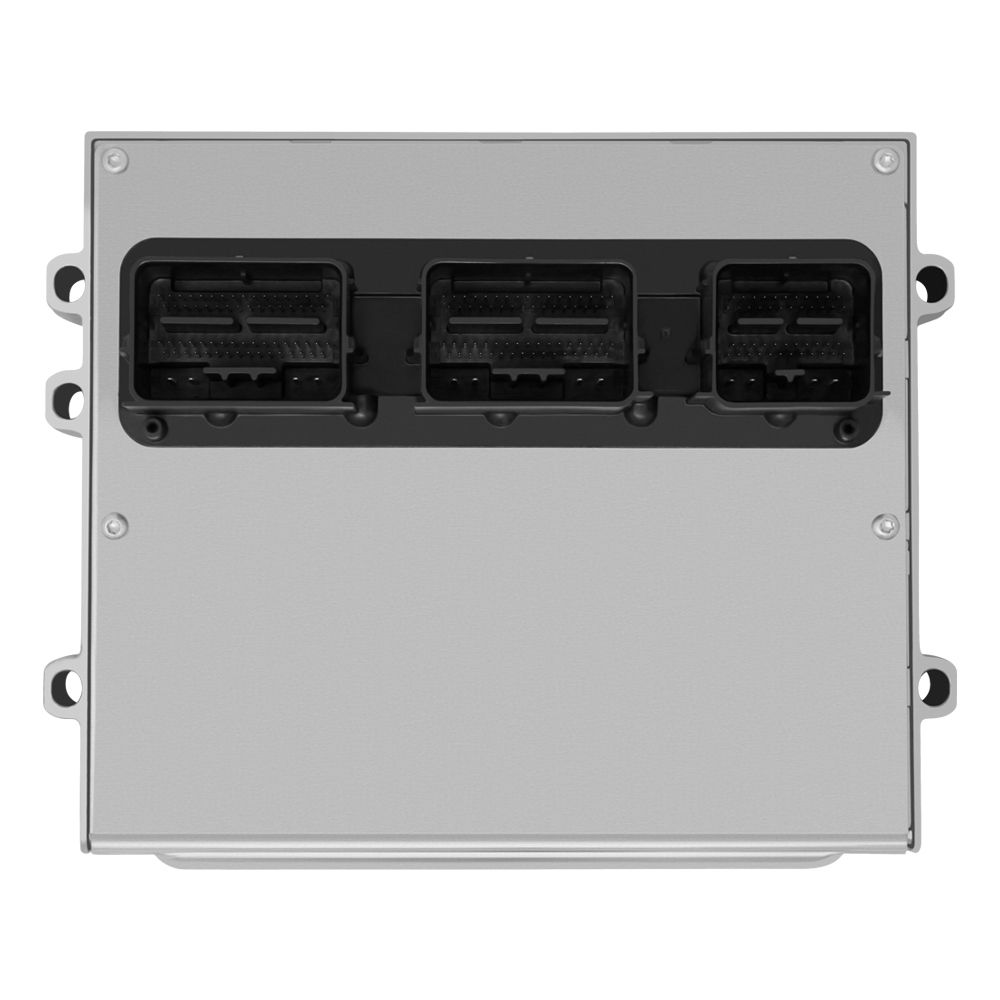
Flagship One stocks a refurbished, VIN-programmed PCM for the 2005 Lincoln Navigator with a lifetime warranty, free shipping and no core charge. The full Lincoln Navigator module lineup covers other engine configurations as well.
The 2005 Lincoln Navigator relies on its PCM to manage critical engine and transmission functions, and when it fails, drivability suffers. Recognizing the symptoms early—such as stalling, hesitation, or warning lights—can help you address the issue before it worsens. Whether you opt for a replacement or reprogramming, understanding the labor and relearn steps ensures a smooth repair process. With the right approach, your Navigator can continue to deliver the power and reliability you expect.