
Last updated on August 25th, 2026 at 12:12 pm
The powertrain control module in your 1996 Lincoln Town Car is the onboard computer that governs fuel injection, ignition timing, and transmission operation for the 4.6L V8. When it fails, you may experience stalling, misfire codes, poor fuel economy, or a no-start condition.
When your 1996 Lincoln Town Car begins exhibiting rough idle, unexpected stalling, or a persistent check-engine lamp, the powertrain control module may be at the center of the problem. This critical computer manages fuel delivery, ignition timing, and emissions functions for the 4.6L V8, and when it begins to fail, the symptoms often mimic other mechanical issues, leading many owners down a costly path of replacing sensors and coils before identifying the real culprit. Understanding what the PCM does, how it fails, and what replacement involves can save you time and money. The 1996 model year marks an important transition point for Ford’s EEC-V electronics, and certain diagnostic trouble codes and service bulletins directly affect how your vehicle’s computer should be diagnosed and serviced. Whether you are troubleshooting intermittent misfires or dealing with a complete no-start condition, knowing the factory procedures, including reprogramming requirements, helps you make informed repair decisions. This guide walks through the module’s role, common symptoms, bulletin-specific details, and what to expect during replacement so you can approach the repair with confidence and avoid unnecessary parts swaps.
The powertrain control module in your 1996 Lincoln Town Car serves as the central nervous system for the 4.6L V8 engine and electronic 4R70W transmission. It continuously reads input from dozens of sensors, including the mass airflow sensor, oxygen sensors, throttle position sensor, and camshaft position sensor, and uses that data to calculate precise fuel injector pulse widths, ignition timing advance, and transmission shift points. When operating correctly, the PCM balances performance, fuel economy, and emissions compliance seamlessly. When it begins to degrade, however, the effects ripple through nearly every drivetrain function. The 1996 Town Car uses Ford’s EEC-V architecture, which brought enhanced onboard diagnostics and tighter emissions monitoring compared to earlier systems. The PCM stores adaptive learning data for idle control and fuel trim, meaning a failing unit may cause increasingly erratic behavior as those learned values corrupt over time. Electrical stress from voltage spikes, failing alternator diodes, or corroded ground connections often damages internal circuitry before triggering a single clear code. Owners searching for replacement PCM modules for the Lincoln Town Car should understand that not all units are equal, and proper VIN-specific programming is essential for the module to communicate correctly with the PATS anti-theft system and the instrument cluster. A module that has lost its calibration or suffered internal faults may still power on and communicate partially with a scan tool, making diagnosis tricky without methodical testing of power and ground feeds first.
Flagship One keeps Lincoln Town Car replacement engine computers in stock for exactly this failure pattern.
1996 Lincoln Town Car
OEM programmed ECM for your 1996 Lincoln Town Car — plug & play, no dealer visit.
Free shipping · Lifetime warranty
The PCM in the 1996 Lincoln Town Car is typically mounted in the engine compartment, and accessing it requires basic hand tools along with care when disconnecting the multiple wiring harness connectors. Factory book time for powertrain control module removal and installation is listed at 1.1 hours, which covers gaining access, unbolting the unit, carefully separating the electrical connectors, and reversing the procedure. If the replacement module is not pre-programmed, an additional relearn procedure is specified at 0.5 hours to allow the PCM to adapt to your vehicle’s idle strategy and fuel trim parameters. The same 1.1-hour figure applies if the service literature references the unit as an engine control module rather than a PCM, since both terms describe the same component in this vehicle. During reinstallation, verify that all connector locking tabs engage fully and that the mounting surface is clean to ensure proper heat dissipation from the module’s aluminum case.
Work with the ignition off, and treat the module as static-sensitive: avoid touching the connector pins at any point.
| Operation | Configuration | Book Time |
|---|---|---|
| Engine Control Module R&R | All configurations | 1.1 hr |
| Powertrain Control Module Relearn | All configurations | 0.5 hr |
| Powertrain Control Module R&R | All configurations | 1.1 hr |
After a new or remanufactured PCM is installed in your 1996 Lincoln Town Car, Ford’s factory procedure typically requires a relearn process so the module can establish correct idle parameters and fuel trim baselines. The published relearn time of 0.5 hours reflects this adaptation step. In some cases, the module may also need full calibration flashing using specialized diagnostic equipment, particularly when the replacement unit arrives blank or carries a generic calibration. This is where choosing a pre-programmed unit matters. A VIN-programmed replacement PCM from Flagship One arrives already loaded with the correct calibration for your specific 1996 Lincoln Town Car, including the proper strategy code and PATS integration data. Because the unit is flashed to your vehicle identification number before shipment, the relearn and reprogramming steps that a dealership would perform are already completed. You still need to follow the idle relearn driving procedure so the module fine-tunes its adaptive tables, but the core calibration and security data are in place from the start.
A failing PCM in the 1996 Lincoln Town Car can produce a wide range of symptoms, many of which overlap with common sensor or ignition failures. One frequent complaint is a rough running engine accompanied by misfire diagnostic trouble codes. In fact, Ford issued a service bulletin specifically addressing codes P0300 through P0308 on 4.6L two-valve engines when the malfunction indicator lamp is illuminated but no actual driveability concern is felt, a condition often resolved through random misfire detected PCM reprogramming rather than mechanical repair. Beyond misfire codes, owners may experience intermittent stalling, particularly at idle or during deceleration, as the module’s idle control logic degrades. Hard starting or a complete no-start condition can occur if the PCM loses its ability to trigger the fuel injectors or ignition coils. Some vehicles develop erratic transmission behavior, including harsh shifts or delayed engagement, because the PCM also governs the 4R70W electronic transmission. Scan tool communication problems are another telltale sign; a failing module may refuse to establish a diagnostic link, respond intermittently, or report corrupted data. You might also notice poor fuel economy, black smoke from the exhaust indicating rich running, or a check-engine lamp that illuminates and then extinguishes randomly. Because these symptoms can stem from wiring faults, sensor failures, or mechanical issues, confirming a PCM problem requires systematic diagnosis, including verifying stable power and ground feeds to the module before condemning the unit.
Ford released several service bulletins relevant to the 1996 Lincoln Town Car’s powertrain control module. Bulletin 97-09-08 provides a service tip regarding PCM reprogramming procedures, offering guidance on proper technique. Bulletin 97-09-07 specifically addresses 4.6L two-valve engines and covers diagnostic trouble codes P0300 through P0308, where the malfunction indicator lamp is illuminated with no accompanying driveability concerns; the recommended fix is PCM reprogramming. Bulletin 99-04-03 pertains to EEC-V vehicles and outlines procedures for reprogramming powertrain control modules outside the vehicle, which may be relevant when performing bench flashing during replacement. These bulletins highlight that calibration updates were a recognized remedy for certain misfire-related complaints, reinforcing the importance of ensuring any replacement module carries the latest applicable software.
| Bulletin | Subject | What It Addresses |
|---|---|---|
| 97-09-08 | POWERTRAIN CONTROL MODULE – REPROGRAM POWERTRAIN CONTROL MODULE (PCM) – SERVICE PROCEDURES – SE | — |
| 97-09-07 | 4.6L 2V ENGINES ONLY – DIAGNOSTIC TROUBLE CODES (DTCS) P0300, P0301, P0302, P0303, P0304, P0305 | — |
| 99-04-03 | EEC V VEHICLES ONLY – OUT-OF-VEHICLE – REPROGRAMMING POWERTRAIN CONTROL MODULES (PCMS) | — |
The powertrain control module manages fuel injector timing, ignition spark delivery, and electronic transmission shifting for the 4.6L V8. It reads sensor inputs in real time and adjusts engine parameters to maintain performance, fuel economy, and emissions compliance. It also stores adaptive learning data for idle and fuel trim.
Factory service literature lists 1.1 hours for removal and installation of the powertrain control module. An additional 0.5 hours is specified for the relearn procedure if the replacement module requires calibration adaptation. A pre-programmed unit may reduce total workshop time since core calibration is already completed.
Driving with a failing PCM is not recommended. Depending on the nature of the failure, the module may cause stalling, harsh shifting, or a no-start condition that could leave you stranded. Intermittent failures can also worsen without warning, potentially affecting other drivetrain components.
Ford’s procedure typically requires a relearn step after PCM replacement, and some units may need full calibration flashing. A VIN-programmed unit from Flagship One arrives with the correct calibration already loaded, so dealership reprogramming is generally unnecessary. You should still perform the idle relearn driving procedure.
Ford service bulletin 97-09-07 specifically addresses codes P0300 through P0308 on 4.6L two-valve engines when the check-engine lamp is on with no driveability concerns. The recommended remedy is PCM reprogramming rather than mechanical repair, suggesting these misfire codes can stem from calibration issues.
If your 1996 Lincoln Town Car is showing misfire codes, stalling, or scan-tool communication problems, the PCM may need replacement rather than continued sensor swapping. A professionally remanufactured, VIN-programmed module offers a practical alternative to dealership pricing while ensuring the correct calibration for your specific vehicle. Flagship One programs each unit to your VIN before shipment, so the factory relearn and reprogramming steps are handled in advance.
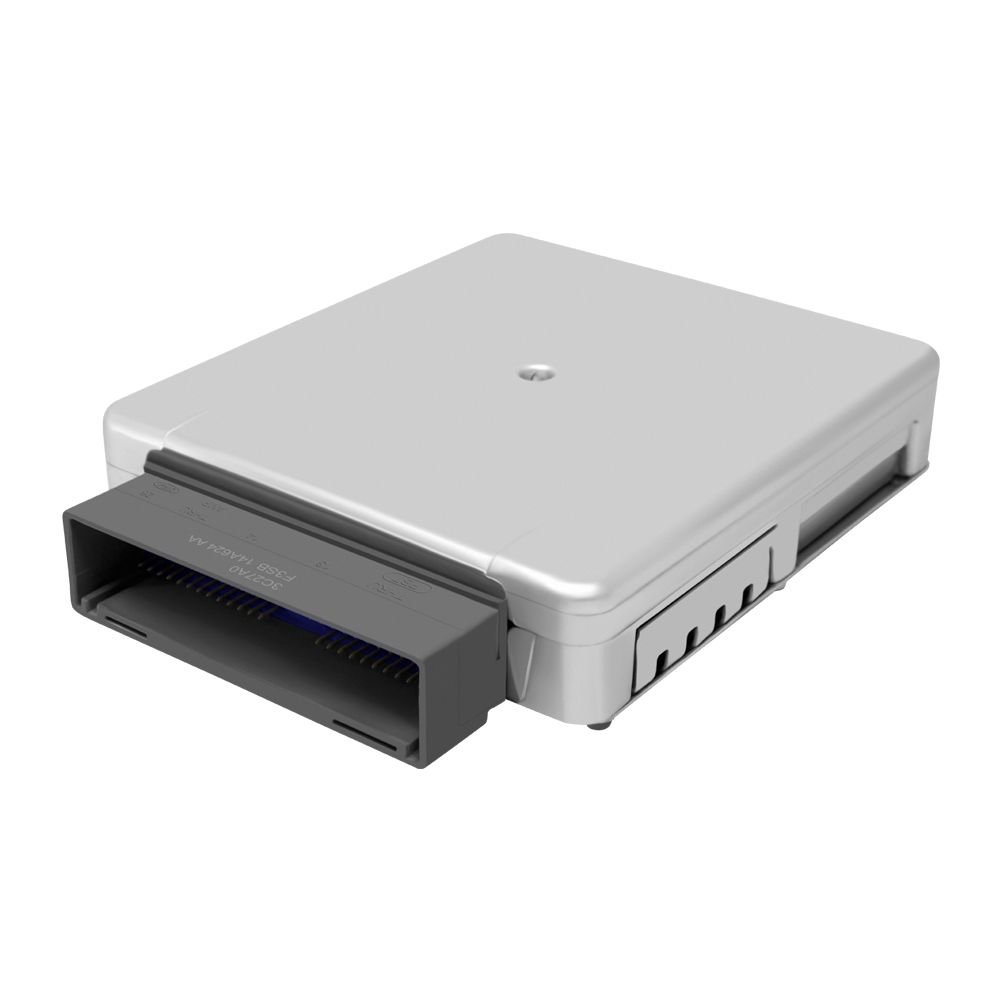
Flagship One stocks a refurbished, VIN-programmed PCM for the 1996 Lincoln Town Car with a lifetime warranty, free shipping and no core charge.
Your 1996 Lincoln Town Car relies on a healthy powertrain control module to keep the 4.6L V8 running smoothly and the transmission shifting correctly. Recognizing the symptoms early, understanding the factory service bulletins, and choosing a properly programmed replacement can restore reliable operation. When you are ready to move forward, a VIN-programmed PCM from Flagship One provides a straightforward path to getting your Lincoln back on the road.