
Last updated on August 25th, 2026 at 12:15 pm
The powertrain control module in the 1996 Eagle Vision 3.5L manages fuel delivery, ignition timing, and transmission shift logic. When it malfunctions, the engine may refuse to start, run rough, or produce erratic shift behavior because the controller can no longer coordinate these critical functions.
Owners of a 1996 Eagle Vision 3.5L often encounter a sudden no‑start condition, rough idle, or unexpected transmission shifts that point to the powertrain control module. This computer governs fuel injection, spark timing, and shift scheduling, so any internal fault can ripple through several systems at once. Recognizing the symptoms early helps you decide whether a simple reset, a relearn procedure, or a full module exchange is the most efficient path. The factory service information lists several labor allowances for removal, installation, and programming, and a handful of service bulletins highlight known issues such as an emissions‑related recall and a false check‑engine light. By understanding where the module lives, what the book times mean, and which bulletins apply, you can plan the repair with realistic expectations for time and cost. This guide walks through each of those elements so you can approach the job confidently, whether you perform the work yourself or coordinate with a shop. It also notes the specific book hours for each step, so you can estimate labor charges accurately. Finally, the article explains how a pre‑programmed replacement can eliminate the need for dealer‑level flash procedures.
The powertrain control module in the 1996 Eagle Vision 3.5L acts as the central brain for the engine and automatic transmission, constantly processing sensor data to adjust fuel mixture, ignition advance, and shift points. Because it integrates both engine and transmission strategies, a single fault can produce a cascade of symptoms ranging from a hard start to erratic gear changes. The module communicates over the vehicle’s data bus with the instrument cluster, the anti‑lock brake system, and the emissions monitors, so a loss of communication often shows up as a dead scan‑tool session or a persistent check‑engine light. Heat, vibration, and moisture exposure over decades of service can degrade the internal circuitry, leading to intermittent operation that is difficult to diagnose without a systematic approach. When replacement becomes necessary, technicians typically source replacement engine computers for the Vision that match the original hardware revision and software calibration. The new unit must be programmed to the vehicle identification number so that immobilizer codes, transmission adaptation values, and emission profiles are correct from the first key cycle. Understanding the module’s role helps you evaluate whether a reset, a relearn, or a full swap is the most logical next step. The module also stores adaptive fuel trims that evolve with engine wear, so a fresh unit starts with baseline values that must be relearned during the first few drive cycles. Because the controller handles both engine and transmission logic, any mismatch in software version can cause harsh shifts or fuel‑economy loss until the correct calibration is loaded.
Engine computer (ECM/PCM)
OEM programmed replacements — plug & play, no dealer visit.
Find yours by year, make & model →
Free shipping · Lifetime warranty
The factory removal procedure reaches the control module next to the air cleaner assembly, so access is gained by loosening the air‑cleaner housing and moving it aside. According to the service manual, the powertrain control module removal and installation each carry a book time of 0.5 hour, while the associated relearn procedure adds another 0.5 hour. The engine control module reset is listed at 0.3 hour, and a separate engine control module relearn is allotted 0.5 hour. If both the powertrain and engine control modules are serviced together, the combined book times reflect each operation individually rather than a single total. No special tools beyond basic hand tools are required, but care must be taken to protect the connector seals when the module is disconnected. After the physical swap, the technician follows the prescribed relearn sequence to allow the new module to learn idle and shift adaptation values.
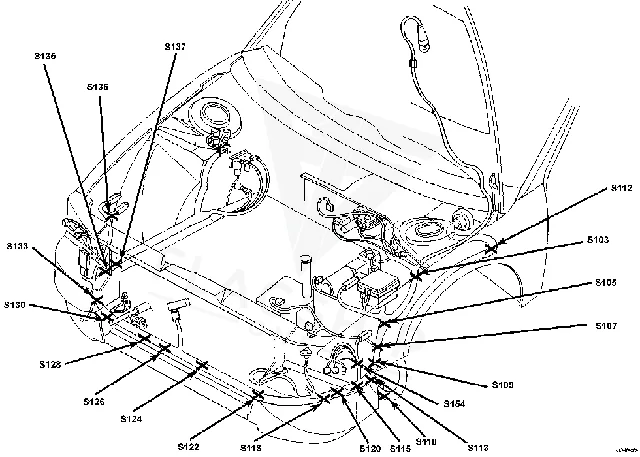
Work with the ignition off, and treat the module as static-sensitive: avoid touching the connector pins at any point.
| Operation | Configuration | Book Time |
|---|---|---|
| Powertrain Control Module R&R | All configurations | 0.5 hr |
| Powertrain Control Module Relearn | All configurations | 0.5 hr |
| Engine Control Module Reset | All configurations | 0.3 hr |
| Engine Control Module Relearn | All configurations | 0.5 hr |
| Engine Control Module R&R | All configurations | 0.5 hr |
After a module is installed, the factory procedure calls for a powertrain control module relearn that lasts 0.5 hour, followed by an engine control module reset of 0.3 hour and an engine control module relearn of 0.5 hour. These steps let the new controller acquire idle speed targets, transmission shift adaptation, and emission monitor readiness. When a replacement arrives from Flagship One, it is shipped as a VIN-programmed replacement unit so the immobilizer code, fuel‑trim baselines, and transmission strategy are already matched to the specific vehicle. Consequently, the technician can skip the dealer‑level flash and proceed directly to the relearn sequence, saving the 0.5 hour relearn and the 0.3 hour reset that would otherwise be required. The only remaining factory step is the powertrain control module relearn, which confirms that the module communicates correctly with the instrument cluster and the anti‑lock brake system. Verifying that the check‑engine light extinguishes after the relearn provides confidence that the installation is complete.
Typical signs that the powertrain control module in a 1996 Eagle Vision 3.5L is failing include a complete no‑start condition where the starter cranks but the engine never fires, intermittent stalling at idle or during low‑speed maneuvers, and a rough running engine that misfires under load. Drivers may also notice the transmission hunting between gears, harsh or delayed shifts, or the vehicle refusing to engage overdrive. The check‑engine light often illuminates with codes related to fuel system performance, ignition timing, or communication loss, and a scan tool may report an inability to establish a data link with the module. In some cases the instrument cluster shows erratic gauge readings because the module no longer supplies accurate sensor data. Voltage spikes from a weak alternator or an improper jump‑start can accelerate internal damage, making the symptoms appear suddenly after a charging‑system event. Because the module also manages the immobilizer, a faulty unit can prevent the key from being recognized, leaving the vehicle immobilized even though the battery and starter are healthy. Recognizing this pattern helps you separate a module problem from a sensor or wiring fault. A sudden loss of communication during a diagnostic session often precedes a complete module failure, so capturing live data early can confirm the root cause before the unit stops responding entirely. Owners who experience repeated crank‑no‑start cycles after a battery replacement should consider the module as a likely suspect.
Three factory service bulletins apply to the 1996 Eagle Vision 3.5L powertrain control module. Bulletin Rc-678-96 is a California emissions recall that requires reprogramming the module to meet updated standards. Bulletin 18-35-96 addresses an erroneous malfunction indicator lamp illumination linked to a hex code and eliminates the need for a PCM reset in those cases. Bulletin 18-037-05 provides a recovery procedure for flash programming failures using the DRBIII scan tool. Each bulletin outlines specific diagnostic steps and the required software version, so technicians should verify the applicable bulletin before beginning any reprogramming work.
| Bulletin | Subject | What It Addresses |
|---|---|---|
| — | Rc-678-96 California Emissions Recall #678 — Reprogram Powertrain Control Module | — |
| 18-35-96 | 18-35-96 Erroneous MIL Illumination With Hex Code $58, Elimination Of PCM Reset | — |
| 18-037-05 | 18-037-05 Flash Programming Failure Recovery Using DRBIII® | — |
Common signs include a no‑start condition, intermittent stalling, rough idle, harsh or delayed transmission shifts, and a check‑engine light that cannot be cleared with a scan tool.
The service manual lists 0.5 hour for removal and 0.5 hour for installation, with additional 0.5 hour for the powertrain control module relearn and 0.3 hour for an engine control module reset.
Recall Rc-678-96 applies to vehicles equipped with the California emissions package; owners should verify the emissions label or consult a dealer to confirm eligibility.
Flagship One supplies units that are pre‑programmed to the vehicle identification number, allowing the technician to skip the dealer flash and proceed directly to the relearn sequence.
Verify battery health, charging‑system output, ground integrity, and connector condition; a weak alternator or corroded ground can mimic module failure.
Deciding between repairing the existing controller and installing a refurbished unit depends on the severity of the fault and the labor budget. A simple reset or relearn may resolve intermittent communication losses, but persistent internal errors usually require a full swap. Because the 1996 Eagle Vision 3.5L uses a single module for both engine and transmission functions, a reliable replacement restores both systems simultaneously and avoids repeated diagnostic cycles.
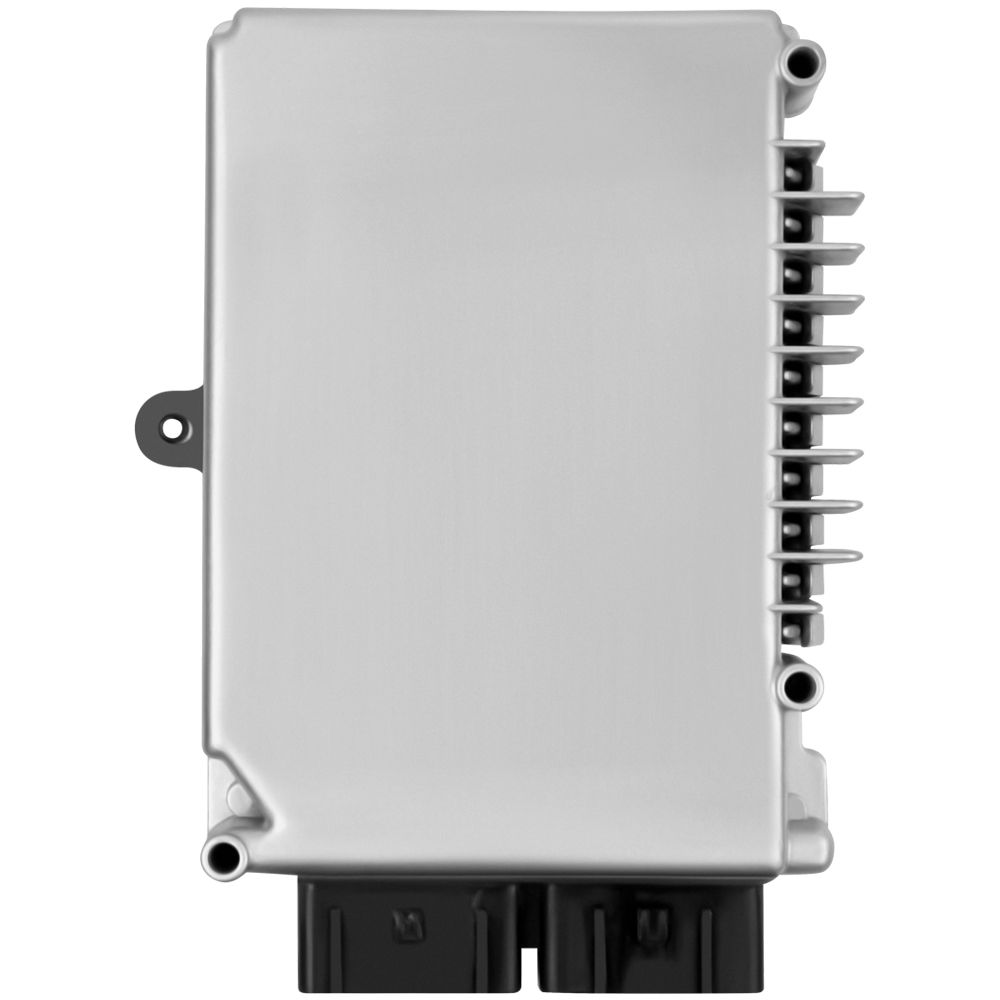
Flagship One stocks a refurbished, VIN-programmed PCM for the 1996 Eagle Vision with a lifetime warranty, free shipping and no core charge. The full Eagle Vision module lineup covers other engine configurations as well.
The 1996 Eagle Vision 3.5L relies on a single powertrain control module to coordinate fuel, spark, and shift strategies, so a dependable unit is essential for daily drivability. If testing confirms an internal fault, a pre‑programmed replacement can reduce shop time and eliminate the need for dealer‑level flashing. Consider confirming the applicable service bulletins before proceeding, and consult a qualified technician to ensure the repair matches the vehicle’s specific configuration.