
Last updated on August 25th, 2026 at 12:14 pm
The powertrain control module in the 1995 Eagle Vision manages fuel delivery, ignition timing, and transmission shifts for the 3.3L V6. When it fails, the engine may not start, stall unexpectedly, or run rough because the controller can no longer process sensor inputs or command actuators correctly.
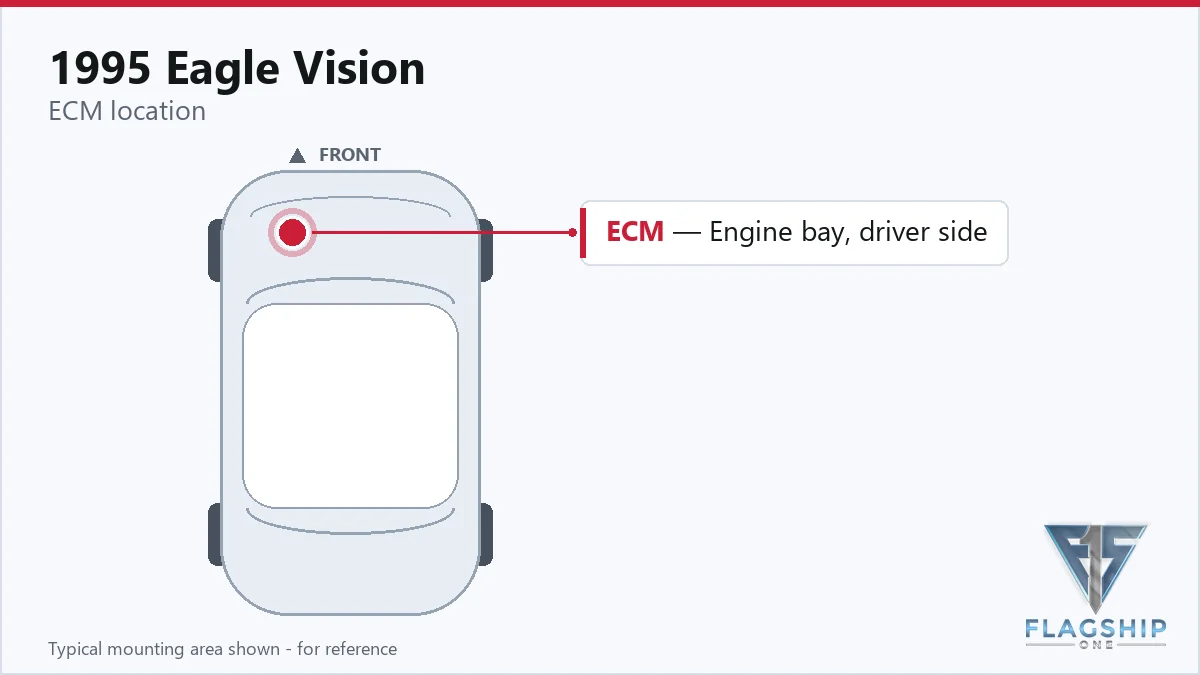
Owners of the 1995 Eagle Vision with the 3.3L V6 sometimes face a sudden no-start, intermittent stalling, or a check-engine light that refuses to clear. These symptoms often trace back to the powertrain control module, the computer that coordinates fuel injection, spark timing, and transmission operation. Because this vehicle predates OBD-II, diagnostic codes appear as hexadecimal values rather than the familiar P-codes, and the factory service bulletins highlight specific risks when modules are exchanged without the correct software. This article explains what the module does, where it lives under the hood, and what the factory labor times look like for removal, reset, and relearn steps. You will also learn which service bulletins apply, how to recognize the warning signs of a failing controller, and why a pre-programmed replacement can save you a trip to the dealership. By the end, you should have a clear picture of the repair process and the practical steps to keep your Vision running reliably. The guide also covers the location of the module next to the air cleaner, the exact book hours for each procedure, and the programming requirements that are handled before the unit ships.
The powertrain control module in the 1995 Eagle Vision is the central electronic brain for the 3.3L V6 engine and the four-speed automatic transmission. It constantly reads data from sensors such as the throttle position, manifold absolute pressure, coolant temperature, and vehicle speed, then calculates the precise injector pulse width, spark advance, and shift points for every driving condition. When the module operates correctly, the engine starts cleanly, idles smoothly, and delivers power without hesitation. A failure inside the controller — whether from heat stress, voltage spikes, or internal component fatigue — can corrupt those calculations, leading to a no-start condition, sudden stalls, rough idle, or erratic shifting. Because this vehicle uses a pre-OBD-II diagnostic system, the module reports faults as hexadecimal codes rather than the later P-code format, and a scan tool may show only a communication error if the processor has stopped responding. The module also stores the vehicle’s anti-theft logic, so swapping a used unit without matching the VIN can trigger the theft alarm and prevent the engine from cranking. For owners facing these issues, sourcing replacement modules for Eagle Vision that arrive already programmed to the specific VIN eliminates the need for dealer flash procedures and reduces the risk of introducing new faults. Understanding the module’s role helps you decide whether a reset, a relearn, or a full replacement is the most efficient path to restoring reliable operation.
1995 Eagle Vision
OEM programmed ECM for your 1995 Eagle Vision — plug & play, no dealer visit.
Free shipping · Lifetime warranty
The factory removal procedure reaches the control module next to the air cleaner assembly. According to the published labor times, removing and installing the module takes 0.5 hours, while a standalone engine control module reset requires 0.3 hours. If a relearn is needed after installation, the engine control module relearn calls for 0.5 hours and the powertrain control module relearn also calls for 0.5 hours. The powertrain control module removal and installation itself is listed at 0.5 hours. In practice, the technician will disconnect the battery, remove the air cleaner housing to gain access, unbolt the module from its bracket, and disconnect the wiring harness connectors. No special tools are mentioned in the factory data, but a clean work area and careful handling of the connectors help prevent bent pins or damaged seals. After the new unit is mounted, the same labor allowances apply for any required reset or relearn steps.
Work with the ignition off, and treat the module as static-sensitive: avoid touching the connector pins at any point.
| Operation | Configuration | Book Time |
|---|---|---|
| Engine Control Module Reset | All configurations | 0.3 hr |
| Engine Control Module Relearn | All configurations | 0.5 hr |
| Engine Control Module R&R | All configurations | 0.5 hr |
| Powertrain Control Module R&R | All configurations | 0.5 hr |
| Powertrain Control Module Relearn | All configurations | 0.5 hr |
After a module is replaced, the factory service procedure requires a controller reset followed by a relearn sequence for both the engine and powertrain control functions. The reset clears any stored adaptive values, and the relearn allows the new module to learn the specific characteristics of the engine sensors and transmission solenoids. In a dealership setting, this process is performed with a DRBIII scan tool and may involve flash programming to match the vehicle identification number. Flagship One supplies a VIN-programmed replacement unit so that the flash programming step is already completed before the part leaves the facility. As a result, the installer can proceed directly to the reset and relearn procedures, which together take about one hour of labor according to the book times. Skipping the flash programming eliminates a common source of post-install communication errors and ensures the anti-theft system recognizes the module immediately. The technician should still verify that the module communicates with the scan tool and that no theft alarm codes remain before returning the vehicle to service.
Common symptoms of a failing powertrain control module in the 1995 Eagle Vision include a crank-no-start condition where the engine turns over but never fires, intermittent stalling while driving or at idle, and a rough or hunting idle that does not smooth out after warm-up. Drivers may also notice sudden loss of power during acceleration, hesitation or surging at steady throttle, and erratic transmission shifts such as delayed engagement, harsh shifts, or the transmission locking in a single gear. The check-engine light may illuminate and stay on, and a scan tool connected to the data link connector may fail to establish communication with the controller, showing only a generic link error. In some cases, the anti-theft system may activate unexpectedly, causing the horn to sound or the starter to be disabled after a module swap. Voltage spikes from a weak alternator or improper jump-starting can accelerate internal damage, so these symptoms often appear after electrical system stress. Because the vehicle uses hexadecimal fault codes rather than OBD-II P-codes, the specific code definitions are not displayed on standard code readers, but the presence of any persistent communication fault or unexplained drivability issue should prompt a thorough inspection of the module and its wiring harness.
| Bulletin | Subject | What It Addresses |
|---|---|---|
| 08-02-95 | 08-02-95 NO Start or Improper Theft Alarm Actuation Due to PCM/BCM Swapping | — |
| 18-037-05 | 18-037-05 Flash Programming Failure Recovery Using DRBIII® | — |
| 08-13-99 | 08-13-99 MIL Illumination With Hex Code $3e or $42, Possible Sags/Hesitations | — |
The factory book time for removal and installation of the powertrain control module is 0.5 hours, with an additional 0.3 hours for a module reset and 0.5 hours each for the engine and powertrain relearn procedures.
Swapping a used module without matching the vehicle identification number often triggers the anti-theft system and can cause a no-start condition, so a VIN-programmed replacement is recommended.
Bulletins 08-02-95, 18-037-05, and 08-13-99 cover theft alarm activation after module swaps, flash programming recovery, and MIL illumination with hex codes 3E or 42 respectively.
Common signs include crank-no-start, intermittent stalling, rough idle, erratic shifting, loss of scan tool communication, and unexpected theft alarm activation.
No, this model uses a pre-OBD-II system that reports faults as hexadecimal values such as 3E and 42 rather than standard P-codes.
Deciding between a repair attempt and a refurbished replacement depends on the severity of the symptoms and the availability of proper programming equipment. A VIN-matched unit that arrives pre-flashed can eliminate the dealership programming step and reduce total labor time, while a reset and relearn may suffice for minor adaptive issues. Evaluating the cost of diagnostic time against the price of a guaranteed replacement helps you choose the most efficient path for your 1995 Eagle Vision.
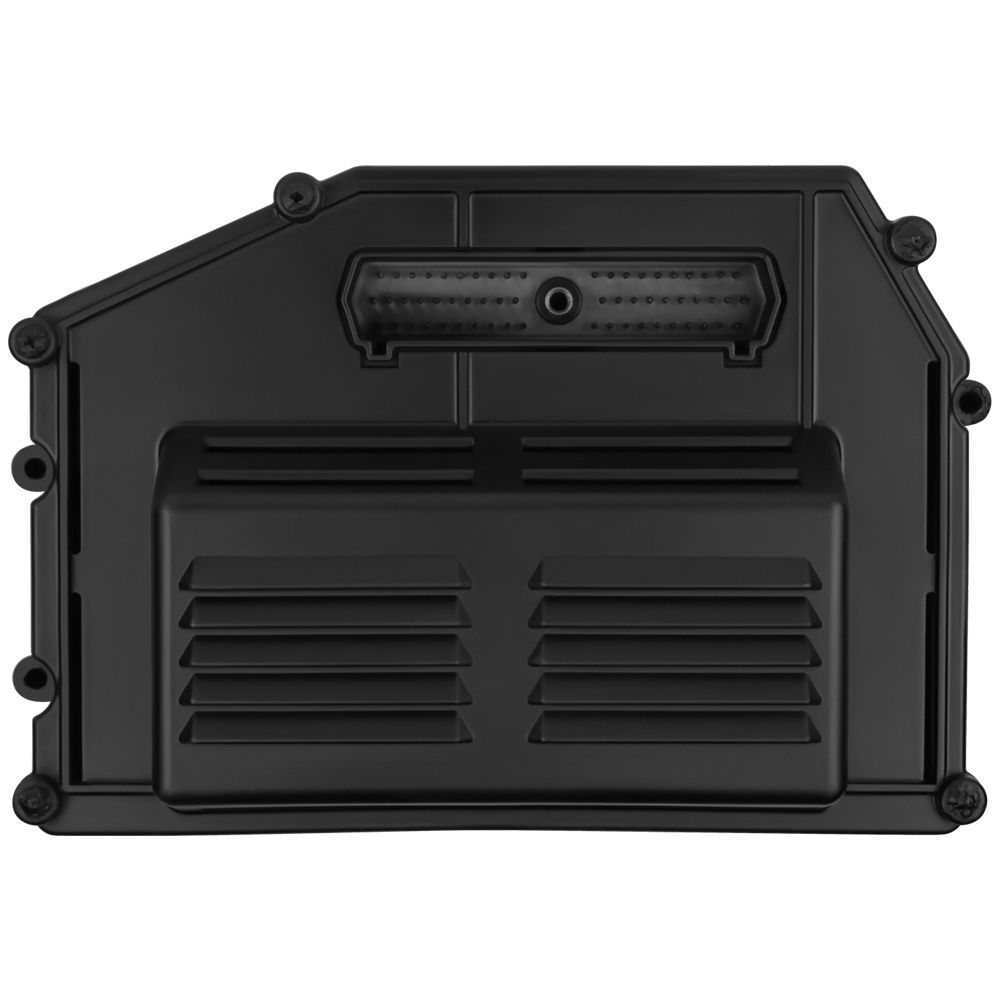
Flagship One stocks a refurbished, VIN-programmed PCM for the 1995 Eagle Vision with a lifetime warranty, free shipping and no core charge. The full Eagle Vision module lineup covers other engine configurations as well.
Understanding the role of the powertrain control module in your 1995 Eagle Vision gives you a clearer picture when drivability problems arise. With the factory labor times, service bulletin awareness, and the option of a pre-programmed replacement, you can approach the repair with confidence. If the module is confirmed faulty, a VIN-matched unit can simplify the process and get you back on the road sooner.