
Last updated on August 25th, 2026 at 12:45 pm
The powertrain control module on the 2016 Dodge Durango with the 3.6L engine serves as the primary computer managing engine and transmission operation. It reads data from numerous sensors and controls fuel injection, ignition timing, and gear shifting. When this module experiences internal failure, it may set module-internal diagnostic trouble codes and leave the vehicle inoperable or driveable with degraded performance.
If your 2016 Dodge Durango with the 3.6L engine is stalling, failing to start, or has lit up the check engine light with codes pointing to the computer, you may be dealing with a powertrain control module issue. This guide walks you through what the module does in this specific vehicle, how replacement and programming work, and what you should know before deciding on a repair path. You will gain a clear picture of the replacement process, the factory-required programming steps, and why units that arrive pre-programmed with your vehicle identification number can streamline the job. Symptoms, causes, service bulletin context, and prevention tips are all covered here.
The powertrain control module on your 2016 Dodge Durango acts as the central nervous system for the engine and automatic transmission. It processes input from the mass airflow sensor, crankshaft position sensor, throttle position sensor, and dozens of other signals to calculate fuel delivery, spark advance, and transmission shift schedules in real time. The 3.6L Pentastar V6 in the Durango relies heavily on this module to meet emissions standards and maintain driveability across varying loads and speeds. Because the module also participates in the vehicle bus network, it shares critical data with the ABS controller and other systems. When internal circuitry within the PCM fails, the module can no longer reliably execute these calculations, leading to drivability complaints or a no-start condition. Accessing the replacement engine computers for the Dodge Durango requires removing the unit from its bracket at the power distribution center.
2016 Dodge Durango
OEM programmed ECM for your 2016 Dodge Durango — plug & play, no dealer visit.
Free shipping · Lifetime warranty
The powertrain control module on the 2016 Dodge Durango with the 3.6L engine is secured to a mounting bracket that is co-located with the power distribution center. Removing the old unit involves disconnecting the electrical connectors, then lifting the module free from bracket position two. Installing the new module reverses this process: the replacement is positioned onto the bracket in the same location and reconnected. The book time for R&R alone is 0.6 hours, while positioning the new unit adds another 0.6 hours. After mechanical installation, a relearn procedure of 0.5 hours is typically needed, and if the ECM requires a separate reset, that is an additional 0.3 hours on top of that. Use care when disconnecting battery power before beginning the swap to avoid voltage spikes that could damage sensitive circuitry.
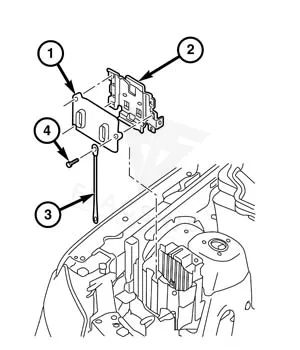
Work with the ignition off, and treat the module as static-sensitive: avoid touching the connector pins at any point.
| Operation | Configuration | Book Time |
|---|---|---|
| Powertrain Control Module Relearn | All configurations | 0.5 hr |
| Powertrain Control Module R&R | All configurations | 0.6 hr |
| Engine Control Module Relearn | All configurations | 0.5 hr |
| Engine Control Module Reset | All configurations | 0.3 hr |
| Engine Control Module R&R | All configurations | 0.6 hr |
The factory procedure requires that after the powertrain control module is installed on the 2016 Dodge Durango, a diagnostic scan tool must be used to write the original vehicle identification number and recorded mileage into the replacement unit. This step is not optional; omitting it may cause a diagnostic trouble code to set and could disrupt communication with other modules on the bus network. Chrysler also recommends temporarily disconnecting the ABS controller during the replacement to prevent VIN broadcast conflicts. When you choose a VIN-programmed replacement unit from Flagship One, the module arrives already loaded with your VIN and mileage data, eliminating the post-installation reprogramming step that the factory specifies for new units.
On a 2016 Dodge Durango equipped with the 3.6L engine, a failing powertrain control module commonly produces a no-start condition or intermittent stalling that leaves the engine running rough at idle. Drivers often report that the engine stalls at low speeds or when coming to a stop, and the check engine light may illuminate with codes that seem to point everywhere. Scan tools may show no communication with the module, or multiple misfire and transmission shift quality complaints can appear simultaneously. The P0601 code, which indicates internal memory checksum failure within the module, is a documented fault for this vehicle and points directly to PCM internal circuitry rather than an external sensor problem. Other symptoms may include poor fuel economy, unresponsiveness from the throttle, and transmission engagement delays that feel unrelated to the transmission itself.
The 2016 Dodge Durango covered here has documented module-internal diagnostic trouble codes recorded. These codes originate within the powertrain control module itself and indicate internal electronic faults rather than wiring or sensor failures elsewhere in the engine management system.
| Code | Meaning | Full Guide |
|---|---|---|
| P0601 | Internal memory checksum error | Full P0601 guide → |
| P0606 | Module processor failure | Full P0606 guide → |
A factory safety recall identified as U65 addresses powertrain control module reprogramming for certain 2016 Dodge Durangos. This campaign falls under the broader category of global recalls issued by the manufacturer. Shops working on this vehicle should always verify open recalls by VIN before beginning any repair. If the PCM has been replaced previously, the new unit may still be subject to the recall reprogramming procedure depending on its software level.
| Bulletin | Subject | What It Addresses |
|---|---|---|
| — | Service Bulletins/Recalls • 29 – Global Recalls • Safety Recall U65 – Reprogram Powertrain Cont | — |
Common symptoms include a no-start condition, intermittent stalling, rough idle, unresponsiveness from the throttle, check engine light illumination, and in some cases complete loss of communication with a scan tool. Diagnostic codes such as P0601 or P0606 may appear, indicating internal module faults.
Yes. The factory requires that the new PCM be programmed with the original VIN and the vehicle’s current mileage using a diagnostic scan tool. Units from Flagship One arrive pre-programmed with the correct VIN, which satisfies this requirement and reduces post-installation labor.
Code P0601 indicates an internal memory checksum error within the control module. If the replacement unit was not properly programmed with the correct VIN and mileage, or if the module itself has an undetected internal fault, the code may persist. Reprogramming the unit and verifying communication on the bus network should resolve it.
Deciding between repair and replacement for your 2016 Dodge Durango powertrain control module depends on the specific fault, the module’s physical condition, and your repair timeline. Remanufactured units offer a lower upfront cost but often require reprogramming before installation. Pre-programmed replacements arrive ready to install, reducing labor and potential programming errors. Whether you choose to rebuild or replace, confirm that the solution matches your vehicle’s configuration and that the technician is equipped to handle the relearn procedure required by this model’s engine management system.
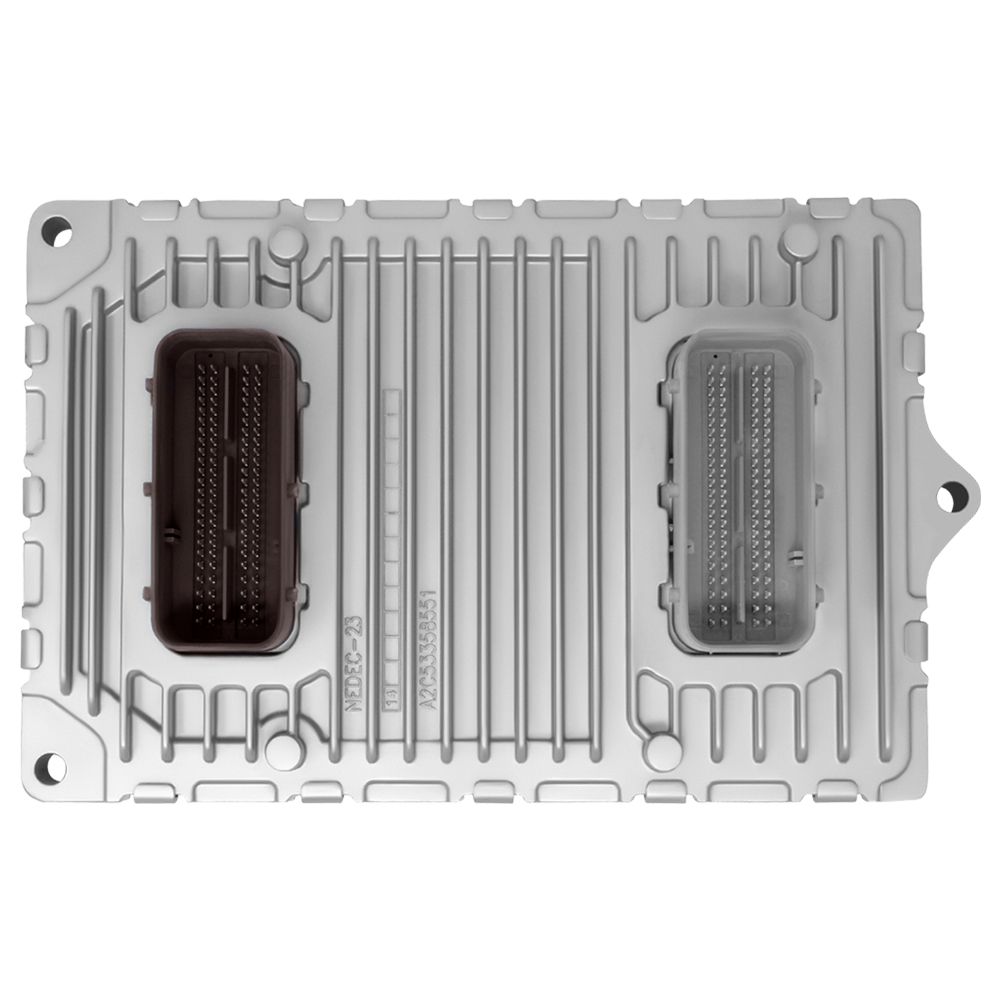
Flagship One stocks a refurbished, VIN-programmed PCM for the 2016 Dodge Durango with a lifetime warranty, free shipping and no core charge. The full Dodge Durango module lineup covers other engine configurations as well.
The powertrain control module is essential to every aspect of how the 2016 Dodge Durango with the 3.6L engine runs and shifts. Internal failures manifest as drivability issues and set codes that point to the module itself rather than外围 sensors. Replacement involves mechanical installation at the power distribution center bracket, followed by required VIN and mileage programming. Flagship One pre-programs these units with your specific VIN, removing one of the most critical post-installation steps. If you are evaluating repair options for your Durango, knowing the full scope of the procedure helps you make an informed decision.