
Last updated on August 25th, 2026 at 12:22 pm
In the 2012 Dodge Challenger, the Powertrain Control Module (PCM) and Engine Control Module (ECM) manage engine and transmission functions, translating sensor data into fuel and ignition commands. Failures in these units can cause erratic engine performance, misfires, or complete loss of power.
Replacing the powertrain or engine computer on a 2012 Dodge Challenger can seem daunting, but understanding what each module does and how to handle the job makes the process smoother. The PCM controls the transmission shift points and fuel delivery, while the ECM manages ignition timing and sensor interpretation. This guide walks you through the essential steps, from locating the module to ensuring it is properly programmed. With clear instructions and practical tips, you can confidently address common issues like misfires, stalling, or a lit check engine light.
The Powertrain Control Module in the 2012 Dodge Challenger interprets data from sensors such as the crankshaft position sensor, throttle position sensor, and manifold absolute pressure sensor. It uses that information to dictate the correct fuel mixture, ignition timing, and transmission shift logic. replacement engine computers for the 2012 Dodge Challenger The Engine Control Module, meanwhile, focuses on engine-specific tasks, such as controlling spark timing, fuel injector pulses, and emission system checks. Together, they keep the vehicle running smoothly, ensuring efficient power delivery and compliance with emissions standards. A malfunctioning module can cause symptoms ranging from a hard idle to a complete loss of power, making replacement a critical repair step.
2012 Dodge Challenger
OEM programmed ECM for your 2012 Dodge Challenger — plug & play, no dealer visit.
Free shipping · Lifetime warranty
The Powertrain Control Module sits beneath the dashboard on the driver’s side, accessible by removing the lower panel and disconnecting a few wiring harnesses. The Engine Control Module is located in the engine bay, close to the intake manifold, and requires removal of a small bracket and a few screws. Each replacement takes approximately 0.5 to 0.6 hours of labor. The process involves disconnecting the battery, removing the old module, installing the new unit, and reconnecting the harnesses. Careful attention to the correct orientation and secure connections ensures the module functions properly once installed.
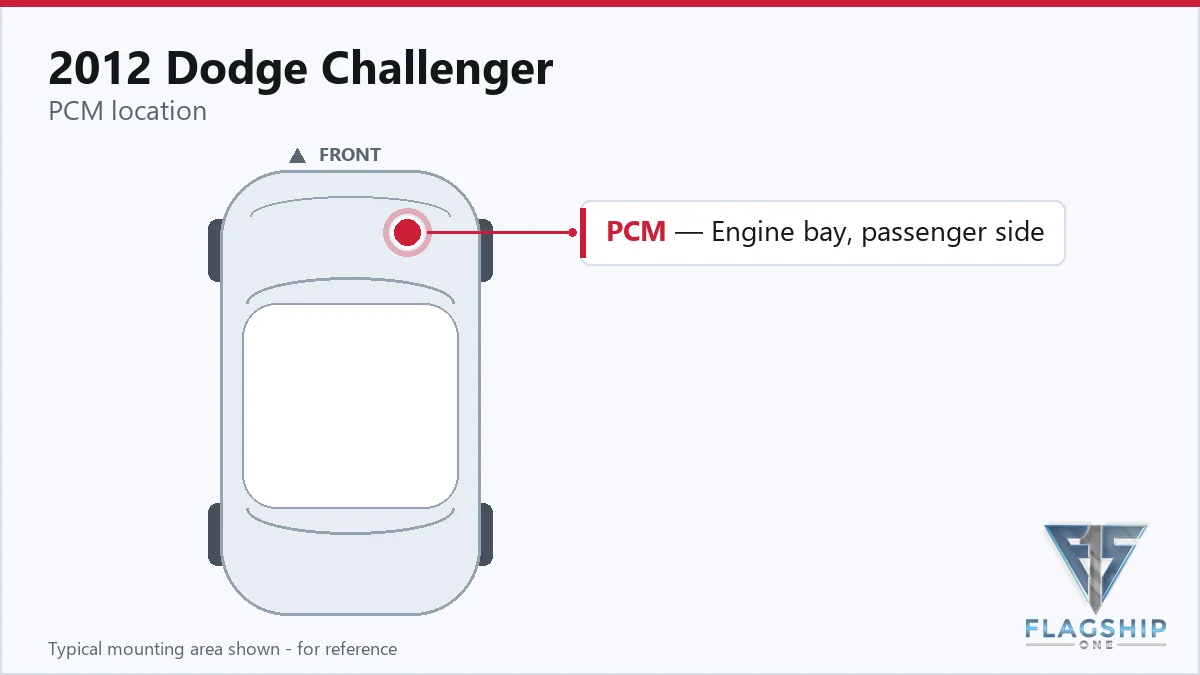
Work with the ignition off, and treat the module as static-sensitive: avoid touching the connector pins at any point.
| Operation | Configuration | Book Time |
|---|---|---|
| Powertrain Control Module Relearn | All configurations | 0.5 hr |
| Powertrain Control Module R&R | All configurations | 0.6 hr |
| Engine Control Module Relearn | All configurations | 0.5 hr |
| Engine Control Module Reset | All configurations | 0.3 hr |
| Engine Control Module R&R | All configurations | 0.6 hr |
After installing a new PCM, the factory procedure calls for a VIN and mileage programming step. Flagship One units come pre‑programmed with the correct VIN and mileage, so this step is already completed. When a new PCM is installed, you still need to confirm the module is recognized by the vehicle’s diagnostic system. VIN-programmed replacement unit The factory procedure is brief, but the pre‑programmed unit eliminates the need for a separate coding session.
When a 2012 Dodge Challenger’s PCM or ECM fails, owners may notice a lit check engine light, irregular engine idle, or the vehicle stalling under load. The engine may also run rich or lean, causing rough performance or reduced fuel economy. In extreme cases, the vehicle may refuse to start or exhibit erratic transmission shifts. If a trouble code such as PCM, ECM control module internal error appears, it typically indicates a communication failure within the module’s internal circuitry.
The codes below point to the PCM itself rather than to a sensor or circuit it monitors. Each one links through to its full diagnostic guide.
| Code | Meaning | Full Guide |
|---|---|---|
| P0601 | Internal memory checksum error | Full P0601 guide → |
| P0606 | Module processor failure | Full P0606 guide → |
Factory Service Bulletin #18-031-12 Rev. A addresses MIL illumination for P0108, which indicates a high manifold absolute pressure sensor circuit. Bulletin #21-005-13 deals with MIL illumination for P0730, pointing to an incorrect gear ratio. Both bulletins provide flashing procedures to correct the associated fault codes.
| Bulletin | Subject | What It Addresses |
|---|---|---|
| 18-031-12 Rev. A | 18-031-12 Rev. A Flash: MIL Illumination P0108 – Manifold Absolute Pressure Sensor Circuit High | — |
| 21-005-13 | 21-005-13 Flash: MIL Illumination for P0730 – Incorrect Gear Ratio | — |
Begin by reading any stored trouble codes with a scan tool. Verify that the codes relate to the PCM, such as P0601 or P0606. Check for signs of wiring damage or connector corrosion. If the codes persist after a reset, a PCM replacement is likely warranted.
A properly programmed ECM should restore the original fuel maps and timing parameters. If the module was malfunctioning, you may notice an improvement in fuel economy once the replacement is installed and the vehicle is re‑learned.
The relearn procedure typically takes about 0.5 hours. It involves running the vehicle through a short drive cycle while the module updates its internal tables for idle, throttle response, and shift points.
Replacing the battery is not mandatory unless the existing battery is weak or has a low voltage output, which could interfere with module programming.
A refurbished PCM that has been tested and reprogrammed to the vehicle’s VIN and mileage can be a safe alternative. Ensure it comes with a warranty and has passed all factory certification checks.
When your 2012 Dodge Challenger exhibits symptoms tied to the PCM or ECM, you have options. A repair that replaces only the module can restore original performance, while a refurbished unit may offer a cost‑effective alternative with similar reliability. Evaluate the condition of the existing electronics, your budget, and how long you plan to keep the vehicle before deciding on the best course of action.
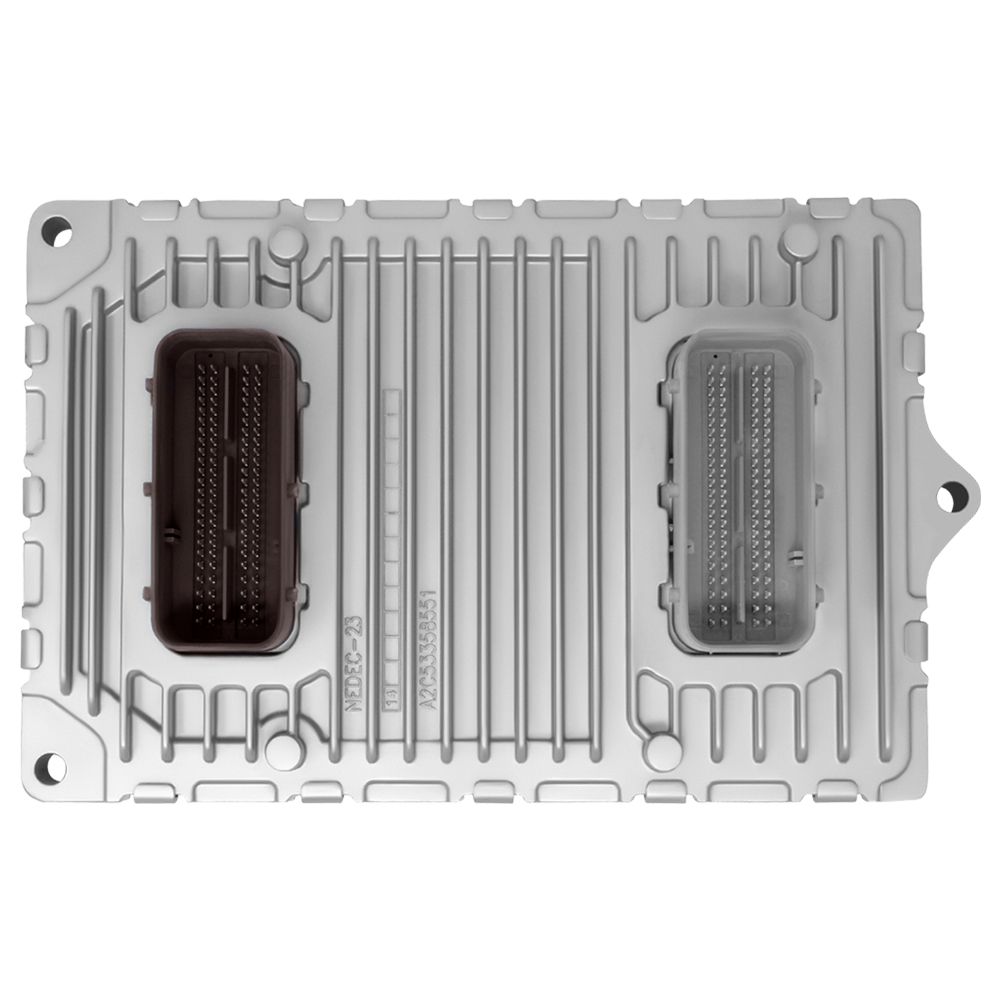
Flagship One stocks a refurbished, VIN-programmed PCM for the 2012 Dodge Challenger with a lifetime warranty, free shipping and no core charge. The full Dodge Challenger module lineup covers other engine configurations as well.
The 2012 Dodge Challenger’s Powertrain Control Module and Engine Control Module are essential for smooth operation. By understanding their roles, knowing how to replace them, and following proper programming steps, you can keep your vehicle running reliably. Consider the information above when planning your next maintenance visit.