
Last updated on August 25th, 2026 at 12:47 pm
The Engine Control Module (ECM) or Powertrain Control Module (PCM) in your 2005 Dodge Sprinter manages fuel, ignition, and emissions for the 2.7L diesel engine. Failure may cause hard starting, poor performance, or false diagnostic codes that mislead repairs.
If your 2005 Dodge Sprinter is stalling, refusing to start, or throwing confusing trouble codes, the engine computer may be the culprit. The ECM or PCM in these vehicles acts as the brain for the 2.7L diesel engine, regulating fuel delivery, ignition timing, and emissions systems. When it fails, symptoms can range from subtle performance issues to a complete no-start condition. Replacing the module isn’t just about swapping hardware—it requires precise programming and a relearn procedure to ensure the vehicle runs correctly. Understanding the role of this module, where it’s located, and what steps are involved in replacement can help you avoid unnecessary diagnostic delays. Whether you’re a technician or a Sprinter owner, knowing these details ensures you’re prepared for a smooth repair process.
The Engine Control Module (ECM) or Powertrain Control Module (PCM) in your 2005 Dodge Sprinter is responsible for managing the engine’s fuel injection, turbocharger boost, and emissions systems. It constantly monitors sensor inputs—like throttle position, coolant temperature, and air intake—to adjust fuel delivery and ignition timing for optimal performance. Without a functioning module, the engine may run poorly or not at all. This component is particularly critical in diesel engines, where precise fuel metering is essential for efficiency and power. If the module fails, you might notice symptoms like rough idling, reduced fuel economy, or even false replacement engine computers for the Sprinter codes that lead to misdiagnosis. The module’s role extends beyond basic engine control; it also interfaces with the transmission and other vehicle systems to ensure smooth operation. Given its complexity, a failing ECM/PCM often requires replacement rather than repair, and the process involves more than just physical installation.
2005 Dodge Sprinter
OEM programmed ECM for your 2005 Dodge Sprinter — plug & play, no dealer visit.
Free shipping · Lifetime warranty
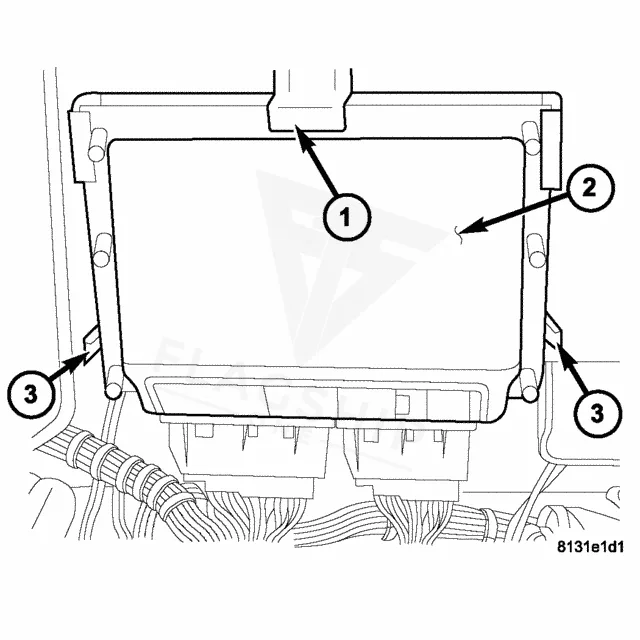
The ECM/PCM in the 2005 Dodge Sprinter is typically located near the engine bay, though the exact position can vary slightly between the 2500 and 3500 models. Replacing the module is a straightforward process, with labor times set at 0.3 hours for removal and installation. This includes disconnecting the battery, unplugging the wiring harness, and removing any mounting bolts securing the module. Once the old unit is out, the new module is installed in the reverse order. No specialized tools are required beyond basic hand tools, but care should be taken to avoid damaging the connectors or pins during the swap. After installation, the module must undergo a relearn procedure, which adds another 0.5 hours of labor to ensure proper communication with the vehicle’s systems.
| Operation | Configuration | Book Time |
|---|---|---|
| Engine Control Module Relearn | Sprinter 2500 | 0.5 hr |
| Engine Control Module Relearn | Sprinter 3500 | 0.5 hr |
| Engine Control Module R&R | Sprinter 2500 | 0.3 hr |
| Engine Control Module R&R | Sprinter 3500 | 0.3 hr |
| Powertrain Control Module Relearn | Sprinter 2500 | 0.5 hr |
| Powertrain Control Module Relearn | Sprinter 3500 | 0.5 hr |
| Powertrain Control Module R&R | Sprinter 2500 | 0.3 hr |
| Powertrain Control Module R&R | Sprinter 3500 | 0.3 hr |
After replacing the ECM or PCM in your 2005 Dodge Sprinter, the module must be programmed to match the vehicle’s specific options package. This step is critical because the engine computer relies on this data to control fuel delivery, emissions, and other systems accurately. The factory procedure requires a scan tool capable of performing this programming, and skipping this step may result in poor performance or false trouble codes. However, if you install a VIN-programmed replacement unit, this step is already completed, saving you time and potential headaches. The relearn procedure, which takes 0.5 hours, is still necessary to synchronize the new module with the vehicle’s sensors and systems. Without this synchronization, the engine may run erratically or fail to start altogether. Ensuring the module is properly programmed and relearned is key to restoring your Sprinter’s performance.
A failing ECM or PCM in your 2005 Dodge Sprinter can cause a variety of symptoms, some of which may mimic other issues. Common signs include a no-start condition, where the engine cranks but refuses to fire, or intermittent stalling while driving. You might also notice poor acceleration, rough idling, or a significant drop in fuel economy. False or unrelated trouble codes, such as internal control module memory checksum error, may appear, leading to misdiagnosis if the module itself is the root cause. In some cases, the vehicle may enter a limp-home mode, limiting power to prevent further damage. Scan tool communication issues, where the tool fails to connect to the module, are another red flag. Because the ECM/PCM controls so many engine functions, symptoms can be inconsistent, making diagnosis challenging. If you’re experiencing any of these issues, it’s worth checking the module’s health before diving into more complex repairs.
Factory service bulletin #08-028-06 addresses an issue where erroneous or unrelated trouble codes may appear in the Engine Control Module (ECM) or ABS/ESP control module of the 2005 Dodge Sprinter. This bulletin highlights that false codes can lead to unnecessary repairs if the module is not properly diagnosed. Technicians are advised to verify the integrity of the module before replacing other components based on these codes. The bulletin serves as a reminder that module-related issues may not always be straightforward and require careful validation.
| Bulletin | Subject | What It Addresses |
|---|---|---|
| 08-028-06 | 08-028-06 Erroneous and/or Unrelated Dtc’s In the Engine Control Module (ECM) or ABS/ESP Contro | — |
False codes often appear if the new module isn’t properly programmed or relearned. The ECM must be synced with the vehicle’s systems to avoid communication errors. A VIN-programmed replacement unit can minimize this issue, but the relearn procedure is still necessary.
Driving with a failing ECM is risky. The vehicle may stall unexpectedly, enter limp mode, or suffer from poor performance. If you suspect the module is failing, it’s best to address it promptly to avoid further damage or unsafe driving conditions.
Start by scanning for trouble codes. If the codes point to the ECM or are inconsistent with other symptoms, the module may be the culprit. A no-start condition, poor performance, or scan tool communication issues are strong indicators of ECM failure.
In this vehicle, the terms ECM and PCM are often used interchangeably, as the module controls both engine and transmission functions. However, the exact terminology may vary depending on the diagnostic tool or service manual used.
Skipping the relearn procedure may result in poor engine performance, false trouble codes, or even a no-start condition. The relearn ensures the new module communicates correctly with the vehicle’s sensors and systems, so it’s a critical step in the replacement process.
If your 2005 Dodge Sprinter is experiencing symptoms of ECM failure, you have options. Replacing the module with a new or refurbished unit can restore performance, but it’s important to choose one that’s already programmed to your vehicle’s VIN. This eliminates the need for on-site programming and reduces the risk of post-installation issues. Whether you’re a technician or a Sprinter owner, understanding the replacement process and the importance of programming can save time and frustration.
Flagship One stocks a refurbished, VIN-programmed PCM for the 2005 Dodge Sprinter with a lifetime warranty, free shipping and no core charge. The full Dodge Sprinter module lineup covers other engine configurations as well.
The ECM or PCM in your 2005 Dodge Sprinter plays a vital role in keeping the 2.7L diesel engine running smoothly. If you’re dealing with no-start conditions, false codes, or poor performance, the module may be to blame. Replacing it involves more than just swapping hardware—proper programming and a relearn procedure are essential for success. By addressing the issue promptly and using a VIN-programmed replacement unit, you can get your Sprinter back on the road with minimal downtime.