
Last updated on August 25th, 2026 at 12:15 pm
In the 1995 Dodge Stealth, the engine control module (ECM) and powertrain control module (PCM) manage fuel delivery, ignition timing, and transmission shifting. Failure of either unit can cause loss of drive, rough idle, or loss of diagnostic communication, requiring a relearn after replacement.
When a 1995 Dodge Stealth experiences symptoms such as a no‑start condition, erratic shifting, or loss of scan‑tool communication, the underlying cause often points to the engine control module or powertrain control module. Understanding how these computers function and what the factory expects after they are swapped can save you time and prevent unnecessary diagnostics. This guide walks you through the role of the ECM and PCM in this particular Stealth, where the units live, what the factory service bulletins recommend, and how a VIN‑programmed replacement from Flagship One simplifies the process. By the end, you’ll know the exact labor steps, the programming requirements, and practical steps to keep the modules healthy.
1995 Dodge Stealth
OEM programmed ECM for your 1995 Dodge Stealth — plug & play, no dealer visit.
Free shipping · Lifetime warranty
The engine control module in a 1995 Dodge Stealth acts as the brain for the V6 powerplant, constantly adjusting fuel injection, ignition timing, and emissions controls based on sensor input. The powertrain control module, while closely linked, extends that oversight to the automatic transmission, coordinating shift timing and torque converter lock‑up. Together they ensure the vehicle runs smoothly and meets emissions standards. Because the Stealth predates OBD‑II, these computers rely on proprietary communication protocols, making accurate relearn procedures essential after any hardware change. The module replacement process often involves accessing the unit beneath the intake manifold, disconnecting the wiring harness, and securing the new unit with the specified torque. A proper 1995 Dodge Stealth engine control module ensures the vehicle’s performance and emissions compliance remain within factory tolerances.
In the 1995 Dodge Stealth, the ECM is mounted on the passenger‑side firewall, attached to the intake assembly, while the PCM resides nearby on the driver’s side, bolted to the transmission housing. Removal typically requires disconnecting the main power connector, unbolting the mounting hardware, and sliding the unit out of its cradle. Installation reverses those steps, with the new module seated firmly and fastened to the factory torque specification. The service guide assigns a labor time of 0.5 hours for both the ECM relearn and the PCM relearn, reflecting the straightforward access once the components are exposed. Technicians also allocate 0.5 hours for each unit’s removal and replacement, indicating that the physical swap is relatively quick when the proper tools are at hand.
| Operation | Configuration | Book Time |
|---|---|---|
| Engine Control Module Relearn | All configurations | 0.5 hr |
| Engine Control Module R&R | All configurations | 0.5 hr |
| Powertrain Control Module Relearn | All configurations | 0.5 hr |
| Powertrain Control Module R&R | All configurations | 0.5 hr |
After the ECM or PCM is installed in a 1995 Dodge Stealth, the factory procedure calls for a relearn cycle that reestablishes sensor baselines and transmission shift patterns. This process traditionally involves a series of key‑on/key‑off sequences and a short drive to allow the modules to capture operating data. With a Flagship One replacement, the unit arrives VIN‑programmed, so the essential a VIN‑programmed replacement unit eliminates the need for those factory‑only steps, allowing you to proceed directly to the half‑hour relearn listed in the labor guide.
A failing ECM or PCM in a 1995 Dodge Stealth may present as a complete no‑start condition, intermittent stalling at idle, rough acceleration, or loss of transmission shifting cues. Drivers often notice that the check engine light flashes without a clear diagnostic code, and a scan tool may fail to establish communication with the vehicle’s computer network. In some cases, the engine may run but exhibit erratic fuel trims, leading to poor fuel economy and emissions warnings. These symptoms typically indicate that the module cannot process sensor data correctly, prompting the need for replacement and the subsequent relearn procedures.
Service Bulletin #18-037-05 outlines a flash programming failure recovery method using the DRBIII® tool. This bulletin specifically addresses situations where the ECM or PCM does not accept a new firmware image, guiding technicians through a step‑by‑step reset and reflash process to restore proper operation.
| Bulletin | Subject | What It Addresses |
|---|---|---|
| 18-037-05 | 18-037-05 Flash Programming Failure Recovery Using DRBIII® | — |
The factory book assigns 0.5 hours for the ECM relearn after the unit is installed.
Factory procedures call for a specific relearn sequence, but a VIN‑programmed Flagship One unit eliminates the need for additional programming tools.
Yes, the service guide lists 0.5 hours for both the ECM and PCM relearn processes.
It provides a recovery method for flash programming failures using the DRBIII® device.
The factory manual includes the required torque values, which should be followed during installation to ensure proper seating.
When the ECM or PCM in your 1995 Dodge Stealth needs attention, you can choose a new factory‑spec unit or a refurbished Flagship One replacement. Both options require the same half‑hour relearn, but the Flagship One part arrives VIN‑programmed, saving you the additional programming step and reducing shop time.
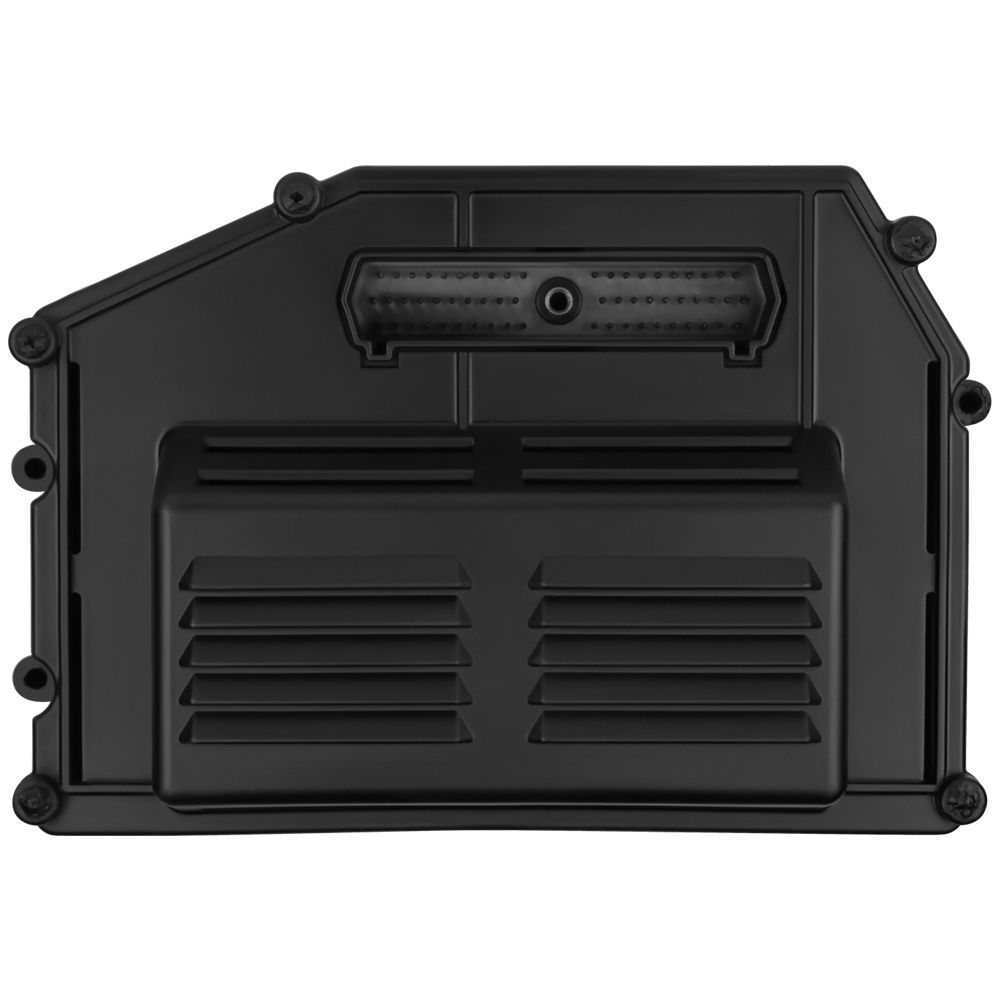
Flagship One stocks a refurbished, VIN-programmed PCM for the 1995 Dodge Stealth with a lifetime warranty, free shipping and no core charge. The full Dodge Stealth module lineup covers other engine configurations as well.
If your 1995 Dodge Stealth shows signs of computer failure, a proper replacement and relearn will restore reliable operation. Consider a VIN‑programmed unit to simplify the process and get back on the road sooner.