
Last updated on August 25th, 2026 at 12:54 pm
In the 2000 Chrysler Concorde the Powertrain Control Module manages engine and transmission commands. A failure often results in loss of communication, engine stall, or diagnostic codes such as P0600 and P0601, indicating internal PCM issues.
When a 2000 Chrysler Concorde experiences powertrain control problems, the PCM may need to be replaced or reprogrammed. This guide explains where the module lives, what work is involved, and what steps follow a replacement. By following the outlined process, you can understand the expected labor, necessary programming, and how to avoid common pitfalls, helping you decide between a new OEM unit and a refurbished alternative.
The Powertrain Control Module in the 2000 Chrysler Concorde acts as the brain for both engine and transmission, processing sensor data and issuing command signals to maintain smooth operation. It coordinates fuel delivery, ignition timing, and shift timing, which makes it essential for reliable performance. A malfunction can trigger communication loss with the diagnostic scanner and cause drivability issues. Understanding its role helps you appreciate why a correct installation and programming step is critical. replacement powertrain control modules for the 2000 Chrysler Concorde ensures the vehicle runs as designed.
Engine computer (ECM/PCM)
OEM programmed replacements — plug & play, no dealer visit.
Find yours by year, make & model →
Free shipping · Lifetime warranty
The PCM is situated within the engine compartment of the 2000 Chrysler Concorde. Removing the unit typically requires about 0.4 hours, while reinstalling it takes roughly 0.5 hours according to the labor guide. Access involves disconnecting the negative battery cable, removing any fasteners that secure the module, and handling the wiring harness with care. Once the old PCM is out, the new unit is positioned in the same location, fastened, and the battery connection restored.
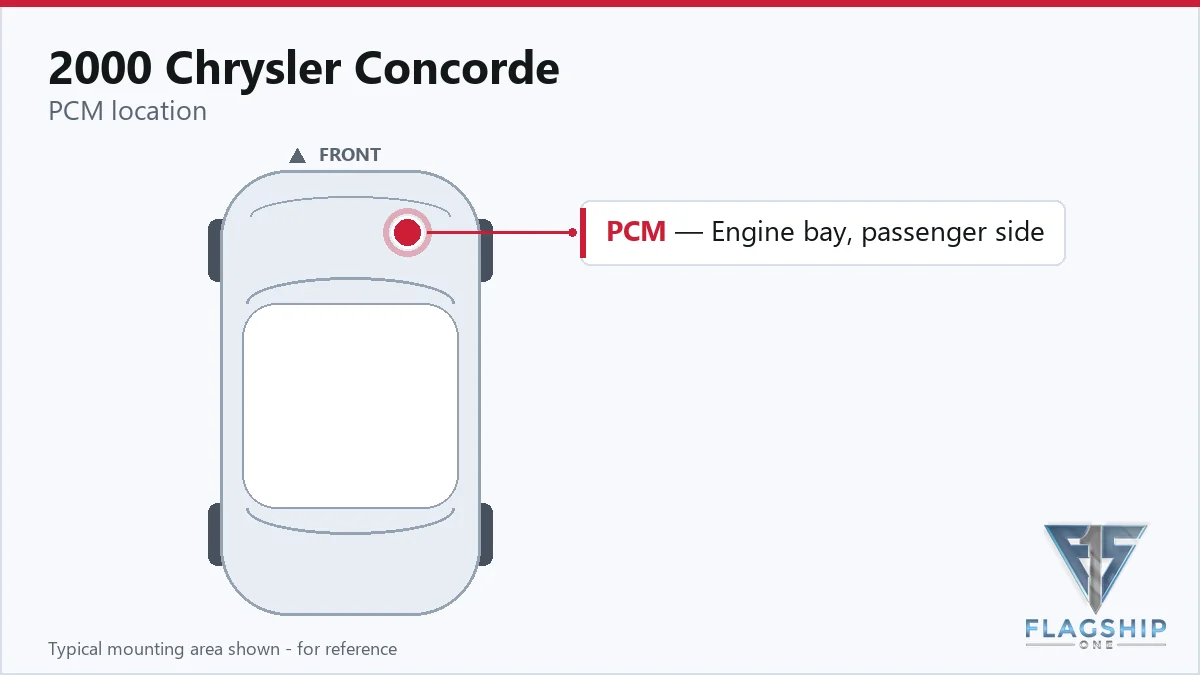
Work with the ignition off, and treat the module as static-sensitive: avoid touching the connector pins at any point.
| Operation | Configuration | Book Time |
|---|---|---|
| Powertrain Control Module Relearn | 300M | 0.5 hr |
| Powertrain Control Module Relearn | Concorde | 0.5 hr |
| Powertrain Control Module R&R | 300M | 0.4 hr |
| Powertrain Control Module R&R | Concorde | 0.4 hr |
| Engine Control Module Relearn | 300M | 0.5 hr |
| Engine Control Module Relearn | Concorde | 0.5 hr |
| Engine Control Module R&R | 300M | 0.4 hr |
| Engine Control Module R&R | Concorde | 0.4 hr |
After a PCM swap, the factory procedure calls for using the DRB Scan tool to reprogram the new module with the vehicle’s original VIN and mileage, followed by a speed control servo installation and fastener tightening, then reconnecting the negative battery cable and reprogramming the radio and clock. Flagship One provides a VIN-programmed replacement unit, so these steps are already completed when the part arrives. a VIN-programmed replacement unit eliminates the need for on‑site reprogramming.
A failing PCM in a 2000 Chrysler Concorde often leads to no‑start conditions, rough idle, or intermittent stalling, especially when the engine control module cannot communicate. Drivers may notice transmission shift delays or unexpected gear changes. Diagnostic scans frequently reveal internal fault codes such as P0601, which indicates a PCM internal communication error. Addressing these signs early can prevent further drivability problems.
The following internal trouble codes are commonly logged by the PCM in this vehicle:
| Code | Meaning | Full Guide |
|---|---|---|
| P0600 | Module-internal fault | Full P0600 guide → |
| P0601 | Internal memory checksum error | Full P0601 guide → |
Service bulletin #08-030-06 Rev. A outlines the Powertrain Control Module Initialization procedure for the 2000 Chrysler Concorde. The bulletin provides guidance on proper relearn steps after module replacement.
| Bulletin | Subject | What It Addresses |
|---|---|---|
| 08-030-06 Rev. A | 08-030-06 Rev. A Powertrain Control Module Initialization | — |
Labor for removing the PCM is generally about 0.4 hours, while reinstalling it usually takes around 0.5 hours, according to the standard book times.
Factory guidance recommends using the DRB Scan tool to input the VIN and mileage. A Flagship One unit arrives pre‑programmed, so the tool is not required for installation.
Bulletin #08-030-06 Rev. A addresses the Powertrain Control Module Initialization process for this model.
When the PCM in your 2000 Chrysler Concorde needs attention, you can choose a brand‑new OEM part or a refurbished unit that meets original specifications. Both options require the same removal and installation steps, but a Flagship One replacement arrives pre‑programmed, saving you the post‑install programming effort.
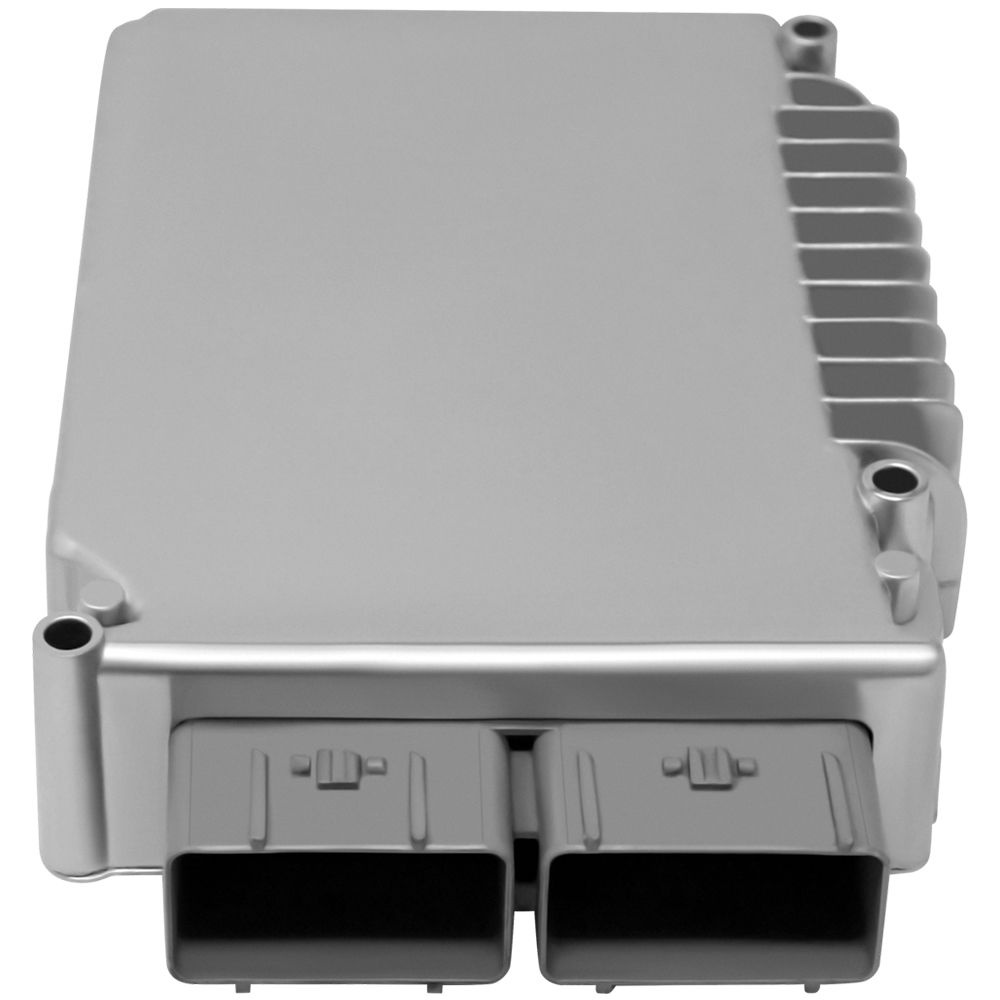
Flagship One stocks a refurbished, VIN-programmed PCM for the 2000 Chrysler Concorde with a lifetime warranty, free shipping and no core charge. The full Chrysler Concorde module lineup covers other engine configurations as well.
The Powertrain Control Module is vital to the operation of a 2000 Chrysler Concorde. Whether you opt for a new or refurbished replacement, following the proper procedures ensures reliable performance and helps avoid future issues.