
Last updated on August 25th, 2026 at 12:16 pm
The Powertrain Control Module (PCM) in your 1997 Chrysler LHS is the central computer managing engine fuel delivery, ignition timing, emissions controls, and transmission shifting. When internal memory corruption occurs, the module may trigger false diagnostic codes or fail to communicate with scan tools.
If your 1997 Chrysler LHS is experiencing starting problems, intermittent stalling, or unexpected check engine light illumination, the Powertrain Control Module may be the source of your frustration. This comprehensive guide explains what the PCM does in your specific vehicle, how to recognize when it has failed, what the replacement process involves, and what you should know before pursuing repair options. The information here applies specifically to the 1997 Chrysler LHS equipped with the 3.5L V6 engine, which uses a unified powertrain control module rather than separate engine and transmission computers. Understanding the role of this critical component and recognizing failure symptoms early may help you avoid being stranded or facing more extensive repairs down the road.
The Powertrain Control Module in your 1997 Chrysler LHS serves as the brain of the vehicle’s powertrain system. This single computer handles multiple critical functions that would have been distributed across separate units in older designs. The module controls fuel injection pulse width and timing, regulating how much fuel enters each cylinder based on inputs from dozens of sensors throughout the engine bay. It manages ignition timing advance, adjusting the spark plug firing point for optimal power and efficiency under varying conditions. The PCM also controls the automatic transmission shifting points, applying clutch pressure and gear selection based on throttle position, vehicle speed, and engine load. Additionally, this module monitors and controls emissions systems, including the evaporative emissions purge system and oxygen sensor feedback loops. The importance of this component cannot be overstated — virtually every aspect of driveability flows through its processing. When internal voltage regulators fail or memory corruption occurs within the module’s circuitry, you may experience drivability issues that seem to come and go, or the vehicle may not start at all. Replacement requires sourcing a proper replacement engine computers for the LHS that is programmed to accept your vehicle’s specific VIN and configuration.
1997 Chrysler LHS
OEM programmed ECM for your 1997 Chrysler LHS — plug & play, no dealer visit.
Free shipping · Lifetime warranty
Locating the PCM on your 1997 Chrysler LHS requires accessing the engine bay area near the air cleaner assembly. The factory removal procedure directs technicians to reach the control module in this location, which sits in a relatively accessible position compared to some other Chrysler products where modules are buried deeper in the engine compartment. The replacement process involves disconnecting the battery negative terminal first, then removing the air cleaner assembly to gain adequate access to the module’s electrical connectors. The PCM itself is mounted in a bracket and secured with fasteners that require standard hand tools to remove. Once the old unit is disconnected and removed, the new module can be positioned in the same bracket orientation. Book time for the replacement operation (R&R) is 0.5 hours according to Chrysler labor guidelines, though additional time may be needed if connectors are corroded or if the mounting location requires additional disassembly. After installation, electrical connections should be verified as secure before reassembly of the air cleaner and reconnection of the battery.
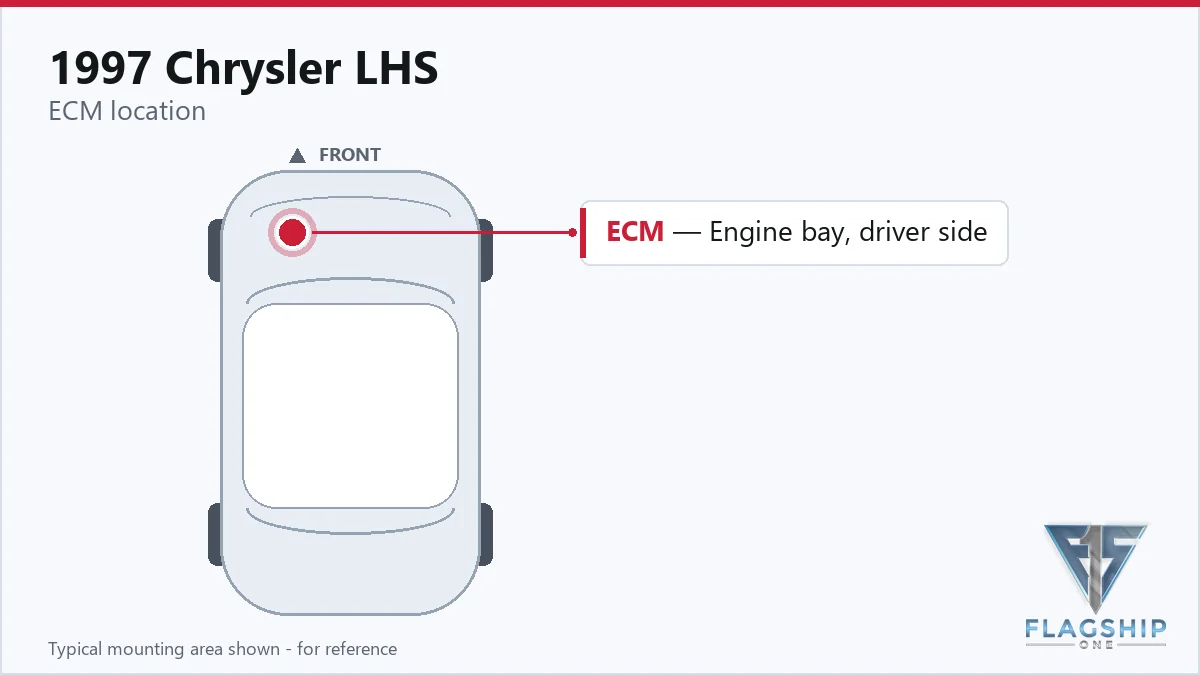
Work with the ignition off, and treat the module as static-sensitive: avoid touching the connector pins at any point.
| Operation | Configuration | Book Time |
|---|---|---|
| Powertrain Control Module Relearn | All configurations | 0.5 hr |
| Powertrain Control Module R&R | All configurations | 0.5 hr |
| Engine Control Module Relearn | All configurations | 0.5 hr |
| Engine Control Module Reset | All configurations | 0.3 hr |
| Engine Control Module R&R | All configurations | 0.5 hr |
After installing a replacement PCM in your 1997 Chrysler LHS, the factory procedure requires performing a relearn or reset procedure to allow the new module to adapt to your vehicle’s specific engine and transmission characteristics. The Chrysler documentation specifies two distinct operations: a module reset procedure requiring 0.3 hours, and a more comprehensive relearn procedure requiring 0.5 hours. These procedures initialize the module’s memory, clear any stored default values from the previous unit, and allow the new PCM to begin learning from your vehicle’s sensors. The relearn process enables the module to optimize fuel delivery and transmission shift points based on actual operating conditions rather than generic programming. If you purchase a replacement unit from Flagship One, the module arrives VIN-programmed so those steps are already done before it ships, meaning you or your technician can install the unit and immediately start the vehicle without performing the factory programming procedure yourself. This pre-programming significantly reduces the post-install time and eliminates the need for dealer-level scan tools or software access.
Every VIN-programmed replacement unit from Flagship One arrives with these steps already completed.
Recognizing PCM failure symptoms on your 1997 Chrysler LHS can save you considerable diagnostic time and expense. One of the most common indications is a no-start condition where the engine cranks normally but fails to ignite, often accompanied by a check engine light that may illuminate briefly or stay dark due to the module’s internal fault. Intermittent stalling while driving represents another frequent complaint, particularly when the module’s internal voltage regulation circuitry becomes unstable — the engine may run normally for miles before suddenly dying as though the key was turned off. Misfire codes affecting individual cylinders often appear when the PCM’s fuel or spark output drivers become compromised, triggering diagnostic trouble codes for lean conditions or ignition misfires. A dead scan-tool communication scenario occurs when the module’s internal communications circuitry fails entirely; in this case, even basic code readers cannot establish a connection with the vehicle’s OBD-II system. Some owners report transmission shifting issues such as harsh shifts, delayed gear engagement, or the vehicle refusing to shift out of a specific gear, since the PCM controls shift solenoids and line pressure. The symptoms often develop gradually, with the vehicle exhibiting occasional hiccups before full failure occurs, though sudden no-start events are also well-documented in owner forums and technician reports.
| Bulletin | Subject | What It Addresses |
|---|---|---|
| 18-35-96 | 18-35-96 Erroneous MIL Illumination With Hex Code $58, Elimination Of PCM Reset | — |
| 18-037-05 | 18-037-05 Flash Programming Failure Recovery Using DRBIII® | — |
| 18-15-98 | 18-15-98 Light Surge Between 42 and 50 Miles Per Hour | — |
No — the replacement module must be programmed with your specific VIN and the 3.5L engine configuration. An unprogrammed unit will not allow the engine to start and may trigger security immobilizer issues.
Technically skilled DIYers with automotive electrical knowledge can perform the physical replacement, but post-install relearn procedures typically require dealer-level diagnostic equipment. Pre-programmed replacement units eliminate this requirement.
This intermittent behavior often indicates a failing PCM with internal circuitry that becomes temperature-sensitive. The module may function when cold but fail as electronics heat up during operation, then work again after cooling.
Repair options for this vintage module are limited since the internal circuitry is not serviceable. Replacement with a properly programmed unit is typically the most reliable long-term solution.
The 1997 Chrysler LHS uses a unified Powertrain Control Module that manages both engine and transmission functions. This integration means a single module failure affects both powertrain systems.
When your 1997 Chrysler LHS requires PCM replacement, you have two primary paths: purchasing a new or refurbished unit from a dealer, or sourcing a VIN-programmed replacement from a specialized supplier like Flagship One. Dealer-sourced units come blank and require programming at the dealership, adding labor costs and turnaround time. Refurbished units from specialty suppliers typically arrive pre-programmed to your VIN, reducing installation to a straightforward swap. Given the integrated nature of the PCM in this vehicle, ensuring the replacement unit is correctly programmed before installation is essential for a successful repair.
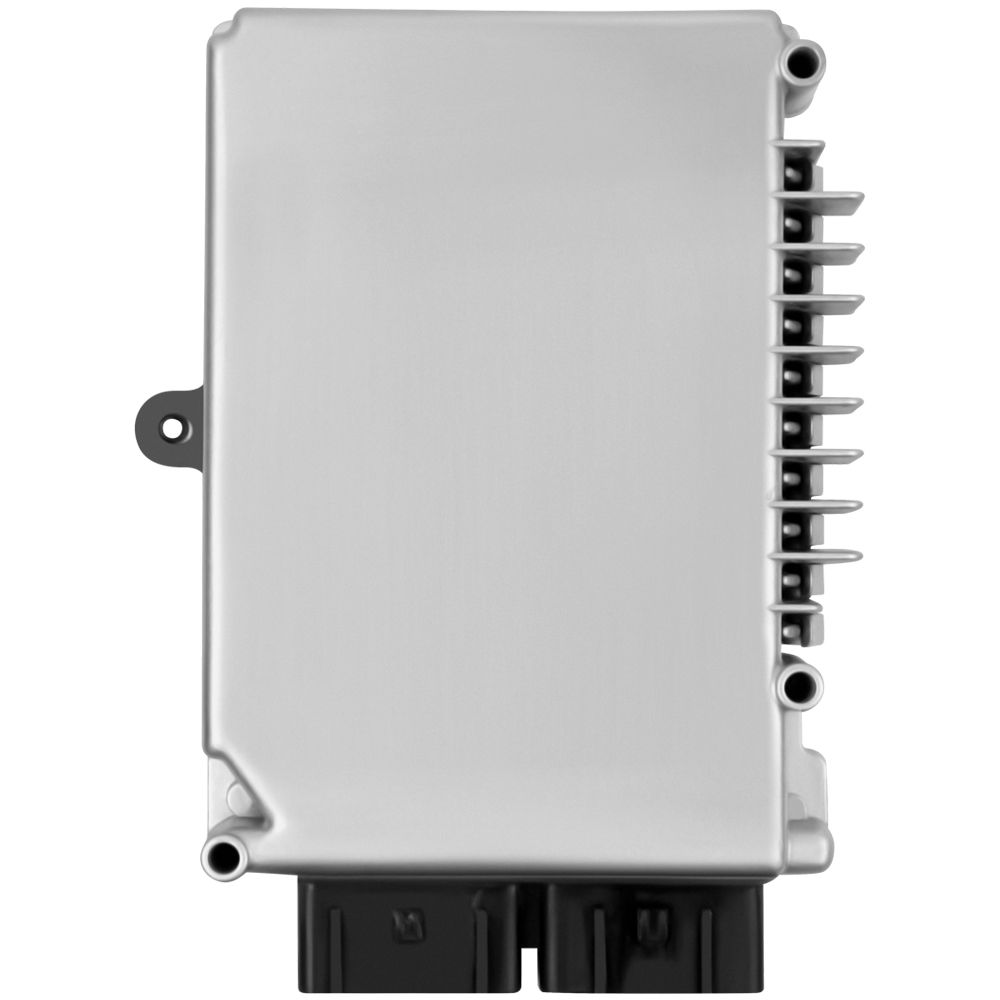
Flagship One stocks a refurbished, VIN-programmed PCM for the 1997 Chrysler LHS with a lifetime warranty, free shipping and no core charge. The full Chrysler LHS module lineup covers other engine configurations as well.
The Powertrain Control Module in your 1997 Chrysler LHS is a critical component that manages virtually every aspect of engine and transmission operation. When symptoms of module failure appear — whether starting problems, stalling, or diagnostic code issues — addressing the problem promptly may prevent being left stranded. Understanding the replacement process, programming requirements, and available options helps you make informed decisions about repair paths for your LHS.