
Last updated on August 25th, 2026 at 12:16 pm
The Powertrain Control Module (PCM) in the 1996 Chrysler Concorde manages fuel delivery, ignition timing, and emissions systems. Failures may cause erratic engine behavior, poor performance, or complete stalls, often triggered by voltage spikes or corrosion.
If your 1996 Chrysler Concorde hesitates at idle, refuses to start, or suddenly triggers the check-engine light, the Powertrain Control Module (PCM) may be the culprit. This small but critical computer oversees everything from fuel injection to transmission shifting, acting as the brain of your vehicle’s drivetrain. When it fails, symptoms can range from subtle performance glitches to complete immobilization. Replacing the PCM isn’t just about swapping hardware—it involves precise programming to match your Concorde’s specific configuration. Understanding the process, from locating the module to ensuring proper calibration, can save you time and frustration. Whether you’re diagnosing a persistent issue or preparing for a replacement, knowing what to expect helps you make informed decisions about repairs or upgrades.
The Powertrain Control Module in the 1996 Chrysler Concorde serves as the central command for engine and transmission operations. It continuously monitors sensors for air intake, throttle position, and exhaust composition, adjusting fuel delivery and ignition timing in real time. This ensures optimal performance while meeting emissions standards. The module also manages transmission shift points, adapting to driving conditions for smooth acceleration. When the PCM malfunctions, your Concorde may experience rough idling, misfires, or even fail to start, as the engine loses its ability to regulate critical functions. Because the system relies on precise data, even minor voltage irregularities or corrosion in connectors can disrupt its operation. For owners facing persistent drivability issues, replacing the module with replacement engine computers for the Concorde may restore lost functionality, but proper programming is essential to avoid further complications.
1996 Chrysler Concorde
OEM programmed ECM for your 1996 Chrysler Concorde — plug & play, no dealer visit.
Free shipping · Lifetime warranty
The PCM in the 1996 Chrysler Concorde is positioned next to the air cleaner assembly, making it relatively accessible compared to modules tucked behind dash panels or under seats. To replace it, you’ll need to disconnect the battery, remove the air cleaner housing, and unplug the wiring harness from the module. The factory procedure specifies no additional disassembly, though you may need to maneuver around nearby components. Labor time for removal and reinstallation is typically 0.5 hours, assuming no complications like seized connectors or damaged mounting points. Once the new unit is installed, securing it properly ensures a stable connection, as vibrations or loose fittings can lead to intermittent faults. Always verify that the harness is fully seated and free of debris before reassembling the air cleaner.
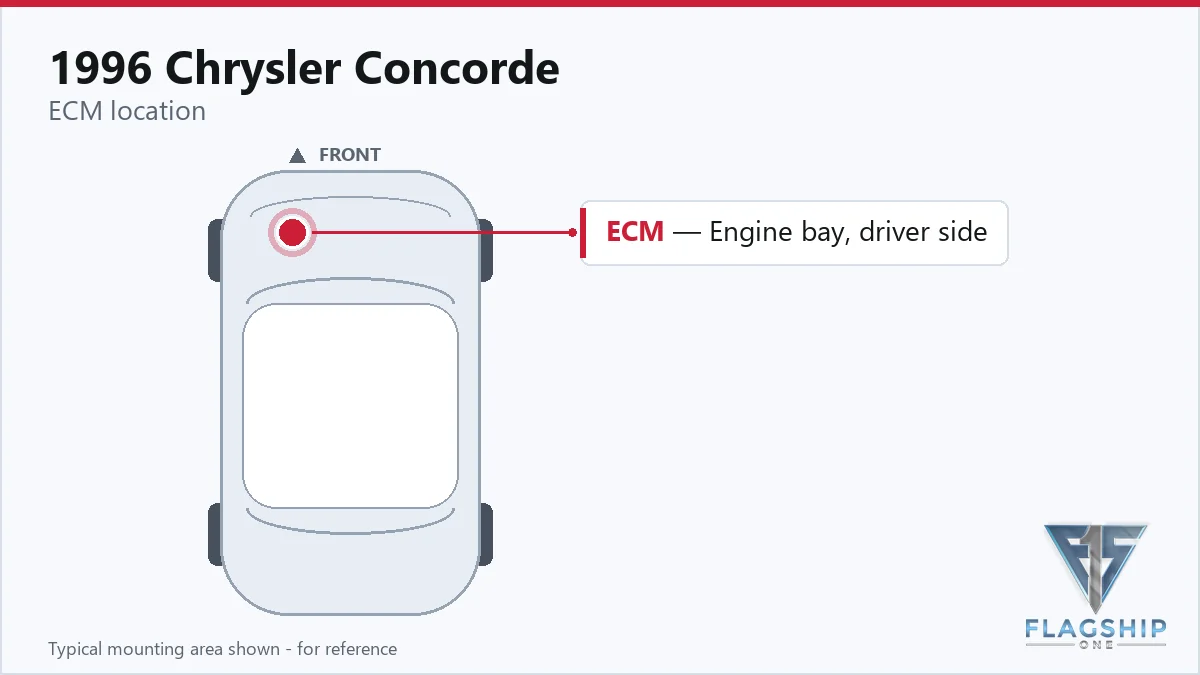
Work with the ignition off, and treat the module as static-sensitive: avoid touching the connector pins at any point.
| Operation | Configuration | Book Time |
|---|---|---|
| Powertrain Control Module Relearn | All configurations | 0.5 hr |
| Powertrain Control Module R&R | All configurations | 0.5 hr |
| Engine Control Module Relearn | All configurations | 0.5 hr |
| Engine Control Module Reset | All configurations | 0.3 hr |
| Engine Control Module R&R | All configurations | 0.5 hr |
After installing a new PCM in your 1996 Chrysler Concorde, the factory procedure requires a relearn process to synchronize the module with the vehicle’s sensors and transmission. This step, which typically takes 0.5 hours, ensures the engine and drivetrain operate smoothly without hesitation or error codes. However, if you opt for a VIN-programmed replacement unit, these calibration steps are already completed, eliminating the need for additional shop time. The module arrives ready to communicate with your Concorde’s systems, reducing the risk of post-installation glitches. Without pre-programming, you may need specialized tools like the DRBIII scan tool to perform the relearn, adding complexity to the repair. For owners seeking a straightforward solution, a pre-configured unit simplifies the process while maintaining factory-level performance.
A failing PCM in the 1996 Chrysler Concorde often announces itself through a range of frustrating symptoms. One of the most common is a no-start condition, where the engine cranks but refuses to fire, as the module fails to deliver spark or fuel. Stalling at idle or during acceleration may also occur, particularly if the PCM loses its ability to adjust air-fuel ratios in real time. Some owners report erratic shifting, with the transmission hesitating or jerking between gears, as the module struggles to manage hydraulic pressures. Check-engine lights are another frequent sign, sometimes triggered by false codes like an internal control module memory error, even when no mechanical issue exists. In severe cases, the vehicle may enter a “limp mode,” severely limiting power to prevent further damage. Scan tools may fail to communicate with the PCM entirely, leaving you with no diagnostic data. If these symptoms appear suddenly or worsen over time, the PCM is a likely suspect, especially if other components like sensors or wiring check out.
| Bulletin | Subject | What It Addresses |
|---|---|---|
| — | Rc-678-96 California Emissions Recall #678 — Reprogram Powertrain Control Module | — |
| 18-35-96 | 18-35-96 Erroneous MIL Illumination With Hex Code $58, Elimination Of PCM Reset | — |
| 18-037-05 | 18-037-05 Flash Programming Failure Recovery Using DRBIII® | — |
Stalling after a PCM replacement often indicates a failed relearn procedure. The module must synchronize with the vehicle’s sensors and transmission to regulate fuel and ignition properly. Without this step, the engine may run erratically or cut out entirely. A pre-programmed unit eliminates this risk by arriving ready to communicate with your Concorde’s systems.
Driving with a failing PCM is risky, as it may cause sudden stalling, misfires, or transmission issues. In severe cases, the vehicle may enter limp mode, severely limiting power. If you notice symptoms like hesitation or warning lights, address the issue promptly to avoid further damage or unsafe driving conditions.
Signs of a PCM needing reprogramming include persistent check-engine lights, false fault codes, or drivability issues after repairs. Chrysler bulletins, such as #18-35-96, address specific scenarios where a reset or update resolves these problems. A scan tool can confirm whether the module requires recalibration.
Replacing the PCM in your Concorde requires basic hand tools to remove the air cleaner assembly and disconnect the wiring harness. If performing a relearn, a DRBIII scan tool or equivalent is necessary to calibrate the new module. A pre-programmed unit eliminates the need for this step, simplifying the process.
Yes, the PCM in the 1996 Concorde manages both engine and transmission functions, including shift timing and hydraulic pressure. A failing module may cause erratic shifting, delayed engagement, or harsh transitions between gears. Proper programming ensures smooth operation across all driving conditions.
When your 1996 Chrysler Concorde’s PCM fails, you face a choice between repairing the existing unit or opting for a replacement. Refurbished modules offer a cost-effective solution, especially when pre-programmed to match your vehicle’s VIN. This eliminates the need for post-installation calibration, reducing labor time and potential headaches. Whether you’re addressing a no-start condition or persistent drivability issues, a properly configured replacement can restore your Concorde’s performance without the guesswork of reprogramming.
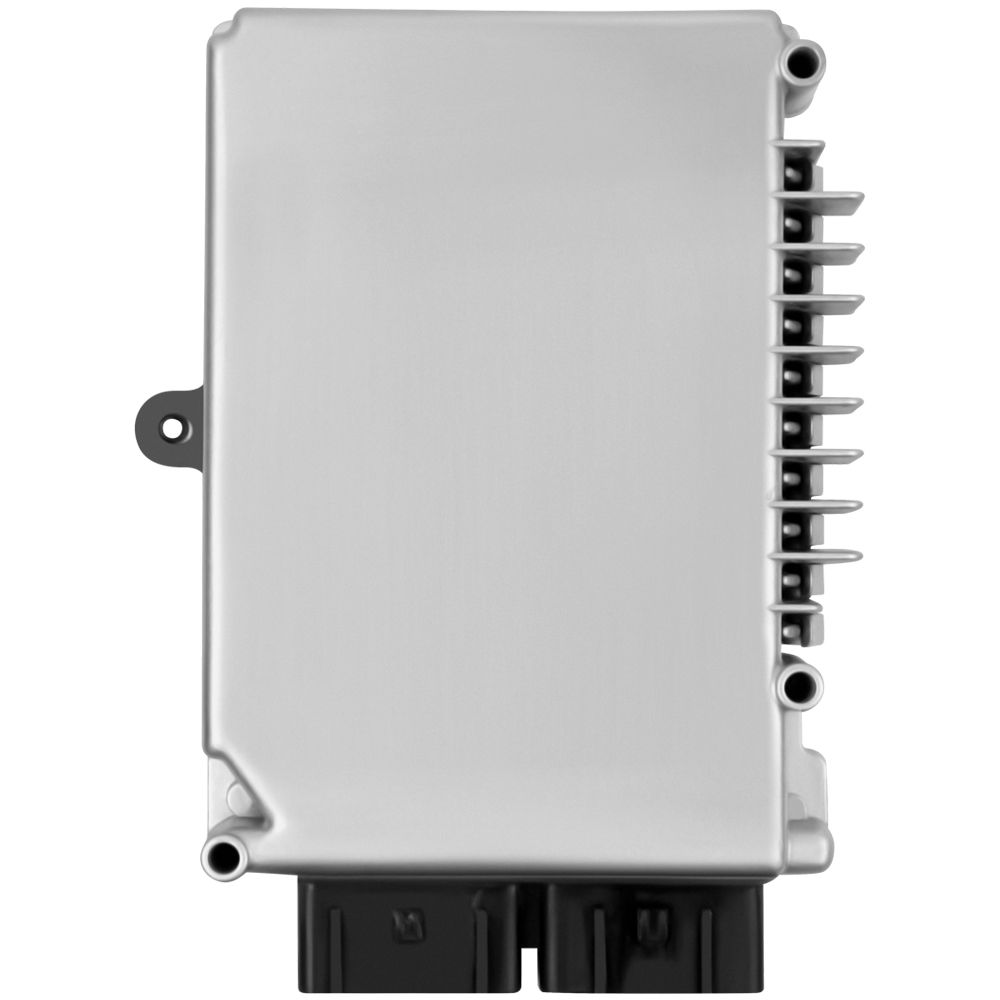
Flagship One stocks a refurbished, VIN-programmed PCM for the 1996 Chrysler Concorde with a lifetime warranty, free shipping and no core charge. The full Chrysler Concorde module lineup covers other engine configurations as well.
The 1996 Chrysler Concorde relies on its PCM to manage critical engine and transmission functions, making it a key component in maintaining drivability. If you’re experiencing stalling, no-start conditions, or false warning lights, a failing module may be the cause. Replacing it with a pre-programmed unit ensures a smooth installation, while understanding the symptoms and prevention tips helps you avoid future issues. Addressing PCM problems promptly keeps your Concorde running reliably for years to come.