
Last updated on August 25th, 2026 at 12:55 pm
The engine control module (ECM) in the 1994 Chrysler Concorde is the primary computer that governs fuel injection, ignition timing, and emission controls for the 3.3L V6. When it malfunctions, the vehicle may crank without starting, stall unexpectedly, or exhibit transmission shift irregularities.
When a 1994 Chrysler Concorde with the 3.3L V6 suddenly refuses to start or begins stalling without warning, the engine control module (ECM) often becomes the prime suspect. This computer is the brain behind the engine’s operation, and even a minor internal fault can leave you stranded. Many Concorde owners first notice trouble when the engine cranks but never catches, or when the automatic transmission shifts harshly for no apparent reason. Because this is a pre-OBD-II vehicle, it does not store the standardized diagnostic trouble codes that later models use, making it harder to pinpoint the ECM as the culprit without a professional scan tool. Understanding what the module does, how to replace it, and what programming is required can turn a confusing breakdown into a manageable repair. This guide walks you through the ECM’s role in your Concorde, the symptoms of a failing unit, the physical replacement process, and the critical programming steps. You will also learn how a pre-programmed replacement module can get you back on the road faster by skipping the dealer relearn procedure entirely.
1994 Chrysler Concorde
OEM programmed ECM for your 1994 Chrysler Concorde — plug & play, no dealer visit.
Free shipping · Lifetime warranty
The engine control module in the 1994 Chrysler Concorde is a sophisticated microprocessor that continuously adjusts fuel delivery, spark timing, and idle speed based on inputs from sensors throughout the engine bay. It reads data from the crankshaft position sensor, throttle position sensor, coolant temperature sensor, and manifold absolute pressure sensor, among others, to calculate the optimal air-fuel mixture and ignition advance for every driving condition. On this 3.3L V6, the ECM also manages the automatic transmission shift points, making it a powertrain control module in function. When the module begins to fail, these calculations become erratic or stop altogether, leading to a range of driveability problems. Internal circuit board damage from heat, vibration, or moisture is a common root cause, as the unit is mounted in an area that can experience temperature extremes. A malfunctioning ECM may send incorrect signals to the fuel injectors, causing a rich or lean condition, or it may fail to ground the fuel pump relay, resulting in a no-start. Because the module is so integral to engine and transmission operation, a faulty unit can mimic symptoms of a bad sensor, a failing fuel pump, or a transmission problem, often leading to misdiagnosis. When troubleshooting confirms the ECM is at fault, sourcing replacement engine computers for the Concorde becomes the next logical step to restore reliable performance.
The engine control module on the 1994 Chrysler Concorde is located in the engine compartment, typically mounted on the passenger side inner fender or firewall area. Accessing the module requires opening the hood and removing any covers or brackets that may obstruct the connector. The factory labor guide allows 0.5 hours for removal and replacement of the powertrain control module, which includes disconnecting the battery, unplugging the electrical harness, unfastening the module from its bracket, and reversing the steps with the new unit. No special tools are needed beyond basic hand tools, though care should be taken to avoid static discharge that could damage the new computer. Once the replacement module is physically installed, the vehicle will need a relearn procedure to synchronize the module with the security system and adaptive memory, a process that also books at 0.5 hours. This relearn typically requires a Chrysler DRBIII scan tool to transfer the VIN and security data, but a pre-programmed module can bypass this step entirely.
Work with the ignition off, and treat the module as static-sensitive: avoid touching the connector pins at any point.
| Operation | Configuration | Book Time |
|---|---|---|
| Powertrain Control Module Relearn | All configurations | 0.5 hr |
| Powertrain Control Module R&R | All configurations | 0.5 hr |
| Engine Control Module Relearn | All configurations | 0.5 hr |
| Engine Control Module Reset | All configurations | 0.3 hr |
| Engine Control Module R&R | All configurations | 0.5 hr |
A failing engine control module in the 1994 Chrysler Concorde often produces symptoms that can be mistaken for other component failures. The engine may crank but refuse to start, or it may start and then stall after a few seconds, especially when the module loses its ability to control the fuel pump relay or ignition coil. Intermittent stalling while driving is another common sign, as the computer sporadically cuts spark or fuel delivery. You might notice rough idling, hesitation on acceleration, or a sudden drop in fuel economy because the ECM is sending incorrect injector pulse widths. Since this module also controls the automatic transmission, shifting problems such as harsh engagements, slipping, or failure to shift out of first gear can point to an internal computer fault rather than a mechanical transmission issue. In some cases, the vehicle may run fine until the engine bay heats up, then stall and restart after cooling down—a classic symptom of heat-related circuit board failure. The check engine light may illuminate, but on this pre-OBD-II model, retrieving codes requires a Chrysler-specific scan tool and the codes are not the familiar P-series. If you have ruled out sensors, wiring, and the fuel pump, a faulty ECM is a strong possibility.
| Bulletin | Subject | What It Addresses |
|---|---|---|
| 08-02-95 | 08-02-95 NO Start or Improper Theft Alarm Actuation Due to PCM/BCM Swapping | — |
| 18-037-05 | 18-037-05 Flash Programming Failure Recovery Using DRBIII® | — |
| 24-07-94 | 24-07-94 ATC Calibration | — |
A used ECM from an identical Concorde may physically plug in, but it will not function correctly without VIN and security system programming. The theft-deterrent system requires the module to be matched to your vehicle’s VIN, and a mismatch will prevent starting. A pre-programmed replacement unit arrives with your VIN already installed, avoiding this issue.
Begin by checking for spark and fuel pressure. If both are present but the engine still won’t start, the ECM may not be triggering the injectors or ignition at the right time. A scan tool capable of reading Chrysler-specific codes can help, but if the module fails to communicate, that itself is a strong indicator of an internal ECM fault.
Yes, the factory procedure requires a relearn using a DRBIII scan tool to transfer the VIN and security data, a step that books at 0.5 hours. However, a VIN-programmed replacement module from Flagship One arrives ready to install, so no additional programming is needed.
On the 1994 Concorde, the terms are often used interchangeably because the module controls both the engine and the automatic transmission. The factory service manual may refer to it as the powertrain control module (PCM), but it is the same unit as the engine control module (ECM).
Yes, because the ECM manages shift points for the automatic transmission. A failing module can cause harsh shifts, delayed engagement, or the transmission to stay in a single gear. These symptoms are often misdiagnosed as a transmission mechanical failure.
When your 1994 Chrysler Concorde needs a new engine computer, you have two paths: a dealer-programmed replacement that requires a shop visit and a relearn fee, or a pre-programmed unit that arrives ready to install. Flagship One specializes in VIN-matched modules for this era of Chrysler vehicles, eliminating the programming hurdle and getting your Concorde back on the road the same day the part arrives.
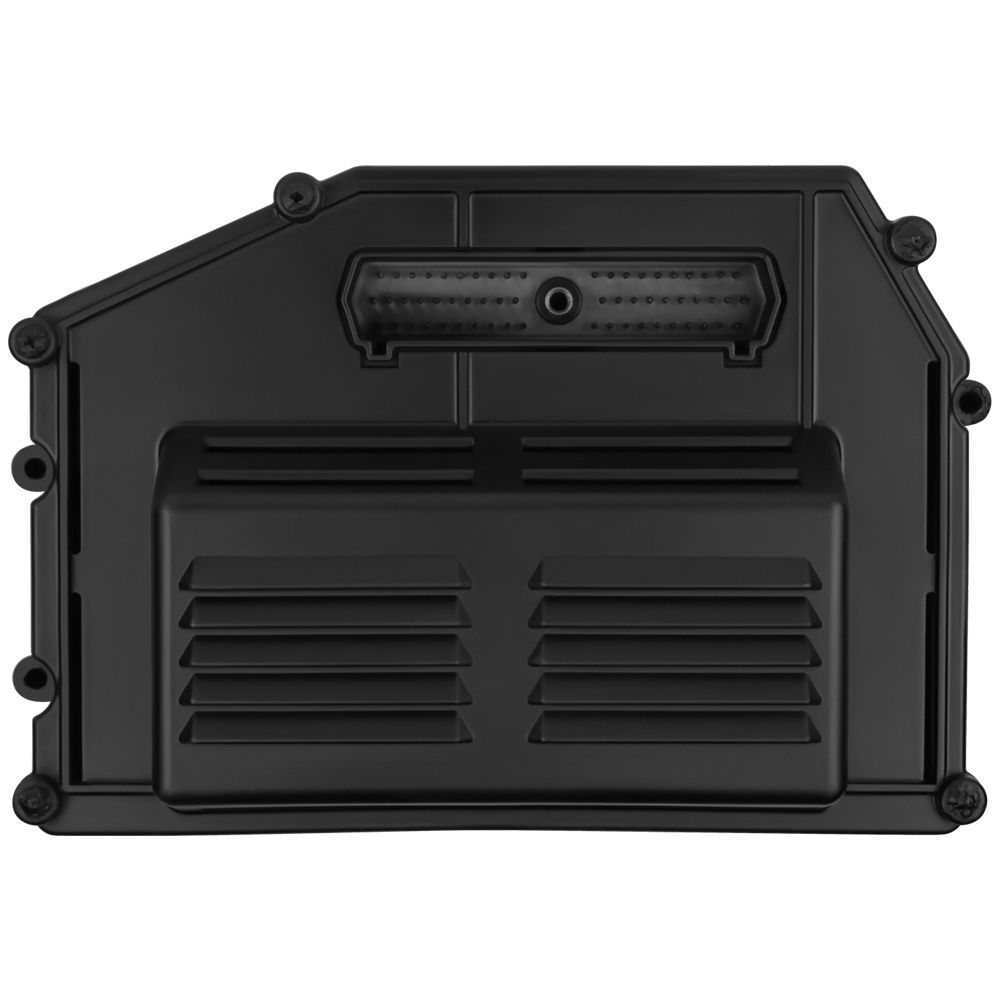
Flagship One stocks a refurbished, VIN-programmed PCM for the 1994 Chrysler Concorde with a lifetime warranty, free shipping and no core charge. The full Chrysler Concorde module lineup covers other engine configurations as well.
A failing ECM doesn’t have to mean the end of your 1994 Chrysler Concorde. With the right replacement module and a clear understanding of the installation and programming steps, you can restore dependable performance. A pre-programmed unit removes the most common obstacle, letting you complete the repair in your own garage.