
Last updated on August 25th, 2026 at 12:57 pm
The Powertrain Control Module in your 2016 Audi S3 is the central computer managing engine fuel delivery, ignition timing, emissions systems, and transmission shifting. When internal processor faults occur from voltage spikes or thermal stress, the module triggers diagnostic codes and causes drivability symptoms requiring replacement.
If your 2016 Audi S3 has stored trouble codes indicating internal powertrain control module failure, you are facing a significant repair decision that affects your vehicle’s ability to run properly. The PCM serves as the brain of your engine management system, and when it fails internally, the vehicle may not start, run poorly, or display multiple fault codes that cannot be cleared through conventional troubleshooting. This guide explains what the powertrain control module does in your specific vehicle, the symptoms that indicate module failure, what the replacement process involves, and the programming requirements necessary to get your Audi back on the road. Whether you are diagnosing a no-start condition or verifying a suspected PCM failure, you will find the technical information needed to understand the repair scope and make informed decisions about replacement options. The content covers factory service procedures, common failure patterns, and practical steps to protect your investment during and after the repair.
The Powertrain Control Module in your 2016 Audi S3 is the primary engine computer responsible for managing the complex interplay between the 2.0L turbocharged engine and the S tronic automated manual transmission. This module receives input from dozens of sensors throughout the powertrain, including the mass airflow sensor, coolant temperature sensor, throttle position sensor, and various pressure transducers, then uses this information to calculate optimal fuel injector pulse width, ignition coil firing angle, turbocharger boost targets, and transmission shift points in real-time. The PCM also monitors emissions control systems, coordinating the operation of the oxygen sensors, evaporative emission system, and exhaust gas recirculation valve to ensure your vehicle meets federal emissions standards while delivering the performance expected from an S model. Unlike simpler engine control modules found in some vehicles, the S3 PCM handles both engine and transmission functions in a single unit, making it the central nervous system of the powertrain. When this module experiences internal processor failures, memory corruption, or voltage regulation problems, the resulting code sets often indicate specific internal faults rather than sensor or wiring issues. Replacement engine computers for the Audi S3 must be programmed with your vehicle’s specific VIN and configuration data to ensure proper communication with the transmission control module, anti-lock brake system, and other body electronics that depend on the PCM for critical functions.
2016 Audi S3
OEM programmed ECM for your 2016 Audi S3 — plug & play, no dealer visit.
Free shipping · Lifetime warranty
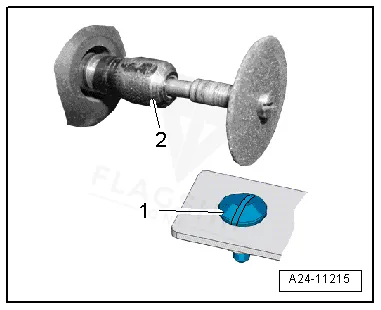
The powertrain control module on your 2016 Audi S3 is located behind the glove box assembly in the passenger footwell, requiring removal of the lower glove box panel and surrounding trim to gain access. This location places the module in an area protected from direct engine heat but potentially exposed to moisture from the HVAC system drainage, which can contribute to connector corrosion over time. The replacement procedure begins with disconnecting the battery negative terminal to prevent voltage spikes that could damage the new module, then removing the glove box housing to expose the PCM mounting bracket. The original module is secured with Torx-head fasteners, and the electrical connector uses a multi-pin design that requires careful release of the locking tab to avoid bending pins. After the old module is removed, the new unit connects to the vehicle wiring harness and mounts to the bracket using the same fastener locations. Reassembly involves reversing the removal steps, ensuring all trim pieces seat properly and no rattles remain. The book time for powertrain control module removal and installation on the S3 is 0.9 hours according to factory labor guides, with an additional 0.5 hour learn procedure required after the new module is installed to establish communication with all vehicle systems and calibrate adaptive values for your specific engine and transmission combination.
Work with the ignition off, and treat the module as static-sensitive: avoid touching the connector pins at any point.
| Operation | Configuration | Book Time |
|---|---|---|
| Powertrain Control Module R&R | A3 | 0.9 hr |
| Powertrain Control Module R&R | A3 Quattro | 0.9 hr |
| Powertrain Control Module R&R | S3 | 0.9 hr |
| Powertrain Control Module Relearn | A3 | 0.5 hr |
| Powertrain Control Module Relearn | A3 Quattro | 0.5 hr |
| Powertrain Control Module Relearn | S3 | 0.5 hr |
| Engine Control Module Relearn | A3 | 0.5 hr |
| Engine Control Module Relearn | A3 Quattro | 0.5 hr |
After installing a new powertrain control module in your 2016 Audi S3, the factory procedure requires performing a PCM learn or initialization procedure using an Audi-approved scan tool to establish communication with the transmission control module, fuel system, and emissions components. This learn process allows the new PCM to read current sensor values, reset adaptive fuel trims, and configure transmission shift characteristics to match your vehicle’s specific drivetrain configuration. The module must also be VIN-matched to ensure proper security coding and to prevent installation in other vehicles. Factory labor guides allocate 0.5 hours for this relearn procedure on the S3, though actual procedure time may vary depending on whether additional system calibrations are required. When you purchase a VIN-programmed replacement unit from Flagship One, the module arrives pre-programmed with your specific VIN and vehicle configuration, which means many of these initialization steps are completed before the module ever reaches your repair facility. This pre-programming significantly reduces the post-install procedure time and ensures the module will communicate with your vehicle’s systems immediately upon installation, though a basic verification scan is still recommended to confirm all systems recognize the new module and no fault codes remain stored.
When the powertrain control module fails internally on your 2016 Audi S3, the symptoms often manifest as multiple seemingly unrelated fault codes that cannot be cleared even after addressing any indicated sensor or wiring problems. Common presentations include a no-start condition where the engine cranking is normal but the PCM provides no fuel or spark commands, or a running vehicle that stalls shortly after start-up once the module loses communication with essential sensors. You may notice stored codes from the module-internal family, such as internal control module memory error indicating processor memory problems, or multiple U-codes representing lost communication with the transmission control module, anti-lock brake system, and other control units that depend on the PCM for coordination. The vehicle may enter a reduced-power limp mode, display warning lights for the engine, transmission, and stability system simultaneously, and refuse to engage the transmission from park. In some cases, the scan tool cannot communicate with the PCM at all, or communication is intermittent, suggesting internal voltage regulation failures within the module itself. Other symptoms can include rough idle, hesitation under acceleration, unexpected gear shifts from the S tronic transmission, and elevated emissions that will cause inspection failure. These symptoms typically appear suddenly rather than developing gradually, because internal component failures tend to be catastrophic rather than progressive.
The following module-internal trouble codes are documented for the 2016 Audi S3 and indicate various internal PCM failures that typically require replacement rather than repair: P0602 (Control Module Programming Read Only Memory), P0604 (Control Module Random Access Memory), P0605 (Control Module Read Only Memory), P0606 (PCM Processor), P0607 (Control Module Performance), P0610 (Control Module Configuration Error), P062F (Control Module Long Term Memory), P0634 (Control Module Temperature Too High), P064F (Internal Control Module Brake Signal Performance), P165D (Control Module Performance), U0100 (Lost Communication With ECM/PCM), U0101 (Lost Communication With TCM), U0111 (Lost Communication With Drive Motor Control Module), U0121 (Lost Communication With Anti-lock Brake System), U0126 (Lost Communication With Power Steering Control Module), U0131 (Lost Communication With Steering Angle Sensor), U0140 (Lost Communication With Body Control Module), U0167 (Lost Communication With Immobilizer Control Module), U016B (Lost Communication With HVAC Control Module), and U019B (Lost Communication With Rear HID Control Module).
| Code | Meaning | Full Guide |
|---|---|---|
| P0602 | Control module programming error | Full P0602 guide → |
| P0604 | Internal RAM error | Full P0604 guide → |
| P0605 | Internal ROM error | Full P0605 guide → |
| P0606 | Module processor failure | Full P0606 guide → |
| P0607 | Module performance fault | Full P0607 guide → |
| P0610 | Module-internal fault | Full P0610 guide → |
| P062F | Internal EEPROM error | Full P062F guide → |
| P0634 | Module-internal fault | Full P0634 guide → |
| P064F | Module-internal fault | — |
| P165D | Module-internal fault | — |
| U0100 | Module-internal fault | Full U0100 guide → |
| U0101 | Module-internal fault | Full U0101 guide → |
A used PCM requires VIN programming to match your specific vehicle, and there is no guarantee the module’s internal components are healthy. Salvage units may have unknown mileage and prior failure history that could leave you stranded again shortly after installation.
Driving with a failing PCM is not recommended because the vehicle may stall unexpectedly, lose transmission shifting capability, or enter a limp mode that severely limits power. These conditions create safety hazards and may cause additional damage to other vehicle systems.
No, the PCM itself is the faulty component in cases of internal code storage. Throttle bodies and sensors should only be replaced if they are specifically identified as failed during diagnosis, not as a preventive measure.
The book time for removal and installation is 0.9 hours, plus 0.5 hours for the post-install learn procedure. Actual labor time may vary based on technician experience and any unexpected complications with connector conditions.
When the PCM fails internally, it often stops communicating with other control modules on the vehicle network. This causes U-codes indicating lost communication with the transmission, brakes, and other systems, which are symptoms of the PCM failure rather than separate problems.
When your 2016 Audi S3 requires a powertrain control module replacement, you have two primary options: a new or refurbished unit from an authorized supplier, or a used unit from a salvage yard. New and refurbished units from Flagship One arrive VIN-programmed to your vehicle, eliminating much of the post-install programming burden and providing a warranty against defects. Used units from salvage yards may be less expensive initially but require additional programming fees and carry unknown reliability. Given the critical role the PCM plays in your vehicle’s operation and the labor involved in accessing it, investing in a quality replacement unit with proper programming is the most reliable path to getting your S3 back to full operation.
Flagship One stocks a refurbished, VIN-programmed PCM for the 2016 Audi S3 with a lifetime warranty, free shipping and no core charge. The full Audi S3 module lineup covers other engine configurations as well.
The powertrain control module is the computational heart of your 2016 Audi S3, and when it fails internally, the vehicle cannot maintain proper engine and transmission function. Understanding the symptoms, replacement procedure, and programming requirements helps you make informed decisions about the repair. Whether you choose a new or refurbished replacement unit, ensuring the module is properly VIN-programmed and initialized will restore your Audi’s performance and reliability.