
Last updated on August 25th, 2026 at 01:03 pm
The Powertrain Control Module (PCM) in your 1999 Mercury Sable is the main engine computer. It manages fuel delivery, ignition timing, and transmission control. When it fails, you may experience no-start, stalling, or check-engine lights. Replacement requires programming to match your vehicle’s VIN.
If your 1999 Mercury Sable with the 3.0L engine is acting up—maybe it cranks but won’t start, or the check-engine light stays on—the Powertrain Control Module (PCM) could be the culprit. This computer is the brain of your Sable’s engine and transmission, processing sensor data to control fuel injection, spark timing, and shift points. Over time, internal components can fail due to heat, vibration, or voltage spikes, leaving you stranded or with poor performance. Understanding what the PCM does, where it lives, and what replacement involves can save you time and money. This guide covers the symptoms of a failing PCM, the labor times for removal and installation (based on factory book times), and the programming requirements that follow a swap. You’ll also learn about relevant factory service bulletins for your Sable, including specific diagnostic trouble codes. Whether you plan to repair the original module or replace it with a refurbished unit, knowing the process helps you make an informed decision. By the end, you’ll have a clear picture of what it takes to get your Sable back on the road reliably.
The Powertrain Control Module (PCM) in your 1999 Mercury Sable is the central computer that manages the engine and transmission. It receives signals from sensors like the crankshaft position sensor, throttle position sensor, and oxygen sensors, then adjusts fuel injector pulse width, ignition timing, and transmission shift solenoids to keep everything running smoothly. For the 3.0L engine, the PCM also controls the idle air control valve and the evaporative emissions system. When the PCM fails, it can cause a range of problems from a no-start condition to erratic shifting or a persistent check-engine light. The module is located inside the passenger compartment, typically behind the glove box or under the dashboard on the passenger side. Replacement involves disconnecting the battery, removing the module, and installing a new or refurbished unit. Because the PCM is VIN-specific, a replacement must be programmed with your vehicle’s calibration data. That’s where replacement PCMs for the Mercury Sable come in—they are pre-programmed to match your VIN, so you can install them without a trip to the dealer. Understanding the role of the PCM helps you diagnose issues accurately and avoid replacing parts unnecessarily.
1999 Mercury Sable
OEM programmed ECM for your 1999 Mercury Sable — plug & play, no dealer visit.
Free shipping · Lifetime warranty
The PCM on your 1999 Mercury Sable is located inside the passenger compartment, mounted on the right side of the firewall behind the glove box. To access it, you typically need to remove the glove box assembly or the lower trim panel. The module is secured with a few bolts or screws. Disconnect the negative battery cable before starting. Unplug the two large wiring harness connectors, remove the mounting fasteners, and slide the PCM out. Installation is the reverse. Factory book time for PCM removal and replacement is 1.0 hour. If your Sable has the 3.0L OHV engine, the ECM R&R book time is 0.5 hour; for the DOHC engine, it is 0.8 hour. After installation, a PCM relearn procedure is required, which adds 0.5 hour of labor. This relearn allows the module to adapt to your vehicle’s specific sensors and driving habits. Ensure the connectors are clean and fully seated to avoid future issues.
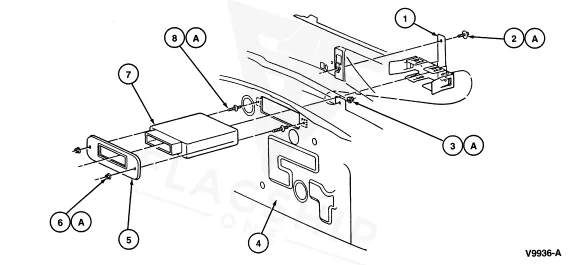
Work with the ignition off, and treat the module as static-sensitive: avoid touching the connector pins at any point.
| Operation | Configuration | Book Time |
|---|---|---|
| Powertrain Control Module R&R | All configurations | 1.0 hr |
| Powertrain Control Module Relearn | All configurations | 0.5 hr |
| Engine Control Module R&R | OHV | 0.5 hr |
| Engine Control Module R&R | DOHC | 0.8 hr |
After installing a replacement PCM in your 1999 Mercury Sable, the factory procedure requires a PCM relearn. This involves a specific drive cycle that allows the module to learn the idle, fuel trim, and transmission shift adapts. The book time for this relearn is 0.5 hour. Additionally, the PCM must be programmed with the correct calibration for your VIN, which typically requires a dealer-level scan tool. However, when you purchase a VIN-programmed PCM from Flagship One, the unit arrives with your vehicle’s original calibration already loaded. That means the programming step is already completed, and you only need to perform the relearn drive cycle. This saves you the cost and hassle of a dealer visit. The relearn itself is straightforward: start the engine, let it idle until it reaches operating temperature, then drive at varying speeds for about 10 to 15 minutes. The PCM will adapt to your engine’s characteristics during this process.
A failing PCM in your 1999 Mercury Sable can produce several warning signs. The most common is a no-start condition where the engine cranks but never fires. You may also experience intermittent stalling, rough idle, or hesitation during acceleration. The check-engine light may illuminate with a stored P1138 code indicating a lack of engine braking or a fuel system issue. Other symptoms include erratic transmission shifting, such as harsh or delayed shifts, or the transmission refusing to shift out of a single gear. You might notice a sudden drop in fuel economy or the engine running rich or lean. In some cases, the scan tool cannot communicate with the PCM at all, which points to a dead module. If you have the 3.0L 4V engine, a DTC P1518 related to the intake manifold runner control may also appear. Addressing these symptoms promptly can prevent further damage to the engine or transmission.
Ford issued several technical service bulletins for the 1999 Mercury Sable 3.0L. TSB 99-04-03 covers out-of-vehicle reprogramming of PCMs on EEC V vehicles, which includes your Sable. TSB 00-06-01 addresses DTC P1138 stored in memory, causing the malfunction indicator lamp to illuminate and a perceived lack of engine braking; this applies to vehicles built through April 11, 1999. TSB 02-15-03 covers DTC P1518 for the intake manifold runner control system on vehicles equipped with the 3.0L 4V engine only. These bulletins provide diagnostic and repair guidance for common PCM-related issues.
| Bulletin | Subject | What It Addresses |
|---|---|---|
| 99-04-03 | EEC V VEHICLES ONLY – OUT-OF-VEHICLE – REPROGRAMMING POWERTRAIN CONTROL MODULES (PCMS) | — |
| 00-06-01 | DIAGNOSTIC TROUBLE CODE (DTC) P1138 STORED IN MEMORY – LAMP – MALFUNCTION INDICATOR LAMP (MIL) | — |
| 02-15-03 | DRIVEABILITY – MALFUNCTION INDICATOR LAMP (MIL) ILLUMINATED WITH DIAGNOSTIC TROUBLE CODE (DTC) | — |
Yes, if you are comfortable removing interior trim and handling electrical connectors. The PCM is behind the glove box. Book labor time is 1.0 hour for the PCM itself, plus 0.5 hour for the relearn. You will need a replacement unit that is pre-programmed to your VIN to avoid a dealer visit.
In this vehicle, the terms are used interchangeably. The Powertrain Control Module (PCM) controls both engine and transmission. Some service information may refer to it as an Engine Control Module (ECM). The book times list separate R&R times for the ECM depending on engine type: 0.5 hour for OHV and 0.8 hour for DOHC.
A used PCM must be programmed with your vehicle’s VIN and calibration. Without that, it may not start or may run poorly. A pre-programmed unit from a specialist like Flagship One is a more reliable option because it arrives ready to install.
After installing a new PCM, you need to perform a drive cycle. Start the engine and let it idle until it reaches normal operating temperature. Then drive at varying speeds for about 10 to 15 minutes, including some light acceleration and deceleration. This allows the PCM to adapt to your engine’s sensors and driving habits.
The 3.0L OHV (overhead valve) engine was standard; the DOHC (dual overhead cam) version was optional on some models. Check the VIN or look at the engine: DOHC engines have two cam covers per bank and a plastic intake manifold with visible runners. The book time for ECM R&R differs: 0.5 hour for OHV, 0.8 hour for DOHC.
If your 1999 Mercury Sable’s PCM has failed, you have two main options: have the original module repaired by a specialist, or replace it with a refurbished unit. Repair may be cost-effective for minor issues, but a replacement ensures all internal components are fresh. For the 3.0L Sable, a VIN-programmed replacement PCM from Flagship One arrives ready to install, saving you the programming step and getting you back on the road faster.
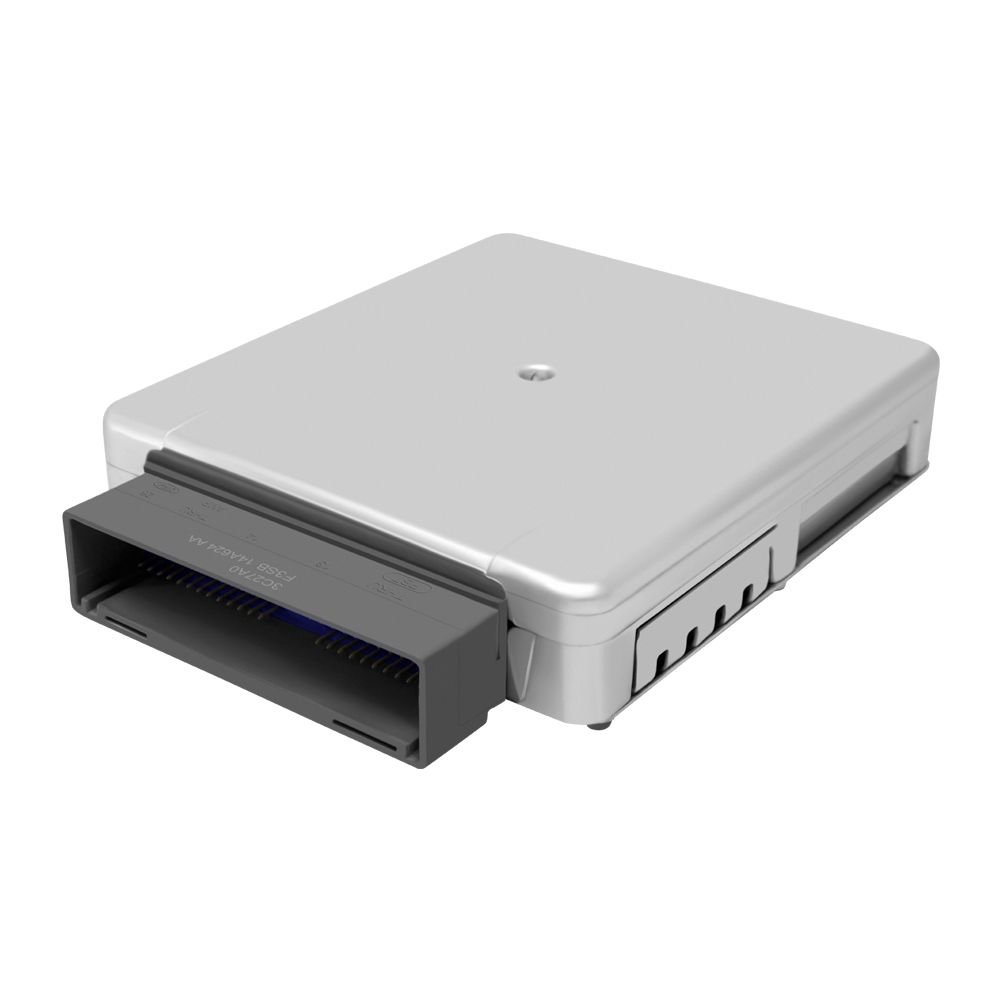
Flagship One stocks a refurbished, VIN-programmed PCM for the 1999 Mercury Sable with a lifetime warranty, free shipping and no core charge. The full Mercury Sable module lineup covers other engine configurations as well.
The PCM is a critical component in your 1999 Mercury Sable 3.0L, controlling engine and transmission performance. Recognizing symptoms like no-start, stalling, or trouble codes such as P1138 can help you diagnose a failing module. Replacement is straightforward with the right preparation, and a VIN-programmed unit eliminates the need for dealer programming. Keep your Sable running reliably by addressing PCM issues promptly.