
Last updated on August 25th, 2026 at 01:06 pm
The Powertrain Control Module (PCM) and Engine Control Module (ECM) in your 1996 Mazda Millenia manage fuel delivery, ignition timing, and transmission behavior. Failures often cause drivability issues like stalling, misfires, or transmission hesitation.
If your 1996 Mazda Millenia has started acting unpredictably—stalling at stops, hesitating under acceleration, or flashing warning lights—it may be signaling a problem with its Powertrain Control Module (PCM) or Engine Control Module (ECM). These critical components act as the vehicle’s brain, coordinating fuel injection, ignition timing, and transmission shifts. When they fail, symptoms can range from subtle drivability quirks to complete no-start conditions. Understanding what these modules do, where they’re located, and what replacement involves can help you make informed decisions about repairs. This guide covers the essentials: labor times, common failure signs, factory procedures, and how a pre-programmed replacement unit can simplify the process. Whether you’re troubleshooting an existing issue or planning ahead, knowing these details ensures you’re prepared for what’s involved in restoring your Millenia’s performance.
In the 1996 Mazda Millenia, the Powertrain Control Module (PCM) and Engine Control Module (ECM) work together to manage the engine’s fuel, ignition, and emissions systems, as well as the automatic transmission’s shift points. The PCM typically oversees broader powertrain functions, while the ECM focuses on engine-specific operations. These modules rely on inputs from sensors—like the throttle position, oxygen, and crankshaft sensors—to adjust fuel delivery and spark timing in real time. When they function correctly, your Millenia runs smoothly, with optimal fuel efficiency and responsive acceleration. However, if the module fails, you may experience a range of issues, from poor idle quality to transmission slippage or even a complete inability to start. Replacing a faulty unit often requires replacement engine computers for the Millenia, which must be programmed to match your vehicle’s VIN to ensure proper operation. Without this programming, the new module may not communicate correctly with the vehicle’s sensors or transmission, leading to persistent drivability problems.
1996 Mazda Millenia
OEM programmed ECM for your 1996 Mazda Millenia — plug & play, no dealer visit.
Free shipping · Lifetime warranty
The PCM and ECM in the 1996 Mazda Millenia are located in the engine bay, typically mounted near the firewall or on the driver’s side inner fender. Accessing the module involves removing a protective cover or bracket, which may require disconnecting a few electrical connectors or vacuum lines. The factory labor time for removing and replacing the Powertrain Control Module is 1.0 hours, while the Engine Control Module replacement is slightly quicker at 0.9 hours. After installation, the module’s electrical connectors must be securely fastened to prevent moisture intrusion or corrosion. While the physical replacement is straightforward, the process doesn’t end with installation—your vehicle will require a relearn procedure to synchronize the new module with the engine and transmission. This step typically adds 0.5 hours of labor and ensures the module adapts to your Millenia’s specific operating conditions.
| Operation | Configuration | Book Time |
|---|---|---|
| Powertrain Control Module R&R | All configurations | 1.0 hr |
| Powertrain Control Module Relearn | All configurations | 0.5 hr |
| Engine Control Module R&R | All configurations | 0.9 hr |
| Engine Control Module Relearn | All configurations | 0.5 hr |
After replacing the PCM or ECM in your 1996 Mazda Millenia, the vehicle requires a factory relearn procedure to ensure the new module communicates correctly with the engine and transmission. This process, which typically takes 0.5 hours, involves resetting adaptive values and calibrating the module to your vehicle’s specific operating parameters. Without this step, you may experience shifting irregularities, poor fuel economy, or even a no-start condition. However, if you install a VIN-programmed replacement unit, the module arrives pre-configured for your Millenia, eliminating the need for this additional programming. This not only saves time but also reduces the risk of incomplete synchronization, which can lead to persistent drivability issues. While the relearn procedure is a standard part of the replacement process, opting for a pre-programmed unit streamlines the repair and ensures your vehicle operates as intended from the first start.
When the PCM or ECM in your 1996 Mazda Millenia begins to fail, the symptoms can vary widely, often mimicking other mechanical or electrical issues. One of the most common signs is the illumination of the check engine light, which may flash intermittently or remain steady. You might also notice erratic shifting, where the transmission hesitates or jerks between gears, particularly during acceleration or deceleration. Stalling or rough idling can occur, especially when the engine is cold, as the module struggles to maintain proper fuel and air ratios. In some cases, the vehicle may fail to start at all, leaving you with a cranking engine that refuses to fire. Misfires are another frequent symptom, often accompanied by a noticeable loss of power or poor fuel economy. If the module’s internal memory becomes corrupted, you may see trouble codes like an internal control module memory check error, which indicates a fault within the module itself. Dead scan-tool communication is another red flag, where diagnostic tools fail to establish a connection with the vehicle’s onboard systems. These symptoms can appear gradually or suddenly, and ignoring them may lead to more severe drivability issues or even transmission damage over time.
Mazda has issued service bulletins addressing common issues with the PCM and ECM in the 1996 Millenia. One bulletin notes a change in the numbering system for remanufactured ECUs, which may affect part identification during replacement. Another bulletin highlights a condition where the check engine light and transmission hold light illuminate simultaneously, often accompanied by erratic shifting. These bulletins serve as a reminder to verify the correct module part number and to address shifting irregularities promptly, as they may stem from module-related faults rather than mechanical transmission issues.
| Bulletin | Subject | What It Addresses |
|---|---|---|
| — | Mazda Tips: Remanufactured Ecu Numbering Change | — |
| — | Mazda Tips: (Kl) MIL &Amp; Hold Light Come On Erratic Shifting | — |
A weak or improperly charged battery can cause voltage fluctuations that disrupt the PCM or ECM’s operation. After a battery replacement, the module may need a relearn procedure to recalibrate its adaptive values. If the stalling persists, the module itself may be failing or require reprogramming to match your vehicle’s VIN.
While the physical swap is possible, the PCM must be programmed to your vehicle’s VIN to function correctly. Without this programming, the module may not communicate with the engine or transmission, leading to drivability issues like erratic shifting or a no-start condition. A VIN-programmed replacement unit eliminates this risk.
This combination often indicates a communication issue between the PCM and transmission control module. It may stem from a failing PCM, corrupted data in the module’s memory, or a wiring fault. Factory service bulletins note this as a known condition, and addressing it promptly can prevent further transmission-related problems.
A failing PCM often triggers multiple trouble codes across different systems, such as fuel, ignition, and transmission. If you see codes like P0601 (internal control module memory check error) alongside others, the module itself may be the culprit. A scan tool can help distinguish between sensor faults and module failures by checking for consistent communication errors.
A flashing check engine light typically indicates a severe misfire or transmission issue that can cause further damage if ignored. While the vehicle may still be drivable, continued operation risks overheating the catalytic converter or damaging the transmission. Addressing the issue promptly—whether it’s a failing PCM or another fault—can prevent costly repairs down the road.
If your 1996 Mazda Millenia is exhibiting symptoms like stalling, erratic shifting, or persistent check engine lights, replacing the PCM or ECM may be the solution. While a repair shop can perform the physical installation in under an hour, the factory relearn procedure adds additional time and complexity. Opting for a VIN-programmed replacement unit simplifies the process, as the module arrives ready to install and eliminates the need for post-install programming. Whether you choose a new or remanufactured unit, ensuring it’s correctly programmed to your vehicle’s VIN is key to restoring reliable performance.
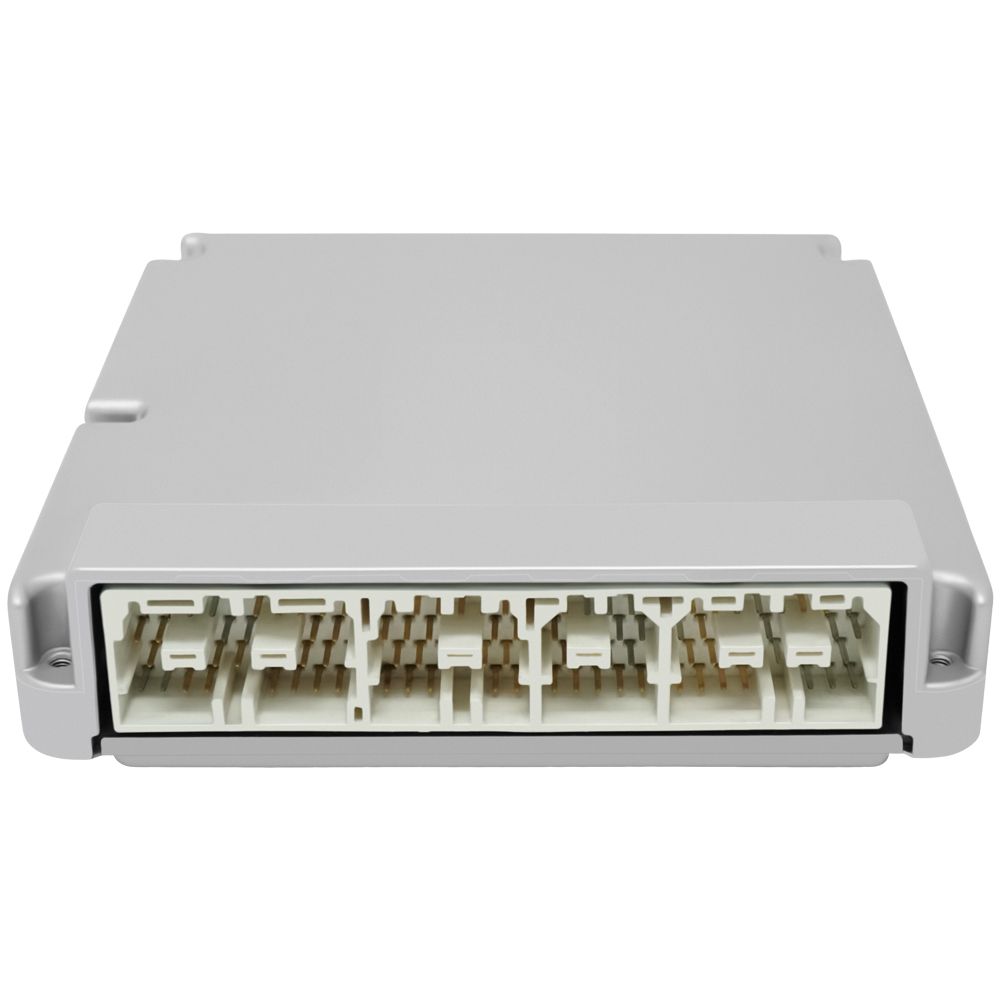
Flagship One stocks a refurbished, VIN-programmed PCM for the 1996 Mazda Millenia with a lifetime warranty, free shipping and no core charge. The full Mazda Millenia module lineup covers other engine configurations as well.
The 1996 Mazda Millenia relies on its PCM and ECM to manage critical engine and transmission functions, and when these modules fail, the symptoms can range from subtle drivability quirks to complete no-start conditions. Understanding the replacement process, labor times, and common failure signs helps you make informed decisions about repairs. Whether you’re addressing an existing issue or planning ahead, a VIN-programmed replacement unit can streamline the process and ensure your Millenia runs smoothly for miles to come.