
Last updated on August 25th, 2026 at 01:09 pm
The engine and powertrain control modules in your 2017 Jeep Renegade manage critical ignition, fuel, and emission settings. A failure within these internal circuits typically causes the vehicle to enter limp mode or prevent the engine from starting entirely.
Dealing with electronic failures in a 2017 Jeep Renegade can be a frustrating experience for any owner. When the vehicle fails to start or exhibits erratic driving behavior, the root cause often lies within the engine or powertrain control modules. These components serve as the central intelligence for your vehicle, processing data from dozens of sensors to ensure the 1.4L engine operates efficiently. Because these modules are deeply integrated into the electrical architecture, a malfunction can manifest as a wide array of symptoms, ranging from a simple check engine light to a complete loss of propulsion. Understanding the distinction between a software glitch and a hardware failure is essential for a successful repair. By exploring the common failure points, the labor involved in replacement, and the necessity of precise programming, you can make an informed decision about how to restore your vehicle to a reliable state. This guide provides the technical clarity needed to navigate the complexities of your vehicle’s electronic control systems.
The Powertrain Control Module and Engine Control Module in the 2017 Jeep Renegade act as the primary coordinators for the internal combustion process. These computers monitor air intake, fuel delivery, and spark timing in real time to maintain the balance between performance and emissions. They are responsible for interpreting signals from the crankshaft position sensor, oxygen sensors, and the throttle position sensor to adjust the engine output based on your driving demands. If these components fail, the communication between the engine and the transmission may break down, leading to harsh shifts or an inability to accelerate. When sourcing replacement engine computers for the 2017 Jeep Renegade you must ensure the hardware matches the specific requirements of the 1.4L engine. These modules also manage the vehicle’s diagnostic system, storing fault codes when they detect a parameter that falls outside of the acceptable factory range. Because the 2017 Jeep Renegade relies so heavily on these digital instructions, any corruption in the module’s memory or a physical failure of the internal capacitors can render the vehicle undrivable. The integration of these systems ensures that the vehicle meets strict environmental standards while providing consistent power delivery across various load conditions.
2017 Jeep Renegade
OEM programmed ECM for your 2017 Jeep Renegade — plug & play, no dealer visit.
Free shipping · Lifetime warranty
The modules in the 2017 Jeep Renegade are positioned to allow for relatively straightforward access, though precision is required during the swap. The labor for the removal and installation of the Powertrain Control Module is listed at 0.5 hours. Similarly, the removal and installation of the Engine Control Module is also rated at 0.5 hours. The process generally involves disconnecting the battery, removing the electrical harnesses from the module pins, and unbolting the unit from its mounting bracket. It is important to ensure that the connectors are seated fully and that no debris enters the wiring loom during the process. Because these units are exposed to the engine bay environment, checking the condition of the mounting hardware and the surrounding wire looms is a typical part of the installation procedure to prevent future vibration damage.
| Operation | Configuration | Book Time |
|---|---|---|
| Powertrain Control Module Relearn | All configurations | 0.5 hr |
| Powertrain Control Module R&R | All configurations | 0.5 hr |
| Engine Control Module Relearn | All configurations | 0.5 hr |
| Engine Control Module Reset | All configurations | 0.3 hr |
| Engine Control Module R&R | All configurations | 0.5 hr |
After a module is physically installed, the factory process typically requires several software steps to synchronize the hardware with the vehicle. This often includes a Powertrain Control Module Relearn, which takes 0.5 hours, and an Engine Control Module Relearn, also taking 0.5 hours. Additionally, an Engine Control Module Reset may be performed, requiring 0.3 hours. These steps are critical because the module must recognize the unique identity of the vehicle to function. However, utilizing a VIN-programmed replacement unit eliminates the need for these tedious dealership visits. Since the unit arrives with your specific vehicle identification number already flashed into the memory, the complex relearn and reset procedures are completed before the part reaches your door, allowing for a plug-and-play installation experience.
Failures within the control modules of a 2017 Jeep Renegade often present as unpredictable engine behavior. You may experience a complete no-start condition where the engine cranks but never fires, or the vehicle may stall unexpectedly while idling at a stop. In some cases, the engine might enter a limp home mode, severely limiting your RPM and power to protect the hardware from further damage. Misfire codes that do not resolve after replacing spark plugs or coils often point toward a failing computer. You might also notice a total loss of communication when attempting to use a scan tool, meaning the module is no longer responding to requests. Internal electrical faults are often flagged by the system, such as when the computer detects an internal control module fault P0601 which indicates a failure in the internal memory or processor. Other symptoms include erratic shifting patterns or a sudden surge in fuel consumption due to incorrect air-fuel mixture commands. These issues typically stem from internal circuit degradation or software corruption within the module’s processor.
When the onboard diagnostics system detects an internal failure within the computer, it will trigger specific manufacturer codes. For the 2017 Jeep Renegade, the most common internal module codes are P0601 and P0606.
| Code | Meaning | Full Guide |
|---|---|---|
| P0601 | Internal memory checksum error | Full P0601 guide → |
| P0606 | Module processor failure | Full P0606 guide → |
The 2017 Jeep Renegade has been subject to specific factory guidance regarding its powertrain electronics. Specifically, Emission Recall U76 was issued, which requires the reprogramming of the Powertrain Control Module to ensure the vehicle continues to meet emissions standards and operates correctly.
| Bulletin | Subject | What It Addresses |
|---|---|---|
| — | Service Bulletins/Recalls • 30 – Canadian Recalls • Emission Recall U76 – Reprogram Powertrain | — |
Yes, if the PCM fails to send the proper trigger signal to the fuel pump or ignition system, the vehicle will not start. This is often accompanied by a lack of communication with a diagnostic scanner.
The ECM focuses primarily on engine functions like fuel and spark, while the PCM manages the broader powertrain, including the transmission and emissions. In many modern vehicles, these functions are combined into one physical unit.
While basic OBD-II scanners can read general codes, a professional-grade tool is typically needed to access the internal memory and perform the relearn processes required for these modules.
A software update, such as the one in Recall U76, can fix logic errors or calibration issues. However, if an internal capacitor or processor has physically failed, the module must be replaced.
According to standard labor guides, the removal and installation for either the PCM or ECM in a 2017 Jeep Renegade is estimated at 0.5 hours.
When deciding between attempting a circuit-level repair or opting for a refurbished replacement, consider the reliability of your daily transport. Professional refurbishment and pre-programming ensure that the 2017 Jeep Renegade returns to factory specifications without the risk of software incompatibility. Choosing a unit that is already matched to your VIN provides a streamlined path to recovery, avoiding the high costs and time associated with dealer-only programming services.
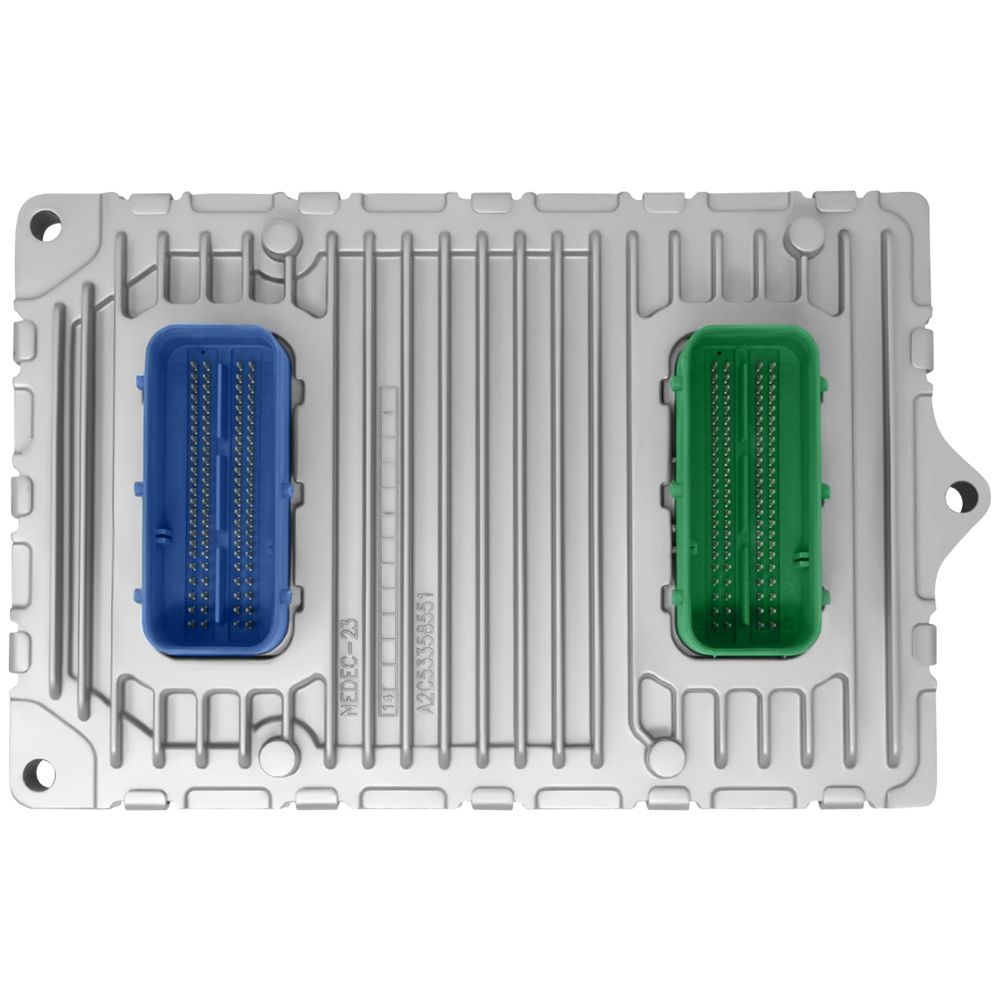
Flagship One stocks a refurbished, VIN-programmed PCM for the 2017 Jeep Renegade with a lifetime warranty, free shipping and no core charge. The full Jeep Renegade module lineup covers other engine configurations as well.
Restoring the electronic heart of your 2017 Jeep Renegade requires a balance of correct hardware and precise software. Whether you are dealing with the symptoms of a failing processor or fulfilling the requirements of Recall U76, using a programmed module is the most efficient solution. By focusing on the known labor times and symptoms, you can get your 2017 Jeep Renegade back on the road with confidence.