
Last updated on August 25th, 2026 at 01:10 pm
The Powertrain Control Module (PCM) in your 2009 Jeep Commander acts as the vehicle’s central computer, managing engine performance, fuel delivery, and transmission behavior. Failures may lead to erratic idling, poor acceleration, or even a no-start condition.
If your 2009 Jeep Commander 5.7L has started hesitating at highway speeds, stalling unexpectedly, or throwing check-engine lights that won’t clear, the Powertrain Control Module (PCM) may be the culprit. This small but critical computer oversees everything from fuel injection timing to transmission shift points. When it fails, symptoms can range from subtle driveability quirks to complete engine shutdown. Understanding what the PCM does, where it’s located, and what replacement involves helps you make informed decisions—whether you’re tackling the job yourself or evaluating quotes from a shop. You’ll also learn why using a pre-programmed module can save time and avoid repeat dealer visits for software updates. This guide covers the essentials: labor times, common failure signs, and practical steps to keep your Commander running reliably.
The Powertrain Control Module (PCM) in your 2009 Jeep Commander serves as the brain of the drivetrain, integrating signals from sensors across the engine and transmission to optimize performance. It adjusts fuel delivery, ignition timing, and shift points in real time, ensuring smooth acceleration and efficient operation. Without a functioning PCM, the engine may run poorly or refuse to start at all. Over time, heat, vibration, or electrical spikes can degrade the module’s internal circuits, leading to erratic behavior. When replacement becomes necessary, choosing replacement PCMs for the Jeep Commander ensures compatibility with your vehicle’s specific 5.7L engine and transmission pairing. The PCM also plays a role in emissions control, so failures may trigger check-engine lights even if the engine seems to run normally. Its location in the engine bay exposes it to temperature swings and moisture, which can accelerate wear if connectors or seals deteriorate.
2009 Jeep Commander 5.7L: When Your
OEM programmed replacements — plug & play, no dealer visit.
Find yours by year, make & model →
Free shipping · Lifetime warranty
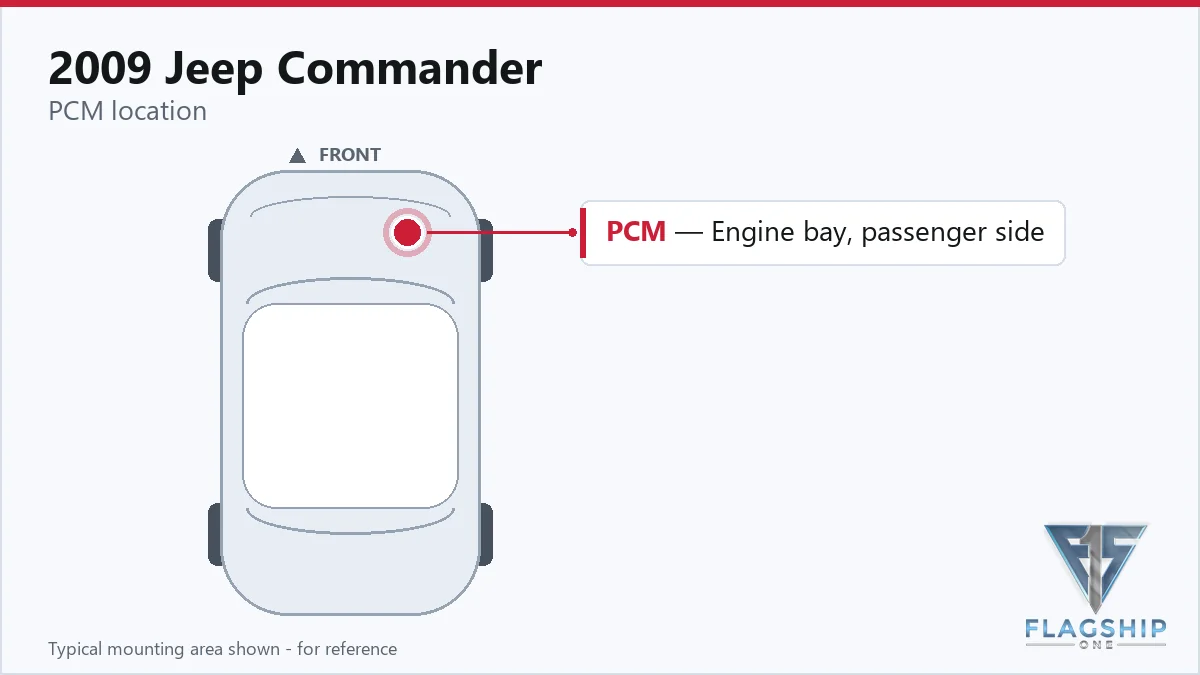
In the 2009 Jeep Commander, the PCM is mounted on the right-front inner fender inside the engine compartment. Accessing it requires removing a few bolts and disconnecting the wiring harness, a straightforward process that typically takes less than half an hour. The factory labor guide lists 0.4 hours for Powertrain Control Module removal and replacement, though additional time may be needed if corrosion or damaged connectors complicate the job. Once the old unit is out, the new module bolts into the same location, and the harness reconnects with a single plug. No special tools are required beyond basic hand tools, but care should be taken to avoid bending pins during installation. If the replacement module isn’t pre-programmed to your vehicle’s VIN, a separate relearn procedure will be necessary, adding another 0.5 hours of labor.
| Operation | Configuration | Book Time |
|---|---|---|
| Powertrain Control Module R&R | All configurations | 0.4 hr |
| Engine Control Module Relearn | All configurations | 0.5 hr |
| Engine Control Module R&R | All configurations | 0.4 hr |
After installing a new PCM in your 2009 Jeep Commander, the factory procedure requires a relearn process to synchronize the module with the vehicle’s sensors and transmission. This typically involves connecting a scan tool to initiate a software calibration, which can take up to 0.5 hours of labor. However, using a VIN-programmed replacement unit eliminates this step entirely, as the module arrives pre-configured for your specific vehicle. This not only saves time but also reduces the risk of incomplete initialization, which can lead to lingering driveability issues. The relearn process is critical because the PCM must recalibrate fuel trims, idle settings, and shift points to match your engine’s current condition. Skipping this step may result in poor performance or even trigger new trouble codes. Flagship One modules come ready to install, so you can avoid the extra trip to the dealer for programming.
When the PCM in your 2009 Jeep Commander 5.7L begins to fail, symptoms often start subtly before becoming more pronounced. You may notice the engine hesitating during acceleration, especially at higher speeds, or the transmission shifting erratically between gears. Stalling at idle or after coming to a stop is another common sign, as the PCM struggles to maintain stable fuel and spark delivery. Check-engine lights are a frequent indicator, with codes like internal control module memory errors pointing directly to the module’s internal faults. In some cases, the vehicle may fail to start at all, as the PCM fails to send the correct signals to the fuel pump or ignition system. Other symptoms include rough idling, reduced fuel economy, or the engine running too rich or too lean. If your scan tool can’t communicate with the PCM, that’s a strong sign the module itself has failed. These issues often worsen over time, so addressing them promptly can prevent more serious drivability problems.
The 2009 Jeep Commander 5.7L may store specific trouble codes when the PCM develops internal faults. These codes help pinpoint whether the issue lies with the module itself or related sensors and circuits.
| Code | Meaning | Full Guide |
|---|---|---|
| P0601 | Internal memory checksum error | Full P0601 guide → |
| P0606 | Module processor failure | Full P0606 guide → |
Jeep issued several service bulletins addressing PCM-related driveability concerns in the 2009 Commander 5.7L. Bulletin #18-020-09 covers software updates to resolve check-engine lights and Multi-Displacement System (MDS) performance issues. Another bulletin, #18-010-12, targets clunks or shudders felt when accelerating after cruise control use or wide-open throttle events. Bulletin #18-032-11 addresses cooling system performance codes, specifically P2181, which may also be linked to PCM calibration. These updates typically require a dealer visit for reprogramming, as they involve flashing the module with revised software to correct known issues.
| Bulletin | Subject | What It Addresses |
|---|---|---|
| 18-020-09 | 18-020-09 Flash: MIL Illumination and/or MDS Driveability Improvements | — |
| 18-010-12 | 18-010-12 Flash: Clunk and Shudder Felt When Resuming Speed With Cruise Control or On Wide Open | — |
| 18-032-11 | 18-032-11 Flash: MIL Illumination for P2181 – Cooling System Performance | — |
Stalling at idle or after deceleration is often linked to PCM failure, particularly if the module struggles to maintain stable fuel delivery or idle speed control. A failing PCM may also cause the transmission to hesitate when shifting into lower gears, compounding the issue. Checking for stored trouble codes can help confirm whether the PCM is the root cause.
Replacing the PCM is a straightforward job if you’re comfortable working with basic hand tools. The module is located on the right-front inner fender in the engine bay, and removal typically takes less than 30 minutes. However, if the new module isn’t pre-programmed to your VIN, you’ll need a scan tool to perform the relearn procedure, which may require a trip to the dealer or a shop with the right equipment.
In the 2009 Jeep Commander, the terms PCM (Powertrain Control Module) and ECM (Engine Control Module) are often used interchangeably, but the PCM is the correct designation. Unlike older vehicles that separated engine and transmission control into two modules, the Commander’s PCM handles both functions, integrating signals from the engine, transmission, and emissions systems into a single unit.
If your vehicle exhibits driveability issues like hesitation, stalling, or erratic shifting, a software update (reprogramming) may resolve the problem. However, if the PCM stores internal fault codes like P0601 or P0606, or if the module fails to communicate with a scan tool, replacement is likely necessary. Reprogramming is typically a dealer-level service, while replacement can be done at home if the new module is pre-programmed.
A used PCM from another 2009 Jeep Commander 5.7L may physically fit, but it won’t function correctly unless it’s reprogrammed to match your vehicle’s VIN. Even then, used modules carry risks, such as undiagnosed internal faults or outdated software. A new, pre-programmed unit ensures compatibility and reliability without the need for additional programming steps.
If your 2009 Jeep Commander 5.7L is showing signs of PCM failure, you have options beyond costly dealer replacements. A new, pre-programmed module eliminates the need for post-installation software updates, saving time and reducing the risk of lingering driveability issues. Whether you’re replacing the unit yourself or having a shop handle the installation, choosing a VIN-matched module ensures a smooth process. Refurbished units may offer a budget-friendly alternative, but new modules provide the best long-term reliability for your vehicle.
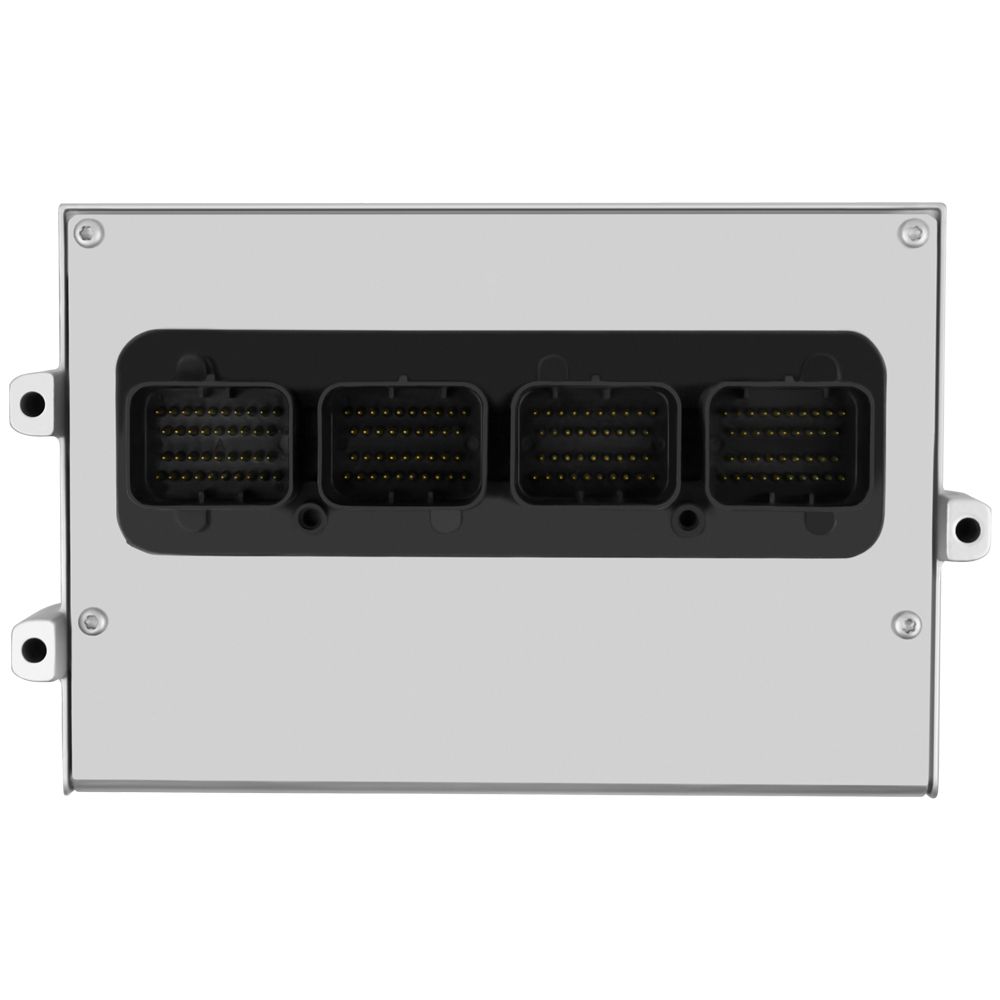
Flagship One stocks a refurbished, VIN-programmed PCM for the 2009 Jeep Commander with a lifetime warranty, free shipping and no core charge. The full Jeep Commander module lineup covers other engine configurations as well.
The 2009 Jeep Commander 5.7L relies on its PCM to keep the engine and transmission working in harmony. When this critical module fails, symptoms like stalling, hesitation, or check-engine lights can disrupt your driving experience. Understanding the replacement process, labor times, and programming requirements helps you make informed decisions about repairs. Whether you opt for a new or refurbished unit, addressing PCM issues promptly can restore your Commander’s performance and prevent more serious problems down the road.