
Last updated on August 25th, 2026 at 01:10 pm
The Powertrain Control Module (PCM) in your 2003 Jeep Wrangler manages engine and transmission functions. Failures may cause erratic performance, no-start conditions, or stored trouble codes like P0601, often tied to internal memory errors.
If your 2003 Jeep Wrangler is experiencing unexpected stalling, failure to start, or erratic engine behavior, the Powertrain Control Module (PCM) may be at fault. This critical component oversees engine and transmission functions, ensuring smooth operation. Replacing it involves more than just swapping parts—proper programming is essential to restore functionality. Understanding the process, from location and labor to post-install steps, helps you make informed decisions about repairs. Whether you’re diagnosing symptoms or preparing for a replacement, knowing what to expect can save time and prevent frustration.
The Powertrain Control Module (PCM) in your 2003 Jeep Wrangler acts as the brain for engine and transmission systems. It processes sensor data to regulate fuel delivery, ignition timing, and shifting patterns, ensuring optimal performance. A malfunctioning PCM may disrupt these functions, leading to poor drivability or even a no-start condition. When replacement becomes necessary, selecting replacement engine computers for the Wrangler ensures compatibility with your vehicle’s 2.4L engine. The module’s role is critical, as it directly influences fuel efficiency, emissions, and overall reliability.
2003 Jeep Wrangler
OEM programmed replacements — plug & play, no dealer visit.
Find yours by year, make & model →
Free shipping · Lifetime warranty
In the 2003 Jeep Wrangler, the PCM is mounted in the engine compartment, making access relatively straightforward. Replacement involves disconnecting the battery, removing the module’s electrical connectors, and unbolting the unit from its mounting location. Labor time for Powertrain Control Module removal and reinstallation is typically 0.4 hours. After installation, the module must be secured properly to avoid vibration or moisture intrusion. While the physical swap is quick, ensuring correct programming afterward is crucial for the vehicle to operate as intended.
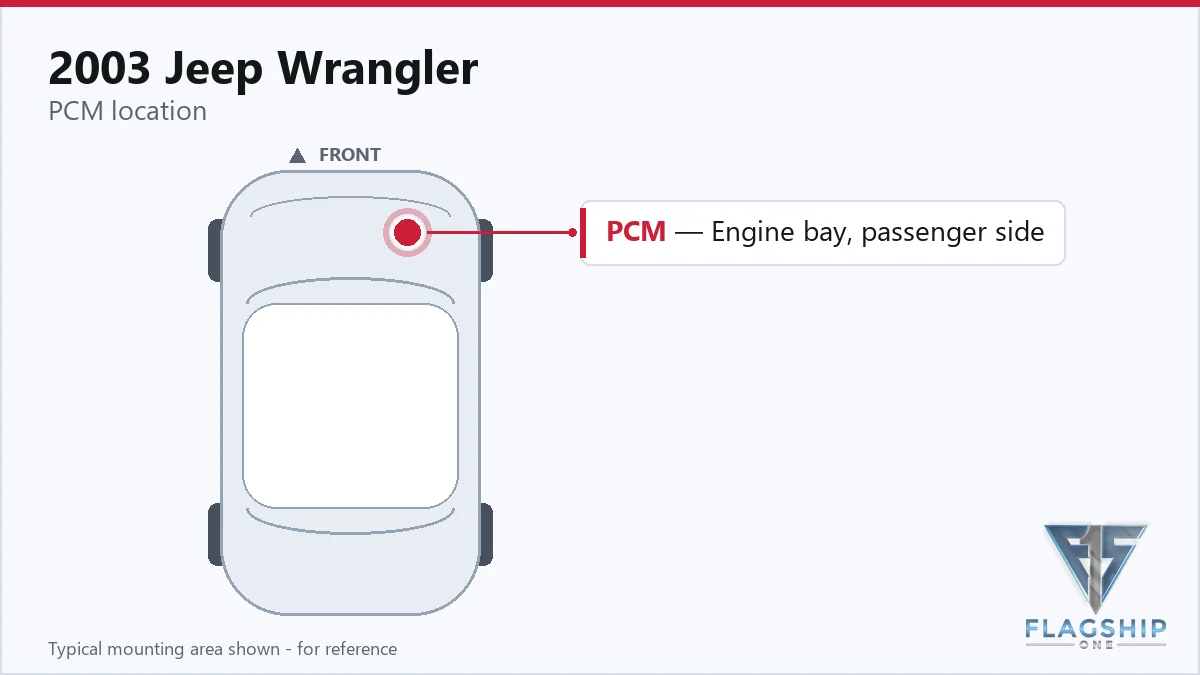
Work with the ignition off, and treat the module as static-sensitive: avoid touching the connector pins at any point.
| Operation | Configuration | Book Time |
|---|---|---|
| Powertrain Control Module R&R | All configurations | 0.4 hr |
| Engine Control Module Relearn | All configurations | 0.5 hr |
| Engine Control Module R&R | All configurations | 0.4 hr |
After installing a new PCM in your 2003 Jeep Wrangler, the factory procedure requires reprogramming the module with the vehicle’s original VIN and mileage using a DRB scan tool. This step ensures the module synchronizes with the engine and transmission systems. However, a VIN-programmed replacement unit from Flagship One arrives pre-configured, eliminating the need for this additional step. This saves time and reduces the risk of programming errors, allowing your vehicle to return to normal operation more quickly.
A failing PCM in the 2003 Jeep Wrangler may cause a range of symptoms, including intermittent stalling, difficulty starting, or erratic engine behavior. You might also notice poor fuel economy or transmission shifting issues. In some cases, the check engine light illuminates, often accompanied by a stored internal control module memory check sum error. If your scan tool fails to communicate with the PCM, that’s another sign the module may need attention. Addressing these symptoms promptly can prevent further drivability problems.
The 2003 Jeep Wrangler’s PCM may store specific trouble codes when internal faults occur. These codes help diagnose issues related to the module’s memory, communication, or processing functions. One documented code for this vehicle is listed below.
| Code | Meaning | Full Guide |
|---|---|---|
| P0601 | Internal memory checksum error | Full P0601 guide → |
Factory service bulletin #08-030-06 Rev. A addresses Powertrain Control Module initialization procedures for the 2003 Jeep Wrangler. This bulletin outlines steps to ensure proper module setup after replacement, emphasizing the importance of VIN and mileage programming. Following these guidelines helps prevent post-installation issues and ensures the PCM operates correctly with the vehicle’s systems.
| Bulletin | Subject | What It Addresses |
|---|---|---|
| 08-030-06 Rev. A | 08-030-06 Rev. A Powertrain Control Module Initialization | — |
Stalling after a PCM replacement often occurs if the module isn’t properly programmed with the vehicle’s VIN and mileage. The factory procedure requires using a DRB scan tool to complete this step. If the programming is skipped or incomplete, the engine may not receive correct fuel or ignition signals, leading to stalling.
While the vehicle may still run with a P0601 code, it’s not advisable to ignore it. This code indicates an internal memory error in the PCM, which may cause erratic engine behavior or even a no-start condition. Addressing it promptly helps prevent further drivability issues.
Common signs include stalling, no-start conditions, or poor engine performance. A scan tool may reveal stored codes like P0601 or fail to communicate with the PCM. If these symptoms persist after checking connections and fuses, the module itself may need replacement.
If your 2003 Jeep Wrangler’s PCM is failing, you have options for replacement. A new or remanufactured module can restore proper engine and transmission function. Given the labor and programming requirements, selecting a unit that arrives ready for installation can simplify the process. This ensures your vehicle returns to reliable operation without unnecessary delays.
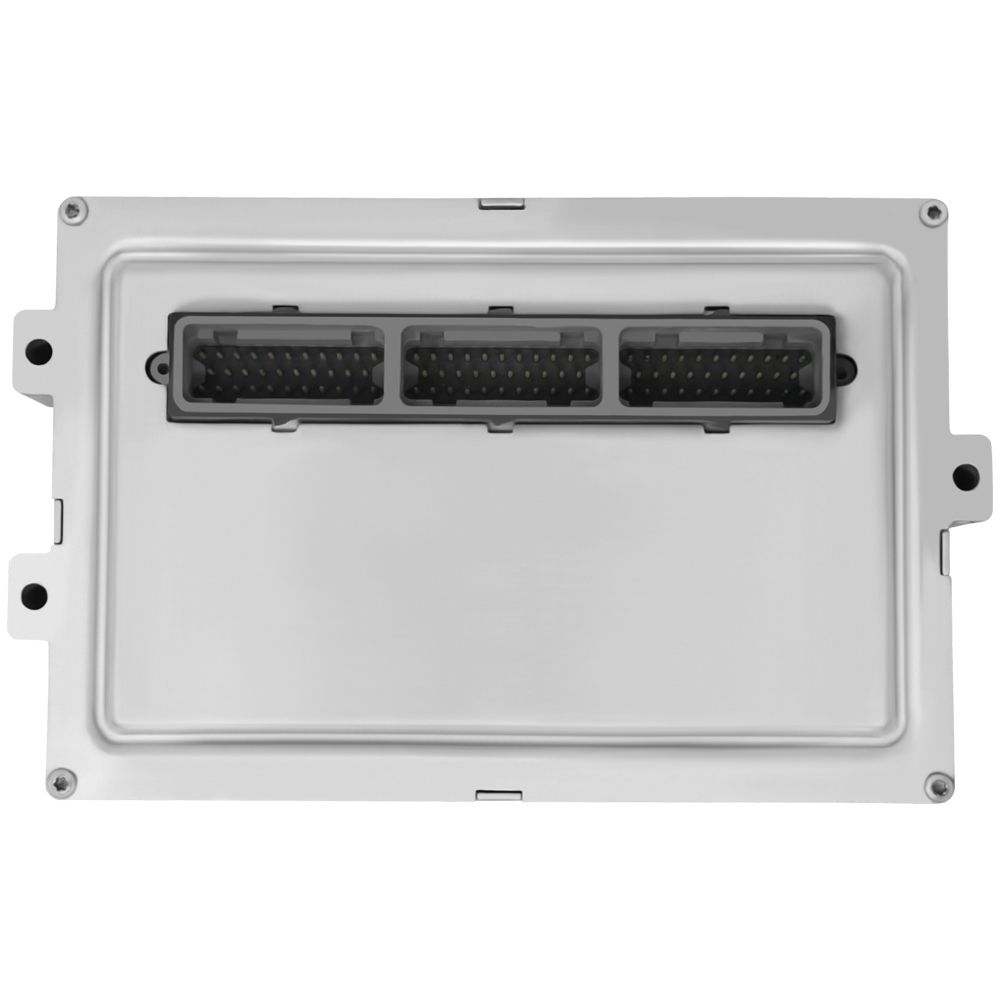
Flagship One stocks a refurbished, VIN-programmed PCM for the 2003 Jeep Wrangler with a lifetime warranty, free shipping and no core charge. The full Jeep Wrangler module lineup covers other engine configurations as well.
The 2003 Jeep Wrangler relies on its PCM for smooth engine and transmission performance. If you’re experiencing symptoms like stalling or stored trouble codes, addressing the issue promptly can prevent further complications. Whether you opt for a repair or replacement, understanding the process helps you make the best choice for your vehicle’s needs.