
Last updated on August 25th, 2026 at 12:14 pm
The engine control module in the 1991 Jeep Wrangler manages fuel delivery and ignition timing for the 2.5L engine. When this module fails, it typically causes intermittent stalling or a complete no-start condition, preventing your vehicle from operating reliably.
When your 1991 Jeep Wrangler begins to exhibit frustrating performance issues, the engine control module often becomes a primary suspect. As a vehicle from the early 1990s, the Wrangler utilizes an early generation of electronic engine management that controls critical functions like fuel metering and spark timing for the 2.5L four-cylinder engine. Diagnosing problems in these older systems presents unique challenges, as you cannot simply plug in a modern scan tool to retrieve standardized diagnostic codes. Instead, identifying a failing module requires careful observation of how the engine runs combined with systematic electrical testing. Understanding what this component does, where it is located, and how it affects your vehicle can save you significant time and money. Whether you are dealing with an occasional rough idle or a complete no-start situation, gaining clarity on the role of this computer helps you make informed decisions about diagnosing and repairing your classic off-road vehicle. By exploring the common symptoms and replacement procedures, you will be better equipped to restore reliable performance to your Jeep without relying on guesswork or unnecessary part swapping.
1991 Jeep Wrangler 2.5L
OEM programmed ECM for your 1991 Jeep Wrangler 2.5L — plug & play, no dealer visit.
Free shipping · Lifetime warranty
In the 1991 Jeep Wrangler, the engine control module serves as the central processing unit for the 2.5L fuel-injected powertrain. It continuously collects data from various engine sensors, including the throttle position sensor, manifold absolute pressure sensor, and coolant temperature sensor. Using this information, the module calculates the precise amount of fuel to inject and the exact moment to fire the ignition coil. Unlike modern powertrain control modules that also manage automatic transmissions, this specific unit focuses primarily on engine operation. When you are troubleshooting poor performance, considering a Jeep Wrangler ECM replacement often becomes necessary after ruling out basic sensor or wiring faults. The module makes real-time adjustments to maintain the ideal air-fuel ratio, ensuring your engine runs smoothly under varying loads and driving conditions. If the internal circuitry degrades, the module may send incorrect signals to the fuel injectors or ignition system, leading to inefficient combustion. Because the 1991 Jeep Wrangler predates the OBD-II standard, the computer relies on earlier diagnostic protocols, making it harder to pinpoint internal failures without specialized knowledge. The module is essentially the brain of the engine, and when its internal memory or processors degrade, the entire fuel and ignition strategy falls apart, leaving you with a vehicle that struggles to run or refuses to start entirely.
In the 1991 Jeep Wrangler, the engine control module is typically mounted inside the engine compartment. You will usually find it bolted to the left inner fender, near the firewall and the bulkhead connector. This placement exposes the unit to significant under-hood heat and vibration, which are common contributors to long-term electronic degradation. Gaining access to the module requires opening the hood and locating the aluminum housing with its large wiring harness connector. To replace the unit, you must first disconnect the negative battery cable to prevent electrical shorts. Next, carefully unplug the wiring harness connector, which often has a retaining bolt that needs to be loosened. Remove the mounting bolts securing the module to the fender well, and lift the old unit away. Installing the replacement involves reversing these steps, ensuring the mounting bolts are snug and the wiring connector is fully seated. Because the connector is exposed to the elements, inspecting the pins for corrosion during installation is highly recommended.
When replacing the engine control module on a 1991 Jeep Wrangler, the factory procedure often requires a specific initialization process. Because this vehicle predates modern OBD-II standards, there is typically no complex VIN programming required via a scan tool, but the system may need a specific sequence of ignition cycles or an idle relearn procedure to calibrate the new module to the existing sensors. The engine must relearn its baseline idle parameters to prevent stalling or rough running immediately after installation. Choosing a pre-programmed Jeep computer eliminates much of the uncertainty involved in this transition. Flagship One units arrive already programmed with the appropriate calibration for your specific 2.5L engine, meaning the fuel maps and ignition timing tables are ready to go. This preparation allows your vehicle to start and idle properly as soon as the replacement is installed, avoiding the lengthy process of forcing the engine through multiple drive cycles to stabilize its performance.
When the engine control module begins to fail in your 1991 Jeep Wrangler, the symptoms often mimic other common ignition or fuel delivery problems, making diagnosis tricky. One of the most frequent indicators is intermittent stalling, where the engine suddenly dies while driving and may or may not restart immediately. You might also experience a rough idle that fluctuates erratically, as the failing module struggles to maintain consistent fuel injector pulse widths. A complete no-start condition is also highly typical, often resulting from the module failing to trigger the ignition coil or the fuel injectors. Because this is a pre-OBD-II vehicle, you cannot rely on modern code readers to point directly to an internal module failure; instead, you must observe how the engine behaves. Another common sign is a sudden drop in fuel economy, indicating the computer is running the engine rich as a safeguard. In some cases, the engine may hesitate or stumble under acceleration, struggling to adjust the air-fuel mixture when the throttle opens. If you find that the ignition coil produces no spark during a no-start event, and all the primary ignition components check out, the module is highly likely to be the culprit. Electrical issues like these require systematic testing, as a failing module can sometimes recover temporarily when it cools down, only to stall again once it reaches operating temperature.
The module in the 1991 Jeep Wrangler operates on earlier electronic fuel injection protocols and predates the OBD-II standard, meaning it manages basic fuel and ignition functions without the complex emissions monitoring or transmission control found in newer vehicles.
No, the 1991 Jeep Wrangler uses a proprietary diagnostic system that is not compatible with modern OBD-II scanners. Fault codes are typically read by cycling the ignition key and counting the flashes of the check engine light on the dashboard.
Failure is often caused by exposure to high under-hood temperatures, vibration, and voltage spikes from a failing alternator or poor battery connections. Age-related degradation of internal capacitors and solder joints is also a common factor.
Yes, if the replacement unit is properly pre-programmed with the correct calibration for the 2.5L engine, it should start the vehicle right away, though an idle relearn procedure may be necessary to ensure perfect low-speed performance.
The engine control module is typically located in the engine compartment, mounted to the left inner fender near the firewall, where it is susceptible to heat and moisture exposure over time.
Deciding whether to repair or replace the engine control module in your 1991 Jeep Wrangler depends on the severity of the internal damage. While some specialized shops may attempt to repair circuit boards, a refurbished replacement often provides a more reliable and efficient solution. Choosing a unit that has been thoroughly tested and pre-programmed specifically for the 2.5L engine ensures your classic Jeep gets back on the trail quickly.
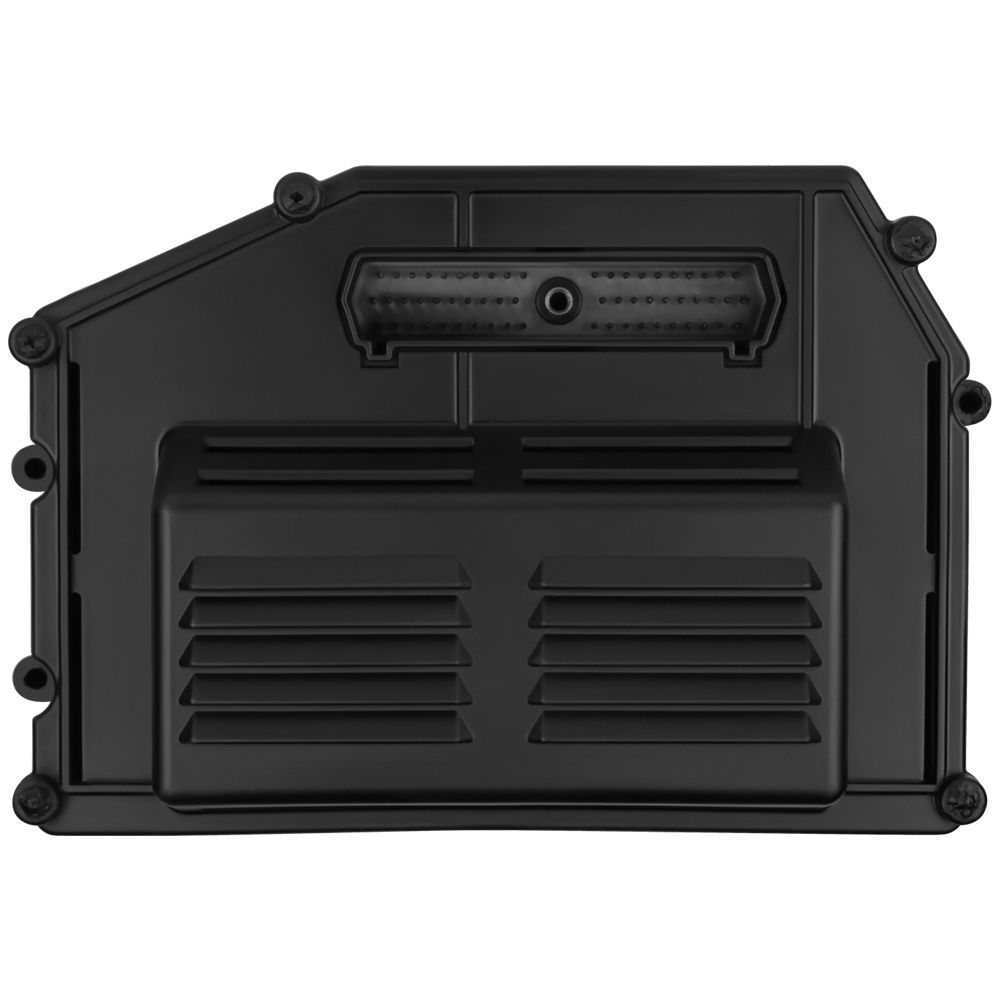
Flagship One stocks a refurbished, VIN-programmed ECM for the 1991 Jeep Wrangler with a lifetime warranty, free shipping and no core charge. The full Jeep Wrangler module lineup covers other engine configurations as well.
Dealing with engine management issues in your 1991 Jeep Wrangler can be challenging without the convenience of modern diagnostics. Understanding how the engine control module operates and recognizing the signs of failure helps you address the problem effectively. When it is time to replace that faulty unit, choosing a pre-programmed option from a trusted supplier ensures your classic Jeep gets back on the trail quickly and reliably.