
Last updated on August 25th, 2026 at 01:30 pm
The powertrain control module (PCM) in your 2018 Ford Focus manages engine and transmission functions. Failure may cause drivability issues, warning lights, or complete vehicle shutdown due to internal faults or communication errors.
If your 2018 Ford Focus has been acting unpredictably—stalling at stops, refusing to start, or shifting erratically—your powertrain control module (PCM) may be the culprit. This small but critical computer oversees everything from fuel delivery to transmission behavior, and when it fails, the effects can range from subtle drivability quirks to a complete loss of function. Unlike simpler sensors, the PCM doesn’t just relay data; it makes real-time decisions based on inputs from across the vehicle, meaning its failure can trigger a cascade of issues. Replacing it isn’t just about swapping a box—it requires precise programming to sync with your Focus’s security and drivetrain systems. Understanding the role of this module, the symptoms of its failure, and the steps involved in replacement can help you make informed decisions, whether you’re diagnosing a persistent issue or preparing for a repair. With the right approach, you can restore your vehicle’s reliability without unnecessary delays or complications.
In your 2018 Ford Focus, the powertrain control module (PCM) acts as the brain of the drivetrain, coordinating engine performance and transmission behavior to deliver smooth, efficient power. It processes data from sensors monitoring throttle position, air intake, exhaust composition, and wheel speed, then adjusts fuel injection, ignition timing, and shift points in real time. This module also interfaces with the vehicle’s security system, ensuring that only properly coded keys can start the engine. When the PCM malfunctions, it may misinterpret sensor data or fail to execute commands, leading to poor acceleration, rough idling, or even a no-start condition. Because it’s tied to so many systems, a failing PCM can trigger a range of symptoms that mimic other issues, making diagnosis tricky. If replacement becomes necessary, you’ll need replacement engine computers for the Focus that are pre-configured for your vehicle’s specific configuration to avoid additional programming steps at the shop.
The PCM in your 2018 Ford Focus is located in the engine bay, typically mounted near the firewall or on the driver’s side strut tower. Accessing it requires removing the plastic engine cover and possibly disconnecting nearby wiring harnesses or air intake components. Replacement involves unbolting the old unit, transferring any necessary connectors or brackets to the new module, and securing it in place. Labor times vary slightly depending on fuel type: 0.9 hours for both flex-fuel and gasoline models when following the streamlined procedure, or 1.4 hours for the standard replacement process. After installation, the module must be properly torqued to avoid vibration damage, though specific torque values aren’t always provided in standard repair manuals. The location and mounting design make the job straightforward for most technicians, but care must be taken to avoid damaging connectors or nearby components during removal.
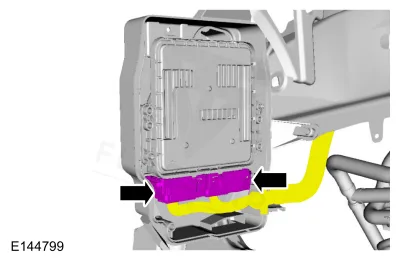
Work with the ignition off, and treat the module as static-sensitive: avoid touching the connector pins at any point.
| Operation | Configuration | Book Time |
|---|---|---|
| Powertrain Control Module R&R | FLEX | 0.9 hr |
| Powertrain Control Module R&R | GAS | 0.9 hr |
| Powertrain Control Module R&R | All configurations | 1.4 hr |
| Powertrain Control Module Relearn | All configurations | 0.5 hr |
| Engine Control Module Relearn | All configurations | 0.5 hr |
| Engine Control Module R&R | FLEX | 0.9 hr |
| Engine Control Module R&R | GAS | 0.9 hr |
| Engine Control Module R&R | All configurations | 1.4 hr |
2018 Ford Focus
OEM programmed ECM for your 2018 Ford Focus — plug & play, no dealer visit.
Free shipping · Lifetime warranty
After replacing the PCM in your 2018 Ford Focus, the factory procedure requires reprogramming the Passive Anti-Theft System (PATS) to ensure the vehicle recognizes the new module and allows the engine to start. This step involves using Ford’s diagnostic equipment to reset the PATS parameters, a process that typically adds 0.5 hours of labor to the job. Without this reset, the vehicle may crank but fail to start, leaving you stranded. However, if you opt for a VIN-programmed replacement unit, this step is already completed before the module arrives, saving you time and potential frustration at the shop. The pre-programmed unit is matched to your Focus’s specific configuration, eliminating the need for on-site reprogramming and reducing the risk of compatibility issues. This approach ensures the module is ready to install and drive, provided all other systems are functioning correctly.
A failing PCM in your 2018 Ford Focus may announce itself in several ways, often starting with subtle drivability issues before escalating to more severe problems. You might notice the engine stalling unexpectedly, especially at idle or during deceleration, or the vehicle may hesitate or jerk during acceleration. Transmission shifting may become erratic, with delayed or harsh gear changes, or the transmission might default to a single gear as a safety measure. In some cases, the engine may crank but refuse to start, leaving you stranded. Warning lights on the dashboard, such as the check engine or transmission warning, are common, and a scan tool may reveal codes like an internal control module keep-alive memory error or other module-specific faults. Communication issues between the PCM and other systems can also trigger codes related to lost signals, such as U0100 or U0140. Because the PCM oversees so many functions, symptoms can vary widely, but persistent or recurring issues—especially those tied to multiple systems—often point to a failing module.
When the PCM in your 2018 Ford Focus begins to fail, it may set one or more trouble codes that help pinpoint the issue. These codes often indicate internal faults, communication errors, or memory corruption within the module itself. The following codes are commonly associated with PCM failure in this vehicle.
| Code | Meaning | Full Guide |
|---|---|---|
| P0603 | Keep-alive memory (KAM) error | Full P0603 guide → |
| P0604 | Internal RAM error | Full P0604 guide → |
| P0605 | Internal ROM error | Full P0605 guide → |
| P0606 | Module processor failure | Full P0606 guide → |
| P0607 | Module performance fault | Full P0607 guide → |
| P062F | Internal EEPROM error | Full P062F guide → |
| P068B | Module-internal fault | — |
| P1635 | Module-internal fault | — |
| P163E | Module-internal fault | — |
| U0100 | Module-internal fault | Full U0100 guide → |
| U0115 | Module-internal fault | Full U0115 guide → |
| U0121 | Module-internal fault | Full U0121 guide → |
If your Focus cranks but won’t start after a PCM replacement, the most likely cause is an incomplete PATS reset. The factory procedure requires reprogramming the Passive Anti-Theft System to sync the new module with the vehicle’s security system. Without this step, the engine control functions may work, but the security system will prevent fuel delivery or ignition. A VIN-programmed replacement unit eliminates this issue by arriving pre-configured for your vehicle.
Driving with a P0603 code—a keep-alive memory error—may be possible in the short term, but it’s not advisable. This code indicates an internal fault in the PCM, which can lead to unpredictable behavior, such as stalling, misfires, or transmission issues. Over time, the problem may worsen, potentially leaving you stranded. Addressing the code promptly can prevent further damage to the module or other systems.
Distinguishing between a bad PCM and a faulty sensor can be challenging, as both can trigger similar symptoms. However, a failing PCM often causes multiple, seemingly unrelated issues—such as stalling, transmission problems, and warning lights—across different systems. If a scan tool reveals module-internal codes like P0604 or P0606, or communication codes like U0100, the PCM itself is likely the culprit. Sensor issues, on the other hand, typically trigger codes specific to their function, such as P0113 for an intake air temperature sensor.
The 0.9-hour labor time applies to the streamlined replacement procedure for both flex-fuel and gasoline models, which assumes minimal disassembly and straightforward access to the module. The 1.4-hour time reflects a more comprehensive approach, potentially accounting for additional steps like removing more components, dealing with stubborn connectors, or addressing corrosion. The actual time may vary depending on the technician’s experience and the condition of your vehicle.
A used PCM from another 2018 Ford Focus may physically fit, but it’s unlikely to work without reprogramming. The module must be matched to your vehicle’s VIN to sync with the security system and drivetrain configuration. Even if reprogrammed, used modules carry the risk of hidden faults or wear, which could lead to premature failure. A new or remanufactured VIN-programmed unit is a more reliable option.
If your 2018 Ford Focus is exhibiting symptoms of PCM failure, you have two main options: repair or replacement. Repairing the existing module is rarely practical, as internal faults often require specialized equipment and expertise. Replacement is the more common solution, and choosing a VIN-programmed unit can simplify the process by eliminating the need for on-site reprogramming. Whether you opt for a new or remanufactured module, ensure it’s designed for your Focus’s specific configuration to avoid compatibility issues and ensure a smooth installation.
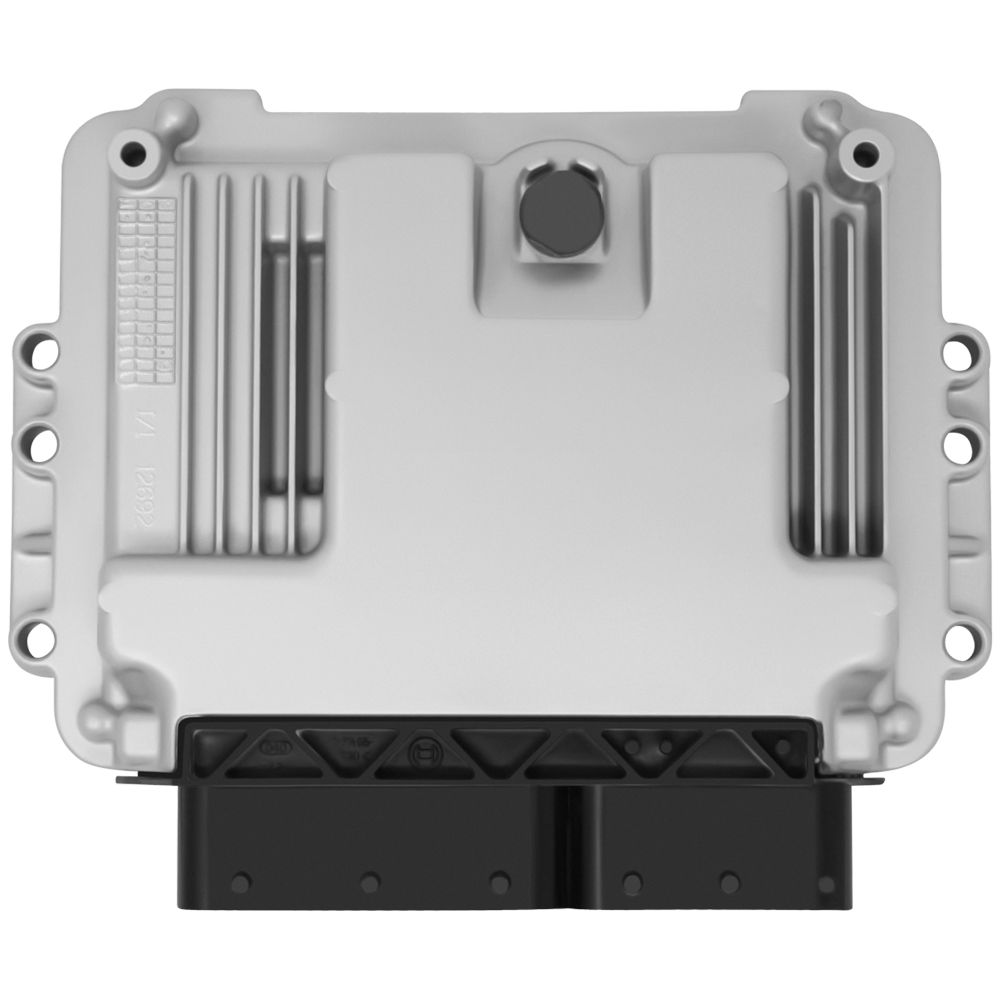
Flagship One stocks a refurbished, VIN-programmed PCM for the 2018 Ford Focus with a lifetime warranty, free shipping and no core charge. The full Ford Focus module lineup covers other engine configurations as well.
The powertrain control module in your 2018 Ford Focus plays a critical role in keeping your vehicle running smoothly, and its failure can lead to frustrating and unpredictable issues. By recognizing the symptoms early—such as stalling, no-start conditions, or transmission problems—you can address the problem before it leaves you stranded. Replacement is a straightforward process, but it’s important to follow the correct procedures, including PATS reprogramming, to ensure full functionality. With the right approach, you can restore your Focus’s reliability and get back on the road with confidence.