
Last updated on August 25th, 2026 at 01:31 pm
The Engine Control Module in the 2017 Ford Fusion Hybrid manages ignition timing, fuel delivery, and emission controls. When the ECM fails, the vehicle may lose power, run rough, or trigger multiple diagnostic codes, compromising drivability and fuel economy.
When a 2017 Ford Fusion Hybrid exhibits intermittent power loss, unexpected stalling, or a cascade of diagnostic trouble codes, the Engine Control Module often lies at the heart of the problem. Understanding how this computer governs engine operation, what the replacement process entails, and which post‑install steps are required can save you time and money. This guide walks you through the module’s function, the physical location, the labor involved, the programming necessities, and practical steps to keep the system healthy, so you know exactly what to expect before, during, and after a repair.
The Engine Control Module in the 2017 Ford Fusion Hybrid acts as the brain for the gasoline engine, interpreting sensor data to control spark timing, fuel injection, and emission systems. It also communicates with the hybrid battery controller to coordinate electric assistance. Because the vehicle relies on precise fuel‑system data, any fault in the ECM can quickly degrade performance or trigger a fail‑safe mode. The module’s reliability is crucial for meeting fuel‑economy targets and maintaining emissions compliance. replacement engine computers for the 2017 Ford Fusion Hybrid ensure the vehicle receives accurate commands after a swap, preserving drivability and regulatory adherence.
The ECM resides within the engine compartment, mounted near the firewall and attached to the vehicle’s wiring harness. Access typically requires removing the intake duct and disconnecting the battery to prevent electrical surges. Labor time for a 2.0L ECM replacement is listed as 0.8 hours, reflecting the steps needed to unbolt the unit, detach connectors, and reinstall the new module. Once the replacement is secured, the connectors are re‑engaged and the battery is reconnected, completing the physical installation before any programming can begin.
| Operation | Configuration | Book Time |
|---|---|---|
| Engine Control Module Relearn | All configurations | 0.5 hr |
| Engine Control Module R&R | 1.5L | 0.6 hr |
| Engine Control Module R&R | 2.0L | 0.8 hr |
| Engine Control Module R&R | 2.5L | 0.7 hr |
| Engine Control Module R&R | 2.7L | 0.7 hr |
| Engine Control Module Reset | All configurations | 0.3 hr |
| Powertrain Control Module R&R | 1.5L | 0.6 hr |
| Powertrain Control Module R&R | 2.0L | 0.8 hr |
2017 Ford Fusion Hybrid
OEM programmed ECM for your 2017 Ford Fusion Hybrid — plug & play, no dealer visit.
Free shipping · Lifetime warranty
After installing a new ECM, the factory procedure calls for a KOEO (Key On Engine Off) self‑test to relearn fuel‑system parameters using the General Equipment: Ford Diagnostic Equipment. Flagship One units arrive VIN‑programmed, so the KOEO test is already satisfied when the replacement is fitted. a VIN‑programmed replacement unit therefore eliminates the need for the operator to run the self‑test manually, streamlining the repair and reducing the chance of post‑install errors.
A failing ECM in the 2017 Ford Fusion Hybrid often reveals itself through a combination of no‑start conditions, intermittent stalling, and erratic idle. Drivers may notice a loss of power during acceleration, and the check‑engine light may flash with multiple codes. One of the documented codes, internal control module checksum error, points directly to an internal processing fault. Additional symptoms can include loss of communication with the powertrain control module, causing the transmission to stay in limp mode, and occasional misfire detections that affect fuel efficiency.
The following codes are commonly stored by the Engine Control Module in this vehicle when a fault occurs:
| Code | Meaning | Full Guide |
|---|---|---|
| P0605 | Internal ROM error | Full P0605 guide → |
| P0606 | Module processor failure | Full P0606 guide → |
| P0607 | Module performance fault | Full P0607 guide → |
| P164E | Module-internal fault | — |
| P166B | Module-internal fault | — |
| P2533 | Module-internal fault | Full P2533 guide → |
| P2534 | Module-internal fault | Full P2534 guide → |
| P2535 | Module-internal fault | Full P2535 guide → |
| U0100 | Module-internal fault | Full U0100 guide → |
| U0103 | Module-internal fault | Full U0103 guide → |
| U0121 | Module-internal fault | Full U0121 guide → |
| U0140 | Module-internal fault | Full U0140 guide → |
The factory book time for swapping a 2.0L Engine Control Module on this model is listed as 0.8 hours, reflecting the average time needed for removal and installation.
Factory guidance recommends using General Equipment: Ford Diagnostic Equipment for the KOEO self‑test, but a VIN‑programmed unit from Flagship One eliminates that step.
Codes such as P0605, P0606, P0607, and communication codes like U0100 often point to internal ECM faults or loss of data link.
Yes, because the ECM coordinates with the hybrid system, a malfunction can cause the battery to disengage or operate inefficiently.
While the labor time is modest, proper disconnect of the battery and use of the correct diagnostic equipment are recommended to avoid accidental damage.
When the Engine Control Module in your 2017 Ford Fusion Hybrid needs attention, you can choose a new factory‑spec unit or a refurbished replacement that meets original performance standards. Both options restore the vehicle’s computer functions, but a refurbished module from Flagship One arrives VIN‑programmed, removing the need for additional programming steps and helping you get back on the road faster.
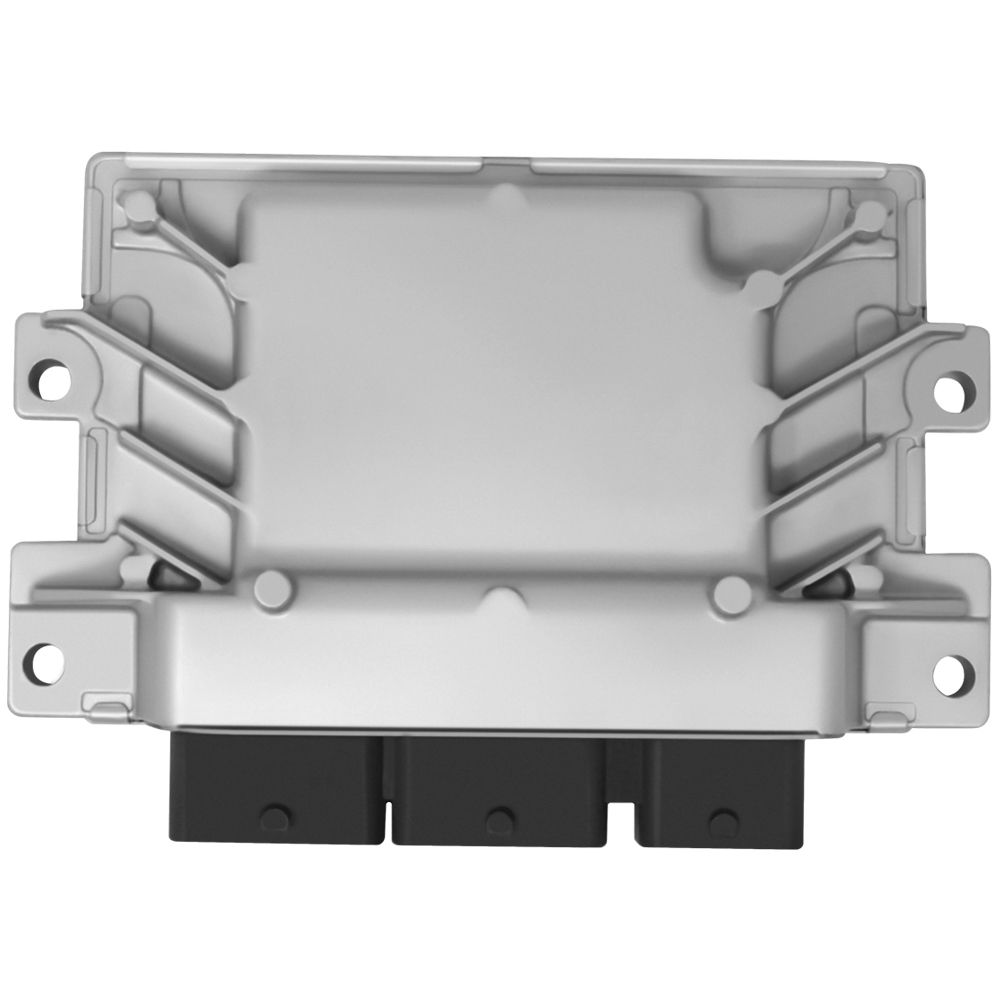
Flagship One stocks a refurbished, VIN-programmed PCM for the 2017 Ford Fusion Hybrid with a lifetime warranty, free shipping and no core charge. The full Ford Fusion Hybrid module lineup covers other engine configurations as well.
The Engine Control Module is essential to the operation of your 2017 Ford Fusion Hybrid. Whether you opt for a brand‑new or refurbished unit, proper installation and understanding of the post‑install requirements ensure reliable performance. Consider your options and choose the solution that best fits your vehicle’s needs.