
Last updated on August 25th, 2026 at 01:34 pm
The Powertrain Control Module (PCM) in your 2009 Ford Focus manages engine and transmission functions. Failures may trigger warning lights, erratic shifting, or a no-start condition due to corrupted data or electrical issues.
If your 2009 Ford Focus is experiencing unexplained stalling, a check engine light, or difficulty starting, the Powertrain Control Module (PCM) may be the culprit. This critical component oversees engine performance and transmission behavior, and its failure can disrupt multiple systems. Replacing it involves more than just swapping hardware—proper programming and relearn procedures are essential to restore full functionality. Understanding the process helps you make informed decisions, whether you’re tackling the job yourself or working with a shop. This guide covers what the PCM does, where it’s located, and what to expect during replacement and programming.
In your 2009 Ford Focus, the PCM acts as the brain for both the engine and transmission, coordinating fuel delivery, ignition timing, and shift points. It constantly adjusts these parameters based on sensor inputs to optimize performance and efficiency. When the PCM malfunctions, you may notice poor drivability, reduced fuel economy, or even a complete no-start condition. Because it integrates multiple control functions, a faulty module can trigger a range of symptoms that mimic other issues. If replacement becomes necessary, choosing replacement engine computers for the Focus ensures compatibility with your vehicle’s specific hardware and software requirements.
2009 Ford Focus
OEM programmed replacements — plug & play, no dealer visit.
Find yours by year, make & model →
Free shipping · Lifetime warranty
The PCM in your 2009 Ford Focus is positioned next to the air cleaner assembly, making it relatively accessible for removal and installation. To replace it, a technician will typically disconnect the battery, remove the air cleaner housing or intake components for clearance, and unplug the wiring harness from the module. The factory procedure specifies 0.6 hours of labor for the removal and reinstallation process. Once the new unit is in place, additional steps like a relearn procedure may be required, which adds another 0.5 hours of labor. Proper torque on mounting bolts and secure connector seating are critical to avoid future electrical issues.
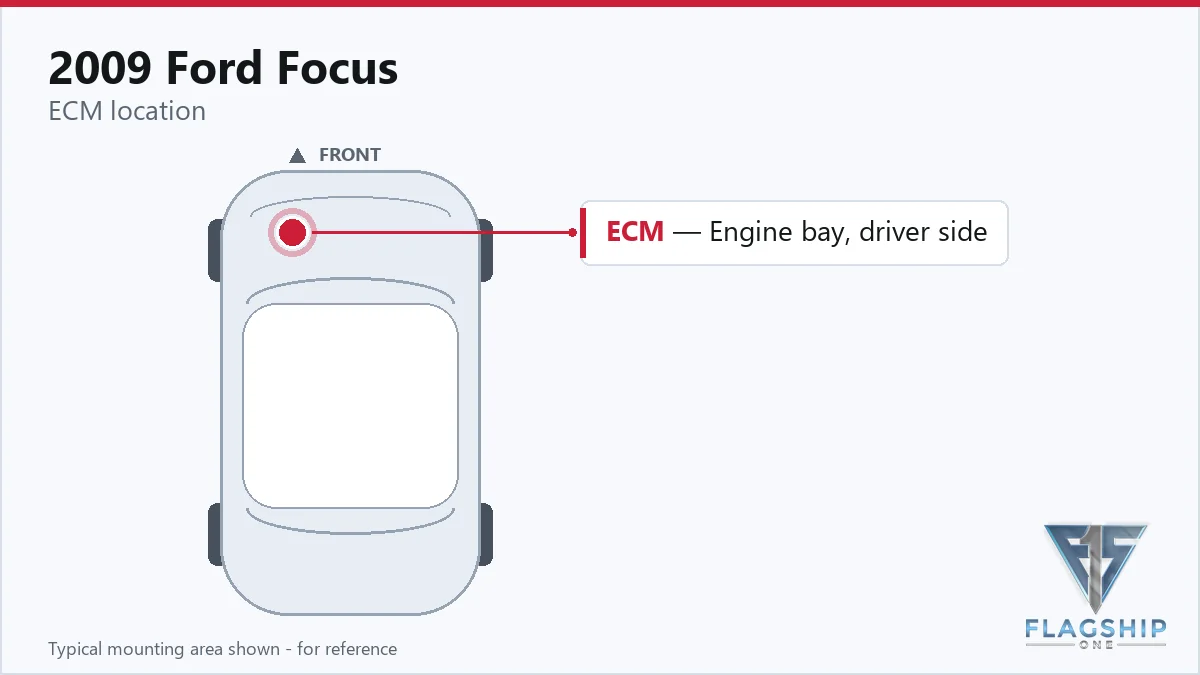
Work with the ignition off, and treat the module as static-sensitive: avoid touching the connector pins at any point.
| Operation | Configuration | Book Time |
|---|---|---|
| Engine Control Module Relearn | All configurations | 0.5 hr |
| Engine Control Module R&R | All configurations | 0.6 hr |
| Powertrain Control Module R&R | All configurations | 0.6 hr |
After installing a new PCM in your 2009 Ford Focus, the factory procedure requires reprogramming the Passive Anti-Theft System (PATS) to ensure the vehicle starts and runs correctly. This step is necessary because the PCM must sync with the ignition key’s transponder code. However, if you opt for a VIN-programmed replacement unit, these steps are already completed, saving you time and potential headaches. This pre-programming ensures the module is ready to communicate with your vehicle’s existing systems without additional dealer visits or specialized tools.
A failing PCM in your 2009 Ford Focus may cause a variety of symptoms, including intermittent stalling, rough idling, or a no-start condition. You might also notice the check engine light illuminating, often accompanied by codes like internal control module performance issues. Other signs include erratic shifting, poor acceleration, or even a complete loss of communication with diagnostic scan tools. These symptoms can be intermittent at first but often worsen over time, leading to more frequent drivability problems. If you’re experiencing these issues, it’s worth checking the PCM as a potential source of the problem.
Ford has issued service bulletins addressing PCM-related issues in the 2009 Focus. TSB 09-13-06 covers instances where the Malfunction Indicator Lamp (MIL) illuminates with codes such as P060A, P061B, P0600, P2107, and U0300, which may indicate PCM internal faults. Another bulletin, TSB 09-19-07, addresses MIL illumination with codes P1702, P0111, or P0456, which can also stem from module-related issues. These bulletins provide guidance for diagnosing and resolving these specific concerns.
| Bulletin | Subject | What It Addresses |
|---|---|---|
| 09-13-06 | MIL ON WITH DTC P060A, P061B, P0600, P2107 AND/OR U0300 | — |
| 09-19-07 | MALFUNCTION INDICATOR LAMP (MIL) ON WITH DIAGNOSTIC TROUBLE CODES (DTC) P1702, P0111, OR P0456 | — |
The relearn procedure ensures the new PCM syncs with the vehicle’s existing sensors and systems. Without it, the engine may not start or could run poorly. This step is separate from the initial programming and typically requires a scan tool or dealer-level equipment.
While the physical replacement is straightforward, programming and relearn procedures often require specialized tools. If you’re not equipped for these steps, a pre-programmed unit can simplify the process. Always disconnect the battery before starting any electrical work.
In this vehicle, the PCM (Powertrain Control Module) combines the functions of the Engine Control Module (ECM) and Transmission Control Module (TCM). It oversees both engine and transmission operations, unlike standalone ECMs found in some other vehicles.
If your 2009 Ford Focus is showing signs of PCM failure, you have options. A dealer or shop can perform a full replacement with programming, but this may involve additional labor and costs. Alternatively, a refurbished or pre-programmed replacement unit can streamline the process, reducing downtime and ensuring compatibility with your vehicle’s systems.
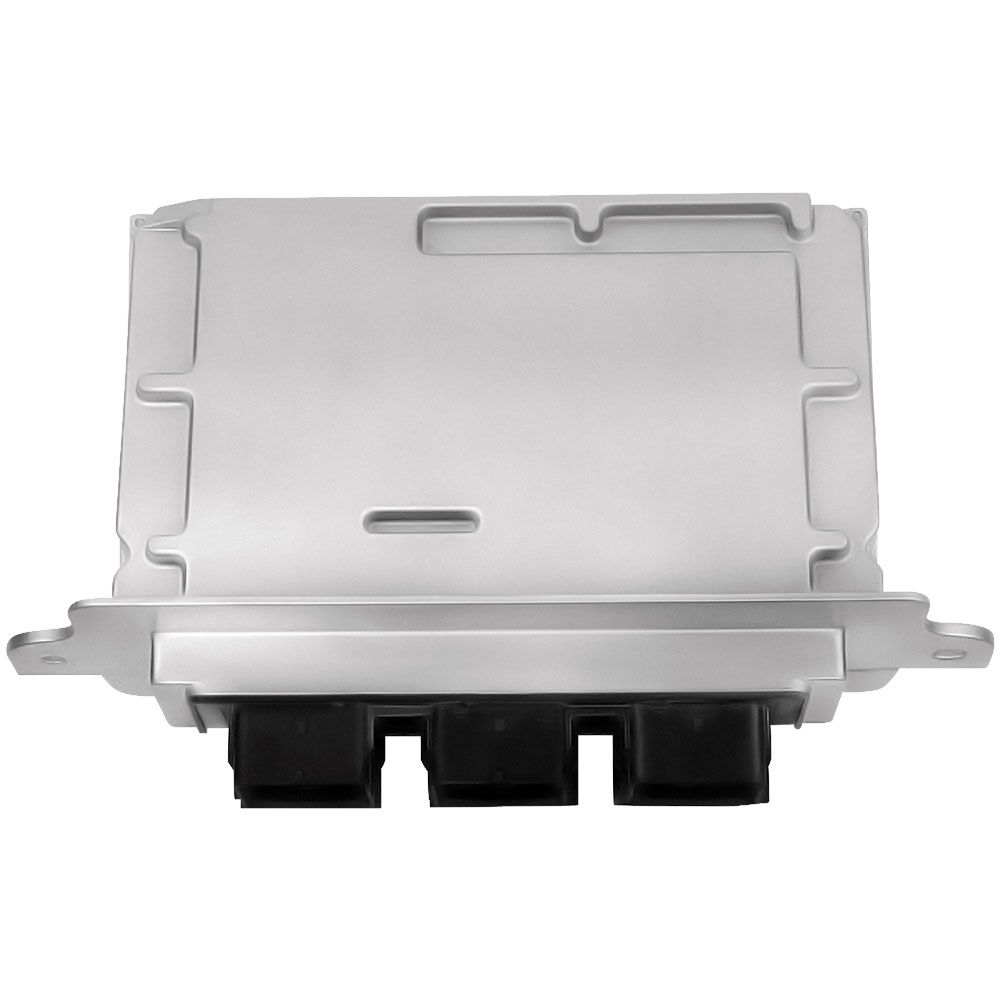
Flagship One stocks a refurbished, VIN-programmed PCM for the 2009 Ford Focus with a lifetime warranty, free shipping and no core charge. The full Ford Focus module lineup covers other engine configurations as well.
The PCM in your 2009 Ford Focus plays a critical role in keeping your vehicle running smoothly. If you’re dealing with persistent drivability issues or warning lights, addressing the PCM early can prevent more serious problems down the road. Whether you choose a new or pre-programmed unit, proper installation and programming are key to restoring reliable performance.