
Last updated on August 25th, 2026 at 01:37 pm
In the 2001 Ford Mustang the Powertrain Control Module (PCM) acts as the vehicle’s brain, managing engine timing, fuel delivery, and transmission shifting. A failure in this unit can cause loss of power, erratic gear changes, or warning lights, often requiring removal and replacement to restore normal operation.
When a 2001 Ford Mustang experiences unusual warning lights or erratic speedometer behavior after a powertrain control module (PCM) swap, the situation can feel confusing. This guide walks you through what the PCM does in this model, where it lives, how long the factory recommends spending on removal and replacement, and what post‑install steps are required. By the end, you will understand the essential steps to ensure a proper swap and avoid the common pitfalls that can leave the vehicle in a diagnostic limbo.
The Powertrain Control Module in the 2001 Ford Mustang coordinates the engine’s fuel injection, ignition timing, and transmission control, making it a central hub for vehicle performance. Because it interprets sensor data and commands actuators, any glitch can affect acceleration, shifting smoothness, and even the accuracy of the speedometer. Proper operation is critical for emissions compliance and drivability, and a malfunction often shows up as warning lamps or diagnostic trouble codes. When a replacement is needed, technicians typically select 2001 Ford Mustang replacement PCM that match the vehicle’s specifications to maintain system integrity.
2001 Ford Mustang
OEM programmed ECM for your 2001 Ford Mustang — plug & play, no dealer visit.
Free shipping · Lifetime warranty
The PCM is mounted behind the cowl side trim, accessed by removing the trim panel that covers the control module. Once the panel is off, the unit can be disengaged from its connectors and fasteners. The factory book time for removing and reinstalling the PCM is listed as 0.5 hours, reflecting the straightforward nature of the access path. After the old module is removed, the new unit is positioned in the same location, connectors are reattached, and any mounting hardware is torqued to the specifications provided by the manufacturer. The process typically concludes with a verification of electrical connections before any programming steps.
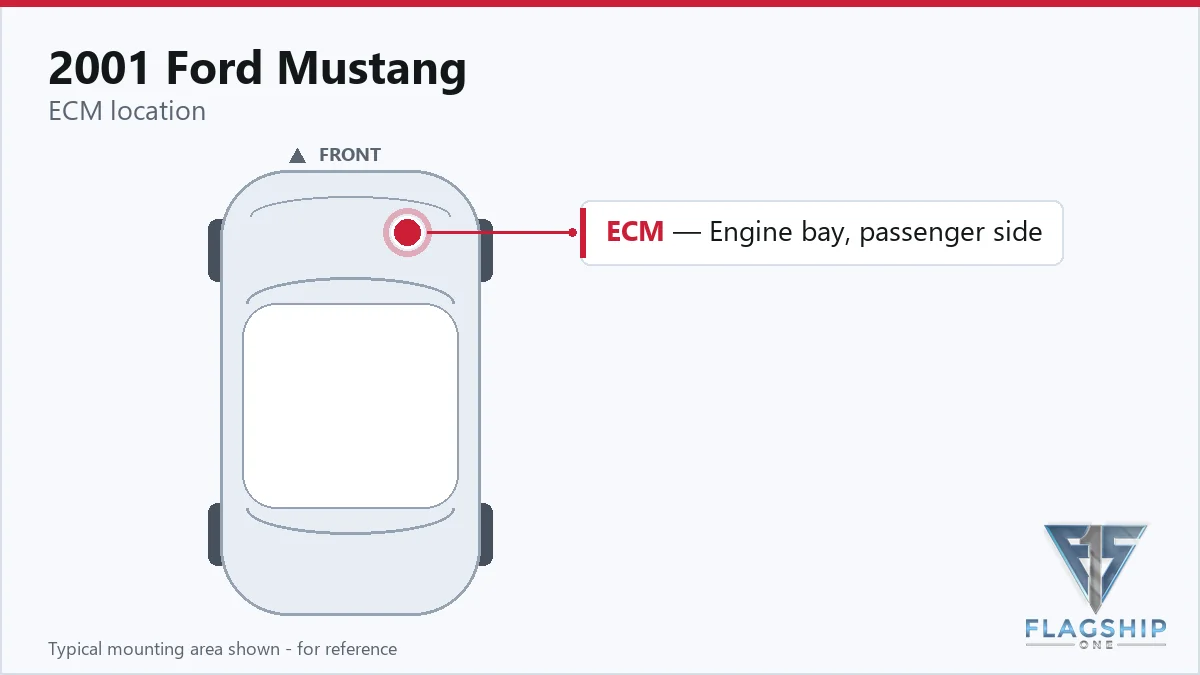
Work with the ignition off, and treat the module as static-sensitive: avoid touching the connector pins at any point.
| Operation | Configuration | Book Time |
|---|---|---|
| Engine Control Module R&R | All configurations | 1.0 hr |
| Powertrain Control Module R&R | All configurations | 0.5 hr |
| Powertrain Control Module Relearn | All configurations | 0.5 hr |
After installing a new PCM in a 2001 Ford Mustang, the factory procedure calls for a Powertrain Control Module relearn that takes about 0.5 hours. This step ensures that the vehicle’s adaptive strategies are calibrated to the new hardware. Flagship One units arrive as a VIN-programmed replacement unit, meaning the necessary relearn data is already embedded, eliminating the need for the technician to perform the relearn manually.
When the PCM in a 2001 Ford Mustang begins to fail, owners may notice the speedometer freezing or displaying incorrect readings, accompanied by a persistent lamp on the dash. Communication with scan tools can become intermittent, and the engine may stall or refuse to start under load. In some cases, the vehicle logs a speedometer error code that points directly to the PCM’s loss of function. These symptoms often appear after a recent PCM or instrument cluster replacement if the proper post‑install procedures were not completed.
Technical Service Bulletin 02-23-04 notes that after replacing the PCM or instrument cluster, the 4‑X‑4 lamp may stay illuminated and the speedometer can become inaccurate. The bulletin also references diagnostic codes P1635 and P1639 as indicators of these problems. Following the bulletin’s guidance helps prevent lingering warning lights and ensures proper instrument function.
| Bulletin | Subject | What It Addresses |
|---|---|---|
| 02-23-04 | 4X4 LAMP ILLUMINATED AFTER POWERTRAIN CONTROL MODULE (PCM) OR INSTRUMENT CLUSTER REPLACEMENT – | — |
Typical signs include persistent dash warning lights, erratic speedometer readings, loss of power, and trouble codes such as P1635 that reference PCM communication.
The factory labor guide lists about half an hour for removal and reinstall, plus an additional half hour if a relearn procedure is required.
Access is achieved by removing the cowl side trim, which typically requires standard trim removal tools and basic hand tools for the fasteners.
A new PCM can resolve speedometer issues, but only if the post‑install relearn steps are completed correctly, as outlined in the service bulletin.
Refurbished units are acceptable if they are VIN‑programmed and meet the factory specifications, ensuring they integrate without additional programming.
When your 2001 Ford Mustang requires PCM service, you can choose a brand‑new unit or a professionally refurbished replacement. Both options can restore proper engine and transmission control, but a VIN‑programmed unit from Flagship One eliminates the need for additional relearn steps, simplifying the repair process.
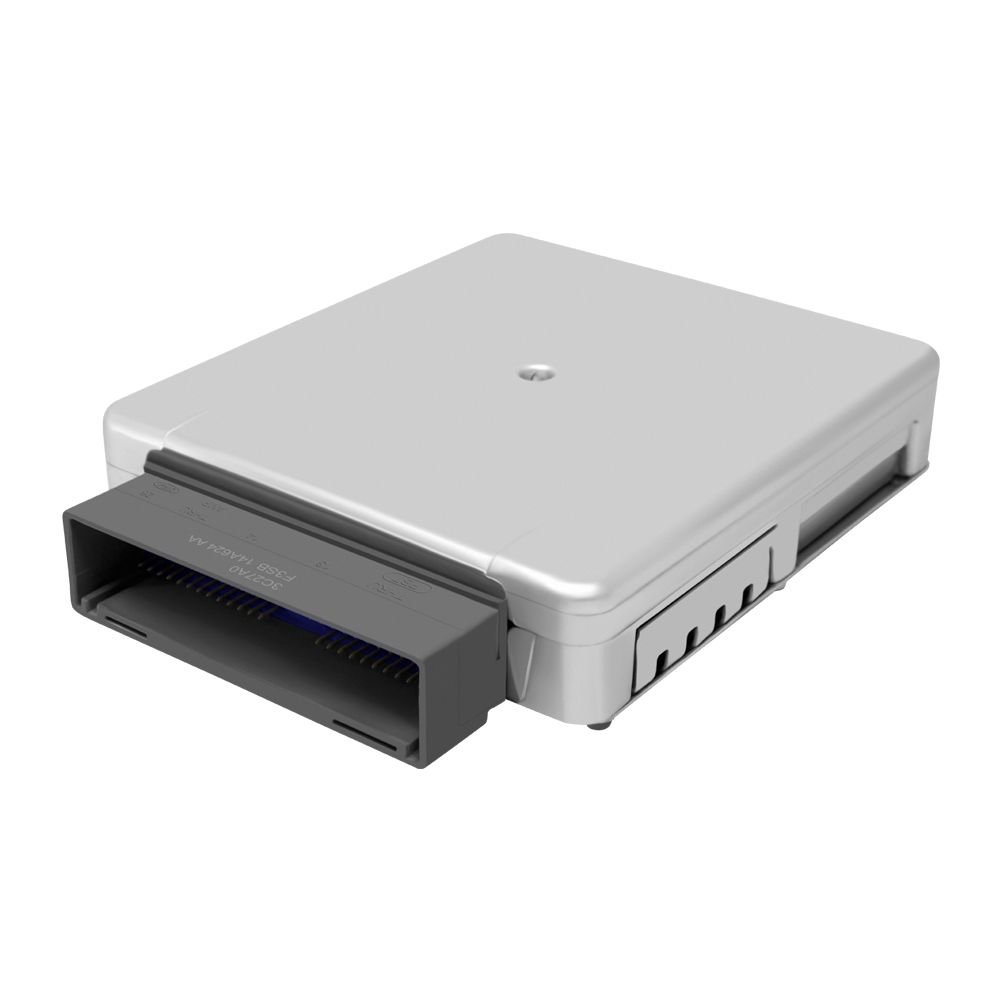
Flagship One stocks a refurbished, VIN-programmed PCM for the 2001 Ford Mustang with a lifetime warranty, free shipping and no core charge. The full Ford Mustang module lineup covers other engine configurations as well.
Replacing the PCM in a 2001 Ford Mustang restores essential engine and transmission functions and clears related warning lights. Consider a VIN‑programmed replacement to streamline the job and get back on the road with confidence.