
Last updated on August 25th, 2026 at 01:37 pm
The powertrain control module (PCM) in your 2000 Ford E-Series van manages engine performance, fuel delivery, and transmission behavior. Failures may cause erratic idling, misfires, or complete no-start conditions.
If your 2000 Ford E-Series van is experiencing unexplained stalling, rough idling, or a no-start condition, the powertrain control module (PCM) may be at fault. This critical component oversees engine and transmission operations, and its failure can disrupt fuel delivery, ignition timing, and shift patterns. Replacing the PCM involves straightforward steps, but proper installation and programming are essential to avoid further issues. Understanding the process helps you make informed decisions, whether you’re tackling the job yourself or working with a shop. This guide covers what the PCM does, where it’s located, and what to expect during replacement and relearn procedures.
The powertrain control module (PCM) in your 2000 Ford E-Series van acts as the brain of the engine and transmission systems. It processes data from sensors to optimize fuel injection, ignition timing, and shift points, ensuring smooth operation and emissions compliance. A malfunctioning PCM may lead to poor performance, reduced fuel economy, or even a vehicle that won’t start. Because it integrates engine and transmission control, issues with the PCM often affect both systems simultaneously. When replacement becomes necessary, selecting replacement engine computers for the E-Series ensures compatibility and proper function for your specific model.
2000 Ford E-Series Van
OEM programmed replacements — plug & play, no dealer visit.
Find yours by year, make & model →
Free shipping · Lifetime warranty
In the 2000 Ford E-Series van, the PCM is positioned next to the air cleaner assembly, making it relatively accessible for replacement. The factory procedure involves disconnecting the battery ground cable first to prevent electrical damage. Once the battery is disconnected, the module can be removed by unplugging its connectors and unfastening any mounting hardware. Reinstallation follows the reverse steps, with care taken to ensure all connections are secure. Labor time for PCM replacement is typically 0.6 hours, according to factory estimates. No specialized tools are required beyond basic hand tools, but proper torque specifications should be followed if provided.
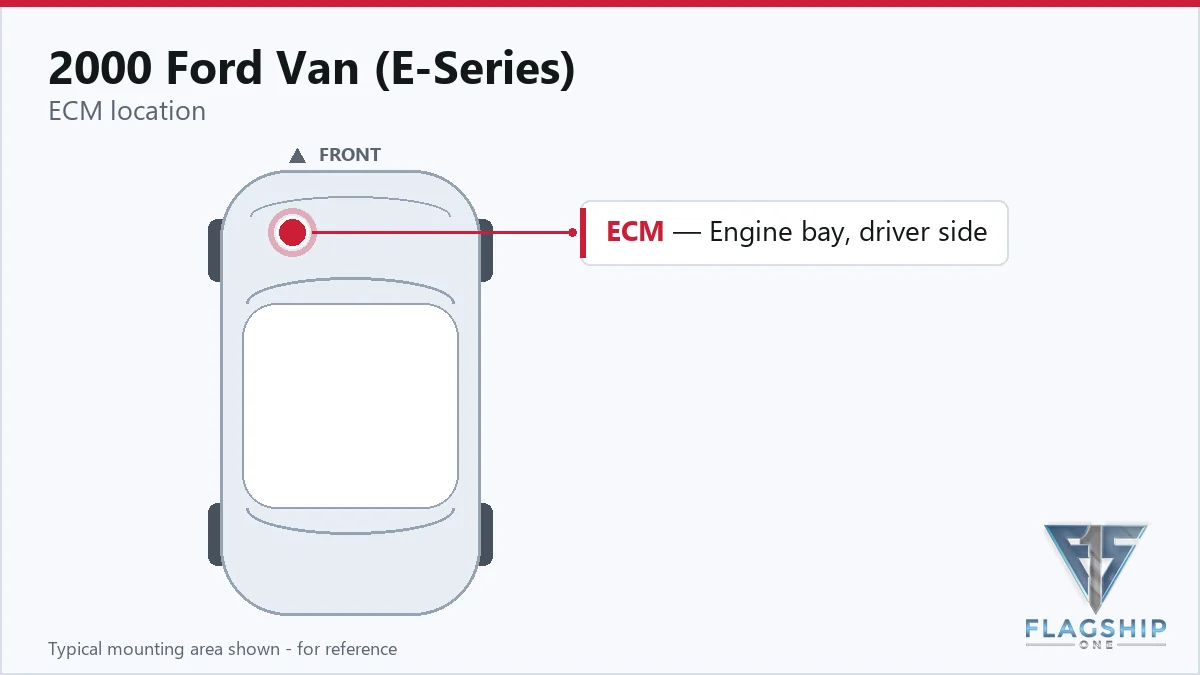
Work with the ignition off, and treat the module as static-sensitive: avoid touching the connector pins at any point.
| Operation | Configuration | Book Time |
|---|---|---|
| Powertrain Control Module R&R | 4.2L | 0.6 hr |
| Powertrain Control Module R&R | 4.6L | 0.6 hr |
| Powertrain Control Module R&R | 5.4L | 0.6 hr |
| Powertrain Control Module Relearn | E-150 Econoline | 0.5 hr |
| Powertrain Control Module Relearn | E-150 Econoline Club Wagon | 0.5 hr |
| Engine Control Module Relearn | E-150 Econoline | 0.5 hr |
| Engine Control Module Relearn | E-150 Econoline Club Wagon | 0.5 hr |
| Engine Control Module R&R | 4.2L | 0.6 hr |
After replacing the PCM in your 2000 Ford E-Series van, a relearn procedure is required to synchronize the module with the vehicle’s systems. This process typically takes 0.5 hours and ensures proper communication with the engine, transmission, and other onboard electronics. However, if you install a VIN-programmed replacement unit, these steps are already completed, saving time and reducing the risk of programming errors. Always confirm the new module is correctly matched to your van’s VIN to avoid compatibility issues.
A failing PCM in your 2000 Ford E-Series van may cause a range of symptoms, including intermittent stalling, rough idling, or a complete no-start condition. You might also notice poor acceleration, erratic shifting, or the check engine light illuminating with codes related to fuel or ignition systems. In some cases, the vehicle may enter a limp-home mode, limiting power to prevent further damage. If the PCM loses communication with the scan tool, it could indicate internal failure or a wiring issue. Common trouble codes like throttle control signal malfunction may appear, signaling a need for further diagnosis or replacement.
Ford service bulletin #02-23-04 addresses issues that may arise after PCM or instrument cluster replacement in gasoline-engine E-Series vans. The bulletin notes that the 4×4 lamp may illuminate incorrectly, and diagnostic trouble codes P1635 or P1639 may appear. Additionally, the speedometer may become inaccurate or inoperative. These symptoms typically occur post-replacement and require proper relearn procedures or software updates to resolve.
| Bulletin | Subject | What It Addresses |
|---|---|---|
| 02-23-04 | 4X4 LAMP ILLUMINATED AFTER POWERTRAIN CONTROL MODULE (PCM) OR INSTRUMENT CLUSTER REPLACEMENT – | — |
Replacing the PCM is a straightforward process if you’re comfortable with basic automotive repairs. The module is accessible near the air cleaner, and the job typically takes less than an hour. However, a relearn procedure is required afterward, which may require a scan tool or professional assistance.
The relearn procedure ensures the new PCM synchronizes with the vehicle’s sensors, transmission, and other systems. Without it, the van may experience poor performance, shifting issues, or even fail to start. The process typically takes 0.5 hours and is essential for proper operation.
Failing to disconnect the battery ground cable can result in electrical damage to the PCM or other sensitive components. It may also trigger fault codes or cause the module to malfunction. Always follow the factory caution to avoid unnecessary repairs.
If your 2000 Ford E-Series van is experiencing PCM-related issues, you have options for repair or replacement. A refurbished or new module can restore proper function, but ensure it’s programmed to your van’s VIN to avoid additional steps. Weigh the cost of a shop diagnosis against the benefits of a direct replacement, especially if symptoms align with common PCM failures.
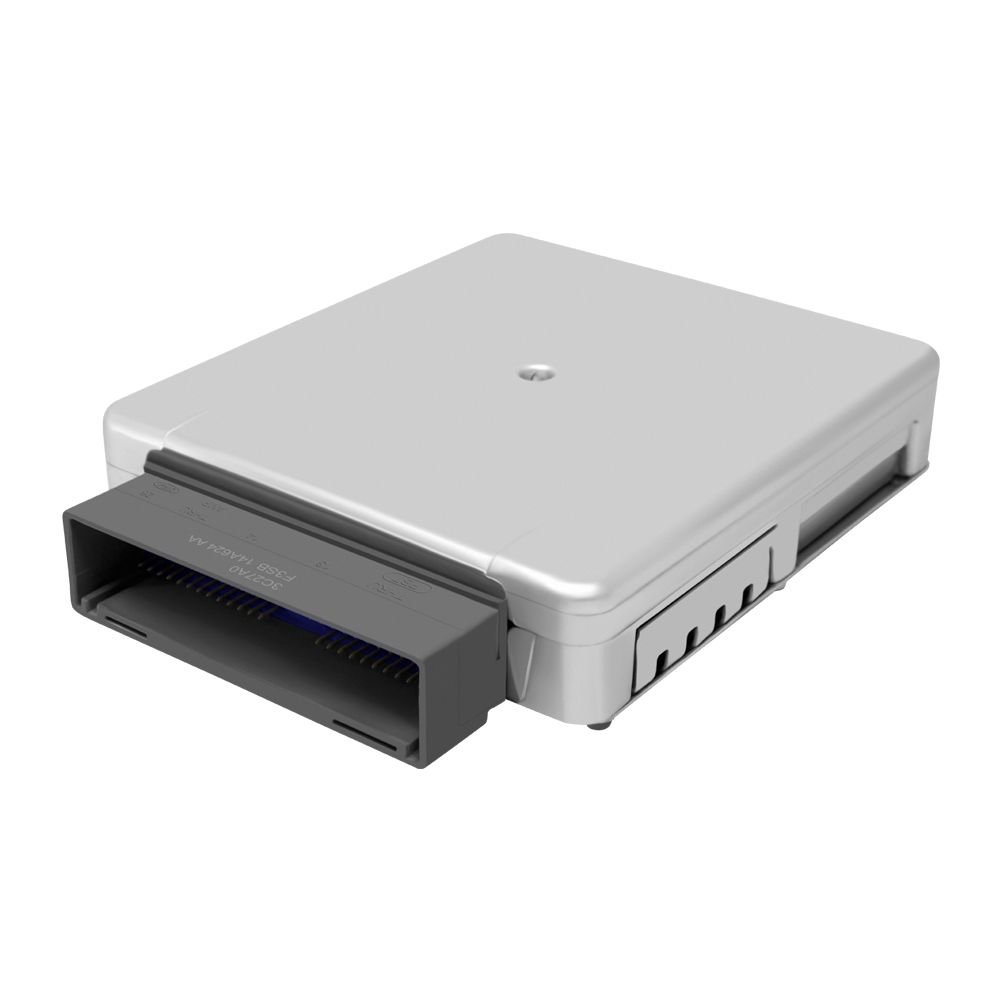
Flagship One stocks a refurbished, VIN-programmed PCM for the 2000 Ford Van (E-Series) with a lifetime warranty, free shipping and no core charge. The full Ford Van (E-Series) module lineup covers other engine configurations as well.
The PCM in your 2000 Ford E-Series van plays a critical role in engine and transmission performance. If you’re facing stalling, no-start conditions, or shifting issues, a failing module may be the cause. Proper replacement and relearn procedures ensure your van runs smoothly, and selecting a pre-programmed unit can simplify the process. Addressing PCM issues promptly helps maintain reliability and drivability.