
Last updated on August 25th, 2026 at 01:38 pm
The powertrain control module in a 2000 Ford Escort 2.0L is the central computer that governs fuel delivery, ignition timing, and emission controls. When it fails, the engine may crank without starting, stall unexpectedly, or illuminate the check engine light with diagnostic trouble codes that do not resolve with sensor repairs.
When a 2000 Ford Escort with the 2.0L engine develops a sudden no-start, intermittent stalling, or a check engine light that refuses to turn off, the powertrain control module often becomes a prime suspect. This small but powerful computer orchestrates nearly every aspect of engine operation, from fuel injector pulse width to ignition timing. Because it sits at the center of so many systems, a malfunction can mimic a wide range of other component failures, leading to unnecessary parts swapping and mounting frustration. Understanding what the module does, how it can be damaged, and what the replacement process actually involves can save you time and help you avoid misdiagnosis. This guide walks you through the module’s role in your Escort, the symptoms that point to a genuine failure, the labor involved in swapping it, and the programming steps that a quality remanufactured unit can simplify. You will also find relevant service bulletin information that may explain certain trouble codes without a module fault, along with practical tips to protect the new module from the most common causes of premature failure.
The powertrain control module in the 2000 Ford Escort 2.0L is the primary computer responsible for managing the engine’s air-fuel mixture, ignition timing, idle speed, and emission controls. It continuously reads data from sensors such as the mass airflow sensor, throttle position sensor, crankshaft position sensor, and oxygen sensors, then adjusts actuator outputs in real time to maintain performance and efficiency. Because the module also monitors the health of the evaporative emissions system and catalyst efficiency, it plays a central role in keeping the vehicle compliant with OBD II regulations. When the module begins to fail, it may send incorrect voltage signals to fuel injectors or ignition coils, causing misfires, rough idle, or a no-start condition. Internal circuit board damage from heat, vibration, or voltage spikes can corrupt the module’s ability to process sensor data, leading to false diagnostic trouble codes that do not correspond to actual mechanical problems. In the 2000 Escort, the module is sometimes referred to as the engine control module or ECM, and it is essential to use a correct, vehicle-specific replacement. For owners seeking a dependable solution, replacement engine computers for the Escort are available pre-programmed with the vehicle’s VIN and calibration data, which eliminates the need for a separate programming session at the dealership.
2000 Ford Escort 2.0L
OEM programmed replacements — plug & play, no dealer visit.
Find yours by year, make & model →
Free shipping · Lifetime warranty
The engine control module on the 2000 Ford Escort 2.0L is located inside the passenger compartment, typically behind the center console or near the floor area on the passenger side. Accessing the module requires removing trim panels and possibly the glove box assembly to reach the mounting bracket. The factory book time for powertrain control module removal and replacement is 0.7 hours. Once the new module is physically installed, the vehicle may require a relearn procedure, which is listed at 0.5 hours. This relearn allows the module to adapt to the engine’s sensors and actuators. During the swap, it is critical to disconnect the negative battery cable and to wear a grounded wrist strap, as electronic modules are sensitive to static electrical charges that can cause immediate or latent damage.
Work with the ignition off, and treat the module as static-sensitive: avoid touching the connector pins at any point.
| Operation | Configuration | Book Time |
|---|---|---|
| Powertrain Control Module R&R | All configurations | 0.7 hr |
| Powertrain Control Module Relearn | All configurations | 0.5 hr |
| Engine Control Module Relearn | All configurations | 0.5 hr |
| Engine Control Module R&R | All configurations | 0.7 hr |
After a replacement module is physically installed, the factory procedure typically calls for a powertrain control module relearn that takes 0.5 hours of labor. This process allows the module to learn the idle air control parameters, fuel trim values, and other adaptive strategies specific to the vehicle. However, when you order a VIN-programmed replacement unit from Flagship One, the module arrives with your vehicle’s identification number and factory calibration data already loaded. That means the time-consuming dealer programming step is already handled, and the module is ready to be installed and driven after a brief idle relearn that the vehicle can often perform on its own during normal operation.
A failing PCM in a 2000 Ford Escort 2.0L can produce a range of driveability and electrical symptoms that are easily mistaken for sensor or wiring faults. The engine may crank strongly but refuse to start, or it may start and then stall without warning. Intermittent misfires, rough idle, and hesitation under acceleration are common, as the module loses its ability to calculate proper fuel and spark delivery. In some cases, the check engine light will illuminate with multiple unrelated diagnostic trouble codes, or a scan tool may fail to communicate with the module entirely. Other signs include the cooling fans running constantly with the key on, the transmission failing to shift correctly, or the fuel pump not priming when the ignition is turned on. One specific code that can appear is variable cam timing solenoid circuit malfunction, which may be triggered by oil contamination affecting the variable cam timing system rather than a true module failure. Recognizing these symptoms early can prevent unnecessary replacement of sensors and actuators.
Ford issued TSB 00-03-07 for 2000 Escort models with the 2.0L engine, addressing diagnostic trouble codes P1380, P1381, and P1383 stored in memory along with an illuminated malfunction indicator lamp and no driveability concerns. The bulletin indicates that these codes may be caused by engine oil contamination affecting the variable cam timing system rather than a faulty PCM. A second bulletin, TSB 01-09-07, provides service tips for OBD II vehicles regarding heated oxygen sensor, catalyst, and fuel system monitors. This bulletin offers diagnostic guidance to help technicians avoid misdiagnosis when those monitors fail to complete or when related codes are present.
| Bulletin | Subject | What It Addresses |
|---|---|---|
| 00-03-07 | 2.0L – DIAGNOSTIC TROUBLE CODES (DTCS) P1380, P1381, OR P1383 IN MEMORY – ENGINE – ENGINE OIL C | — |
| 01-09-07 | DRIVEABILITY – HO2S (HEATED OXYGEN SENSOR), CATALYST, AND FUEL SYSTEM MONITORS – OBD II VEHICLE | — |
The most frequent indicators include a no-start condition where the engine cranks but does not fire, intermittent stalling, and a check engine light that stays on with multiple sensor codes. You may also notice the fuel pump not priming, the cooling fans running constantly, or a loss of communication with a scan tool.
Yes, because the PCM controls shift timing and torque converter lockup on automatic transmission models. A failing module can send incorrect signals that result in harsh or delayed shifts, or it may keep the transmission in limp mode, limiting the vehicle to a single gear.
A factory-fresh module requires programming with the vehicle’s VIN and calibration data, plus a relearn procedure. However, a pre-programmed replacement unit arrives with the VIN and software already loaded, so only a brief idle relearn is typically needed.
That bulletin explains that codes P1380, P1381, and P1383 can be caused by engine oil contamination affecting the variable cam timing system, not necessarily a faulty PCM. It advises checking the oil condition and related components before condemning the module.
Always disconnect the negative battery cable first, wear a grounded anti-static wrist strap, and avoid touching the connector pins. Keep the new module in its anti-static bag until you are ready to install it, and handle it by the edges only.
Repairing a failed module is rarely practical for the average owner, as internal circuit board damage requires specialized micro-soldering equipment and access to proprietary diagnostic software. A refurbished replacement that has been thoroughly tested and comes pre-programmed with your Escort’s VIN offers a straightforward, plug-and-play alternative. This approach restores factory driveability without a trip to the dealership for programming.
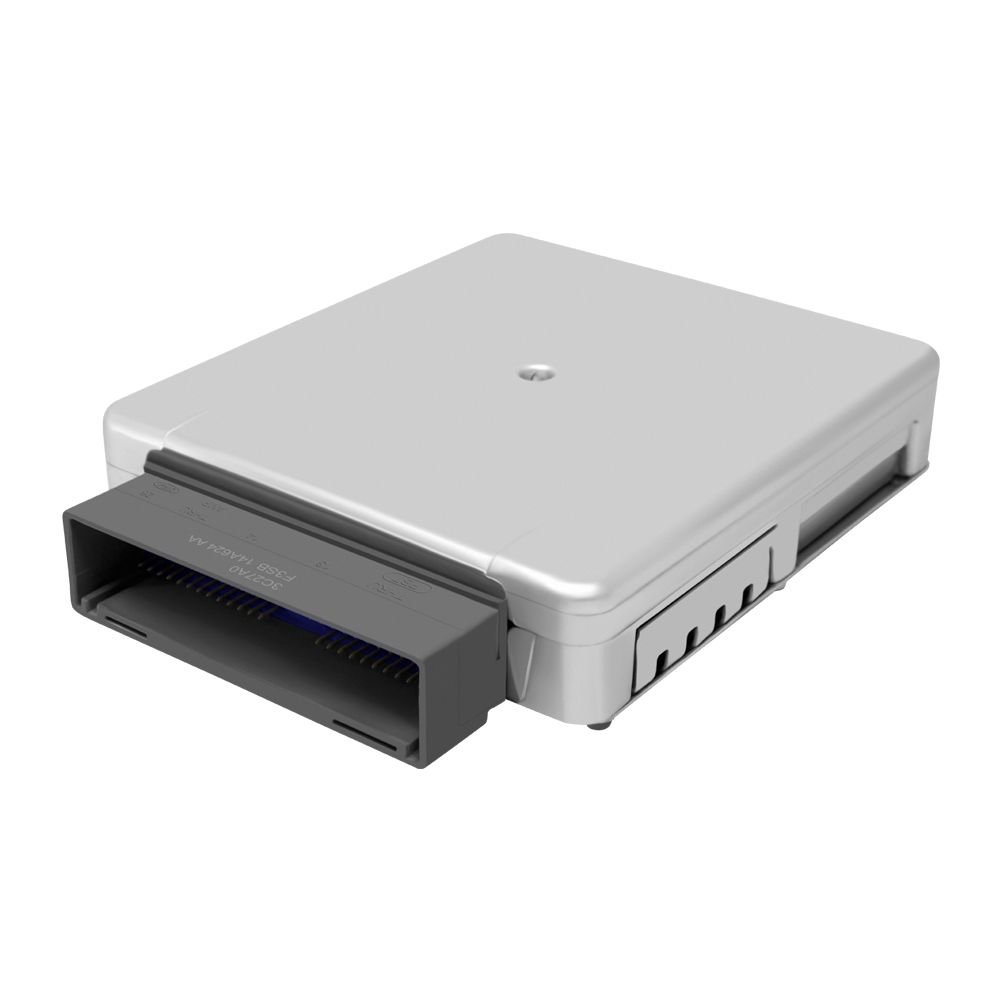
Flagship One stocks a refurbished, VIN-programmed PCM for the 2000 Ford Escort with a lifetime warranty, free shipping and no core charge. The full Ford Escort module lineup covers other engine configurations as well.
A properly functioning powertrain control module is essential for the 2000 Ford Escort 2.0L to start, run, and drive as intended. By recognizing the symptoms early, following static-safe handling practices, and choosing a VIN-programmed replacement, you can resolve module-related issues efficiently and get your Escort back on the road with confidence.