
Last updated on August 25th, 2026 at 12:07 pm
The powertrain control module in your 2006 Saturn Relay manages fuel delivery, ignition timing, and emissions functions. When this computer fails, you may encounter stalling, no-start conditions, or persistent diagnostic trouble codes. The module also coordinates with the transmission control module for proper shift operation.
When your 2006 Saturn Relay develops drivability problems that resist conventional repairs, the engine computer may be a contributing factor. The powertrain control module, sometimes referred to as the engine control module in service literature, governs critical engine and transmission functions for the 3.9L V6 powerplant. Understanding how this component works, where it lives in your vehicle, and what happens when it fails can help you make informed repair decisions. This guide walks through the role of the PCM in your Saturn Relay, its physical location, and what the factory service manual says about replacement. You will also find information about programming requirements, common symptoms of module failure, documented trouble codes, and relevant service bulletins. The goal is to give you a clear picture of what replacing this computer involves so you can approach the repair with confidence and avoid unnecessary parts swaps. Whether you are diagnosing a persistent check engine light or planning a module replacement, the details cover the essentials for your specific vehicle and its powertrain.
The powertrain control module in your 2006 Saturn Relay serves as the central brain for engine management and powertrain coordination. It continuously processes inputs from dozens of sensors monitoring airflow, coolant temperature, throttle position, oxygen content, and crankshaft position. Using that data, it commands fuel injector pulse width, ignition timing advance, and idle air control to keep the 3.9L V6 running efficiently across all operating conditions. Beyond engine management, the PCM also communicates with the transmission control module to regulate shift points and torque converter lockup. This integration ensures smooth gear transitions and optimal fuel economy. The module also oversees evaporative emissions testing, exhaust gas recirculation control, and various onboard diagnostics that illuminate the Service Engine Soon lamp when a fault is detected. Because the PCM handles so many interrelated functions, a failure can produce widely varying symptoms. Some failures affect only emissions monitoring, while others disrupt starting or fuel delivery entirely. Internal memory corruption, voltage damage from faulty charging components, or water intrusion through degraded connector seals can all compromise the module. When replacement becomes necessary, selecting replacement engine computers for the Relay ensures the new unit matches your vehicle’s calibration and configuration. The module must be programmed with the correct software and calibration files for your specific powertrain combination, and certain learned values must be restored for the engine and transmission to perform as intended. Without proper programming, drivability problems may persist even after the new computer is installed.
2006 Saturn Relay
OEM programmed ECM for your 2006 Saturn Relay — plug & play, no dealer visit.
Free shipping · Lifetime warranty
The factory service procedure indicates that the control module is accessed adjacent to the air cleaner assembly in your 2006 Saturn Relay. This placement keeps it relatively accessible compared to modules buried deep in the dashboard or under seats. Published labor times for this vehicle list 0.9 hours for removal and replacement of the powertrain control module. An additional 0.5 hours is allotted for the relearn procedure that follows installation. The same times apply if the component is referenced as the engine control module in service documentation: 0.9 hours for R&R and 0.5 hours for relearn. These figures represent standard book times; actual service time may vary depending on shop conditions and technician familiarity with the vehicle. Before beginning removal, the factory procedure emphasizes capturing the existing module’s data with a scan tool. This saved information must be transferred into the replacement unit after it is installed. The physical removal itself involves disconnecting the electrical connector and releasing the module from its mounting location near the air cleaner housing.
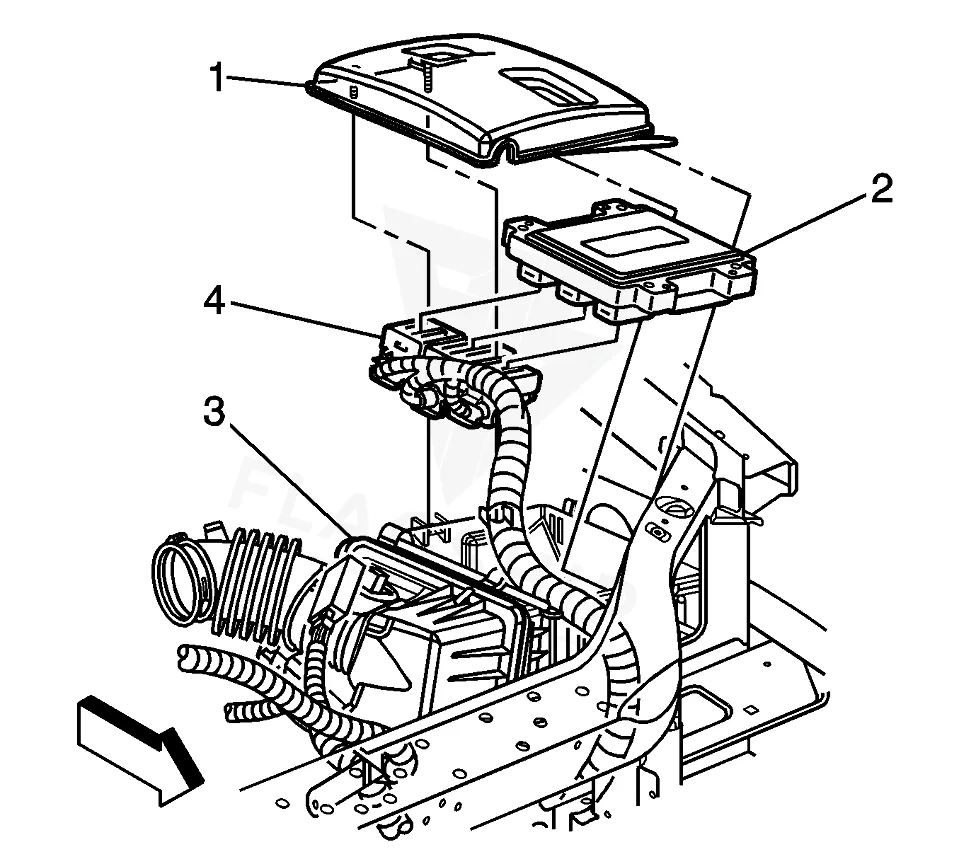
Work with the ignition off, and treat the module as static-sensitive: avoid touching the connector pins at any point.
| Operation | Configuration | Book Time |
|---|---|---|
| Powertrain Control Module R&R | All configurations | 0.9 hr |
| Powertrain Control Module Relearn | All configurations | 0.5 hr |
| Engine Control Module R&R | All configurations | 0.9 hr |
| Engine Control Module Relearn | All configurations | 0.5 hr |
After the replacement module is physically installed, the factory procedure requires specific programming steps. A scan tool must first capture data from the original module before removal, and that captured data then needs to be restored into the new unit. This includes learned adaptive values and configuration settings that help the engine and transmission operate correctly. In addition to data restoration, the factory notes that specialized equipment and the proper program and calibration files for the vehicle are required to reprogram the control module. This means a qualified technician with access to the appropriate scan tool and software is typically needed to complete the installation properly. When you source a VIN-programmed replacement unit from Flagship One, the programming and calibration work is already completed before shipment. The unit arrives configured for your vehicle’s specific identification number, which eliminates the need for the scan-tool reprogramming and data restoration steps that the factory procedure describes. Your installer can focus on the physical swap and any relearn procedure the vehicle requires.
Common symptoms of a failing powertrain control module in the 2006 Saturn Relay can range from subtle to severe. One of the most frequent indicators is a Service Engine Soon lamp that illuminates and remains on, sometimes accompanied by multiple diagnostic trouble codes that seem unrelated or return after repairs. Drivers may notice intermittent stalling, particularly at idle or during deceleration, or a no-start condition where the engine cranks but fails to fire. Misfire codes, rough running, and poor fuel economy can also surface when the module’s internal processing is compromised. In some cases, the vehicle may exhibit shifting irregularities or harsh gear changes if the PCM’s communication with the transmission control module is disrupted. Another telltale sign is loss of communication with a scan tool. If your technician connects a diagnostic scanner and cannot establish a link to the powertrain control module, the computer itself may have failed internally. Voltage irregularities from a weak alternator or a failing battery can damage the module over time, producing intermittent symptoms that worsen gradually. Among the documented module-internal codes for this vehicle, a code such as P0601 control module memory indicates an internal checksum error, meaning the computer’s memory has become corrupted and the module typically requires replacement. Other codes in the P0600 series point to various internal processor, memory, or voltage reference faults that generally cannot be repaired without replacing the unit.
The following diagnostic trouble codes are documented as module-internal faults for the 2006 Saturn Relay. These codes typically indicate problems within the powertrain control module itself rather than failures of external sensors or actuators. When any of these codes appear, a thorough diagnosis is essential before condemning the computer.
Two factory service bulletins are relevant to the 2006 Saturn Relay’s powertrain control module. Bulletin 06-06-04-003, later revised as 06-06-04-003D and dated March 20, 2007, addresses a Service Engine Soon lamp illumination accompanied by diagnostic trouble codes P1404 and P0404. The bulletin indicates that some vehicles may have previously been serviced for this same condition, and technicians may find that earlier exhaust gas recirculation valve and PCM replacements were performed. The recommended correction involves installing an EGR valve kit and reprogramming the PCM. Bulletin 05-06-04-060, dated September 23, 2005, covers diagnostic trouble codes P0601, P0602, P0603, P0604, and P1621 that are shared across multiple modules including the PCM, ECM, and TCM. These codes point to internal control module faults that may require module replacement rather than external component repair.
| Bulletin | Subject | What It Addresses |
|---|---|---|
| 06-06-04-003 | Service Engine Soon (SES) Light Illuminated, Multiple Powertrain Control Module (PCM) Diagnosti | Some customers may comment on a Service Engine Soon (SES) light illuminated on the instrument cluster. Some vehicles may have previously been serviced for this… |
| 05-06-04-060 | Powertrain Control Module (PCM), Engine Control Module (ECM), Transmission Control Module (ECM) | — |
The published labor time is 0.9 hours for removal and replacement of the powertrain control module, plus an additional 0.5 hours for the relearn procedure. Actual time may vary depending on the technician and shop conditions.
The factory service procedure indicates the control module is accessed adjacent to the air cleaner assembly. This location is relatively straightforward to reach compared to modules in other vehicles.
The factory procedure requires capturing data from the original module with a scan tool before removal and restoring it into the new unit. Specialized equipment and the correct calibration files are also required for reprogramming. A VIN-programmed unit from Flagship One arrives with this work already completed.
Codes in the P0600 series, including P0601 through P0604 and P062F, typically point to internal module faults. Code P1621 is also documented as a shared module-internal code for this vehicle. A proper diagnosis is recommended before replacing the computer.
A factory service bulletin documents that EGR-related codes P1404 and P0404 may lead to repeated PCM replacements if the underlying EGR issue is not resolved. The recommended fix involves installing an EGR valve kit and reprogramming the PCM rather than replacing the computer alone.
If your 2006 Saturn Relay is showing signs of PCM failure, you have two main paths: have the existing unit repaired or purchase a replacement. Repairing a failed module is sometimes possible, but internal memory faults and voltage damage often make replacement the more reliable option. A VIN-programmed unit eliminates the programming steps that the factory procedure requires, simplifying installation for your technician. The 3.9L powertrain depends on a correctly calibrated computer, so choosing a properly programmed module is essential for restoring normal drivability.
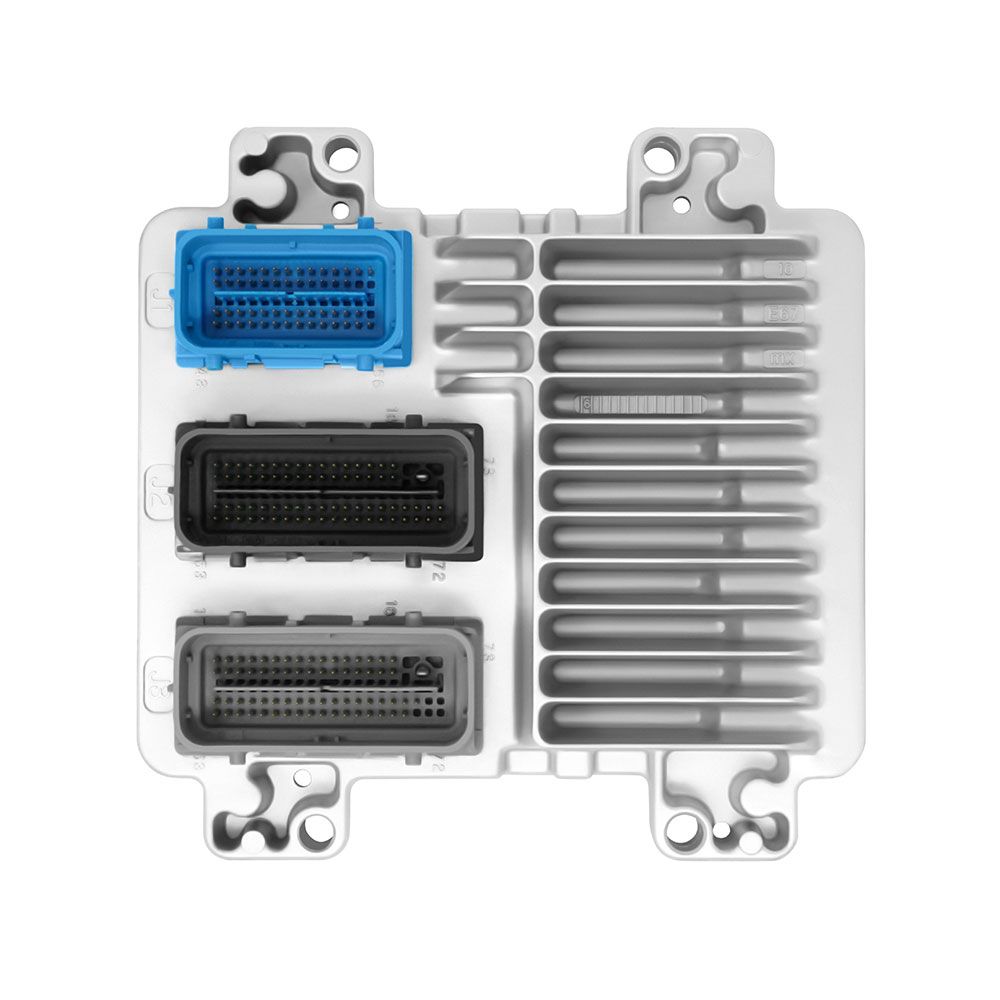
Flagship One stocks a refurbished, VIN-programmed PCM for the 2006 Saturn Relay with a lifetime warranty, free shipping and no core charge. The full Saturn Relay module lineup covers other engine configurations as well.
The powertrain control module in your 2006 Saturn Relay plays a central role in engine performance, emissions control, and transmission operation. When symptoms point to module failure, understanding the location, labor times, and programming requirements helps you plan the repair with confidence. A VIN-programmed replacement from Flagship One can streamline the process by eliminating factory reprogramming steps. Explore the available options for your Saturn Relay to get back on the road with a properly functioning engine computer.