
Last updated on August 25th, 2026 at 01:43 pm
The powertrain control module (PCM) in your 1993 Plymouth Voyager 2.5L manages fuel injection, ignition timing, and transmission shift points. When it fails, the engine may not start, run poorly, or the transmission may not shift correctly. Common causes include voltage spikes, heat, and age.
If your 1993 Plymouth Voyager 2.5L is experiencing intermittent stalling, no-start conditions, or erratic transmission behavior, the powertrain control module (PCM) may be the culprit. The PCM is the central computer that controls engine and transmission functions. This guide explains what the PCM does in your Voyager, where it is located, what replacement involves, and how to avoid common pitfalls. You will learn the symptoms of a failing PCM, the factory-recommended replacement and relearn procedures, and how a pre-programmed replacement unit can save you time. Whether you are a DIY owner or a professional technician, this information will help you diagnose and resolve PCM-related issues accurately.
The powertrain control module (PCM) in your 1993 Plymouth Voyager 2.5L is a single unit that combines engine and transmission control. It receives input from sensors such as the throttle position sensor, coolant temperature sensor, and crankshaft position sensor, then adjusts fuel delivery, ignition timing, and shift solenoids to keep the engine running smoothly and the transmission shifting properly. Because the Voyager uses a pre-OBD-II system, the PCM does not store standardized P-codes; instead, it communicates faults through a check engine light flash pattern. When the PCM fails, it can cause a range of drivability issues. For a reliable fix, you can choose from replacement PCMs for the Voyager that are built to match the original specifications and are ready to install.
1993 Plymouth Voyager
OEM programmed ECM for your 1993 Plymouth Voyager — plug & play, no dealer visit.
Free shipping · Lifetime warranty
The PCM on the 1993 Plymouth Voyager 2.5L is mounted underhood on the driver side inner fender panel. To access it, you typically need to remove the air cleaner housing or other components that may block the area. The module is held in place by a bracket and electrical connectors. According to factory labor times, removing and replacing the PCM takes 0.5 hours for both the standard Voyager and the Grand Voyager. After installation, a separate 0.5-hour relearn procedure is required to synchronize the module with the vehicle. This relearn involves using a DRBIII scan tool to reset adaptive values and verify proper communication. The job is straightforward for a technician with basic hand tools, but care must be taken to avoid damaging the connectors or the module itself.
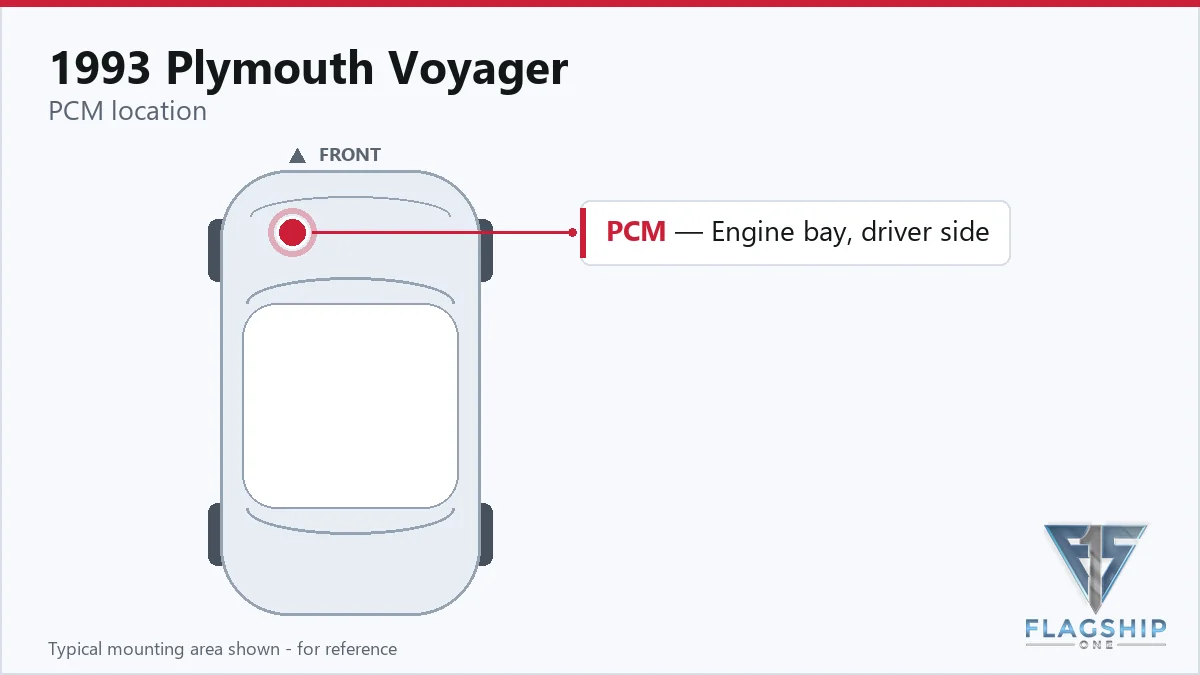
Work with the ignition off, and treat the module as static-sensitive: avoid touching the connector pins at any point.
| Operation | Configuration | Book Time |
|---|---|---|
| Powertrain Control Module R&R | Grand Voyager | 0.5 hr |
| Powertrain Control Module R&R | Voyager | 0.5 hr |
| Powertrain Control Module Relearn | Grand Voyager | 0.5 hr |
| Powertrain Control Module Relearn | Voyager | 0.5 hr |
| Engine Control Module Relearn | Grand Voyager | 0.5 hr |
| Engine Control Module Relearn | Voyager | 0.5 hr |
| Engine Control Module R&R | Grand Voyager | 0.5 hr |
| Engine Control Module R&R | Voyager | 0.5 hr |
After installing a new or replacement PCM in your 1993 Plymouth Voyager 2.5L, the factory procedure requires a flash programming recovery step using the DRBIII scan tool, as outlined in service bulletin #18-037-05. This process restores the module’s firmware and ensures it communicates correctly with the vehicle’s sensors and actuators. However, when you purchase a VIN-programmed replacement PCM from Flagship One, the unit arrives with the correct calibration already loaded. This means the DRBIII flash recovery step is unnecessary; you can install the module and proceed directly to the relearn procedure. The relearn itself still takes 0.5 hours and involves driving the vehicle through specific cycles to allow the PCM to adapt to the engine and transmission.
A failing PCM in a 1993 Plymouth Voyager 2.5L often produces symptoms that mimic other component failures. The engine may crank but not start, or it may start and stall shortly after. You might notice intermittent stalling while driving, rough idle, hesitation during acceleration, or a sudden loss of power. Transmission shifting can become erratic, with harsh or delayed shifts, or the transmission may fail to shift at all. The check engine light may illuminate, and on this pre-OBD-II vehicle, you can retrieve fault codes by counting the flash pattern of the light. Another common sign is a complete lack of communication with a scan tool when attempting to read data from the PCM. If you experience multiple electrical issues simultaneously, the PCM is a likely suspect.
Factory service bulletin #18-037-05 addresses flash programming failure recovery using the DRBIII scan tool. This bulletin applies to the 1993 Plymouth Voyager 2.5L and covers the procedure to recover a PCM that has experienced a failed or interrupted flash update. The steps involve using the DRBIII to re-establish communication and reload the correct calibration. This bulletin is relevant if you are performing a PCM replacement or updating the module’s software. Following the bulletin’s instructions helps avoid bricking the module and ensures a successful programming session.
| Bulletin | Subject | What It Addresses |
|---|---|---|
| 18-037-05 | 18-037-05 Flash Programming Failure Recovery Using DRBIII® | — |
Common signs include no-start, stalling, rough running, transmission shifting problems, and a check engine light that flashes a code pattern. If multiple electrical issues appear at once, the PCM is a likely cause. A professional diagnosis with a DRBIII scan tool can confirm.
Yes, the PCM is accessible underhood on the driver side inner fender. The job takes about 0.5 hours for removal and installation. However, after replacement, a 0.5-hour relearn procedure using a DRBIII scan tool is required. If you do not have that tool, a shop can perform the relearn.
Factory procedure requires a flash programming recovery using the DRBIII tool per bulletin #18-037-05. However, if you purchase a VIN-programmed replacement PCM from Flagship One, the correct calibration is already loaded, so you can skip the flash step and go directly to the relearn procedure.
When your 1993 Plymouth Voyager 2.5L needs a PCM, you have two main options: have a shop repair the original module or replace it with a new or refurbished unit. Repair may be possible for some failures, but replacement is often more reliable. Flagship One offers VIN-programmed PCMs that arrive ready to install, eliminating the need for a factory flash recovery. This saves you the 0.5-hour programming step and gets your Voyager back on the road faster.
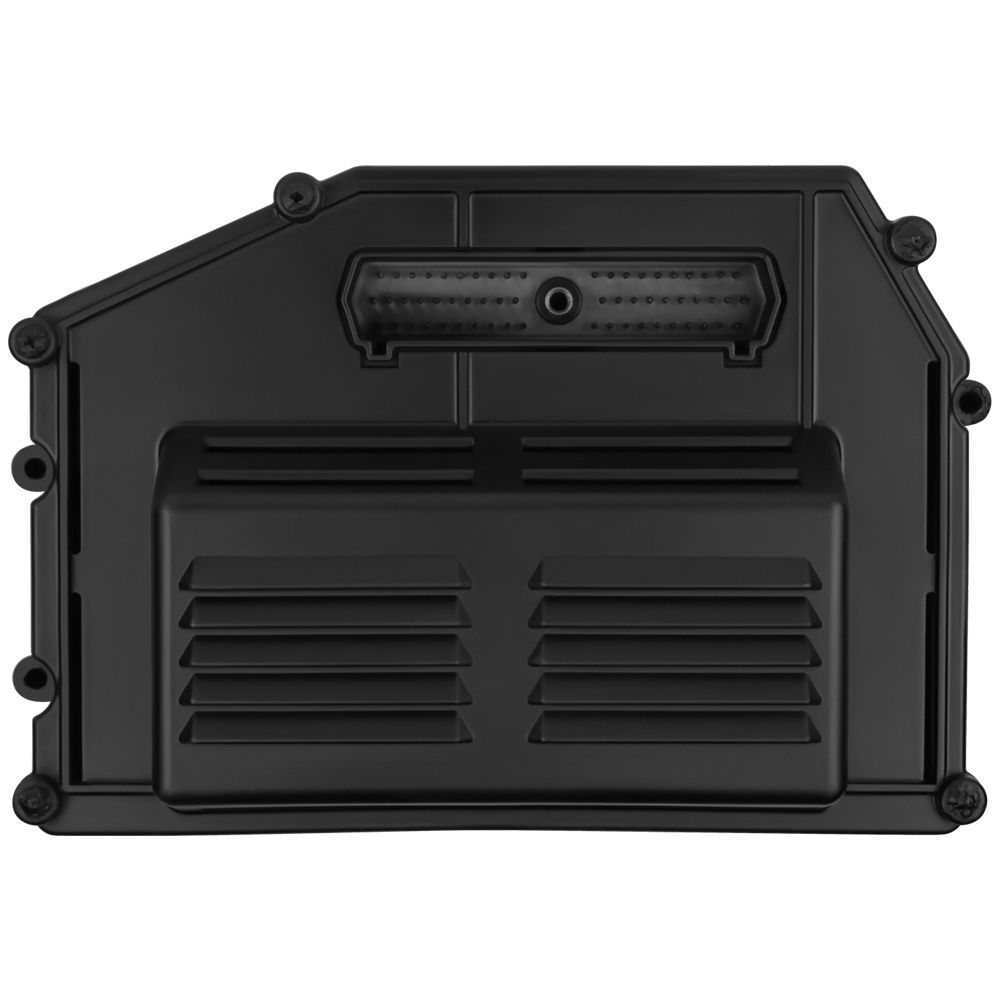
Flagship One stocks a refurbished, VIN-programmed PCM for the 1993 Plymouth Voyager with a lifetime warranty, free shipping and no core charge. The full Plymouth Voyager module lineup covers other engine configurations as well.
The PCM in your 1993 Plymouth Voyager 2.5L is a critical component that controls engine and transmission operation. Recognizing the symptoms of failure, knowing its location underhood on the driver side inner fender, and understanding the replacement and relearn process will help you get an accurate repair. For a straightforward solution, consider a pre-programmed replacement unit that bypasses the factory flash recovery step.