
Last updated on August 25th, 2026 at 01:07 pm
In the 2014 Lexus LS600hL, the Powertrain Control Module and Engine Control Module manage engine and transmission commands, monitor sensor data, and store diagnostic information. A failure in either unit can trigger internal codes, disrupt powertrain performance, and prevent the vehicle from starting or shifting correctly.
If your 2014 Lexus LS600hL is experiencing powertrain control issues, you are likely dealing with the PCM or ECM. These computers are central to engine and transmission operation, and any fault can lead to a range of drivability problems. This guide explains what the modules do, where they are located, how to replace them, and what factory procedures are required after installation. By the end, you will understand the labor involved, the necessary safety steps, and how a Flagship One replacement can simplify the post‑install programming.
The Powertrain Control Module in a 2014 Lexus LS600hL acts as the brain for both the engine and transmission, interpreting sensor inputs and commanding actuators to maintain optimal performance. It stores fault codes and manages emission controls. The Engine Control Module focuses specifically on engine management, handling fuel injection, ignition timing, and emissions. Both units must communicate flawlessly for smooth acceleration and gear changes. 2014 Lexus LS600hL engine control module ensures that the hybrid system operates within design parameters, making reliable operation essential for this luxury hybrid sedan.
2014 Lexus LS600hL
OEM programmed replacements — plug & play, no dealer visit.
Find yours by year, make & model →
Free shipping · Lifetime warranty
The PCM and ECM are accessed by removing the cable that connects to the negative auxiliary battery terminal. After the cable is detached, the modules can be unbolted and taken out of their mounting brackets. The factory labor guide lists a removal and replacement time of one and a half hours for each module, with an additional half hour for the relearn procedures. No torque specifications are provided, so follow standard fastener practices for securing the units after installation.
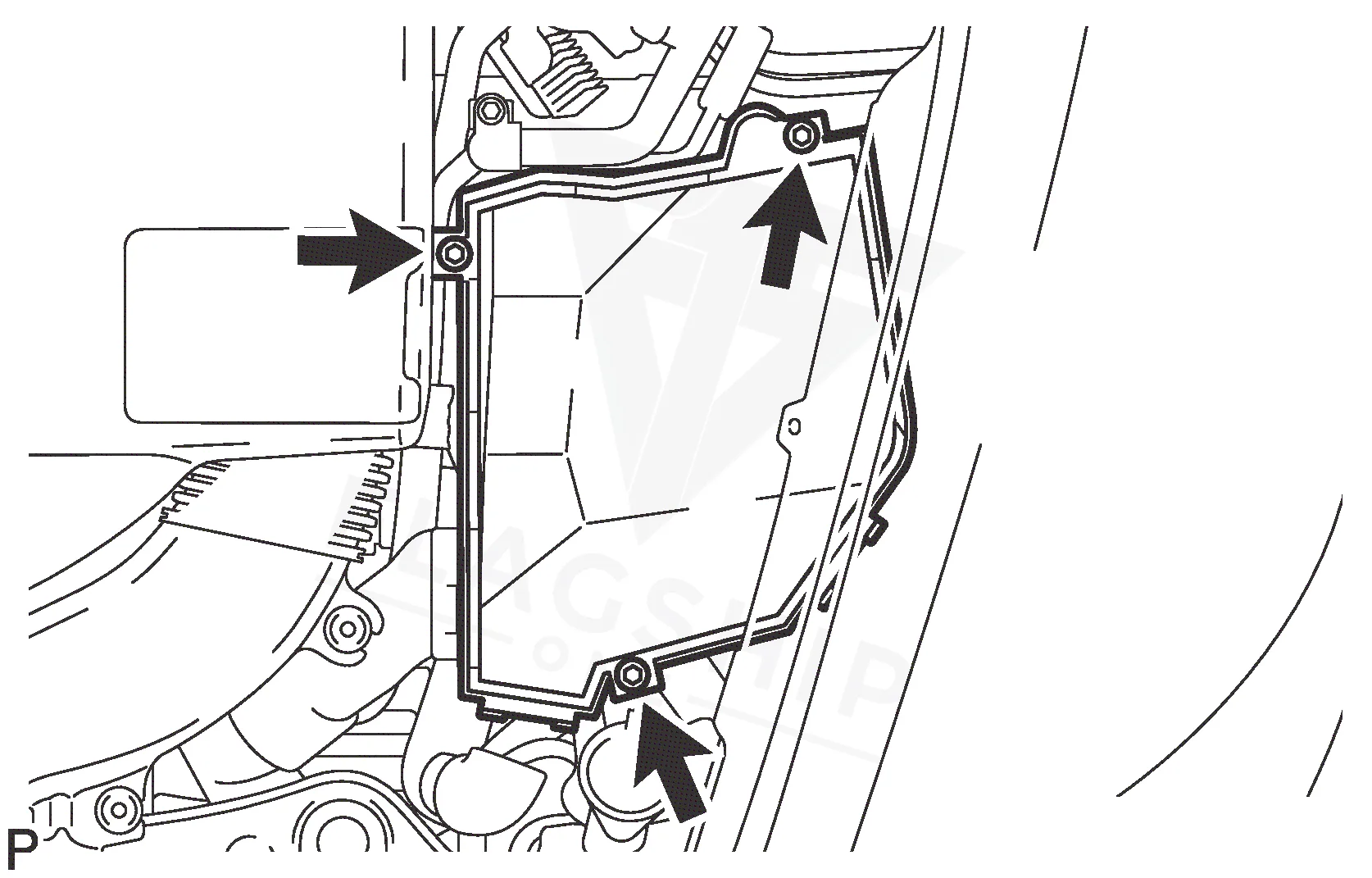
Work with the ignition off, and treat the module as static-sensitive: avoid touching the connector pins at any point.
| Operation | Configuration | Book Time |
|---|---|---|
| Powertrain Control Module Relearn | All configurations | 0.5 hr |
| Powertrain Control Module R&R | All configurations | 1.5 hr |
| Engine Control Module R&R | All configurations | 1.5 hr |
| Engine Control Module Relearn | All configurations | 0.5 hr |
Once a new module is installed in the 2014 Lexus LS600hL, the factory procedure calls for a Powertrain Control Module relearn that typically takes about half an hour. The same applies to the Engine Control Module relearn. Flagship One units arrive as a VIN-programmed replacement unit, which means those relearn steps have already been completed at the factory, eliminating the need for on‑site programming.
When the PCM or ECM begins to fail in a 2014 Lexus LS600hL, you may notice the engine refusing to start, rough idle, unexpected stalling, or the transmission shifting harshly. Diagnostic tools often report loss of communication with the control units, and you might see the internal fault code PCM internal failure appear on a scan tool. Additional signs include reduced fuel efficiency and warning lights related to emissions or hybrid system performance.
The following internal diagnostic codes are documented for the PCM and ECM in this vehicle:
| Code | Meaning | Full Guide |
|---|---|---|
| P0606 | Module processor failure | Full P0606 guide → |
The factory labor guide estimates about one and a half hours for removal and installation, plus an additional half hour for the relearn procedure.
Yes, because the PCM coordinates both engine and hybrid functions, a fault can lead to the hybrid system entering a safe‑mode or shutting down.
The factory caution advises waiting after turning the power switch off before removing the negative cable, to ensure capacitors discharge safely.
The internal code P0606 is used to identify a PCM internal malfunction on this vehicle.
The relearn can be completed with a scan tool that supports Lexus PCM procedures, but a VIN‑programmed replacement from Flagship One eliminates that requirement.
When the PCM or ECM in your 2014 Lexus LS600hL needs attention, you can choose a professional repair with a new factory‑refurbished unit or a Flagship One replacement that arrives pre‑programmed. Both options restore the vehicle’s powertrain control, but the pre‑programmed unit saves the extra step of performing the relearn on the shop floor.
Flagship One stocks a refurbished, VIN-programmed PCM for the 2014 Lexus LS600hL with a lifetime warranty, free shipping and no core charge. The full Lexus LS600hL module lineup covers other engine configurations as well.
Addressing PCM or ECM issues in your 2014 Lexus LS600hL helps maintain smooth performance and reliability. Consider a Flagship One replacement to reduce labor and avoid additional programming steps, then enjoy the confidence of a fully functional powertrain system.