
Last updated on August 25th, 2026 at 02:14 pm
The Engine Control Module (ECM) in your 1994 Isuzu Amigo acts as the brain of the fuel and ignition systems. When it fails, you may experience erratic engine behavior, poor performance, or a no-start condition. This module interprets sensor data to optimize fuel delivery and spark timing.
If your 1994 Isuzu Amigo has been acting up—stalling at stoplights, misfiring under load, or refusing to start—your Engine Control Module (ECM) may be the culprit. This small but critical component oversees fuel delivery, ignition timing, and sensor feedback to keep your engine running smoothly. Unlike modern vehicles with self-diagnosing systems, the Amigo’s pre-OBD-II ECM relies on basic sensor inputs, making it more susceptible to voltage spikes, corrosion, or age-related wear. Replacing it isn’t just about swapping a box; the module must be calibrated to your vehicle’s specific configuration. Understanding where it’s located, how to recognize failure symptoms, and what replacement entails can save you time and avoid unnecessary repairs. Whether you’re troubleshooting a no-start condition or preparing for a replacement, this guide covers the essentials for your 1994 Isuzu Amigo.
1994 Isuzu Amigo
OEM programmed ECM for your 1994 Isuzu Amigo — plug & play, no dealer visit.
Free shipping · Lifetime warranty
The Engine Control Module (ECM) in your 1994 Isuzu Amigo is responsible for managing the engine’s air-fuel mixture and ignition timing based on inputs from sensors like the throttle position, coolant temperature, and oxygen sensors. Without it, your engine wouldn’t know how much fuel to inject or when to spark the plugs, leading to poor performance or a complete shutdown. Over time, heat, vibration, and electrical fluctuations can degrade the ECM’s internal circuitry, causing intermittent or permanent failures. If your Amigo struggles with cold starts, idles roughly, or loses power unexpectedly, the ECM may be struggling to process sensor data correctly. Replacing it with replacement engine computers for the Isuzu Amigo ensures compatibility, but programming is often required to sync the new unit with your vehicle’s fuel and ignition systems. Since the Amigo predates OBD-II, diagnostic tools won’t always pinpoint ECM issues directly, so recognizing symptoms early is key to avoiding prolonged troubleshooting.
In the 1994 Isuzu Amigo, the ECM is typically mounted in front of the center console, tucked under the dashboard. Accessing it requires removing the lower dash panel, which may involve unscrewing a few fasteners or gently prying off plastic clips. Once the panel is off, you’ll see the ECM secured in a bracket or directly mounted to the firewall. Disconnecting the wiring harness is straightforward—press the release tab and pull the connector free. Reinstalling a replacement ECM follows the reverse process: secure the module in place, reconnect the harness, and reattach the dash panel. While the physical swap is simple, the labor time can vary depending on how easily the dash components come apart. If your Amigo has aftermarket stereo or alarm wiring, those may need to be temporarily removed to reach the ECM without damaging surrounding components.
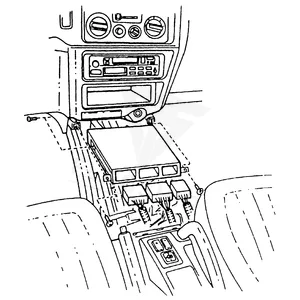
Work with the ignition off, and treat the module as static-sensitive: avoid touching the connector pins at any point.
After installing a new ECM in your 1994 Isuzu Amigo, the factory procedure typically requires programming the module to recognize your vehicle’s VIN and sensor calibrations. This step ensures the ECM communicates correctly with the fuel injectors, ignition system, and other critical components. Without proper programming, your Amigo may run poorly or fail to start at all. Flagship One replacement units arrive as a VIN-programmed replacement unit, meaning the module is pre-configured to match your vehicle’s specifications. This eliminates the need for additional programming steps, allowing you to install the ECM and drive without further setup. If you opt for a non-programmed unit, you’ll need access to specialized diagnostic tools or a dealership to complete the programming process, which can add time and cost to the repair.
When the ECM in your 1994 Isuzu Amigo begins to fail, you may notice a range of symptoms that can mimic other issues, such as a bad fuel pump or faulty ignition components. Common signs include stalling at idle, especially when the engine is warm, or a no-start condition where the engine cranks but refuses to fire. Misfires under load—such as when accelerating uphill—are another red flag, often accompanied by a rough idle or hesitation. In some cases, the Amigo may run excessively rich, causing black smoke from the exhaust or a strong fuel odor. Electrical gremlins, like flickering dashboard lights or intermittent power loss, can also point to ECM trouble. Since the Amigo lacks OBD-II diagnostics, you won’t see a specific trouble code like an internal control module memory error, but a scan tool may show no communication with the ECM at all. If your Amigo exhibits multiple symptoms—such as stalling, misfires, and poor fuel economy—the ECM is a likely suspect, especially if other components like spark plugs and fuel injectors have been ruled out.
A warm-engine stall in your Amigo often points to an ECM struggling with sensor feedback, particularly the coolant temperature or oxygen sensors. As the engine heats up, the ECM may misinterpret sensor data, leading to incorrect fuel or ignition timing. If the stalling persists after checking sensors and wiring, the ECM itself may be failing.
Yes, replacing the ECM in your Amigo is a straightforward process if you’re comfortable working under the dash. The module is typically located in front of the center console, and the swap involves disconnecting the wiring harness and securing the new unit. However, programming the ECM to your vehicle’s VIN is often required unless you use a pre-programmed replacement.
Distinguishing between an ECM failure and a sensor issue can be tricky in the Amigo. Start by checking for consistent symptoms—like stalling, misfires, or a no-start condition—that persist even after replacing sensors. If multiple sensors fail simultaneously or the ECM doesn’t respond to a scan tool, the module itself is likely the problem.
A used ECM from another Amigo may work, but it depends on whether the module has been programmed for a different vehicle’s VIN or sensor calibrations. Even if the part number matches, the used ECM may not communicate correctly with your Amigo’s fuel or ignition systems, leading to poor performance or a no-start condition.
If your Amigo’s ECM fails while driving, you’ll likely experience sudden stalling or power loss. Safely pull over and check for loose connections or visible damage to the ECM or wiring. If the issue persists, the ECM may need replacement. Avoid driving the vehicle until the problem is resolved, as an intermittent ECM can cause unpredictable engine behavior.
If your 1994 Isuzu Amigo is showing signs of ECM failure, you have two main options: attempt a repair or opt for a replacement. While some shops may offer ECM repairs, these are often temporary fixes and may not address underlying issues like internal corrosion or circuitry damage. A new or refurbished replacement ECM, particularly one that’s pre-programmed to your Amigo’s VIN, ensures a reliable solution without the hassle of additional programming steps. Given the Amigo’s age, a replacement ECM can restore performance and prevent future breakdowns, making it a practical choice for long-term reliability.
Flagship One stocks a refurbished, VIN-programmed ECM for the 1994 Isuzu Amigo with a lifetime warranty, free shipping and no core charge. The full Isuzu Amigo module lineup covers other engine configurations as well.
The ECM in your 1994 Isuzu Amigo plays a critical role in keeping your engine running smoothly, and recognizing the signs of failure early can save you from unexpected breakdowns. Whether you’re dealing with stalling, misfires, or a no-start condition, understanding the module’s location, replacement process, and programming requirements helps you make an informed decision. If you’re ready to address ECM issues, a pre-programmed replacement unit can simplify the process and get your Amigo back on the road with minimal downtime.