
Last updated on August 25th, 2026 at 12:15 pm
The powertrain control module (PCM) in your 1997 Eagle Vision serves as the central computer managing engine combustion, transmission shifting, and emissions systems. Module failure typically stems from electrical stress, heat cycling, or voltage spikes and manifests as starting difficulties, drivability complaints, or illumination of the check engine light.
If your 1997 Eagle Vision has developed starting problems, runs poorly, or the check engine light stays on, the powertrain control module may be the culprit. This guide walks you through understanding what the PCM does in your vehicle, recognizing failure symptoms, and weighing your repair options—whether you pursue a replacement unit or consider other solutions. The Eagle Vision’s 3.3L V6 engine relies heavily on its electronic control system, and when the module malfunctions, it can affect everything from idle quality to transmission shift behavior. You’ll learn where the module sits, what the factory service procedure involves, and how modern VIN-programmed replacement units can streamline the repair. By the end, you’ll have the factual foundation to make an informed decision about addressing your vehicle’s drivability issues.
The powertrain control module in your 1997 Eagle Vision functions as the brain of the powertrain, orchestrating fuel delivery, ignition timing, transmission clutch apply, and emissions control based on inputs from dozens of sensors throughout the engine compartment. Unlike simpler earlier systems, the 1997 model year incorporated the engine control module and transmission control functions into a single integrated unit, allowing tighter coordination between the 3.3L V6 engine and its automatic transmission. This module receives signals from the crankshaft position sensor, coolant temperature sensor, oxygen sensors, throttle position sensor, and many others, then calculates the optimal air-fuel mixture and spark advance for every driving condition. When the PCM receives invalid data, computes incorrectly, or loses communication with essential sensors, it reverts to a default strategy that often produces drivability symptoms. The module also stores diagnostic trouble codes that technicians retrieve during troubleshooting. Understanding this system helps explain why replacement engine computers for the Eagle Vision must be programmed to match your specific vehicle—the unit contains unique calibration data for your VIN, transmission gear ratios, and axle ratio. The module’s location near the air cleaner places it in an area of moderate heat exposure and vibration, two factors that contribute to long-term reliability concerns in vehicles of this age.
1997 Eagle Vision
OEM programmed ECM for your 1997 Eagle Vision — plug & play, no dealer visit.
Free shipping · Lifetime warranty
The factory service procedure places the powertrain control module in the engine compartment, specifically positioned next to the air cleaner assembly where it remains accessible through the inner fender well. To replace the module, a technician typically removes the air cleaner ductwork and housing to gain the necessary clearance for module extraction and installation. The replacement process involves disconnecting the electrical connectors, removing the mounting hardware, installing the new module, and reassembling the air cleaner components. According to labor guide specifications, the removal and replacement procedure for the PCM requires approximately 0.5 hours of book time. Following installation, the factory procedure mandates additional time for system reset and relearn procedures, which account for the separate labor operations listed in the guide. The total hands-on time at the bench, excluding wait times for programming, reflects the straightforward nature of the physical replacement. Technicians should verify all connector seals remain intact during service and ensure proper torque of any mounting bolts to prevent vibration-induced failures.
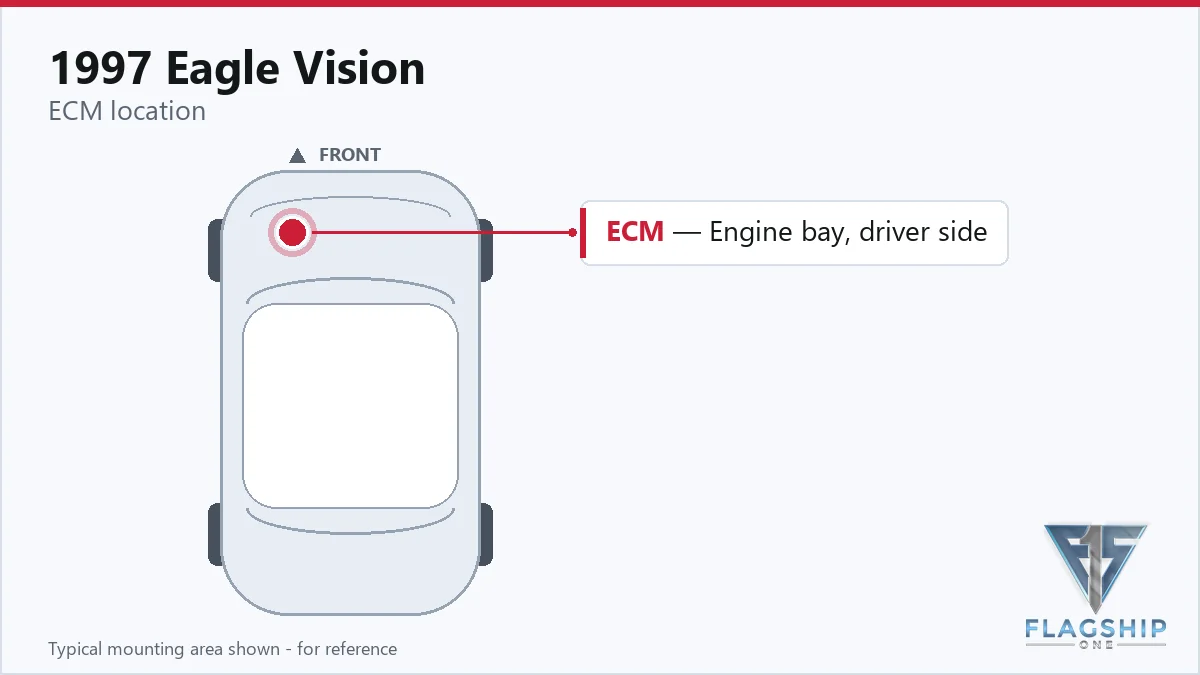
Work with the ignition off, and treat the module as static-sensitive: avoid touching the connector pins at any point.
| Operation | Configuration | Book Time |
|---|---|---|
| Powertrain Control Module R&R | All configurations | 0.5 hr |
| Powertrain Control Module Relearn | All configurations | 0.5 hr |
| Engine Control Module Reset | All configurations | 0.3 hr |
| Engine Control Module Relearn | All configurations | 0.5 hr |
| Engine Control Module R&R | All configurations | 0.5 hr |
After installing a replacement powertrain control module in your 1997 Eagle Vision, the factory service procedure requires both a reset operation and a relearn procedure to be performed using the DRBIII scan tool. The reset operation clears any stored default values and prepares the module to accept vehicle-specific calibration data, while the relearn procedure allows the module to adapt to the unique characteristics of your engine and transmission. Labor guides allocate 0.3 hours for the reset operation and 0.5 hours for the relearn procedure, reflecting the time needed to complete each step through the diagnostic interface. These procedures are essential because the module must learn idle airflow characteristics, transmission shift points, and fuel trim values specific to your vehicle before optimal operation resumes. When you purchase a replacement unit from Flagship One, the module arrives a VIN-programmed replacement unit that has been configured with your specific vehicle identification number before shipping. This means the time-consuming dealer programming steps that would normally be required after installation have already been completed on your behalf, potentially reducing the post-install procedure to verification and verification of sensor inputs only.
When the powertrain control module in your 1997 Eagle Vision begins to fail, the vehicle may exhibit a range of symptoms that often mimic other component problems, making diagnosis challenging. A no-start condition represents one of the most common complaints, where the engine cranking normally but fails to ignite because the module does not deliver fuel or spark. Stalling after startup occurs when the module loses communication with critical sensors or computes incorrect idle air control values. Misfire codes such as P0300 through P0305 frequently appear when the module cannot properly control fuel delivery or ignition timing based on flawed sensor data. Many owners report that their scan tool cannot communicate with the vehicle’s OBD-II system, which indicates a dead or unresponsive module that has stopped broadcasting diagnostic data. Transmission shifting problems may also manifest, including harsh shifts, failure to shift into overdrive, or complete loss of gear engagement. The check engine light may illuminate continuously or flash depending on the severity of the fault. In some cases, the vehicle may run but exhibit poor fuel economy, hesitation under acceleration, or rough idle characteristics that develop gradually as the module’s internal circuitry degrades. If your vehicle displays any of these symptoms and routine maintenance items have been ruled out, testing the PCM or related circuits becomes warranted. A internal memory check sum error condition may also trigger illumination of the malfunction indicator lamp, indicating the module has detected an internal fault that compromises its ability to process data reliably.
| Bulletin | Subject | What It Addresses |
|---|---|---|
| 18-037-05 | 18-037-05 Flash Programming Failure Recovery Using DRBIII® | — |
| 18-30-96 | 18-30-96 Erroneous MIL Illumination With Hex Code $2b, $2a, or $29, Shift Cycling | — |
| 18-02-97 | 18-02-97 Erroneous MIL Illumination With Hex Code $6a | — |
The replacement module must be programmed for your specific VIN, transmission type, and powertrain configuration. A generic unprogrammed unit will not operate your vehicle and may cause additional drivability issues. Units ordered from Flagship One arrive VIN-programmed for your application.
The physical replacement is straightforward for someone with basic mechanical skills, as the module sits near the air cleaner and is accessible through the fender well. However, the factory reset and relearn procedures typically require a scan tool like the DRBIII that may not be available to DIY mechanics. Purchasing a pre-programmed replacement may simplify the process.
Loss of scan-tool communication often indicates a failed or unresponsive PCM, as the module must be operational to broadcast data through the OBD-II port. This symptom warrants testing the module’s power and ground circuits before concluding the module itself has failed.
If diagnostic trouble codes indicate internal module faults, if the module fails to respond to reset procedures, or if physical damage to the module housing is visible, replacement is the appropriate solution. Repairs are not practical for PCM failures due to the integrated nature of the circuitry.
The module should relearn your engine’s characteristics during the relearn procedure, and normal operation typically resumes once the adaptation process completes. If drivability issues persist, verification of sensor data and connections is recommended.
When your 1997 Eagle Vision requires a powertrain control module replacement, you have two primary paths forward. You may pursue repair through a dealership or independent shop, where the technician performs the physical replacement and then executes the factory reset and relearn procedures using diagnostic equipment. Alternatively, you can obtain a pre-programmed replacement unit from Flagship One that arrives ready to install with your VIN already configured, potentially reducing the post-install procedure to verification steps only. The choice depends on your access to diagnostic tools, your comfort level with the repair process, and your timeline for returning the vehicle to service.
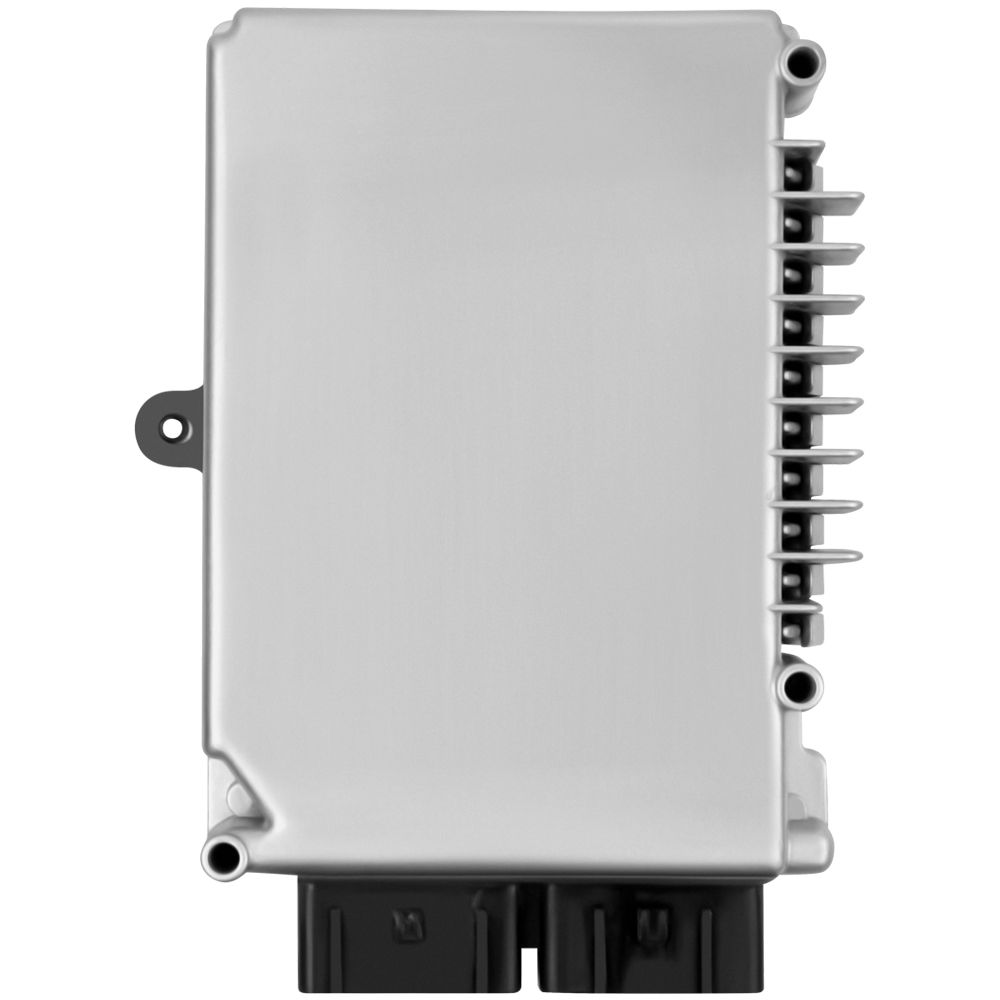
Flagship One stocks a refurbished, VIN-programmed PCM for the 1997 Eagle Vision with a lifetime warranty, free shipping and no core charge. The full Eagle Vision module lineup covers other engine configurations as well.
The powertrain control module in your 1997 Eagle Vision represents a critical component that manages engine and transmission functions through integrated electronics. When failures occur, the vehicle may exhibit no-start conditions, stalling, misfire codes, or illumination of the check engine light. Understanding the module’s location near the air cleaner, the factory programming requirements, and your replacement options empowers you to make informed decisions about the repair. Whether you handle the job yourself with a pre-programmed unit or entrust the work to a professional, addressing PCM issues promptly helps restore your vehicle’s reliable operation.